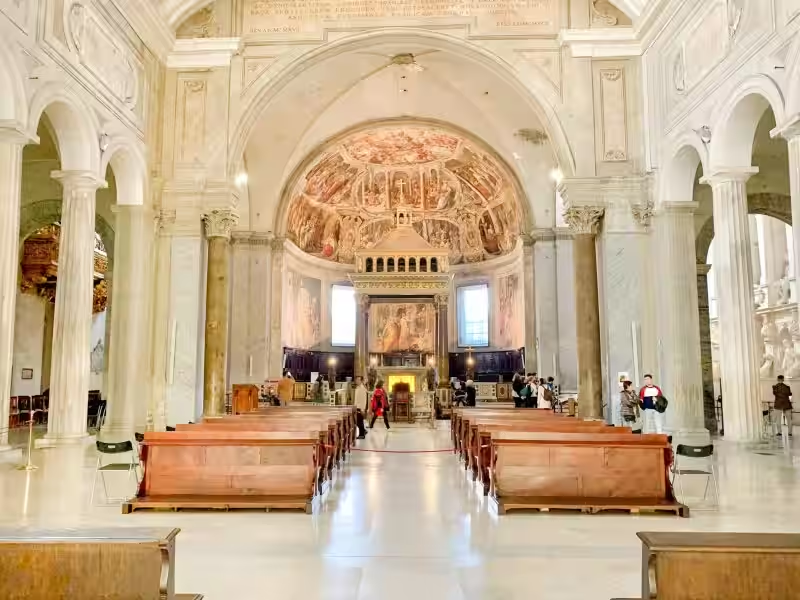
The city of Rome, a living tapestry woven with threads of ancient history and enduring faith, holds countless treasures. Among its most revered and significant is the Basilica di San Pietro ai Vincoli, or Saint Peter in Chains. This isn’t just another magnificent church; it’s a site steeped in profound religious narrative, a testament to unwavering devotion, and a place that continues to inspire pilgrims and history enthusiasts alike. The very name, “San Pietro ai Vincoli,” whispers of ancient stories, of relics and the powerful faith they represent. For anyone seeking a deeper understanding of Christian history and the enduring power of religious conviction, a journey to this basilica offers an unparalleled experience.
Beyond its architectural grandeur, San Pietro ai Vincoli serves as a vivid reminder of the early Christian Church’s struggles and triumphs. It stands as a tangible connection to the apostles, a place where the stories of faith are not just read, but felt. The atmosphere within its ancient walls resonates with centuries of prayer, contemplation, and the unwavering belief that has shaped the spiritual landscape of the Western world. Exploring San Pietro ai Vincoli is an invitation to step back in time and engage with the very foundations of our religious heritage.
The Sacred Chains: A Relic of Profound Significance
The beating heart of San Pietro ai Vincoli, and the source of its unique name, lies in the venerated relics it houses: the chains believed to have bound Saint Peter himself during his imprisonment in Jerusalem. Imagine the immense weight of those physical restraints, juxtaposed with the immense spiritual freedom Peter found even in captivity. This is the essence of the devotion associated with San Pietro ai Vincoli – the triumph of faith over earthly adversity. The belief that these very chains are present offers a powerful, almost tangible, link to one of Christianity’s most pivotal figures.
These sacred chains, carefully enshrined and displayed for veneration, are more than just historical artifacts; they are potent symbols of martyrdom, resilience, and the unwavering commitment to Christ. For centuries, believers have journeyed to San Pietro ai Vincoli seeking solace, strength, and inspiration, drawing courage from the story of Peter’s imprisonment and eventual miraculous release. The experience of witnessing these relics can be deeply moving, prompting reflection on personal struggles and the enduring power of divine intervention in our lives. It’s a reminder that even in our darkest moments, faith can offer liberation.
The story behind these chains is as compelling as the relics themselves. According to tradition, when Saint Peter was imprisoned in Jerusalem by King Herod Agrippa, he was bound with iron chains. The Gospel of Acts recounts his miraculous escape from prison, but the chains themselves became a focal point of veneration. Later, these chains were said to have been brought to Rome and eventually placed in the basilica that now bears their name.
The legend continues that upon the death of Emperor Theodosius II, his daughter Eudoxia presented Pope Leo I with the chains that had bound St. Peter. When the Pope brought them near the chains that had bound him in Rome, the two sets of chains miraculously united, solidifying their authenticity and deepening their sacred significance. This miraculous event, celebrated by the faithful, cemented the importance of San Pietro ai Vincoli as a pilgrimage site, drawing those who sought a direct connection to the foundational moments of their faith.
Michelangelo’s Moses: A Masterpiece of Religious Artistry
While the chains are the basilica’s spiritual anchor, its artistic soul is arguably embodied by Michelangelo’s breathtaking statue of Moses. This colossal sculpture, a true masterpiece of Renaissance art, dominates one of the basilica’s chapels and has captivated viewers for centuries. Moses, depicted as a powerful, commanding figure, is not just a historical prophet; he represents divine authority, the struggle for liberation, and the weight of leadership. The sheer presence of this statue within San Pietro ai Vincoli amplifies the basilica’s religious and historical resonance.
Michelangelo’s genius lies in his ability to imbue the marble with such life and emotion. The intense gaze of Moses, the powerful musculature, and the iconic horns (a misinterpretation of biblical text that has become an enduring artistic convention) all speak to a profound understanding of the subject’s significance. Standing before Michelangelo’s Moses in San Pietro ai Vincoli is an encounter with artistic brilliance inextricably linked to religious narrative, prompting contemplation on leadership, law, and the divine inspiration that guides humanity.
The statue of Moses is often interpreted as representing the awe-inspiring power of God’s law and the strength required to lead a people. Michelangelo’s depiction captures a pivotal moment, as if Moses has just descended from Mount Sinai, tablets in hand, his very being radiating divine authority and a fierce determination to uphold God’s commandments. The intricate details, from the flowing beard to the powerful stance, all contribute to the statue’s profound impact.
The legacy of this sculpture extends far beyond the walls of San Pietro ai Vincoli. It has inspired countless artists and thinkers, becoming an icon of religious and artistic achievement. For visitors, encountering Michelangelo’s Moses is an opportunity to connect with a profound piece of human creativity that serves a deeply spiritual purpose. It’s a powerful visual sermon, reminding us of the enduring importance of divine guidance and the monumental tasks of leadership. The grandeur of the statue is a fitting complement to the sacred relics housed within the basilica.
A Place of Ongoing Devotion and Spiritual Renewal
San Pietro ai Vincoli remains a vibrant center of religious life in Rome. It is not merely a museum piece; it is a living church where daily Mass is celebrated, prayers are offered, and the faithful continue to find spiritual solace and connection. The sense of peace and reverence that permeates the basilica is a testament to its enduring role in the lives of believers, both past and present.
For those seeking a deeper spiritual experience, a visit to San Pietro ai Vincoli offers a chance to participate in centuries-old traditions. Whether you are a devout pilgrim or simply a curious traveler, the basilica’s profound atmosphere and historical weight can inspire introspection and a renewed sense of faith. The simple act of walking through its hallowed halls, gazing upon the sacred chains, and contemplating Michelangelo’s Moses can be a deeply transformative experience, a reminder of the power of belief and the enduring legacy of faith.
Frequently Asked Questions: San Pietro ai Vincoli and Religion
What is the primary religious significance of San Pietro ai Vincoli?
San Pietro ai Vincoli is a significant Catholic church in Rome, Italy, renowned for housing the relic of the chains that bound Saint Peter during his imprisonment. This makes it a major pilgrimage site for Catholics.
What religious orders have been associated with San Pietro ai Vincoli?
Historically, the church has been entrusted to various monastic orders. For a long period, it was under the care of the Benedictine monks.
What specific relics are housed in San Pietro ai Vincoli?
The church’s name, “San Pietro ai Vincoli” (Saint Peter in Chains), directly refers to the principal relic it houses: the chains believed to have bound the Apostle Peter in Jerusalem.
Is San Pietro ai Vincoli still an active place of worship?
Yes, San Pietro ai Vincoli remains an active parish church and a place of pilgrimage, with regular liturgical services and continued veneration of its relics.
What is the story behind the relic of St. Peter’s chains?
According to tradition, the chains were miraculously presented to Empress Eudoxia, wife of Emperor Theodosius II, in the 5th century. She brought them to Rome, where they were placed in a church, later identified as San Pietro ai Vincoli.
What is the architectural style of San Pietro ai Vincoli, and how does it relate to its religious function?
The church, though undergoing various renovations, retains elements of early Christian basilican architecture. Its grand interior and devotional focus are designed to inspire awe and facilitate worship and contemplation of the sacred relics.
Are there any specific feast days or religious observances particularly associated with San Pietro ai Vincoli?
The Feast of Saint Peter in Chains, celebrated on August 1st, is the primary occasion for special religious observances and pilgrimages to the church.