The day you’ve dreamed of, filled with love, commitment, and the blessing of your faith, is approaching. As you finalize the details for your wedding, one of the most crucial and often overlooked elements is the Catholic ceremony program. It’s more than just a booklet; it’s a roadmap for your guests, a guide to the sacred rites, and a tangible keepsake of your spiritual union. For those unfamiliar with the nuances of a Catholic wedding, the ceremony program serves as an invaluable interpreter, demystifying the liturgy and allowing everyone to participate fully in your joy.
This article will delve deep into what makes a Catholic ceremony program so important, from its essential components to its role in reflecting your unique journey of faith. We’ll explore how to craft a program that is both informative and personal, ensuring that your guests leave with a profound understanding and appreciation of the sacrament you are about to undertake. Think of it as your personal welcome mat to the sacred space, inviting loved ones to share in the beauty and meaning of your Catholic wedding.
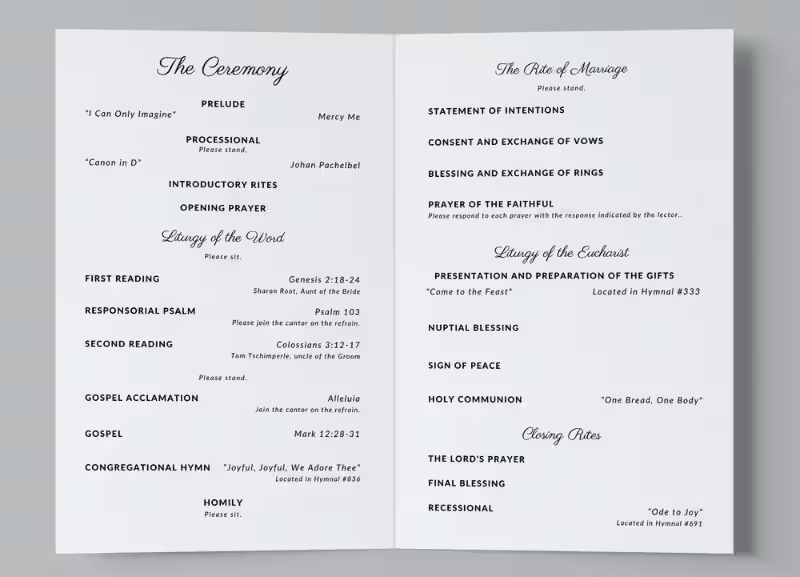
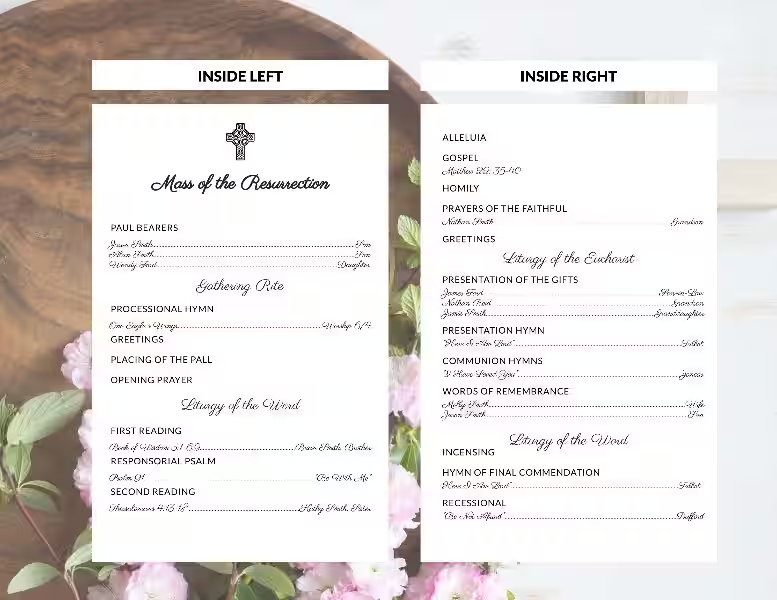
In the context of a Catholic wedding, the ceremony program is far more than a simple itinerary. It’s a sacred document that mirrors the structure and prayers of the Mass or the Liturgy of the Word, depending on the type of ceremony. For many guests, especially those from different faith traditions or who haven’t attended a Catholic wedding before, the program is their sole guide to understanding the rituals, prayers, and responses. It helps them follow along, know when to stand, when to sit, and when to participate in prayers and hymns.
Without a well-crafted Catholic ceremony program, guests might feel lost or disconnected from the profound spiritual significance of the event. Imagine attending a concert without a program – you’d miss the flow, the context of each piece, and the composer’s intent. Similarly, a Catholic ceremony program illuminates the path of the liturgy, allowing everyone to actively engage in the prayers and hymns, fostering a deeper sense of community and shared celebration of your marital covenant before God.
Key Components of a Comprehensive Program
A truly informative Catholic ceremony program will typically include several essential elements that guide guests through the liturgy. These are designed to provide clarity and encourage participation. Here are some of the most common and important sections you’ll want to consider:
Opening Prayer and Introduction: This section often sets the tone, welcoming guests and briefly explaining the significance of the sacrament.
Readings: The program will list the scripture readings for the day, often including the book, chapter, and verse. This allows guests to follow along in their own Bibles or simply focus their attention.
Homily: While the content of the homily won’t be in the program, its placement is indicated, signifying a time for reflection and spiritual guidance from the priest or deacon.
Rite of Marriage: This is the heart of the ceremony, detailing the exchange of vows, the blessing and exchanging of rings, and the prayers for the couple.
Prayers of the Faithful: These are the intercessory prayers offered for the couple, their families, the Church, and the world. The program will list the intentions.
Liturgy of the Eucharist (if applicable): For a Nuptial Mass, this section includes the prayers of consecration, the Our Father, and the Sign of Peace.
Recessional: The final blessing and the procession of the newly married couple out of the church.
Hymns and Music: Including the titles of hymns and any musical selections allows guests to prepare to sing or appreciate the chosen pieces.
Wedding Party: A list of the members of the bridal party, including bridesmaids, groomsmen, flower girls, and ring bearers.
Acknowledgements and Thanks: A space to thank those who have helped you on your journey, including parents, grandparents, and those who have played a special role.
Beyond these standard components, a thoughtfully designed Catholic ceremony program can also include personal touches. You might add a brief “Our Love Story” section, a quote that is meaningful to your faith, or even a small prayer you’ve written yourselves. These additions don’t detract from the sacred nature of the liturgy; rather, they enhance the personal significance of the ceremony, making it a true reflection of your unique bond and shared faith journey.
Crafting Your Personalized Catholic Ceremony Program
Creating your Catholic ceremony program is an opportunity to infuse your wedding with your personality and your faith. While adhering to the traditional structure is important, there’s ample room for personalization and creativity. Think about the overall aesthetic of your wedding and how the program can visually complement it. This is where the magic of a well-executed Catholic ceremony program truly shines.
The process begins with understanding the specific liturgy that will be followed for your wedding. Will it be a Nuptial Mass, which includes the full Eucharistic celebration, or a Liturgy of the Word, which focuses on scripture and prayers? Your priest or deacon will be an invaluable resource here, guiding you through the approved texts and rites. Once you have this framework, you can begin to weave in your personal touches. This might involve selecting hymns that are particularly meaningful to you as a couple, choosing readings that resonate with your relationship, or even including a short, heartfelt message to your guests.
Design and Content Considerations
When it comes to the design of your Catholic ceremony program, clarity and readability are paramount. While a beautiful design is certainly desirable, it should never come at the expense of ease of understanding. Consider using a font that is legible from a distance, and ensure there is sufficient white space to avoid a cluttered appearance. Many couples opt for a design that echoes their wedding invitations, creating a cohesive visual theme.
The content itself should be accurate and respectful. Double-check all the readings, prayers, and names for any errors. If you are including a brief personal message, ensure it aligns with the solemnity and sacredness of the occasion. For instance, a simple blessing or a thank you to your guests for sharing in your sacraments is appropriate. You might also consider including a brief explanation of any Catholic traditions that might be unfamiliar to your guests, such as the significance of the veil or the unity candle, if you are incorporating them.
The music and readings you choose for your Catholic ceremony program play a significant role in shaping the spiritual atmosphere of your wedding. Selecting hymns that are both beautiful and theologically rich can elevate the liturgy and encourage congregational singing. Think about hymns that speak to the themes of love, commitment, and the sacrament of marriage, such as “Amazing Grace,” “How Great Thou Art,” or “Jesu, Joy of Man’s Desiring.”
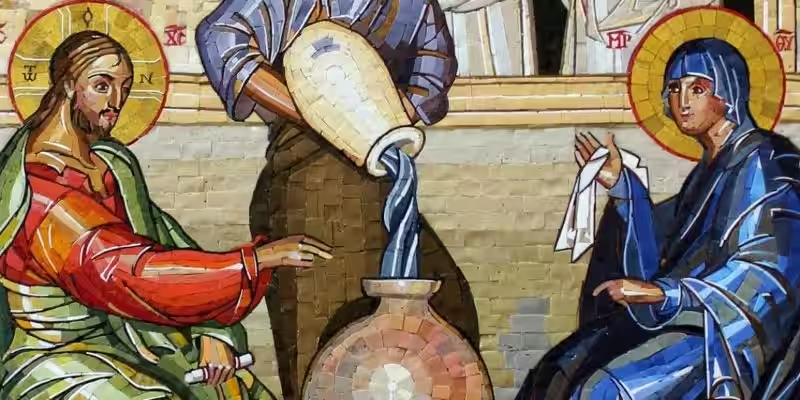
Similarly, the scripture readings are carefully chosen by the Church to offer divine wisdom and guidance for your new life together. The program will list these readings, allowing your guests to reflect on the passages. Often, couples have the opportunity to select one of the readings, provided it is from the approved lectionary. This is a wonderful way to personalize your Catholic ceremony program and choose words that deeply resonate with your faith and your relationship. For example, you might choose the passage from 1 Corinthians 13:4-7, which famously describes love, or the story of the Wedding at Cana, illustrating Christ’s presence at celebrations.
Distributing Your Catholic Ceremony Program Effectively
The best-designed Catholic ceremony program is only effective if it reaches your guests! Thoughtful distribution ensures that everyone can follow along and feel included in the sacred rites. Imagine the confusion if guests are left without a guide during the ceremony; a well-planned distribution process prevents this.
A common and effective approach is to have ushers hand out the programs as guests enter the church. This allows them to receive one before finding their seats. Alternatively, you can have a dedicated table near the entrance with programs neatly arranged. For larger weddings, consider having a few ushers specifically tasked with ensuring every guest receives a program. The aim is to make it effortless for your guests to access this vital resource.
Beyond the initial distribution, consider the timing of your ceremony. If there are any unique traditions or moments within your Catholic ceremony program that might require a brief explanation, you can subtly guide your guests through them. For example, if you are including a symbolic gesture, a short note in the program can provide context. Ultimately, the goal is to make the experience of your wedding ceremony as joyful, meaningful, and accessible as possible for every single person who has come to celebrate your love and your faith with you. The Catholic ceremony program is your key to unlocking that communal experience.
A Catholic ceremony program is a printed booklet or leaflet distributed to guests at a Catholic wedding. It typically outlines the order of the liturgy, including readings, prayers, songs, and the exchange of vows. It also often includes names of the wedding party, special dedications, and sometimes a brief explanation of the Catholic marriage rite for those unfamiliar with it.
Why is a program important for a Catholic wedding?
A program helps guests follow along with the Mass or ceremony, especially those who may not be familiar with Catholic traditions. It ensures everyone understands the flow of the service and can participate more fully in the prayers and responses. It also serves as a keepsake for the couple and their guests.
What information should be included in a Catholic ceremony program?
Essential information includes:
* The title of the ceremony (e.g., “The Order of Holy Matrimony”).
* The names of the couple.
* The date and location of the ceremony.
* The order of the liturgy:
* Processional
* Opening prayer
* Liturgy of the Word (First Reading, Responsorial Psalm, Second Reading, Gospel)
* Homily
* Rite of Marriage (Exchange of Vows, Blessing and Exchange of Rings)
* Universal Prayer (Prayers of the Faithful)
* Liturgy of the Eucharist (Offertory, Preface, Sanctus, Eucharistic Prayer, Communion)
* Concluding Rites (Blessing, Dismissal)
* Recessional
* Names of the wedding party (parents, bridal party, officiant, etc.).
* Names of those providing music (cantor, organist, choir).
* Any special readings or poems chosen by the couple.
* A thank you note from the couple, optional.
Do I need to include the full text of the readings and prayers?
While you can include the full text of the readings and prayers, it is more common to list the title or first few words of each section and indicate where guests can follow along in their own missals (if applicable) or simply listen. Including the full text can make the program very long.
Can we include photos in our Catholic ceremony program?
Yes, many couples choose to include photos of themselves, their families, or even a picture of the church in their programs. This personalizes the program and makes it a treasured memento.
Should we include information about Catholic marriage for guests who are not Catholic?
It can be helpful to include a brief explanation of key elements of the Catholic marriage rite, such as the symbolism of the rings, the Sacrament of Matrimony, or the meaning of the nuptial blessing. This can help all guests feel more included and informed.
When should we finalize and print our Catholic ceremony programs?
It’s best to finalize the content of your program at least 4-6 weeks before your wedding date, allowing ample time for printing and any potential revisions. Proofread carefully before sending to print!
Where can I get ideas for Catholic ceremony program designs?
Many wedding websites, Pinterest, and stationery companies offer templates and design inspiration for Catholic ceremony programs. You can also look at programs from other Catholic weddings you’ve attended.