In the tapestry of religious life, threads of individual devotion are woven together to form a vibrant and enduring fabric. At the core of this communal spiritual experience lies what can be broadly understood as the general congregation. It’s more than just a gathering; it’s a dynamic expression of shared belief, a space where the individual finds strength in unity and where the collective spirit of faith finds its voice. Understanding the significance and multifaceted nature of the general congregation can deepen our appreciation for the religious traditions that shape our lives and communities.
This article will delve into the essence of the general congregation, exploring its various forms, its profound impact on individuals and communities, and the ways in which it serves as a cornerstone of religious practice. We will uncover how these gatherings, whether formal or informal, provide a vital platform for spiritual nourishment, mutual support, and the transmission of shared values across generations.
What is a General Congregation? The Essence of Coming Together
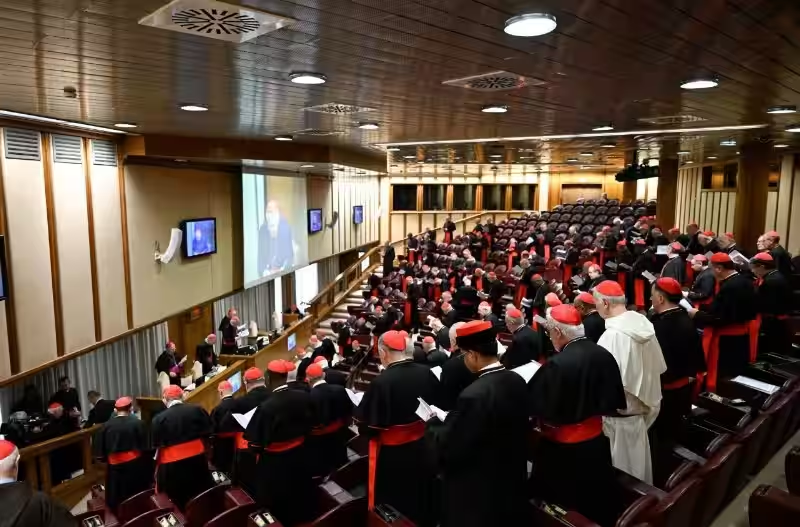
At its most fundamental level, a general congregation refers to the act of a religious community coming together for worship, instruction, or fellowship. While the term might evoke images of a large, formal church service, its scope is far broader, encompassing various denominations and traditions. It’s about the collective participation of believers, a moment where singular prayers merge into a chorus and individual acts of devotion coalesce into a powerful testament of shared faith. Think of it as the religious equivalent of a family reunion, where everyone gathers to celebrate, connect, and reaffirm their bonds.
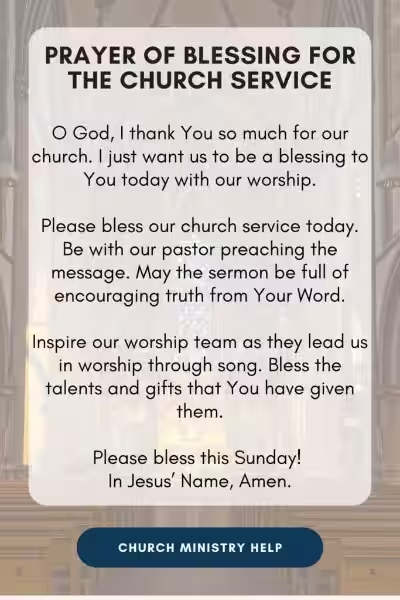
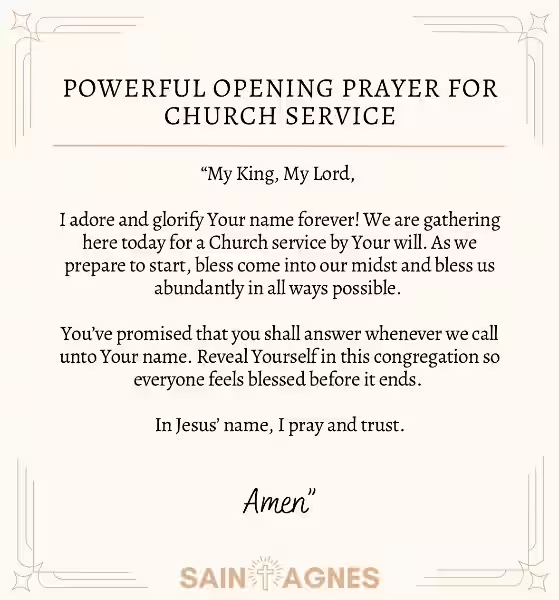
The concept of a general congregation is not limited to any single religion. Whether it’s the weekly gathering of a Christian church, the Friday prayers of a mosque, the Shabbat service in a synagogue, the puja and discourse in a Hindu temple, or the sangha meeting in a Buddhist center, the underlying principle remains the same: believers uniting for a common spiritual purpose. These gatherings provide a structured environment for communal worship, often featuring shared prayers, readings from sacred texts, sermons or teachings, and sometimes music or chanting. The very act of congregating reinforces a sense of belonging and shared identity among adherents.
The Multifaceted Roles of the General Congregation
The general congregation plays a pivotal role in the spiritual and social lives of its members, serving a multitude of functions that extend far beyond the immediate act of worship. One of its primary roles is spiritual nourishment. Within the collective setting, individuals can experience a heightened sense of the divine. The shared experience of prayer, the resonant sound of hymns or chants, and the insightful delivery of religious teachings can all contribute to a profound spiritual upliftment, offering solace, inspiration, and a renewed connection to their faith. This communal spiritual energy can feel palpable, creating an atmosphere conducive to introspection and spiritual growth.
Beyond spiritual sustenance, the general congregation acts as a vital support system. In times of joy, members celebrate together, amplifying their happiness. In times of sorrow or hardship, the congregation provides a network of mutual support, offering comfort, practical assistance, and a reminder that no one is alone in their struggles. This sense of community is invaluable, fostering strong interpersonal relationships built on shared values and mutual care. For instance, a new parent might receive meals from fellow congregants, or someone facing illness might find a prayer chain mobilized in their behalf. These acts of tangible support underscore the living, breathing nature of the general congregation.
Forms and Expressions of General Congregations
The manifestations of a general congregation are as diverse as the religious traditions they represent. In Christianity, this often takes the form of weekly eucharistic services or masses, where believers partake in communion and engage in communal prayer and scripture reading. These services are typically led by ordained clergy and follow a structured liturgy that has been refined over centuries. The emphasis is on sacramental participation and the communal reception of God’s grace.
In Islam, the Friday congregational prayer, known as Jum’ah, is a central pillar of religious life. Muslims gather in mosques, facing Mecca, to offer their prayers led by an Imam, who also delivers a sermon (khutbah) on religious and social matters. This gathering is not just a ritual; it’s a powerful demonstration of Islamic unity and submission to God. Similarly, Jewish synagogues host regular services, particularly on Shabbat (Sabbath) and holidays, where congregants participate in prayers, Torah readings, and rabbinic teachings, fostering a strong sense of communal identity and tradition.
Beyond Formal Services: The Broader Congregation
While formal services are a defining characteristic, the concept of the general congregation extends to other forms of communal engagement. This can include Bible study groups, religious education classes, volunteer initiatives, and social gatherings organized by religious institutions. These less formal settings provide opportunities for deeper connection, discipleship, and the practical application of religious teachings in everyday life. For example, a church might organize a mission trip, a mosque might host a youth group discussion on ethical issues, or a temple might hold a charity drive. These activities build upon the foundational bonds established in formal worship.
Furthermore, in some traditions, spontaneous or less structured gatherings for prayer or meditation can also be considered a manifestation of the general congregation. The key element is the intentional coming together of believers to share in their faith. This might involve a small group of friends meeting regularly to discuss scripture, or a larger, more informal gathering for spiritual reflection. The power of these diverse expressions lies in their ability to foster a sense of belonging, encourage spiritual growth, and solidify the collective identity of the religious community.
The Impact of the General Congregation on Individuals
For individuals, participation in a general congregation can be transformative. It provides a sanctuary from the stresses of daily life, a space where one can pause, reflect, and reconnect with their spiritual core. The shared experience of worship can amplify feelings of awe and wonder, fostering a deeper sense of purpose and meaning. Hearing sermons and participating in discussions can offer new perspectives on life’s challenges and provide guidance for navigating complex moral and ethical dilemmas. The collective expression of faith can also instill a sense of hope and resilience, reminding individuals of their place within a larger, enduring narrative.
Moreover, the general congregation offers invaluable opportunities for personal growth and development. By engaging with religious teachings and interacting with fellow believers, individuals can refine their understanding of their faith, challenge their assumptions, and cultivate virtues such as compassion, humility, and forgiveness. Witnessing the faith of others, particularly those who have overcome significant adversity, can be incredibly inspiring. This constant exposure to shared spiritual values and practices helps to shape character and reinforce a commitment to living a life aligned with one’s religious convictions. For example, observing the dedication of volunteers within the congregation might inspire an individual to become more involved in service.
The General Congregation as a Force for Community and Change
The general congregation is far more than a collection of individuals; it is a powerful engine for community building and, often, social change. When people unite under a shared spiritual banner, they develop strong bonds of fellowship and mutual responsibility. This sense of solidarity can translate into collective action, enabling religious communities to address social injustices, support those in need, and contribute positively to the wider society. Think of the historical role of religious congregations in the Civil Rights Movement, where churches served as organizing centers and sources of moral support for activists.
Religious institutions, through their general congregations, often play a crucial role in providing essential social services, such as food banks, homeless shelters, educational programs, and healthcare initiatives. These efforts are not merely acts of charity; they are expressions of a faith that calls for justice and compassion. By working together, congregants can achieve far more than they could individually, amplifying their impact and demonstrating the tangible benefits of their shared faith. The collective voice of a united general congregation can also be a powerful force in advocating for ethical policies and promoting positive societal values.
Conclusion: The Enduring Vitality of the General Congregation
In conclusion, the general congregation stands as a testament to the enduring human need for connection, meaning, and shared purpose. Whether expressed through grand cathedrals, humble community halls, or intimate prayer circles, the act of coming together in faith enriches lives and strengthens communities. It provides a vital space for spiritual nourishment, mutual support, and the transmission of timeless wisdom. The general congregation is the heartbeat of religious life, a dynamic force that inspires, sustains, and empowers individuals and communities to live lives of purpose and devotion.
As we navigate the complexities of modern life, the importance of these communal gatherings remains undiminished. They offer a grounding presence, a source of hope, and a reminder of the profound power that arises when individuals unite in shared belief and collective action. Understanding and appreciating the multifaceted role of the general congregation allows us to better grasp the depth and vitality of the religious traditions that continue to shape our world.
Frequently Asked Questions about General Congregation and Religion
What is a general congregation?
A general congregation is a gathering of members of a religious community for worship, prayer, fellowship, and often to conduct church business. It’s a central event for many denominations.
What are the main purposes of a general congregation?
The primary purposes include communal worship, spiritual edification, sharing of religious teachings, communal prayer, mutual support and fellowship among members, and sometimes administrative decisions related to the congregation’s activities.
How often do general congregations typically take place?
The frequency varies greatly by religious tradition and individual congregation. Many meet weekly, often on a Sunday, while others may have services or gatherings on different days or less frequently.
Is attendance at a general congregation mandatory in most religions?
While often highly encouraged as a core aspect of religious life and community, mandatory attendance is not a universal rule across all religions. The emphasis and consequences of non-attendance can differ significantly.
What should I expect if I attend a general congregation as a visitor?
You can generally expect a structured service that may include singing, prayers, readings from scripture, a sermon or message, and perhaps communion or other sacraments. Visitors are usually welcomed and are not expected to participate in offerings or certain rituals unless they feel comfortable doing so.
What is religion?
Religion is a system of beliefs, practices, and rituals that are typically centered around a supernatural being or beings, or a transcendent reality. It often provides a framework for understanding life, morality, and the universe, and fosters a sense of community among its adherents.
What are some common elements found in many religions?
Common elements include belief in the divine or sacred, sacred texts or scriptures, rituals and ceremonies, moral codes or ethical guidelines, prayer or meditation, and a community of believers.
Are there different types of religions?
Yes, religions are incredibly diverse. They can be broadly categorized as monotheistic (believing in one God), polytheistic (believing in multiple gods), pantheistic (believing God is in everything), atheistic (lack of belief in gods), agnostic (uncertainty about the existence of gods), and many other classifications.
How do religions influence individuals and societies?
Religions can profoundly influence individuals by shaping their values, ethics, worldview, and sense of purpose. On a societal level, religions can impact culture, art, law, politics, and social structures.
Is it possible to be religious without belonging to an organized religion?
Yes, many individuals identify as spiritual but not religious (SBNR). They may hold personal beliefs about the divine, the universe, or a higher power, and engage in personal practices of reflection or meditation, without adhering to the doctrines or communal structures of a formal religious institution.