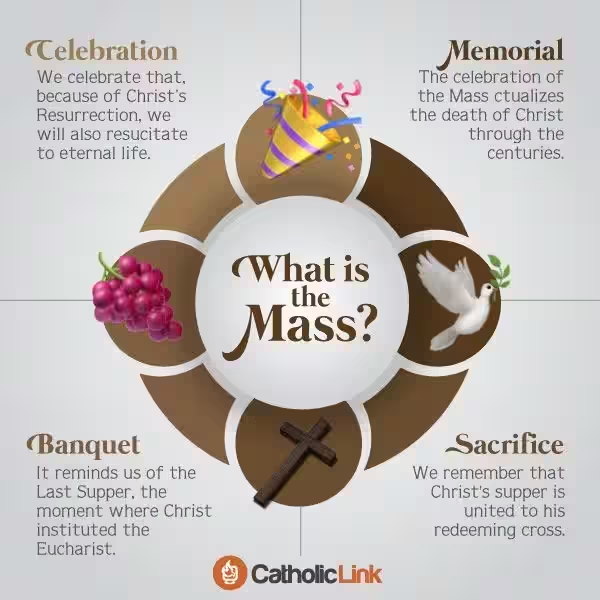
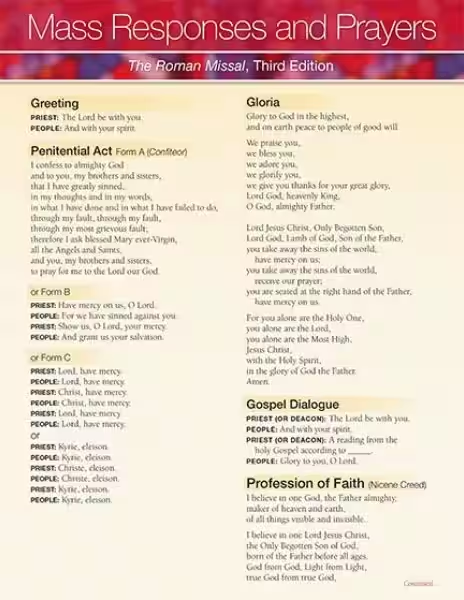
The Catholic Mass is far more than a weekly obligation; it’s a profound spiritual encounter, a sacred dialogue between God and His people. At its core, the Mass is a vibrant tapestry woven with scripture, community, and, most importantly, prayer. The prayers for Catholic Mass are not mere recitations, but rather the very heartbeat of our faith, expressions of our deepest hopes, our sincerest confessions, and our boundless gratitude. Understanding these liturgical prayers enriches our participation, moving us from passive observers to active participants in this divine offering.
For Catholics, the Mass is the highest form of worship, a re-presentation of Christ’s sacrifice on the cross. Within this sacred space, the prayers serve as our conduit to God, fostering a personal relationship with Him and with our fellow believers. They guide us, console us, and transform us, reminding us of God’s ever-present love and the promise of eternal life.
The first major part of the Mass is the Liturgy of the Word, where sacred scripture is proclaimed. This section is rich with prayers that prepare our hearts and minds to receive God’s message. It begins with the Opening Prayer, a concise and powerful plea that sets the tone for the entire celebration.
The Opening Prayer, often led by the priest, is an invitation for God to open our minds and hearts to His word. It might ask for the grace to understand His teachings, to live them out, or to be strengthened in our faith. For example, a typical Opening Prayer might invoke the Trinity, asking for divine assistance to “listen attentively to the word of God, receive it with a pure heart, and bear the fruit of good works.” This prayer acts as a spiritual foundation, ensuring that our reception of scripture is fertile ground for growth.
Following the readings, we often recite the Creed, a formal statement of our core beliefs. This communal profession of faith, from the Apostles’ Creed to the more elaborate Nicene Creed, solidifies our shared identity as Catholics and reaffirms the fundamental truths of our religion. It’s a powerful moment of unity, where we collectively declare our belief in God the Father, Jesus Christ His Son, and the Holy Spirit, the Church, and the resurrection.
The Liturgy of the Eucharist: A Sacred Supper, A Divine Encounter
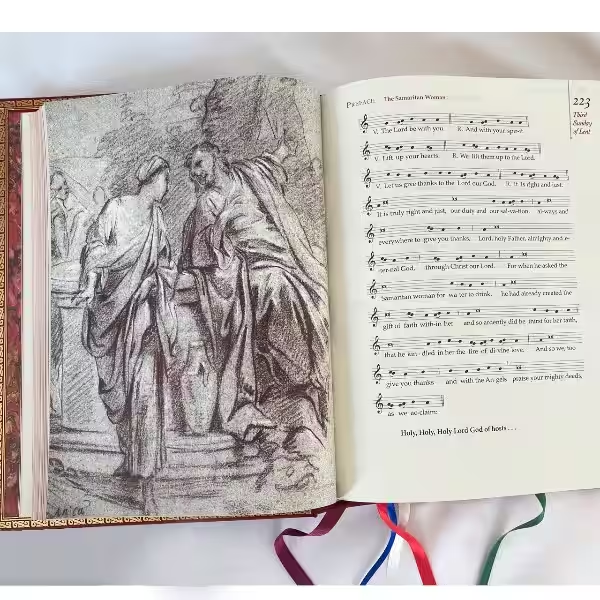
The Liturgy of the Eucharist is the pinnacle of the Mass, where the bread and wine are transformed into the Body and Blood of Christ through the Eucharistic Prayer. This is where the most sacred and profound prayers are found, the very heart of our Catholic tradition. The Sanctus, a hymn of praise sung with the angels, declares God’s holiness, crying out, “Holy, Holy, Holy Lord God of hosts. Heaven and earth are full of his glory.“
Following the Sanctus, the priest offers the Epiclesis, a prayer invoking the Holy Spirit to descend upon the gifts of bread and wine. This is a crucial moment, asking for the divine power that will bring about the transubstantiation, the miraculous change where the accidents of bread and wine remain, but their substance becomes the very Body and Blood of Christ. This prayer is a testament to God’s power and His desire to be intimately present with us.
Then comes the Institution Narrative, where the priest recounts the words of Jesus at the Last Supper: “This is my body, which will be given up for you. This is the cup of my blood, the blood of the new and everlasting covenant. It will be poured out for you and for many, for the forgiveness of sins.” These words are not just a remembrance; they are a powerful invocation, bringing about the reality of Christ’s presence. Following this, we respond with the Mystery of Faith: “When we eat this bread and drink this cup, we proclaim your death, Lord Jesus, until you come in glory.“
Prayers of Petition and Thanksgiving: Bringing Our Lives to the Altar
Beyond the core prayers of the Mass, we also have opportunities to bring our personal intentions and our gratitude to God. The Prayer of the Faithful, also known as the Universal Prayer, is a vital part of the Mass where we intercede for various needs – for the Church, for world leaders, for those who are suffering, and for ourselves. This is our chance to lift up our brothers and sisters in Christ and to pray for the needs of the world.
During the Prayer of the Faithful, we might hear petitions like, “For all those suffering from illness, that they may find healing and comfort, let us pray to the Lord.” Or, “For an end to division and conflict, that peace may reign throughout the world, let us pray to the Lord.” These prayers remind us that we are part of a larger community, and our prayers have the power to touch lives both near and far.
Finally, after receiving Communion, we enter a period of Eucharistic Adoration and post-Communion prayer. This is a sacred time for personal reflection and thanksgiving. We have just received Christ Himself, and this intimate encounter calls for a response of deep love and gratitude. We might spend this time in silent prayer, offering thanks for the gift of the Eucharist, or reciting personal prayers of devotion. The Prayer after Communion typically summarizes the graces received and asks for the strength to live out the Gospel message.
Embracing the Prayers: A Deeper Connection to Faith
The prayers for Catholic Mass are not simply words to be spoken; they are invitations to a deeper communion with God and with our Church family. By understanding the meaning and purpose behind each prayer, we can move beyond rote recitation and engage with the Mass on a more profound spiritual level. Consider these simple ways to enrich your experience:
Familiarize Yourself with the Prayers: Before Mass, take a moment to read through the prayers for the day. Many parish bulletins or online resources provide the Mass readings and prayers in advance.
Listen Attentively: During the Mass, make a conscious effort to listen to the prayers being offered. Try to understand the intent behind the words.
Participate Actively: Respond with conviction and reverence when it is time to pray or sing. Your voice is a valued part of the communal prayer.
Reflect on the Meaning: After Mass, take some time to reflect on a particular prayer that resonated with you. How can its message be applied to your daily life?
The prayers for Catholic Mass are a constant source of grace and guidance. They are the threads that bind us together in faith, connecting us to the timeless offering of Christ and to each other. By embracing these sacred words, we not only deepen our own spiritual journey but also contribute to the vibrant, prayerful heart of our Catholic community.
Frequently Asked Questions about Prayers for Catholic Mass
What are the main parts of a Catholic Mass?
The Catholic Mass is typically divided into two main parts: the Liturgy of the Word and the Liturgy of the Eucharist. The Liturgy of the Word includes readings from Scripture, a homily (sermon), and prayers. The Liturgy of the Eucharist includes the presentation of gifts, the Eucharistic Prayer, and Holy Communion.
What is the Sign of the Cross, and when is it used in Mass?
The Sign of the Cross is a prayerful gesture made by tracing the shape of a cross on oneself with the right hand, while saying “In the name of the Father, and of the Son, and of the Holy Spirit. Amen.” It is used at the beginning and end of Mass, during baptisms, and in many other moments of prayer and devotion.
What is the role of the Kyrie Eleison (Lord, Have Mercy) in the Mass?
The Kyrie Eleison is one of the oldest parts of the Mass. It is a prayer of petition and mercy where the congregation calls upon God to have mercy on us. It is usually prayed after the opening prayer and before the Liturgy of the Word.
What is the Gloria (Glory to God in the Highest)?
The Gloria is a hymn of praise that is sung or recited during Mass, usually on Sundays and feast days, except during seasons of Advent and Lent. It is an ancient and joyful song of praise to God the Father and God the Son.
What are the different types of prayers said during the Liturgy of the Word?
During the Liturgy of the Word, the prayers include the opening prayer, the prayer of the faithful (intercessions), and the prayer after Communion. The prayer of the faithful is a series of petitions for various needs of the Church, the world, and individuals.
What is the Eucharistic Prayer, and what is its significance?
The Eucharistic Prayer is the central prayer of the Mass, where the Church, through the priest, gives thanks to God and consecrates the bread and wine to become the Body and Blood of Jesus Christ. It is a prayer of thanksgiving, invocation, and offering.
What is the Our Father (The Lord’s Prayer)?
The Our Father is the prayer taught by Jesus to his disciples. It is recited by the congregation during the Liturgy of the Eucharist, usually just before Holy Communion, as a sign of unity and a preparation for receiving the Eucharist.
What are some common prayers or responses said by the congregation during Mass?
Congregations often respond to the priest with prayers such as “Amen” (meaning “so be it” or “I believe”), “And with your spirit,” “Thanks be to God,” and participate in the prayers of the Mass by reciting or singing along.
What is the final blessing at the end of Mass?
At the end of Mass, the priest gives a final blessing to the congregation. This blessing is typically trinitarian, invoking the Father, Son, and Holy Spirit, and it sends the faithful out to live their faith in the world.