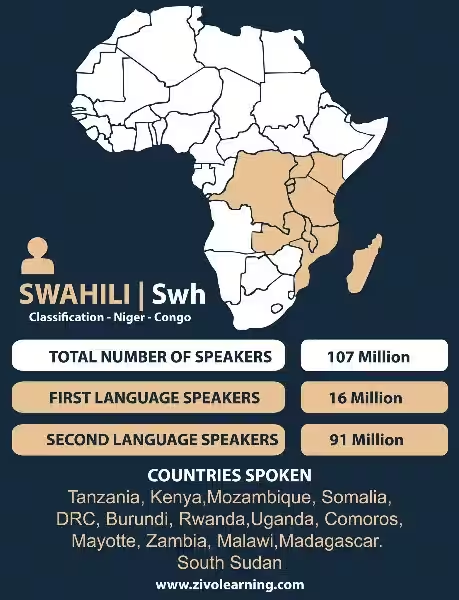
In the tapestry of human existence, where diverse cultures and beliefs intertwine, there exists a profound concept that resonates across continents and throughout history: Sisi ni moja. This Swahili phrase, meaning “We are one,” encapsulates a powerful truth, especially when we delve into the realm of religion. While the outward expressions of faith may appear varied, the underlying human yearning for connection, meaning, and transcendence often reveals a shared spiritual DNA. Understanding this inherent unity within religious diversity can foster empathy, dismantle prejudice, and build bridges of understanding in our increasingly interconnected world. The beauty of sisi ni moja lies in its invitation to recognize our common humanity, even amidst our distinct spiritual paths.
This article will explore how the principle of sisi ni moja manifests within and across various religious traditions. We will journey through the shared ethical frameworks, the universal search for purpose, and the common human experiences that bind us together, irrespective of our specific doctrines or rituals. By highlighting these commonalities, we aim to provide a more nuanced and compassionate perspective on religious pluralism, demonstrating that our differences need not be barriers but can, in fact, enrich our collective understanding of the divine and our place within it. The journey towards embracing sisi ni moja is a journey towards a more harmonious and enlightened global community.
At the heart of most major religions lies a core set of ethical teachings that emphasize compassion, kindness, justice, and love. Think of the Golden Rule, which appears in slightly different forms across numerous faiths: “Do unto others as you would have them do unto you.” This is not a coincidence; it’s a testament to a shared human understanding of morality. Whether it’s the Buddhist concept of Karuna (compassion), the Christian imperative to love your neighbor as yourself, the Islamic emphasis on Zakat (charity), or the Jewish principle of Tzedakah (righteousness and justice), the message is remarkably consistent. These are not abstract theological concepts but practical guides for living a good life and contributing positively to society. They underscore the fundamental idea that sisi ni moja in our need to treat each other with dignity and respect.
Consider the simple act of helping a stranger. Across the globe, people of faith are moved by a divine spark to alleviate suffering and offer support. This impulse is not dictated by specific dogma but by an innate sense of shared humanity. A Hindu volunteer at a soup kitchen, a Muslim distributing aid after a disaster, a Christian ministering to the sick, or a Buddhist meditating for world peace are all acting on this universal moral compass. These actions, driven by empathy and a desire to do good, are powerful affirmations of sisi ni moja. They demonstrate that the divine, in its essence, calls us to be our brother’s keeper and our sister’s helper, regardless of our differing labels.
Love and Compassion: The Universal Language of the Heart
Love, in its many forms – agape, philia, eros – is a central theme in religious discourse worldwide. It’s the driving force behind acts of selfless service, forgiveness, and reconciliation. The concept of divine love often serves as a model for human relationships, urging believers to extend this boundless affection to all beings. This unconditional love is not just an ideal; it’s a practice that can transform individuals and communities. When we extend love and compassion, we are actively embodying the spirit of sisi ni moja, recognizing the inherent worth and interconnectedness of every soul.
Think about the stories that resonate across spiritual traditions: the parables of forgiveness, the tales of saints who dedicated their lives to the marginalized, the narratives of divine intervention motivated by mercy. These stories aren’t just historical accounts; they are timeless lessons that teach us how to navigate the complexities of human interaction with grace. By cultivating love and compassion, we dismantle the walls of separation that often arise from fear and misunderstanding. We begin to see the divine spark in each person, reinforcing the profound truth that sisi ni moja, and our capacity for love is our greatest shared inheritance.
The Quest for Meaning and Purpose: A Shared Human Journey
Beyond ethical guidelines, religions offer frameworks for understanding our existence and finding purpose in the universe. Humans are inherently meaning-seeking creatures. We ask the big questions: Why are we here? What is our place in the cosmos? What happens after death? Different religions offer unique answers and narratives, but the underlying quest for significance is a shared human experience. This universal longing for understanding and belonging is a powerful testament to sisi ni moja. We are united in our desire to make sense of our lives and to find a purpose that transcends our daily existence.
Whether through prayer, meditation, pilgrimage, or study, individuals across faiths engage in practices aimed at connecting with something larger than themselves. This could be the contemplation of God’s creation in nature, the pursuit of inner peace, or the dedication to a cause greater than personal gain. These pursuits, though varied in their methods, stem from a common spiritual hunger. They reveal that the search for meaning is not an individualistic endeavor but a fundamental aspect of the human condition, a shared journey that underscores our oneness. The very act of seeking purpose is an affirmation of sisi ni moja.
Ritual and Community: Weaving the Fabric of Belonging
Religious rituals, from daily prayers to grand festivals, provide structure, meaning, and a profound sense of community. These shared practices create sacred spaces where individuals can connect with the divine and with each other. The communal aspect of worship is crucial; it transforms individual faith into a collective experience, reinforcing the bonds of belonging. When people gather for prayer, for a wedding, for a funeral, or for a holy celebration, they are participating in a ritual that acknowledges their shared humanity and their connection to a larger spiritual family. This communal participation is a tangible expression of sisi ni moja.
Imagine a bustling temple, a serene mosque, a vibrant church, or a quiet synagogue. In each of these settings, individuals come together, united by their faith. They sing the same hymns, recite the same prayers, and share in the same sacraments or traditions. This shared experience of worship fosters a sense of solidarity and mutual support. It reminds us that we are not alone in our spiritual journey but are part of a vast, interconnected web of believers. The strength derived from this communal bond is a powerful illustration of how, in our shared spiritual practices, sisi ni moja.
Navigating Differences: The Path Towards Inclusive Understanding
While the commonalities are abundant, acknowledging and respecting religious differences is also crucial for fostering true understanding. The diversity of religious expression is a testament to the richness of human culture and the multifaceted nature of the divine. Instead of viewing these differences as sources of division, we can see them as unique perspectives on the same ultimate reality, or as different paths leading to the same spiritual summit. This approach allows us to appreciate the beauty in each tradition without diminishing the value of others. Embracing this nuanced perspective is key to living out the spirit of sisi ni moja.
For instance, the focus on karma in Hinduism and Buddhism, the concept of divine grace in Christianity, or the emphasis on submission to God’s will in Islam, all offer distinct yet valuable insights into the human relationship with the sacred. Learning about these different approaches can broaden our horizons and deepen our appreciation for the vast spectrum of human spirituality. By engaging with these differences with curiosity and respect, we move beyond mere tolerance towards a genuine embrace of sisi ni moja, recognizing that our collective wisdom is amplified by the diversity of our experiences.
Building Bridges: Dialogue and Mutual Respect
Interfaith dialogue and active listening are essential tools for building bridges between different religious communities. When we engage in sincere conversations, sharing our beliefs and genuinely seeking to understand others, we begin to dismantle stereotypes and prejudices. This process involves humility, a willingness to learn, and a commitment to finding common ground. The goal is not to convert or to prove one faith superior, but to foster mutual respect and understanding. This commitment to dialogue is a practical application of sisi ni moja in our everyday interactions.
Consider the simple act of attending an interfaith event or reading a book by an author from a different religious background. These small steps can have a profound impact. They open our minds to new perspectives and remind us that behind every religious label is a human being with hopes, fears, and a spiritual journey. When we approach each other with an open heart and mind, we discover the shared humanity that binds us, reinforcing the powerful message that sisi ni moja. This is how we can truly weave a stronger, more resilient tapestry of global community, one conversation and one connection at a time.
Frequently Asked Questions: Sisi ni Moja – Religion
What does “Sisi ni Moja” mean in the context of religion?
“Sisi ni Moja” translates to “We are one” in Swahili. In the context of religion, it emphasizes the shared humanity and common values that unite people of different faiths. It promotes understanding, respect, and cooperation among diverse religious communities, highlighting that despite doctrinal differences, there is a fundamental oneness in our shared human experience and aspirations for peace and well-being.
How does “Sisi ni Moja” relate to interfaith dialogue?
“Sisi ni Moja” is a core principle that underpins interfaith dialogue. It encourages individuals from different religious backgrounds to come together, not to debate or convert, but to listen, learn, and discover common ground. By recognizing our shared humanity (“Sisi ni Moja”), we can build bridges of understanding and foster a more harmonious society where religious diversity is celebrated.
Does “Sisi ni Moja” mean we should all follow the same religion?
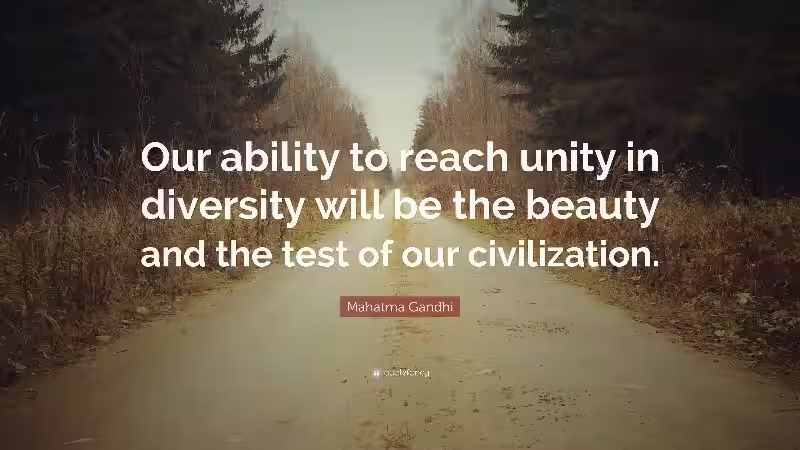
No, “Sisi ni Moja” does not advocate for the eradication of religious diversity or the adoption of a single religion. Instead, it calls for unity in diversity. It means acknowledging that while we may have different paths and beliefs, we are all part of the same human family and share a common destiny. The focus is on mutual respect and the recognition of shared ethical principles that transcend religious boundaries.
How can the “Sisi ni Moja” principle be applied in everyday life to promote religious harmony?
The “Sisi ni Moja” principle can be applied by actively seeking to understand and appreciate other religions. This can involve attending interfaith events, engaging in respectful conversations, challenging stereotypes, and standing in solidarity with those of different faiths who face discrimination. It means treating everyone with dignity and recognizing their inherent worth, regardless of their religious affiliation.
What are the benefits of embracing the “Sisi ni Moja” philosophy in religious communities?
Embracing the “Sisi ni Moja” philosophy brings numerous benefits, including:
* Reduced prejudice and discrimination: By seeing others as part of our shared humanity, we are less likely to fear or marginalize them.
* Increased social cohesion: It fosters a sense of community and belonging among people of different faiths.
* Cooperation on common goals: It enables collaboration on social justice issues, humanitarian efforts, and peacebuilding initiatives.
* Enrichment of understanding: Learning from different perspectives broadens our own spiritual and intellectual horizons.
* Promotion of lasting peace: By building trust and mutual respect, it contributes to a more peaceful and harmonious world.