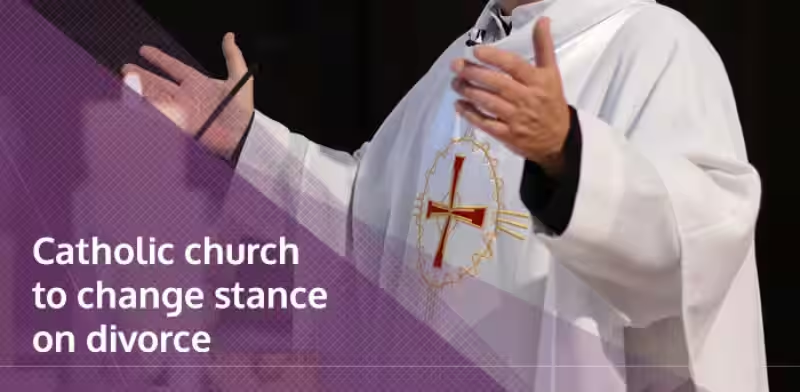
Marriage, in the eyes of the Roman Catholic Church, is a sacred and indissoluble sacrament. This foundational belief shapes its profound and often complex stance on divorce. For many, the journey of faith intersects with the painful reality of marital breakdown, leaving individuals grappling with deeply held religious convictions and the desire for peace and resolution. Understanding the Church’s perspective is not about judgment, but about offering clarity, compassion, and a pathway for those experiencing this difficult life event.
This article aims to explore the intricacies of the Roman Catholic Church and divorce, offering a comprehensive and relatable guide. We will delve into the theological underpinnings of the Church’s teaching on marriage, examine the distinction between civil divorce and sacramental annulment, and explore the pastoral care offered to those navigating these challenges. Our goal is to provide useful, relatable, and informative insights into a topic that touches the lives of many within the Catholic faith.
The Sacramental Nature of Marriage: A Covenant Before God
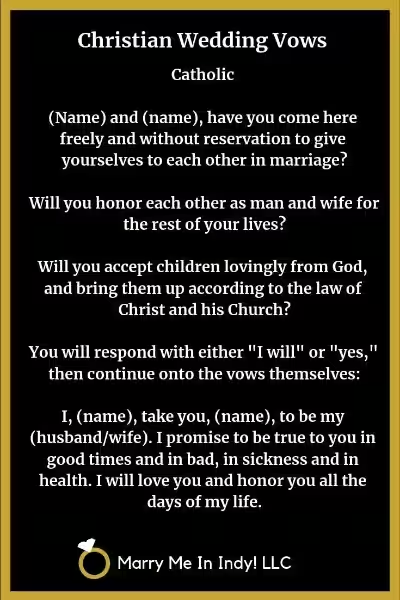
From a theological standpoint, marriage within the Roman Catholic Church is far more than a legal contract. It is understood as a covenant, a solemn promise entered into not only between two individuals but also between those individuals and God. This understanding is rooted in biblical teachings and the Church’s interpretation of Christ’s words on the sanctity of marriage, emphasizing its unbroken and permanent nature.
This sacrament is considered a reflection of the union between Christ and His Church, a profound symbol of unconditional love and fidelity. Consequently, the Church teaches that a valid, sacramental marriage, once entered into, cannot be dissolved by any human power, including divorce. This doesn’t mean the Church denies the reality of marital breakdown or the pain it causes, but rather it upholds a persistent ideal of marital permanence.
Understanding Civil Divorce vs. Sacramental Annulment
It is crucial to distinguish between a civil divorce and a sacramental annulment, as these are often conflated in discussions about the Roman Catholic Church and divorce. A civil divorce legally dissolves the marital contract in the eyes of the state, allowing individuals to remarry under civil law. However, from the Church’s perspective, this legal dissolution does not necessarily impact the sacramental bond of marriage.
A declaration of nullity, or annulment, on the other hand, is a formal process within the Church that determines whether a valid sacramental marriage ever truly existed in the first place. It is not a retroactive dissolution of a marriage, but rather a pronouncement that certain essential conditions for a sacramental marriage were absent at the time of the wedding vows. This means the couple was never, in the eyes of the Church, truly married sacramentally.
Grounds for Annulment: When a Sacramental Marriage May Not Have Been Valid
The process of seeking an annulment is not a casual endeavor; it involves a thorough investigation by the diocesan tribunal. The Church examines whether the marriage was entered into with the necessary freedom, understanding, and intention to be lifelong, faithful, and open to children. Several key areas are considered:
Lack of Consent: This could involve coercion, grave error about the other person or the nature of marriage, or a deliberate intention to exclude one of the essential goods of marriage (fidelity, indissolubility, or procreation). For instance, marrying someone with the secret intention of never having children would be a significant impediment.
Inability to Consent: This might include psychological immaturity, addiction, or mental illness to such a degree that a person could not truly understand or commit to the marital covenant. Imagine someone marrying while suffering from a severe, untreated mental disorder that fundamentally impaired their ability to form a lifelong bond.
Defective Form: The marriage ceremony itself must adhere to specific Church laws. If the proper form was not followed, and there was no dispensation from the bishop, the marriage might be considered invalid.
It is important to note that seeking an annulment is not about finding fault or assigning blame. It is a pastoral process aimed at discerning the truth about the marital bond and allowing individuals to move forward in their faith journey with clarity. The Roman Catholic Church approaches this with compassion and understanding for the individuals involved.
Pastoral Care and Support for Catholics Experiencing Divorce
The Roman Catholic Church recognizes the immense emotional, spiritual, and practical challenges that accompany divorce. While upholding its teachings on marriage, the Church remains committed to providing pastoral care and support to its members. This care extends to individuals, couples, and families navigating the aftermath of marital breakdown.
Parishes and diocesan organizations often offer resources such as support groups, counseling services, and spiritual direction. These initiatives aim to create a safe and understanding environment where individuals can process their experiences, find solace, and receive guidance on living out their faith. The Church’s pastoral approach is one of accompaniment, walking with individuals through their difficulties.
Living Faithfully After Divorce: Navigating Sacramental Life
For Catholics who have undergone a civil divorce, the question of their participation in the sacramental life of the Church often arises. The Church’s teaching on remarriage after divorce is intricately linked to its understanding of the indissolubility of marriage.
If a marriage is deemed sacramentally valid and has not been annulled, a divorced Catholic is generally considered still married in the eyes of the Church. In such cases, they are typically not permitted to receive Holy Communion or remarry sacramentally. This is a challenging aspect of the Church’s teaching, and it is often a source of pain and confusion.
If a marriage has been declared null by an annulment, then the individual is free to marry again within the Church. This requires going through the marriage preparation process once more.
The Roman Catholic Church encourages divorced individuals to remain actively involved in the life of the Church through prayer, participation in parish activities, and charitable works. The journey of faith is continuous, and opportunities for spiritual growth and connection abound, regardless of one’s marital status.
The Role of Compassion and Understanding
Ultimately, the Roman Catholic Church’s approach to divorce is a delicate balance between upholding its core doctrines and extending profound compassion and understanding to its members. The teachings on marriage are not designed to be punitive, but rather to articulate a vision of marital love that is both challenging and deeply fulfilling.
Navigating the intersection of faith and divorce can be a complex and emotional journey. It requires patience, prayer, and a willingness to engage with the Church’s teachings with an open heart. The Church offers a community of support and a rich tradition of spiritual guidance for those seeking to live faithfully through these challenging circumstances.
Frequently Asked Questions: Roman Catholic Church and Divorce
Can Roman Catholics get divorced?
While a civil divorce can be obtained, the Roman Catholic Church does not recognize divorce as dissolving a valid sacramental marriage. Catholics are free to seek a civil divorce for legal and practical reasons, but they are not permitted to remarry in the Church if their previous marriage is deemed valid by the Church.
What if a Catholic has been divorced and civilly remarried?
If a Catholic has been civilly divorced and remarried without an annulment from their previous marriage (which was deemed valid by the Church), they are generally considered to be in a state of sin and are therefore not permitted to receive Holy Communion or participate fully in the sacramental life of the Church. They are still considered married to their first spouse in the eyes of God and the Church.
What is an annulment?
An annulment, or a declaration of nullity, is a formal process by which the Church determines that a sacramental marriage was never valid from its inception due to a defect in consent or the absence of essential qualities for a sacramental union. It does not mean the marriage “didn’t happen,” but rather that the spiritual bond of marriage was never truly formed.
Can a divorced Catholic remarry in the Church?
A divorced Catholic can only remarry in the Church if their previous marriage has been declared null and void by an annulment process. If the previous marriage is deemed valid by the Church, they cannot remarry in the Church and must remain single or return to their first spouse if that spouse is alive and willing.
What is the Church’s stance on remarriage after the death of a spouse?
If a Catholic’s spouse dies, and their marriage was valid, they are free to remarry in the Catholic Church.
Does the Church discourage divorce?
Yes, the Roman Catholic Church views marriage as a lifelong and indissoluble covenant between a man and a woman, blessed by God. While the Church understands the difficulties that can lead to separation, it strongly discourages divorce as a solution and emphasizes the sanctity and permanence of marriage.
What if a Catholic is in a difficult or abusive marriage?
The Church recognizes that there are situations where separation is necessary for the safety and well-being of individuals and children, such as in cases of abuse. In such circumstances, a Catholic may separate from their spouse and pursue a civil divorce, but this does not alter their canonical status regarding remarriage within the Church unless an annulment is granted.