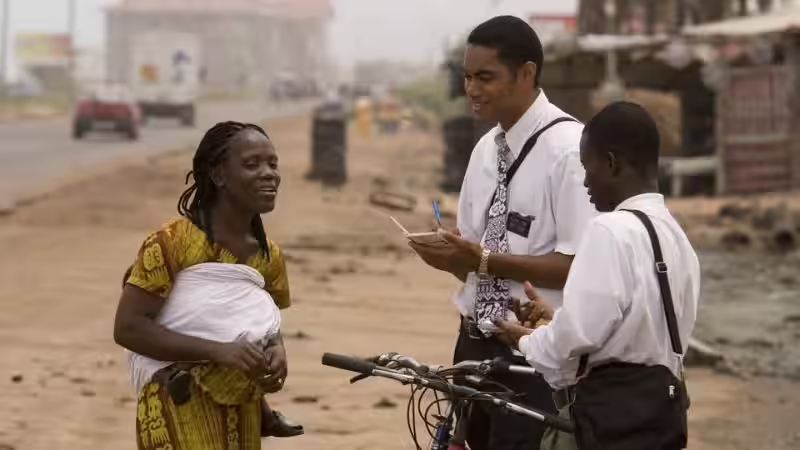
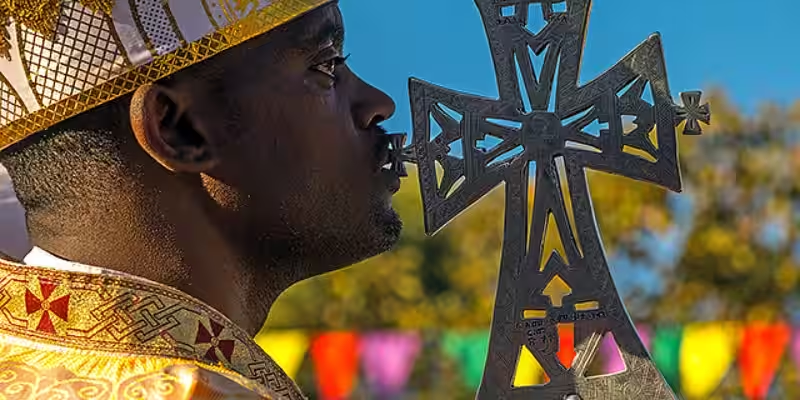
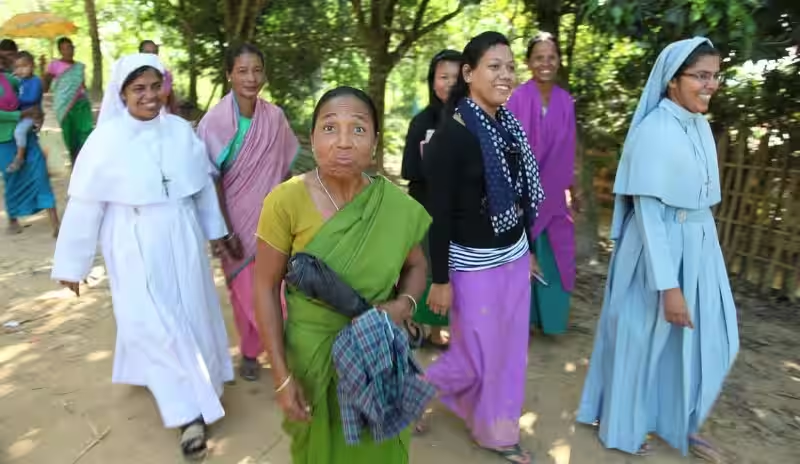
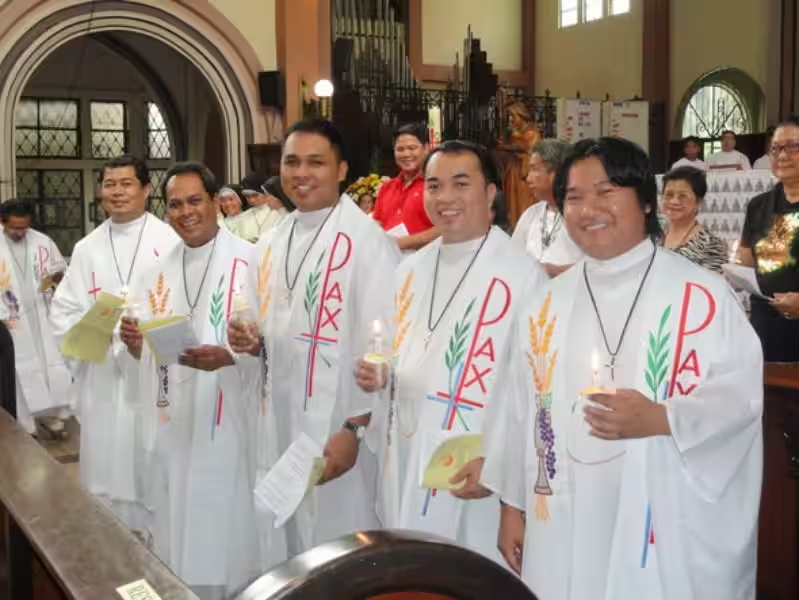
For centuries, the narrative of global religious expansion has often been told from a singular perspective, with stories of missionaries journeying out from Europe and North America to distant lands. Yet, this is a story with far richer, more complex, and increasingly vital chapters, written and lived by African missionaries. These individuals, driven by their own profound faith and a deep understanding of their cultural contexts, have become powerful agents of religious transformation, not just within Africa but across the globe. Their journey is not merely about spreading a creed; it’s about incarnating faith in diverse realities, fostering spiritual resilience, and redefining what it means to be a follower of God in the 21st century.
The impact of African missionaries on the global religious scene is a testament to the dynamism and outward-looking nature of faith that has blossomed within the continent. Often overlooked in historical accounts, these devoted individuals have been instrumental in establishing and nurturing Christian communities, adapting theological concepts to local idioms, and fostering a sense of spiritual ownership among their congregants. Their work is a continuous unfolding of a tapestry, woven with threads of tradition, innovation, and an unshakeable belief in the transformative power of their faith.
From Local Roots to Global Reach: The Genesis of African Missionary Endeavors
The impulse for African missionaries to share their faith is not a new phenomenon, though its scale and scope have dramatically increased in recent decades. Early forms of this mission were often deeply intertwined with the spread of Christianity itself across the continent. As African societies embraced the Gospel, many indigenous converts felt a profound calling to share this newfound spiritual truth with their neighbors, and eventually, with people beyond their immediate communities. This wasn’t about imposing foreign doctrines, but about sharing a deeply personal and transformative experience.
Think of it like discovering a powerful medicine that has cured a debilitating illness. The natural inclination, fueled by compassion, is to want to share that cure with others who are suffering. Similarly, African missionaries often felt a powerful urge to extend the spiritual healing and hope they had found. This early missionary spirit, though often operating on a smaller scale and within regional networks, laid the groundwork for the more expansive international movements we see today. It was a grassroots phenomenon, born from a genuine desire to connect and to serve.
The Rise of Indigenous Leadership and the Call to Witness
A pivotal shift in the landscape of religious expansion in Africa was the rise of indigenous leadership within established churches. As African clergy and theologians matured in their understanding and practice of Christianity, they began to feel a distinct call to step beyond their national borders. This wasn’t a rejection of Western missionary efforts, but rather a confident assertion of their own spiritual maturity and a recognition that their unique perspectives and experiences were valuable assets in global evangelism.
Consider the analogy of a student who has excelled in their studies. Eventually, they are not just content to learn; they feel a desire to teach, to contribute their knowledge, and to inspire others. This is akin to what happened with many African religious leaders. They had absorbed the teachings, wrestled with their meaning in their own cultural contexts, and were now ready to become ambassadors of their faith, carrying the light of their understanding to new horizons. This self-initiated call to witness is a hallmark of the modern African missionary movement.
Adapting the Message: Inculturation and Contextualization
One of the most profound contributions of African missionaries is their unparalleled ability to inculturate and contextualize their faith. Unlike missionaries from different cultural backgrounds who might struggle to bridge the gap between Western theological frameworks and local African realities, African missionaries possess an innate understanding of their target audiences. They can speak the language, understand the nuances of social structures, and draw upon existing cultural idioms to explain complex spiritual concepts in ways that resonate deeply.
For instance, when explaining the concept of sacrifice, a Western missionary might rely on abstract theological discussions. An African missionary, however, might draw parallels to traditional practices of offering gifts or sacrifices to appease deities or honor ancestors, making the Christian message of Christ’s ultimate sacrifice far more accessible and relatable. This “speaking the same language”, not just linguistically but culturally and spiritually, is a superpower of African missionaries, ensuring that the Gospel is not just heard, but truly understood and embraced.
The Global Footprint: Beyond Africa’s Shores
The impact of African missionaries is no longer confined to the African continent. Increasingly, these devoted individuals are venturing out to other parts of the world, carrying their faith and their unique perspectives with them. This outward migration of religious influence is a significant testament to the vitality and dynamism of Christianity in Africa, and it is reshaping religious landscapes in unexpected places.
The reasons for this global reach are multifaceted. Many African missionaries feel a divine imperative to share what they believe has transformed their own lives and communities. Others are responding to calls for help from struggling Christian communities in other parts of the world, offering support, leadership, and spiritual guidance. Whatever the motivation, their presence is making a tangible difference, injecting new energy and perspectives into established religious traditions and fostering the growth of new ones.
Serving in Diaspora Communities: A Bridge Between Worlds
A significant area of focus for African missionaries is serving within diaspora communities in the West and other global cities. As Africans migrate for economic, political, or educational reasons, they often seek out religious communities that reflect their cultural heritage and provide a sense of belonging. African missionaries play a crucial role in establishing and nurturing these churches, offering spiritual comfort, cultural continuity, and a vital support network for newcomers.
Imagine arriving in a new country where everything is unfamiliar. Finding a place of worship that speaks your language, understands your traditions, and welcomes you with open arms can be an incredibly grounding experience. African missionaries provide this sanctuary, acting as a bridge between worlds, helping individuals maintain their spiritual identity while navigating a new cultural landscape. They often organize social events, provide language assistance, and offer guidance on navigating local customs, becoming pillars of support for their communities.
Contemporary Challenges and Innovations in Mission
The work of African missionaries today is not without its challenges. They often face financial limitations, visa restrictions, and the need to navigate diverse cultural and religious contexts with sensitivity. However, these challenges have also spurred incredible innovation and resilience. Many African missionaries are leveraging technology to connect with supporters, share their message, and provide virtual support to congregations.
Platforms like social media, video conferencing, and online giving are becoming essential tools for modern missionaries. This allows them to maintain stronger connections with their home churches and their global networks of supporters, fostering a sense of shared mission despite geographical distances. Furthermore, African missionaries are increasingly engaging in cross-cultural dialogues, working collaboratively with missionaries from other backgrounds to address global issues such as poverty, injustice, and the impact of climate change, demonstrating a commitment to a holistic approach to mission.
The Future of Faith: A Collaborative and African-Led Vision
The growing influence of African missionaries signals a significant and exciting evolution in the global religious narrative. It is a move away from a unidirectional flow of religious ideas and towards a more collaborative and multi-directional exchange. This shift promises to enrich faith traditions worldwide, making them more inclusive, relevant, and responsive to the diverse needs of humanity.
The story of African missionaries is far from over; it is a living, breathing testament to the enduring power of faith and the remarkable capacity of individuals to transcend boundaries in its service. As we look to the future, we can anticipate a landscape where African perspectives and leadership will play an increasingly prominent role in shaping the global religious conversation, fostering a more equitable and vibrant expression of faith for all. Their journey is a constant reminder that the heart of religion beats in diverse rhythms, and that the most profound transformations often emerge from the most unexpected, yet deeply faithful, sources.
Frequently Asked Questions about African Missionaries and Religion
What roles have African missionaries played in spreading religion in Africa and beyond?
African missionaries have been instrumental in the evangelization and growth of various religious traditions across the African continent and in diasporic communities. They have often served as bridges between local cultures and imported religious doctrines, adapting and contextualizing faith in unique ways. Beyond Africa, some have engaged in missionary work in other parts of the world, contributing to the global diversity of religious expression.
How have African missionaries adapted religious practices to local cultural contexts?
African missionaries have a rich history of indigenizing religious practices. This can involve incorporating traditional music, dance, art, and storytelling into worship services. They may also reinterpret theological concepts through the lens of African philosophies and cosmologies, leading to unique expressions of faith that resonate with local communities. For instance, this might involve integrating local healing traditions or addressing social issues through a religious framework.
What are some of the challenges faced by African missionaries?
African missionaries often face a range of challenges. These can include limited financial and material resources, geographical barriers and difficult travel conditions, cultural misunderstandings and resistance to new religious ideas, and sometimes political instability or conflict in the regions where they serve. They may also grapple with the legacy of colonialism and its impact on religious institutions.
How has the rise of African Christianity and Islam influenced global religious landscapes?
The dynamic growth of Christianity and Islam in Africa has significantly reshaped global religious demographics and theological discourse. African interpretations of these faiths, often characterized by vibrant worship, syncretism, and a strong emphasis on community and social justice, are increasingly influencing religious practices and thought worldwide. This has led to a more decentralized and diverse global religious landscape.
What is the relationship between African missionaries and traditional African religions?
The relationship between African missionaries and traditional African religions is complex and varied. In some instances, missionary efforts led to the abandonment or suppression of traditional beliefs. However, in other cases, there has been a process of syncretism or adaptation, where elements of traditional religions have been integrated into Christian or Islamic practices. Many African missionaries today also seek to understand and engage respectfully with existing traditional spiritualities, recognizing their cultural significance.