In the tapestry of religion, the concept of saints holds a unique and profound place. Far from being dusty historical figures confined to ancient texts, saints represent a living, breathing connection to the divine, offering guidance, inspiration, and even tangible presents to believers across generations. For many, encountering the stories and intercessions of saints feels less like a historical lesson and more like receiving a spiritual gift, a personal touch from the heavens that enriches their faith journey. Understanding the role of saints, and the ways in which their legacy continues to manifest, can unlock a deeper appreciation for the multifaceted nature of religious devotion.
The very idea of sainthood is rooted in the pursuit of holiness and a life dedicated to God. Saints are individuals who, through their exemplary lives, profound faith, and often extraordinary sacrifices, have been recognized for their closeness to the divine. Their stories serve as powerful narratives, demonstrating the possibilities of human virtue and the transformative power of faith. These are not abstract ideals; they are relatable individuals who navigated the complexities of life, experienced joy and sorrow, and ultimately chose a path of unwavering devotion. Their legacies, far from being relics of the past, continue to be a source of comfort and strength for countless individuals seeking to live a more meaningful and spiritually enriched life.
The Nature of Saints: Divine Intermediaries and Inspirations
When we speak of saints in religion, we’re not just talking about historical figures. We’re acknowledging individuals whose lives were so aligned with divine principles that they are believed to hold a special place in the heavenly realm. This belief positions them as divine intermediaries, individuals who can intercede on our behalf, bringing our prayers and petitions before God. Think of it like having a trusted friend who knows someone important; their recommendation can carry significant weight. For believers, approaching a saint is an act of faith, a hope that their virtuous life has earned them the ear of the Almighty.
The impact of saints extends far beyond mere intercession; they are profound sources of inspiration. Their biographies are filled with accounts of courage in the face of adversity, unwavering compassion for the suffering, and a deep commitment to their spiritual path. When we feel lost or discouraged, reflecting on the struggles and triumphs of saints can offer a much-needed spiritual boost. For instance, the story of Saint Francis of Assisi, who renounced worldly possessions to embrace a life of poverty and care for the poor and animals, continues to inspire environmentalists and humanitarians alike. These narratives are not just historical accounts; they are living testaments to the power of conviction and the enduring impact of a life well-lived, presenting us with spiritual gifts of resilience and purpose.
Saints’ Presents: Tangible and Intangible Spiritual Gifts
The idea of saints presents might conjure images of physical objects, but the reality is much richer and more varied. While relics, images, and even objects touched by saints are revered and considered sacred gifts, the most impactful presents are often intangible. These spiritual gifts manifest as answered prayers, moments of profound peace, a renewed sense of hope, or a sudden clarity of purpose. When a believer faces a difficult situation and finds unexpected strength or a path forward, they might attribute this to the intercession of a particular saint, feeling as though they have received a direct gift from the heavens.
Consider the experience of someone struggling with a nagging doubt or a persistent fear. They might turn to Saint Jude, the patron saint of lost causes, or Saint Anthony, known for helping find lost items, not just physical ones but also lost hope or direction. The subsequent feeling of calm, the resolution of the problem, or the emergence of a solution can be perceived as a saint’s present, a tangible manifestation of divine assistance channeled through their intercession. These are not merely coincidences; for believers, they are divine interventions, carefully bestowed spiritual gifts that reaffirm their faith and the presence of God in their lives.
The Devotional Landscape: How Religion Embraces Saints
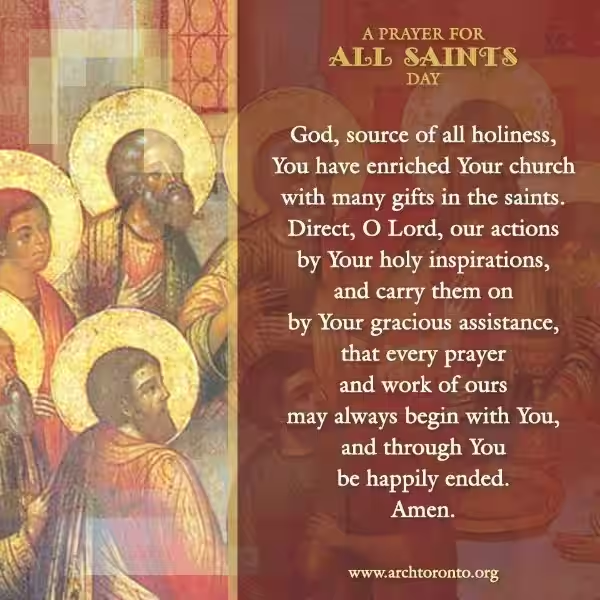
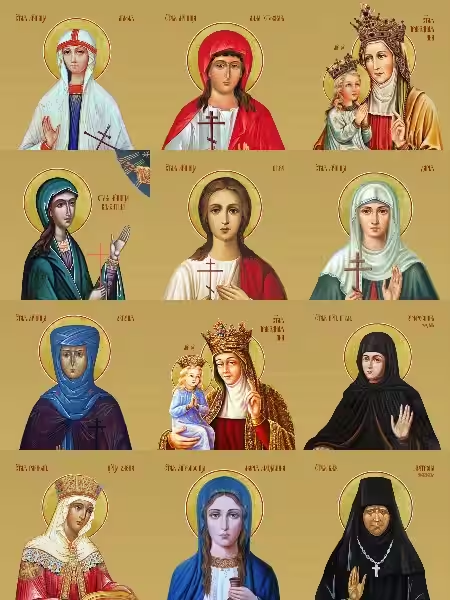
The role of saints is deeply woven into the devotional landscape of many religions, particularly within Christianity and its various denominations. Churches are often adorned with statues and icons of saints, serving as visual reminders of their presence and their role as intercessors. Feast days dedicated to specific saints are observed with special services, prayers, and sometimes even cultural traditions that have evolved over centuries, presenting a calendar rich with spiritual gifts to celebrate. These observances are not simply historical commemorations; they are active engagements with the spiritual realm, opportunities to connect with these holy individuals.
The practice of devotion to saints often involves personal prayer and petition. Believers might light candles before an image of a saint, recite specific prayers or novenas (nine days of prayer), or wear medals bearing their likeness. These acts are outward expressions of an inner reliance on the saint’s intercession. For example, a parent praying for the healing of a sick child might implore the aid of Saint Peregrine, the patron saint of those suffering from cancer, believing that their prayers, amplified by the saint’s intercession, will be more readily heard. This active participation in religious practice transforms the abstract concept of sainthood into a dynamic and personal relationship, offering a continuous stream of saints presents in the form of answered prayers and spiritual solace.
The Enduring Legacy: Saints as Timeless Gifts in a Changing World
In our rapidly evolving world, the presence of saints within religion offers a profound sense of continuity and spiritual anchor. Their stories, rooted in timeless virtues like love, compassion, and faithfulness, remain as relevant today as they were centuries ago. They remind us that despite technological advancements and societal shifts, fundamental human struggles and aspirations endure. The enduring legacy of saints is not just about their historical significance; it’s about their continuing role as timeless gifts that guide and comfort us.
Whether one seeks strength to overcome personal challenges, inspiration to live a more virtuous life, or simply a feeling of divine connection, the communion of saints offers a rich and accessible avenue. The belief that these holy individuals continue to care for and intercede for humanity is a powerful testament to the enduring nature of divine love and the spiritual presence that permeates our lives. Every prayer offered, every act of kindness inspired by their example, can be seen as a present received from the saints, a continuous flow of spiritual gifts that enrich the human experience within the framework of religion.
Frequently Asked Questions: Saints Presents and Religion
What is the significance of giving gifts in relation to saints and religion?
In many religious traditions, particularly Christianity, the act of giving gifts can be seen as an expression of devotion, gratitude, or a way to honor a saint or a religious figure. It can also be a way to share blessings or to support religious institutions. Historically, offerings and gifts were common practices in ancient religions, and these traditions have often carried over into modern religious observances.
Are there specific types of gifts considered appropriate when related to saints or religious figures?
The appropriateness of gifts often depends on the specific saint, religious tradition, and the context of the gift-giving. Generally, gifts that are symbolic of faith, devotion, or the saint’s life are considered suitable. This can include religious items like rosaries, prayer cards, icons, statues, candles, books on spirituality or the lives of saints, or donations to charities associated with a particular saint or religious cause.
Can I give a “saint present” as a secular gift?
While the term “saint present” specifically refers to gifts with religious or devotional significance, the concept can be adapted for secular gift-giving. For example, if someone admires a historical figure known for a particular virtue (like courage or kindness), a gift that symbolizes that virtue could be given in their honor, drawing inspiration from the idea of honoring a saint. However, it’s important to be mindful of the religious connotations if the recipient is not religious.
How does the concept of saints relate to gift-giving in different religions?
The concept of saints is most prominent in Christianity, particularly Catholicism and Orthodoxy. Here, saints are venerated as holy individuals, and gifts or offerings might be made at their shrines or in their name. In other religions, while the term “saint” might not be used in the same way, there are often revered figures, prophets, or spiritual leaders. Practices of honoring these figures can involve acts of devotion, charitable giving, or offerings, which share a similar spirit to giving “saints presents.”
Are there any taboos or things to avoid when giving gifts related to saints or religion?
When giving religious gifts, it’s important to be respectful of the recipient’s beliefs and practices. Avoid giving items that are disrespectful, of poor quality, or that might be considered idolatrous within their specific religious framework. For example, if a person adheres to a religion that prohibits images, a statue would be inappropriate. It’s always a good idea to have some understanding of the recipient’s faith or to opt for more general symbolic gestures like charitable donations if unsure.