In the tapestry of Christian devotion, certain practices stand out for their profound spiritual depth and accessibility. Among these, the Holy Face Chaplet holds a special place, offering a powerful yet simple way to connect with the profound love and suffering of Jesus Christ. This devotional prayer, often overlooked in favor of more widely known rosaries, provides a unique avenue for experiencing God’s mercy and growing in holiness. It’s more than just a string of beads; it’s a pathway to inner transformation, a tool for deepening one’s faith, and a testament to the enduring power of prayer.
For many, the concept of a “chaplet” might sound unfamiliar or even a bit daunting. However, at its heart, the Holy Face Chaplet is a structured prayer that guides the individual through meditations on the suffering of Jesus, particularly as depicted on His Holy Face. This devotional practice invites us to contemplate the immense sacrifice He made for humanity, fostering a sense of gratitude, repentance, and ultimately, a more intimate relationship with Him. Whether you are a seasoned practitioner of Catholic prayer or someone seeking a new spiritual discipline, the Holy Face Chaplet offers a rich and rewarding experience.
The devotion to the Holy Face of Jesus is rooted in a profound desire to honor the sacred humanity of Christ and to seek reparation for the sins that wound His divine heart. It’s about looking beyond the physical suffering to the unconditional love that motivated it. The image of the Holy Face, often derived from the Shroud of Turin or other traditional depictions, serves as a visual anchor for our prayers, reminding us of the divine countenance that gazed upon us even in His deepest agony. This focus on the face is particularly poignant because the face is often seen as the mirror of the soul, revealing our innermost emotions and intentions.
The historical roots of this devotion are often traced back to Sister Maria Pierina De Micheli, a nun who received visions from Jesus in the early 20th century. He reportedly asked for a special devotion to His Holy Face, emphasizing its role in atoning for blasphemy and sacrilege, sins that deeply grieve His Sacred Heart. The Holy Face Chaplet emerged as a central element of this devotion, providing a tangible way for individuals to participate in this act of love and reparation. It’s a call to embrace a deeper understanding of Christ’s suffering, not as a morbid fascination, but as an act of profound empathy and solidarity with His redemptive mission.
The Call to Reparation and Divine Mercy
The core of the Holy Face Chaplet devotion lies in the concept of reparation. This isn’t about “earning” God’s favor, but rather about freely offering our prayers and sacrifices as a balm to the wounds inflicted by sin. It’s a way of saying, “Lord, I see Your suffering, and I offer You my love and sorrow in return for the indifference and malice of the world.” This act of spiritual solidarity with Christ’s Passion brings comfort to His Sacred Heart and opens the floodgates of His boundless mercy upon us and upon the world.
The promise associated with this devotion is significant: Jesus Himself is said to have promised abundant graces to those who practice the Holy Face Chaplet. These graces often include inner peace, strength in trials, and a deeper sense of God’s presence. It’s a reminder that God’s mercy is not a distant concept but a tangible reality that we can access through sincere prayer. By focusing on the suffering depicted in the Holy Face, we open ourselves to receiving the healing balm of His mercy, transforming our hearts and lives in the process.
Understanding the Structure of the Holy Face Chaplet
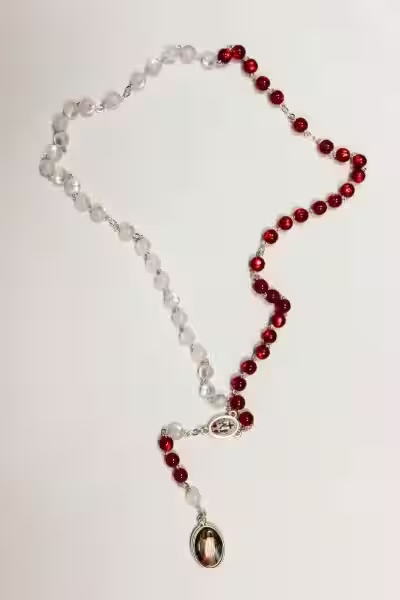
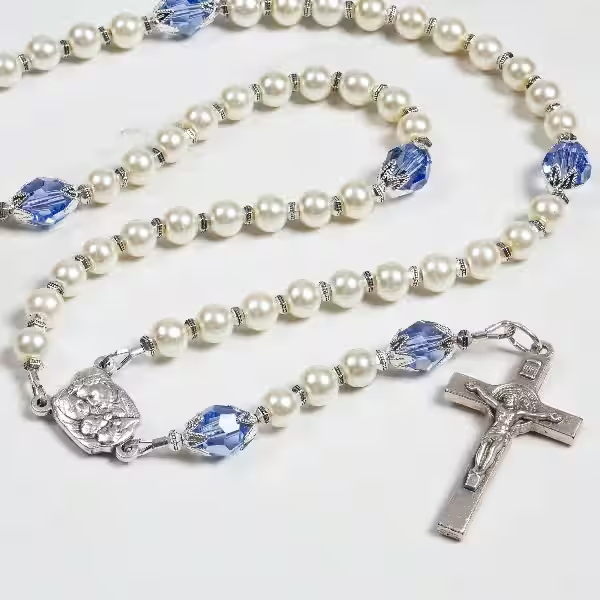
The Holy Face Chaplet is crafted with a specific structure that facilitates meditation and prayer. It typically consists of a medal of the Holy Face, attached to a cord or chain, from which hang a crucifix and a series of beads grouped in sets of six. This design is intentionally different from the traditional rosary, highlighting its unique focus. The arrangement of the beads and the prayers associated with them are designed to guide the supplicant through a contemplative journey of Christ’s suffering and the attributes of His divine countenance.
The prayers themselves are profound, often echoing the sentiments of the Shroud of Turin and the visions granted to Sister Maria Pierina. They typically begin with an act of faith and an offering, followed by a series of prayers of contrition and petition. Each set of six beads is prayed with a specific invocation, such as “May the most holy, most adorable, most incomprehensible and ineffable name of God be blessed, loved, adored, and glorified throughout all eternity, now and forever.” This repetitive yet meaningful invocation helps to anchor the mind and heart in the prayer, allowing for deeper contemplation.
The Prayers and Meditations
The Holy Face Chaplet unfolds through a series of specific prayers. It usually begins with the Creed, followed by an act of contrition. Then, on the crucifix, the prayer “O Jesus, by Your Cross and Passion, have mercy on us and on the whole world” is recited. The medals within the chaplet are often used for the invocation “Holy Face of Jesus, be our advocate; have mercy on us,” repeated six times. This repeated invocation for the Holy Face to be our advocate is a powerful plea for divine intercession, recognizing the supreme power of Christ’s suffering to plead our cause before the Father.
The beauty of the Holy Face Chaplet lies in its simplicity and its directness. It doesn’t require complex theological knowledge, but rather an open heart and a willingness to engage with the suffering love of Jesus. The prayers are designed to kindle a spirit of penitence and gratitude, fostering a deeper appreciation for the sacrifice made for us. By meditating on the wounds and the sorrow etched on the Holy Face, we are invited to participate in His redemptive work, offering our own small acts of love and reparation in solidarity with His immense sacrifice.
Integrating the Holy Face Chaplet into Daily Life
Incorporating the Holy Face Chaplet into your daily routine doesn’t have to be an overwhelming task. Even a few minutes of dedicated prayer can yield significant spiritual benefits. Think of it as a spiritual anchor, a way to reconnect with God amidst the busyness of life. It can be prayed during your morning commute, while taking a break from work, or before retiring for the night. The key is consistency, even if it’s just one round of the chaplet each day.
Many find it helpful to set aside a specific time each day for this devotion, perhaps as part of their morning or evening prayers. Some might choose to pray the Holy Face Chaplet during the traditional hours of the Passion, like at 3 p.m., the hour of mercy. Others may find comfort in praying it during times of personal struggle or when they feel a particular need for God’s intercession. The Holy Face Chaplet is a versatile tool, adaptable to individual needs and circumstances, always offering a direct line to divine grace.
Finding Peace and Strength Through Devotion
The practice of the Holy Face Chaplet offers a profound sense of inner peace and spiritual strength. By contemplating Christ’s suffering, we gain perspective on our own trials and difficulties. We realize that we are not alone in our struggles, but that Jesus has already walked the path of suffering and offers us His unwavering support. This devotional practice can be a powerful antidote to anxiety and despair, fostering a deeper trust in God’s providence.
The Holy Face Chaplet is more than just a prayer; it is a transformative encounter with the love and mercy of Jesus. It invites us to look upon His suffering face, not with sadness, but with a profound understanding of His love for us. Through this devotion, we can find solace, hope, and the strength to live a life that honors His sacrifice. It is a beautiful invitation to draw closer to the heart of Christ, experiencing the boundless depth of His mercy and love.
Frequently Asked Questions about the Holy Face Chaplet
What is the Holy Face Chaplet?
The Holy Face Chaplet is a devotion that honors the suffering and passion of Jesus Christ, specifically focusing on His Sacred Face, which was so cruelly disfigured during His Passion. It is a powerful prayer aimed at offering reparation and seeking mercy through the merits of Christ’s suffering.
What is the purpose of praying the Holy Face Chaplet?
The primary purpose is to offer reparation for sins that wound the Sacred Face of Jesus, such as blasphemy, impurity, and the desecration of the Lord’s Day. It is also prayed to obtain mercy, peace, and the conversion of sinners.
How is the Holy Face Chaplet prayed?
The Holy Face Chaplet is typically prayed using a special chaplet that consists of specific beads. It involves a series of prayers, including the “O Jesus, Our Joy, Our Love, Our Hope,” “O Jesus, Your Divine Face is the only adoration I ask for,” and the Creed, Our Father, Hail Mary, and Glory Be. The exact structure can be found in prayer books or online resources dedicated to the devotion.
When did the devotion to the Holy Face originate?
The devotion officially began with the revelations of Jesus to Sister Marie of St. Peter, a Carmelite nun in Tours, France, in the mid-19th century. Jesus asked for a special devotion to His Holy Face to make reparation for blasphemies and insults against Him.
What are the promises associated with praying the Holy Face Chaplet?
According to the revelations to Sister Marie of St. Peter, several promises are attached to this devotion. These include the conversion of many sinners, the protection of homes from divine chastisement, and special graces during life and at the hour of death for those who honor His Holy Face.
Can anyone pray the Holy Face Chaplet?
Yes, anyone who desires to honor the suffering of Jesus Christ and offer reparation for sins is welcome to pray the Holy Face Chaplet. It is a devotion open to all within the Catholic faith and those who are drawn to it.
Is the Holy Face Chaplet part of Catholic doctrine?
While the devotion to the Holy Face has received strong encouragement and approval from various Popes and Church authorities, including the establishment of the Archconfraternity of the Holy Face, it is considered a private revelation and devotion. It is a rich and spiritually beneficial practice within the Catholic tradition, but not an article of dogma.