The journey of recovery is often described as a profound spiritual awakening, a rediscovery of purpose and connection that transcends the everyday. Within the framework of Alcoholics Anonymous (AA) and its kindred programs, the 12th Tradition stands as a silent, yet powerful, guiding principle. It speaks not of dogma or specific religious creeds, but of a spiritual essence that underpins the entire recovery movement. For many, understanding and embracing the spirit of this tradition can unlock a deeper, more enduring sense of peace and belonging, regardless of their individual religious beliefs.
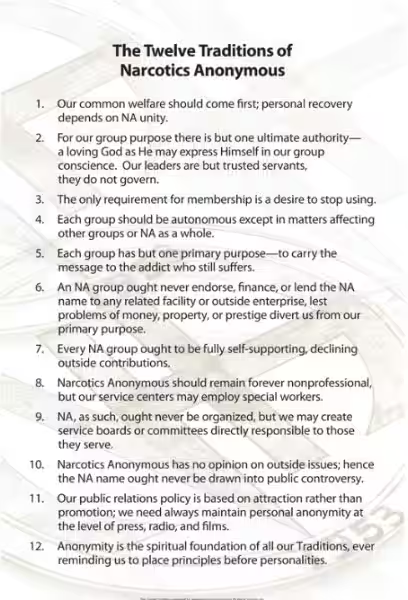
The 12th Tradition itself is elegantly simple: “Anonymity is the spiritual foundation of all our traditions, ever reminding us to place principles before personalities.” While its primary function is to protect the identity of members and the program’s integrity, its deeper meaning resonates with the core of religious experience. It’s about surrendering ego, recognizing that the work of recovery is far greater than any individual, and that a higher power, however one conceives it, is the true driving force.
Understanding the “Spiritual Foundation” of the 12th Tradition
The phrase “spiritual foundation” is key here. It doesn’t necessitate adherence to any particular religious doctrine. Instead, it points to a universal spiritual reality that many find in their recovery. Think of it like a grand, interconnected web of life. The 12th Tradition asks us to remember that we are all part of this web, and that our individual contributions, while important, are magnified when we operate from a place of humility and selflessness. This resonates deeply with many religious teachings that emphasize the importance of community, service, and the transcendence of the individual self for a greater good.
For someone new to recovery, the concept of a “higher power” can be intimidating if they’ve had negative experiences with organized religion. However, the beauty of the 12th Tradition lies in its inclusivity. It encourages each individual to find their own understanding of this power. For some, it might be God as they understand Him. For others, it could be the collective consciousness of their recovery group, the forces of nature, or even the inherent goodness within humanity. The crucial element is the willingness to believe in something larger than oneself. This willingness is itself a spiritual act, a step towards opening oneself to healing and transformation.
The Principle of Anonymity: More Than Just Secrecy
At its surface, the 12th Tradition is about anonymity. This means members don’t reveal their identities as members of the program to the public. This principle serves several vital purposes. Firstly, it protects individuals from potential stigma or judgment. Secondly, it prevents the program from becoming associated with any particular celebrity or public figure, which could dilute its universal message. Thirdly, and most importantly for our discussion, it emphasizes the principle of placing principles before personalities. This is where the spiritual aspect truly shines.
When anonymity is honored, the focus shifts from who is speaking to what is being said. The message of hope and recovery becomes paramount. This mirrors the essence of many religious traditions where the teachings and the divine are placed above the individual preacher or leader. Imagine a beautiful song; while the singer is important, the true power lies in the melody and lyrics. Similarly, in recovery, the principles of self-acceptance, honesty, and mutual support are the “melody” that guides us, and our individual personalities should not overshadow this fundamental truth. This selfless act of yielding personal recognition is a profound spiritual discipline.
Connecting the 12th Tradition to Personal Religious Practices
For individuals who already have a religious background, the 12th Tradition offers a bridge to integrate their faith into their recovery journey. Many religions advocate for humility, service, and the recognition of a divine presence. The 12th Tradition’s emphasis on anonymity and placing principles before personalities aligns perfectly with these values. For example, a Christian might see the anonymity of the 12th Tradition as an echo of Jesus’ teachings on humility and serving others without seeking recognition. A Buddhist might find resonance in the concept of detachment from ego and the pursuit of enlightenment, which is aided by the selfless nature of the tradition.
The spiritual foundation of the 12th Tradition provides a common ground for people of diverse religious beliefs. It encourages a shared experience of spiritual growth without requiring conformity to any single dogma. This is a radical concept in the history of human spiritual exploration. Think of a bustling marketplace where people from all walks of life gather to trade. The 12th Tradition creates a similar space for recovery, where the shared desire for healing and a connection to something greater unites individuals, regardless of their specific “spiritual currency.” This emphasis on universal spiritual principles is what makes programs guided by the 12 Traditions so enduringly effective.
Practical Applications of the 12th Tradition in Daily Life
The 12th Tradition isn’t just an abstract concept; it has practical implications for how we live our lives, both within and outside of recovery meetings. By internalizing the principle of “placing principles before personalities,” we can cultivate a more compassionate and less judgmental approach to ourselves and others. When we see someone struggling, instead of focusing on their perceived flaws, we can focus on the underlying principle of human suffering and the need for support. This shift in perspective can transform our interactions and strengthen our relationships.
Consider a simple scenario: a colleague makes a mistake at work. Instead of immediately criticizing them, the spirit of the 12th Tradition prompts us to consider the principle of empathy and understanding. We might recall our own past errors and the help we received. This doesn’t mean condoning mistakes, but rather approaching them with a gentle spirit and a focus on learning and growth. This application of the tradition extends to our personal relationships, encouraging us to prioritize honesty, kindness, and accountability over ego-driven defenses or the need to be “right.” This conscious effort to live by principles, rather than by personal whims or the desire for validation, is a profound spiritual practice that can lead to inner peace and greater effectiveness in all aspects of life.
The Universal Appeal of the 12th Tradition’s Spirituality
The enduring strength of the 12th Tradition lies in its universal appeal. It speaks to a fundamental human need for meaning, connection, and transcendence. Whether one identifies as religious, spiritual, or agnostic, the core message of humility, service, and reliance on a power greater than oneself resonates deeply. This is why the principles of AA and similar programs have spread across cultures and continents, offering hope to millions.
The spiritual foundation it provides is not about adhering to a specific set of rules, but about cultivating a mindset of openness and surrender. It’s about recognizing that true strength lies not in individual might, but in collective wisdom and divine guidance. This understanding liberates us from the burden of trying to control everything and allows us to tap into a boundless source of strength and resilience. By embracing the spirit of the 12th Tradition, individuals can embark on a path of profound personal growth and spiritual discovery, fostering a sense of purpose and belonging that can last a lifetime.
Frequently Asked Questions About the 12th Tradition, Religion, and Spirituality
This section addresses common questions regarding the relationship between the 12 Traditions of Alcoholics Anonymous (and similar recovery programs) and religious or spiritual beliefs.
What does the 12th Tradition mean by “principles”?
The 12th Tradition states, “Anonymity is the spiritual foundation of all our Traditions, ever reminding us to place principles before personalities.” The “principles” referred to are the core values and guiding beliefs that underpin the recovery program. These principles emphasize humility, service, honesty, compassion, and spiritual growth, rather than focusing on individual leaders or personalities.
Does the 12th Tradition require belief in a specific religion?
No, the 12th Tradition, and indeed the entire 12-step program, does not require belief in any specific religion. The concept of a “Higher Power” is intentionally broad and can be interpreted by each individual according to their own understanding. This could be God as understood by a particular religion, or it could be a non-religious conception of a guiding force, the collective group, nature, or even one’s own inner strength.
How does the 12th Tradition’s emphasis on principles relate to religious beliefs?
The 12th Tradition’s emphasis on principles aligns with the ethical and moral teachings found in many religions. The core principles of humility, service, and selflessness are often central tenets of religious doctrines. For those with religious beliefs, their faith can serve as a framework for understanding and practicing these principles within their recovery journey.
Can someone with strong religious beliefs still adhere to the 12th Tradition?
Absolutely. In fact, many individuals find that their religious beliefs enhance their ability to live by the principles of the 12th Tradition. Their faith can provide a strong foundation for concepts like surrender, seeking guidance, and practicing compassion. The key is that their personal religious understanding of a Higher Power is respected, and they do not attempt to impose it on others within the fellowship.
What if someone’s religion prohibits alcohol or certain behaviors associated with recovery?
The 12-step program is designed to be inclusive. While it encourages sobriety and a spiritual awakening, it respects individual religious freedom. If a person’s religious beliefs present a conflict with certain aspects of the program, they are encouraged to find a way to integrate their recovery with their faith. Often, this involves focusing on the spirit of the principles rather than literal interpretations, or finding support within their religious community that complements their recovery efforts.
How does the 12th Tradition’s anonymity principle interact with sharing one’s religious beliefs?
The 12th Tradition’s emphasis on anonymity at the level of press, radio, and film is about protecting individuals and the program from public notoriety. It encourages members to focus on the message of recovery and the principles rather than personal fame. When sharing in meetings, members are free to discuss their spiritual journey and beliefs as they relate to their recovery, but they are also encouraged to do so without promoting a specific religious doctrine or seeking personal recognition.
Is it appropriate to discuss religion in 12-step meetings?
Yes, it is appropriate to discuss spirituality and how one’s concept of a Higher Power (which may be religious) helps in recovery. However, it is not appropriate to proselytize or try to convert others to a particular religion or belief system. The focus should remain on shared experiences of seeking help and finding recovery through spiritual principles.
What is the difference between “religion” and “spirituality” in the context of the 12th Tradition?
While often used interchangeably, “religion” typically refers to an organized system of beliefs and practices, often with established doctrines and rituals. “Spirituality,” in the context of the 12th Tradition, is a broader, more personal concept of connection to something larger than oneself, a search for meaning, and a sense of purpose. The program is designed to be accessible to both the religiously affiliated and those who identify more with a personal spiritual path.