In the ever-evolving landscape of religious practice and biblical scholarship, understanding the text that underpins our faith is paramount. For many in the Catholic Church, the New American Bible Revised Edition (NABRE) has become a cornerstone for personal study, liturgical readings, and communal prayer. This comprehensive revision represents a significant undertaking, aiming to bring the ancient scriptures to life for contemporary readers, making the Word of God more accessible and understandable than ever before. It’s not just a book; it’s a bridge connecting the wisdom of the past with the questions and challenges of the present.
The journey to the NABRE was a deliberate and prayerful process, built upon decades of dedicated work by scholars and theologians. Their goal was to present the Bible in a way that honors its sacred origins while speaking directly to the hearts and minds of people today. This commitment to accuracy, clarity, and spiritual depth is what makes the New American Bible Revised Edition (NABRE) such a valuable resource for anyone seeking to deepen their relationship with God and explore the rich tapestry of biblical narratives.
To truly appreciate the significance of the New American Bible Revised Edition (NABRE), it’s helpful to understand its lineage. The original New American Bible (NAB), first published in its complete form in 1970, was a groundbreaking translation. It aimed to move away from more archaic language, embracing a more modern and understandable English. This was a crucial step in making the Bible more relatable to a wider audience, particularly within the context of Catholic worship and personal devotion. The NAB represented a significant shift, and its impact was felt across Catholic communities.
However, as biblical scholarship continued to advance and our understanding of ancient languages and historical contexts deepened, the need for further refinement became apparent. The revision process that led to the New American Bible Revised Edition (NABRE) was extensive, involving meticulous review and updating of the translation, as well as the inclusion of revised introductions and notes. This commitment to ongoing scholarship ensures that the NABRE remains a living and relevant translation, reflecting the latest insights while maintaining the integrity of the original texts and the Church’s teachings. It’s a testament to the enduring power of scripture and the dedication to presenting it faithfully.
Key Features and Innovations of the NABRE
One of the most impactful features of the New American Bible Revised Edition (NABRE) is its meticulous translation. The revision involved consulting the original Hebrew, Aramaic, and Greek texts more directly than in previous versions. This focus on the source languages allows for a more nuanced and accurate rendering of the biblical message. For instance, where older translations might have used a generalized term, the NABRE can sometimes capture specific shades of meaning, offering a richer understanding. This commitment to linguistic precision is a hallmark of the NABRE.
Beyond the translation itself, the New American Bible Revised Edition (NABRE) also boasts significant enhancements in its supplementary materials. The introductions to each book of the Bible have been thoroughly revised, providing crucial historical, cultural, and literary context. The footnotes have also been updated and expanded, offering explanations of difficult passages, theological insights, and connections to other parts of scripture or Church tradition. This contextual information is incredibly valuable for readers, transforming the experience from simply reading words on a page to engaging with a dynamic and layered message. Imagine reading about the Exodus; the updated notes might explain the geographical challenges of the journey or the theological significance of God’s liberation, making the story more vivid and meaningful.
The NABRE in Liturgical and Personal Faith Practices
For Catholics, the New American Bible Revised Edition (NABRE) holds a special place in the public worship of the Church. It is the official translation used for the readings at Mass in the United States. This means that when you attend Mass, the scripture passages you hear proclaimed are from the NABRE. This consistent use in the liturgy fosters a shared understanding and a common vocabulary for biblical themes within the community. Hearing the same verses read from the NABRE week after week helps to embed the Word of God into the fabric of Catholic life, making it a familiar and comforting presence.
Beyond the sanctuary, the New American Bible Revised Edition (NABRE) is an indispensable tool for personal faith cultivation. Many individuals choose to own a personal copy of the NABRE for their daily prayer, reflection, and study. The clarity of the translation, coupled with the insightful notes, makes it an ideal companion for delving into scripture at your own pace. Whether you’re seeking guidance for a particular challenge, exploring a specific biblical character, or simply desiring to grow closer to God, the NABRE provides a reliable and spiritually enriching pathway. It empowers individuals to engage directly with the Bible, fostering a deeper, more personal encounter with God’s love and truth.
Navigating Scripture with the NABRE: Tips for Engagement
Approaching the Bible, even with a clear translation like the New American Bible Revised Edition (NABRE), can sometimes feel like embarking on a grand adventure. One of the most beneficial practices is to read scripture regularly and consistently. Even dedicating a few minutes each day to reading a passage from the NABRE can yield profound spiritual growth. Consider starting with a Gospel, such as the Gospel of John, known for its profound theological insights and compelling narratives. The NABRE’s accessible language makes these foundational texts an excellent starting point.
Another invaluable tip is to utilize the supplementary resources within the New American Bible Revised Edition (NABRE). Don’t shy away from the introductions and footnotes. They are designed to illuminate the text and provide context that can significantly enhance your understanding. For example, if you encounter a passage that seems confusing or historically distant, consult the footnotes. They might offer explanations about the cultural norms of the time, the historical events surrounding the writing, or the theological significance of a particular phrase. This active engagement with the text, facilitated by the NABRE’s thoughtful design, transforms reading into a journey of discovery and deepening faith. Additionally, consider reading in community, discussing passages from the NABRE with fellow parishioners or study groups to gain diverse perspectives and shared insights.
The beauty of the New American Bible Revised Edition (NABRE) lies not only in its accurate translation but also in its capacity to convey the profound theological truths that have shaped our faith for millennia. The revision process was guided by a deep understanding of Catholic doctrine, ensuring that the translation and accompanying notes faithfully reflect the Church’s teachings. This means that as you read the NABRE, you are engaging with scripture as interpreted and understood within the Catholic tradition. The themes of God’s covenant love, the salvific work of Jesus Christ, and the guidance of the Holy Spirit are presented with clarity and power.
Furthermore, the New American Bible Revised Edition (NABRE) is remarkably relevant to the challenges and questions of our modern world. The ancient narratives, when read through the lens of this contemporary translation and its insightful notes, offer timeless wisdom and guidance. Whether grappling with issues of justice, compassion, or the search for meaning, the scriptures within the NABRE provide a divine perspective and a source of hope. For example, passages concerning social justice in the Old Testament prophets, when illuminated by the NABRE’s context, resonate powerfully with contemporary calls for fairness and equality. The NABRE helps us see that the Word of God is not confined to history but is a living and active force in our lives today.
Embracing the NABRE in Your Spiritual Journey
Ultimately, the New American Bible Revised Edition (NABRE) is more than just a book; it is an invitation. It’s an invitation to encounter God in a deeper, more meaningful way, to explore the foundational narratives of our faith, and to find guidance for navigating the complexities of life. By embracing the NABRE, you are choosing to engage with a rich and vibrant tradition that has nourished souls for centuries. Whether you are a lifelong Catholic or new to exploring the faith, the NABRE offers a welcoming and enlightening path.
Make the New American Bible Revised Edition (NABRE) a regular part of your spiritual discipline. Let its words nourish your soul, challenge your thinking, and draw you closer to the heart of God. The journey of faith is a lifelong one, and the NABRE stands as a steadfast companion, offering clarity, depth, and enduring wisdom at every turn. Explore its pages with an open heart and a questioning mind, and discover the transformative power of God’s Word as presented in this invaluable revised edition.
Frequently Asked Questions about the New American Bible Revised Edition (NABRE)
What is the NABRE?
The New American Bible Revised Edition (NABRE) is a modern English translation of the Bible approved for use in Catholic liturgy in the United States. It is the result of a revision of the New American Bible (NAB) and was published in 2011.
What makes the NABRE different from other Bible translations?
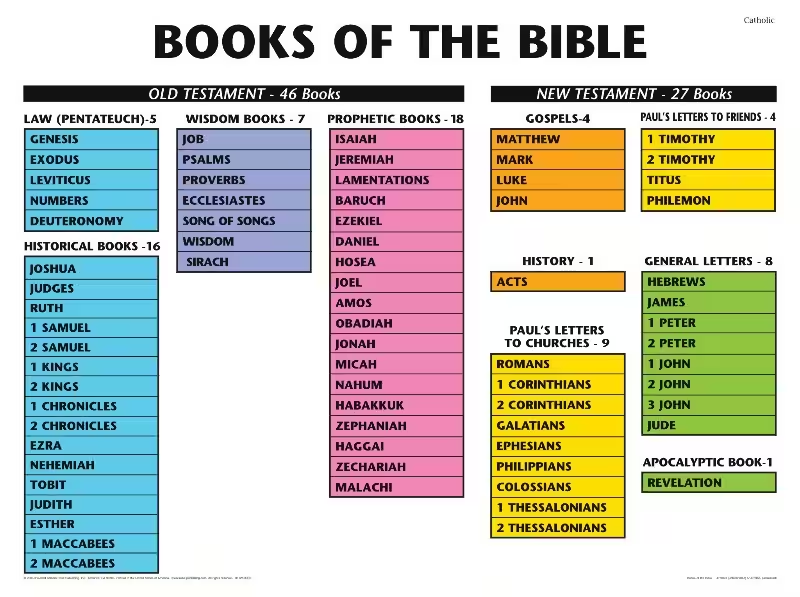
The NABRE is specifically translated for the Catholic Church. This means it includes all the books of the Catholic canon, including the deuterocanonical books (often referred to as the Apocrypha by Protestants). It also features extensive footnotes and commentary that reflect Catholic theological perspectives.
What is the history of the NABRE?
The NABRE is a revision of the New American Bible, which was first published in 1970. The revision process involved updating the translation, modernizing the language, and incorporating new scholarship. The Old Testament was revised first, and the New Testament, which had been revised in 1986, was incorporated into the 2011 edition of the NABRE.
Who uses the NABRE?
The NABRE is primarily used by Catholics in the United States for personal reading, study, and in liturgical settings. It is the translation used for the readings during Mass in most Catholic churches in the United States.
Are the deuterocanonical books included in the NABRE?
Yes, the NABRE includes the deuterocanonical books. These books are part of the Catholic canon of Scripture and are found between the Old and New Testaments in the NABRE.
How does the NABRE relate to Catholic doctrine and tradition?
The NABRE is translated and annotated with Catholic doctrine and tradition in mind. The footnotes and introductions are designed to help readers understand the biblical texts from a Catholic perspective.
Is the NABRE the only Bible translation used by Catholics?
While the NABRE is the official translation for liturgy in the United States, Catholics may use other translations for personal study. However, the NABRE is the primary recommended translation for its liturgical use and its alignment with Catholic teaching.
Where can I find more information about the NABRE?
You can find more information about the NABRE on the United States Conference of Catholic Bishops (USCCB) website, which oversaw the translation. Publishers of Catholic Bibles also offer resources and information about this edition.