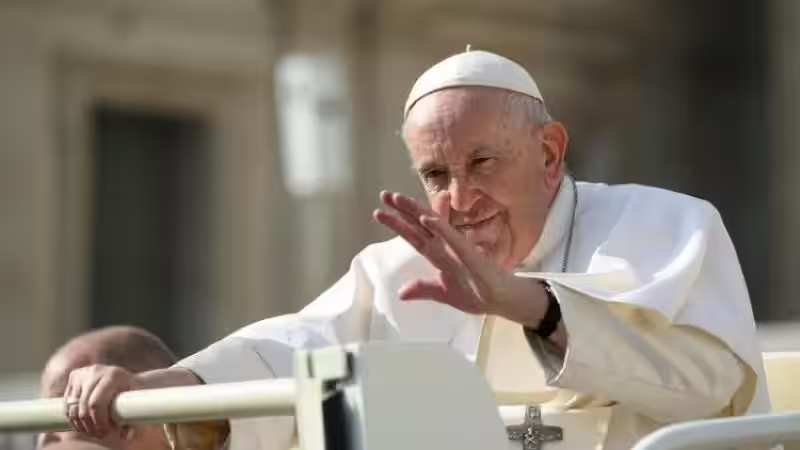
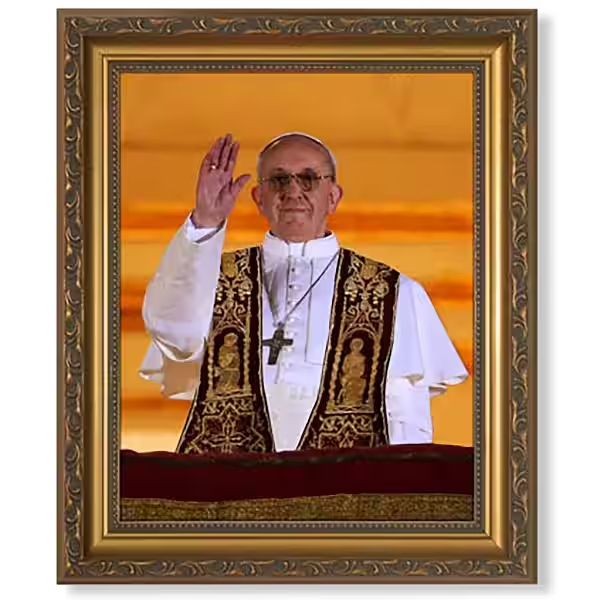
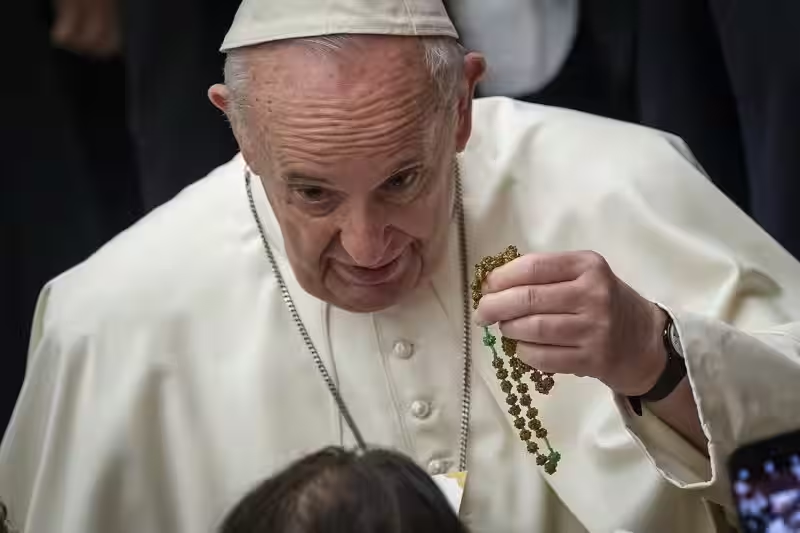
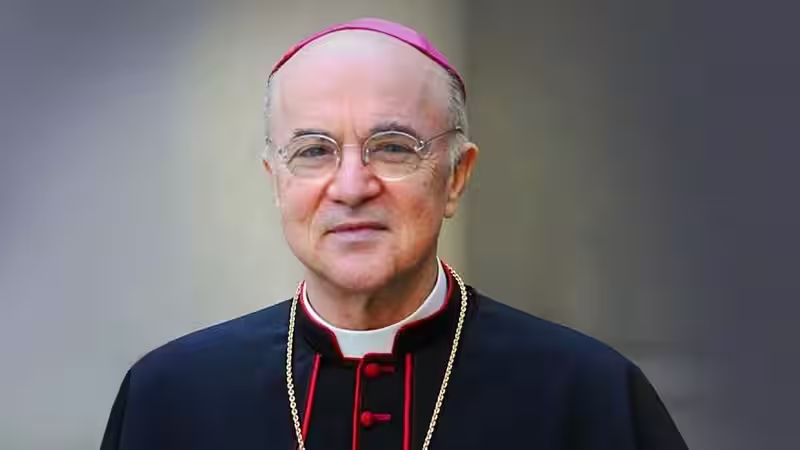
The spiritual landscape of the 21st century is a fascinating tapestry, woven with threads of tradition, innovation, and a persistent human search for meaning. At its heart, guiding millions and sparking global conversations, is Pope Francis, often affectionately referred to as “Papi Francis.” His papacy has been characterized by a disarming humility, a relentless focus on the marginalized, and a bold willingness to confront difficult issues within the Catholic Church and beyond. Understanding Papi Francis and his impact requires delving into the essence of religion itself, exploring how his leadership resonates with contemporary challenges and aspirations.
Religion, in its myriad forms, has always been a cornerstone of human civilization. It offers frameworks for understanding our existence, provides moral compasses, and fosters communities united by shared beliefs and practices. For many, faith is a source of solace, strength, and purpose. It can inspire acts of profound kindness, fuel movements for justice, and offer a spiritual anchor in turbulent times. Papi Francis, in his unique way, embodies this enduring power of faith, demonstrating that religious leadership can be both deeply rooted in tradition and remarkably attuned to the present.
What is it about Papi Francis that so captivates people, even those outside the traditional fold of Catholicism? It’s his unvarnished authenticity, a quality that cuts through the pomp and circumstance often associated with religious institutions. He doesn’t just preach about compassion; he lives it. From his early days as a bishop in Argentina, his commitment to the poor and forgotten has been unwavering. This is not just a rhetorical stance; it’s a lived reality that permeates his every action and statement, making his message of faith tangible and deeply relatable.
Consider his choice of footwear. While his predecessors often sported ornate papal shoes, Papi Francis continues to wear his well-worn, simple black shoes. This seemingly small detail speaks volumes about his priorities and his connection to the common person. It’s a powerful symbol that suggests that true spirituality isn’t about outward displays of wealth or power, but about inner conviction and service. This approach resonates with a world that often feels disconnected from its leaders, offering a refreshing beacon of genuine human engagement.
Embracing the Marginalized: A Core Tenet of Papi Francis’ Ministry
One of the most striking aspects of Papi Francis’ papacy is his consistent and vocal advocacy for the marginalized. He has made it a point to visit and engage with those on the fringes of society: prisoners, refugees, the homeless, and those suffering from illness or addiction. These encounters are not mere photo opportunities; they are profound moments of solidarity and recognition, affirming the inherent dignity of every individual, regardless of their circumstances.
His words and actions consistently challenge the comfortable and call for a radical re-evaluation of our societal structures that often create and perpetuate exclusion. For example, when Papi Francis speaks about the plight of refugees, he doesn’t offer platitudes; he uses vivid language to describe their suffering and implores us to open our hearts and our borders. This directness, coupled with his demonstrable compassion, makes his message of inclusion a powerful force for change within the religious and secular spheres.
Religion in a Modern World: Navigating Change and Tradition
The world today is characterized by rapid technological advancement, shifting social norms, and a growing awareness of global interconnectedness. In such a dynamic environment, religion faces the challenge of remaining relevant and meaningful. Papi Francis has embraced this challenge head-on, demonstrating that faith can adapt and evolve without compromising its core values. He encourages dialogue, promotes understanding, and seeks common ground, even with those who hold vastly different beliefs.
His approach to interfaith dialogue is a prime example. Instead of retreating into insularity, Papi Francis actively seeks out conversations with leaders of other faiths, recognizing that a shared commitment to peace and justice can transcend denominational differences. This open-mindedness fosters a sense of global spiritual community and offers a powerful model for how diverse religious traditions can coexist and even collaborate in addressing the world’s complex problems.
The Call for Social Justice: A Spiritual Imperative
For Papi Francis, faith is inextricably linked to action, particularly in the realm of social justice. He has been a staunch critic of unfettered capitalism, warning against its potential to create vast inequalities and exploit the vulnerable. His encyclicals and speeches frequently call for a more just and equitable distribution of resources, urging individuals and institutions to consider the ethical implications of economic policies.
This integration of faith and social justice is not a new concept, but Papi Francis articulates it with a fresh urgency and clarity that resonates deeply with many. He reminds us that a true religious commitment requires us to look beyond our personal spiritual lives and actively work towards creating a world where dignity, fairness, and opportunity are available to all. This is a powerful and inspiring vision that moves beyond ritual and dogma to address the tangible realities of human suffering.
The Future of Faith: Lessons from Papi Francis
As we look towards the future, the leadership of Papi Francis offers valuable insights into how religion can continue to thrive and serve humanity. His emphasis on evangelization through example, his unwavering commitment to the poor, and his bold embrace of dialogue are not just characteristics of his papacy; they are principles that can guide religious communities of all traditions.
The lessons we can draw from Papi Francis are abundant. They include:
The power of humility: True spiritual leadership often lies not in pronouncements from on high, but in walking alongside people, sharing their burdens, and celebrating their joys.
The necessity of compassion: A faith that does not extend itself to the suffering and marginalized is a faith that has lost its way.
The importance of dialogue: In a diverse world, listening and understanding are crucial for building bridges and fostering peace.
The call to action: Spiritual growth should translate into tangible efforts to create a more just and humane world.
Ultimately, Papi Francis, through his distinctive brand of pastoral leadership, reminds us that religion, at its best, is a force for good in the world. It is a source of hope, inspiration, and a powerful impetus for positive change. His legacy will likely be defined by his ability to make faith feel not like an ancient relic, but a vibrant, relevant, and deeply human endeavor.
Frequently Asked Questions about Pope Francis and Religion
Who is Pope Francis?
Pope Francis, born Jorge Mario Bergoglio, is the current head of the Catholic Church and the sovereign of the Vatican City State. He was elected Pope on March 13, 2013.
What is the religion of Pope Francis?
Pope Francis is a member of the Roman Catholic Church and serves as its Pope.
What are the core beliefs of Catholicism?
Catholicism is a Christian denomination that emphasizes the authority of the Pope as the successor of Saint Peter, the seven sacraments (Baptism, Confirmation, Eucharist, Penance, Anointing of the Sick, Holy Orders, and Matrimony), the veneration of saints, and the belief in transubstantiation during the Eucharist.
What is Pope Francis’s stance on interfaith dialogue?
Pope Francis is a strong advocate for interfaith dialogue and has consistently called for greater understanding and respect between people of different faiths, including Judaism, Islam, and other religions.
Does Pope Francis believe in the Trinity?
Yes, like all Christians, Catholics and Pope Francis believe in the Holy Trinity – one God in three co-equal, co-eternal persons: the Father, the Son (Jesus Christ), and the Holy Spirit.
What are some key aspects of Pope Francis’s teachings?
Pope Francis is known for his emphasis on mercy, compassion, social justice, care for the poor and marginalized, and environmental stewardship. He often encourages a more inclusive and outward-looking Church.
What is the role of the Pope in the Catholic Church?
The Pope is considered the Vicar of Christ on Earth, the Bishop of Rome, and the supreme pontiff of the Catholic Church. He holds supreme authority in matters of faith and morals and is responsible for leading and guiding the universal Church.
How does Pope Francis view other Christian denominations?
Pope Francis advocates for ecumenism, the movement to promote unity among different Christian churches. He has met with leaders of various Christian denominations and expressed a desire for closer relationships and greater understanding.