The figure of Mary Magdalene, a woman intimately connected to the life and ministry of Jesus, has captivated imaginations for centuries. From her dramatic appearances in the Gospels to her transformative presence in countless books, her story continues to resonate deeply within religious discourse and popular culture. The concept of a “Mary Magdalene book,” whether referring to biblical accounts, apocryphal texts, or modern interpretations, opens a vast landscape for exploration, offering profound insights into faith, discipleship, and the evolving understanding of women’s roles in religious history.
This article delves into the rich tapestry surrounding Mary Magdalene, examining her scriptural significance, the historical and theological interpretations that have shaped her image, and the compelling narratives found within various forms of the “Mary Magdalene book.” We will explore how these narratives have influenced our understanding of her life, her relationship with Jesus, and her enduring legacy as a pivotal figure in early Christianity. Our journey will be guided by the desire to understand the profound spiritual nourishment that engaging with a “Mary Magdalene book” can provide.
Biblical Foundations: The Mary Magdalene of the Gospels
The primary source for understanding Mary Magdalene lies within the New Testament Gospels. She is consistently depicted as a devoted follower of Jesus, present at key moments of his crucifixion and resurrection. The Gospels of Luke, Mark, John, and Matthew all mention her, though with slightly different emphases. Luke’s Gospel famously describes Jesus casting seven demons out of her, marking a significant moment of healing and liberation. This narrative, often central to any “Mary Magdalene book,” portrays her as someone who experienced profound transformation through encountering Jesus, moving from a state of affliction to one of devoted discipleship.
Her presence at the foot of the cross, as detailed in John’s Gospel, is a testament to her unwavering loyalty. Furthermore, she is the first witness to the empty tomb and the first person to whom the Risen Christ appears, as recounted in John. This pivotal role in the resurrection narrative is a cornerstone of her significance. The idea that she was entrusted with the initial message of the resurrection to the other disciples elevates her status beyond that of a mere follower, marking her as a foundational witness. Understanding these scriptural accounts is crucial for anyone seeking to appreciate the core essence of the “Mary Magdalene book” as understood within Christian tradition.
Luke 8:2: Mentions her as one of the women who accompanied Jesus and from whom he cast out seven demons.
John 19:25: Places her at the cross with Jesus’ mother and other women.
John 20:1-18: Details her discovery of the empty tomb and her encounter with the Risen Jesus.
Matthew 27:56, 27:61; Mark 15:40, 15:47; Mark 16:1, 16:9: Further corroborates her presence at the crucifixion and her role as a witness to the resurrection.
These Gospel testimonies, while brief, paint a picture of a woman of deep faith, courage, and significant spiritual connection. The very act of Jesus choosing to reveal himself first to her after his resurrection underscores a profound trust and a recognition of her spiritual readiness. This revelation is an event that many a “Mary Magdalene book” seeks to explore and expand upon, offering a glimpse into the divine intimacy shared between Jesus and his followers.
Beyond the Canonical: The Mystique of Apocryphal Texts
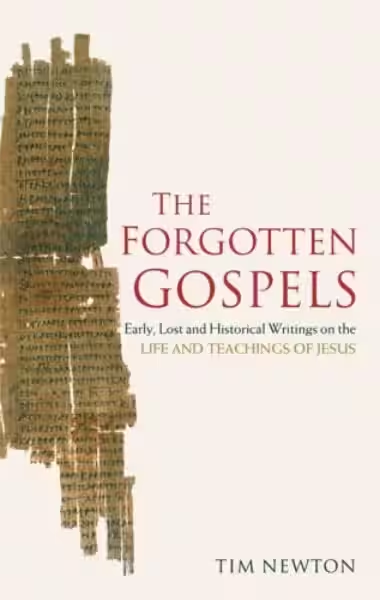
The narrative of Mary Magdalene becomes significantly more complex and debated when we venture beyond the accepted biblical canon. For centuries, a body of literature known as apocryphal texts has offered alternative perspectives and expanded biographies of early Christian figures, including Mary Magdalene. These texts, often written centuries after the Gospels, provide rich, albeit historically contested, insights that have fueled the creation of countless modern “Mary Magdalene book” interpretations. One of the most influential of these is the Gospel of Mary.
The Gospel of Mary, discovered in the late 19th century, presents Mary Magdalene not just as a witness, but as a spiritual leader and confidante of Jesus, capable of receiving and transmitting profound teachings. In this text, she is portrayed as having received special revelations from Jesus that were more advanced than those given to the other male apostles. This depiction has been a fertile ground for much speculation and has significantly shaped later understandings of her role, often forming the spiritual core of a particular kind of “Mary Magdalene book” that emphasizes mystical experience and feminine wisdom.
The Gospel of Mary and its Implications:
A Visionary Leader: Portrays Mary as a spiritual authority, capable of teaching and guiding others.
Recipient of Secret Knowledge: Claims she received esoteric teachings directly from Jesus.
Conflict with Male Apostles: Highlights tension between Mary’s authority and that of Peter, who questions her teachings.
Emphasis on Inner Revelation: Focuses on personal spiritual experience and Gnostic themes.
The existence and content of such texts have contributed immensely to the mystique surrounding Mary Magdalene. They offer a different lens through which to view her, suggesting a dynamism and an intellectual depth that challenged the patriarchal structures of the early church. The exploration of these apocryphal narratives is essential for a comprehensive understanding of why the “Mary Magdalene book” continues to fascinate and provoke discussion.
Modern Interpretations and the Evolving “Mary Magdalene Book”
In contemporary times, the figure of Mary Magdalene has experienced a resurgence of interest, leading to a diverse array of books that explore her life and significance from various angles. These modern “Mary Magdalene book” creations range from historical fiction and theological treatises to works of feminist theology and spiritual guides. They grapple with the biblical accounts, the apocryphal texts, and the centuries of tradition and speculation that have surrounded her. The aim is often to reclaim her narrative and place her in a more prominent, empowering role within Christian history.
Many contemporary authors have sought to portray Mary Magdalene as a more complex and nuanced individual than she might appear in the canonical Gospels alone. Some “Mary Magdalene book” authors highlight her entrepreneurial spirit, her social standing, or her role as a spiritual teacher, drawing inspiration from both scripture and tradition. Others focus on her emotional depth and her profound love for Jesus, exploring the human aspects of her devotion. This rich tapestry of modern interpretations reflects a growing desire to understand her not just as a biblical figure, but as a relatable woman who embodied profound faith and transformative love.
Themes Explored in Modern “Mary Magdalene Book” Narratives:
Feminist Reinterpretation: Emphasizing her leadership and spiritual authority.
Mystical and Esoteric Traditions: Connecting her to Gnostic or other mystical teachings.
Historical Fiction: Imagining her life within its historical context, often focusing on her relationships and actions.
Psychological Depth: Exploring her internal struggles, motivations, and spiritual journey.
Theology of Love and Forgiveness: Highlighting her as a symbol of divine compassion and redemption.
The enduring appeal of Mary Magdalene lies in her multifaceted nature. She is a figure of redemption, a witness to the miraculous, and a subject of enduring mystery. Whether one approaches her through the lens of scripture, apocryphal writings, or contemporary literary interpretations, the “Mary Magdalene book” continues to offer a powerful invitation to explore faith, devotion, and the profound impact one individual can have on the spiritual landscape.
The book “Mary Magdalene” by V.C. Andrews explores the life and experiences of Mary Magdalene, a prominent figure in the New Testament, often depicted as a devoted follower of Jesus. The novel delves into her personal journey, her relationship with Jesus, and her role in the early Christian movement, offering a fictionalized yet deeply researched perspective on historical and religious themes.
Is the book “Mary Magdalene” a historical account or fiction?
The book “Mary Magdalene” by V.C. Andrews is a work of historical fiction. While it draws heavily on biblical narratives and historical context surrounding Jesus and his followers, it takes creative liberties to develop character depth, explore motivations, and construct a compelling narrative. It is not intended as a purely factual historical record but rather as an imaginative exploration of a significant religious figure.
What is the religious significance of Mary Magdalene?
In Christian tradition, Mary Magdalene is revered as a saint and a pivotal figure in the events following Jesus’ crucifixion and resurrection. She is often considered the first witness to the resurrection and an apostle to the apostles. Her devotion to Jesus and her role in spreading the Christian message make her a symbol of faith, repentance, and the transformative power of divine love.
Does the book “Mary Magdalene” challenge traditional religious interpretations?
While the book aims to provide a humanizing and nuanced portrayal of Mary Magdalene, its interpretations may differ from some traditional religious perspectives. By focusing on her personal agency and emotional life, it might offer new angles for consideration, but it generally remains respectful of core Christian beliefs and narratives. Readers may find it prompts personal reflection on established interpretations.
Where can I find more information about Mary Magdalene in a religious context?
For a deeper understanding of Mary Magdalene in a religious context, you can consult the New Testament Gospels (Matthew, Mark, Luke, and John), specifically accounts of Jesus’ crucifixion, burial, and resurrection. Additionally, theological commentaries, scholarly articles on early Christianity, and reputable religious encyclopedias offer further insights into her historical and spiritual significance within Christianity.