Milan, a city synonymous with high fashion, cutting-edge design, and a pulsating modern energy, also harbors a deep and vibrant spiritual heart. For travelers seeking more than just the usual tourist trail, understanding the role of religion in shaping Milan holidays offers a profound and enriching experience. From ancient cathedrals echoing with centuries of prayer to lively local festivals that celebrate patron saints, Milan’s religious landscape is as diverse and captivating as its cosmopolitan allure. Planning a trip around a significant religious observance can unlock a unique perspective, revealing the soul of this Lombard capital and connecting you with its enduring traditions.
Imagine the scent of incense mingling with the aroma of freshly baked panettone, or the solemnity of a Good Friday procession set against the backdrop of magnificent Gothic architecture. These are the moments that define Milan holidays when viewed through the lens of faith. It’s an invitation to step beyond the boutiques and art galleries and immerse yourself in the rituals and celebrations that have been passed down through generations. Whether you are a devout follower yourself, an avid cultural explorer, or simply curious about the interplay between faith and daily life, Milan offers a compelling journey into its spiritual heritage.
The undisputed spiritual epicenter of Milan is the breathtaking Duomo di Milano. This colossal Gothic cathedral, a testament to faith and architectural ambition, is not just a landmark; it’s a living, breathing monument to centuries of religious devotion. Its spires pierce the sky, each a silent prayer reaching towards the heavens, and its stained-glass windows tell stories of biblical significance. Visiting the Duomo during a special religious occasion, such as Christmas celebrations or Easter masses, offers an unparalleled opportunity to witness its grandeur imbued with palpable spiritual energy. The sheer scale of the building, combined with the resonant hymns and the focused reverence of the congregation, can be a deeply moving experience, even for those with no specific religious affiliation.
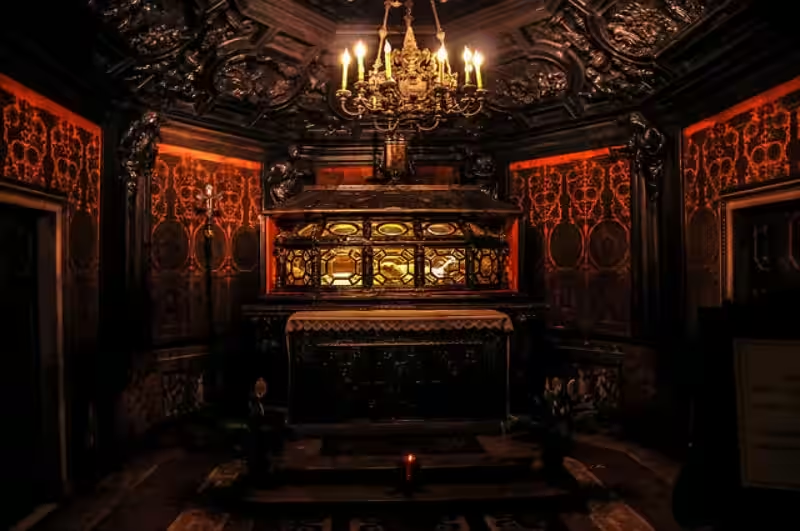
Beyond the Duomo, Milan boasts a wealth of other significant religious sites that are integral to its Milan holidays. The Basilica di Sant’Ambrogio, dedicated to the city’s patron saint, is another cornerstone of Milanese faith, exuding an aura of ancient sanctity. Its Romanesque architecture offers a stark yet beautiful contrast to the Gothic splendor of the Duomo. Exploring these hallowed grounds, perhaps during a feast day dedicated to Sant’Ambrogio, allows you to connect tangibly with the history of faith in Milan. These sites are not merely historical relics; they are active places of worship, where the rhythm of life is still dictated by the sacred calendar, making them essential to understanding Milan holidays and their religious undertones.
Major Religious Festivals and Their Milanese Expression
Milan’s calendar is marked by several significant religious festivals that infuse the city with a unique spirit, especially during Milan holidays. The most prominent among these is undoubtedly the Feast of Sant’Ambrogio on December 7th. This day is not only a solemn religious observance but also a public holiday, often marking the start of the Christmas season in Milan. The city comes alive with special services at the Basilica di Sant’Ambrogio, traditional markets like the Obej Obej (a lively Christmas market near the Sforza Castle), and a general atmosphere of festive anticipation. It’s a perfect example of how religious and secular celebrations intertwine, creating a truly Milanese holiday experience.
Other significant periods, such as Easter in Milan, are observed with deep reverence. While perhaps less outwardly boisterous than Christmas, Easter week sees solemn processions, particularly on Good Friday, that wind through the historic streets. The Duomo and other churches host special services, and the atmosphere shifts to one of reflection and spiritual renewal. For travelers, experiencing these Milan holidays means witnessing the deep-seated faith that continues to shape the city’s cultural identity. It’s an opportunity to observe traditions that have endured for centuries, offering a glimpse into the heart of Milanese life beyond its modern facade.
Faith in Daily Life and its Holiday Manifestations
The presence of religion in Milan isn’t confined to grand cathedrals and specific festival dates; it’s woven into the fabric of daily life, and this continuity profoundly influences how Milan holidays are experienced. You’ll notice small chapels tucked away in unexpected corners, religious iconography adorning homes, and the quiet hum of prayer often audible from open church doors. This constant, subtle presence means that even during seemingly secular Milan holidays, there’s often an underlying spiritual current. For instance, a simple Sunday stroll might lead you past a lively street procession honoring a local parish saint, complete with banners, brass bands, and devoted followers.
During major religious observances, this integration becomes even more pronounced. Consider the simple act of enjoying a coffee or aperitivo; during times like Lent leading up to Easter, you might find many locals observing dietary restrictions, a quiet nod to their faith influencing their daily choices. Similarly, during Advent, the anticipation of Christmas is palpable, not just in the glittering shop displays but also in the carols sung in churches and the widespread tradition of the nativity scene, a beautiful symbol of the religious significance of the season. These everyday expressions of faith are what make Milan holidays so authentic and relatable, offering a genuine connection to the city’s enduring spiritual heritage.
Navigating Milan’s Religious Landscape as a Visitor
For visitors, understanding and respecting Milan’s religious traditions is key to a fulfilling experience during Milan holidays. Churches are active places of worship, so dressing modestly is essential when visiting, particularly the Duomo and the Basilica di Sant’Ambrogio. This means covering shoulders and knees. Silence and reverence are expected inside religious buildings, even during bustling holiday periods. It’s a simple act of respect that allows you to fully appreciate the spiritual atmosphere without causing disruption.
Embracing the local rhythm can also enhance your understanding of Milan holidays in relation to religion. This might involve:
Attending a service: Even if you’re not religious, attending a short service, perhaps a vespers or a Sunday mass, can offer a profound insight into local devotion. Many services are conducted in Italian, but the communal experience transcends language barriers.
Exploring local markets: Festivals like the Obej Obej market during the Feast of Sant’Ambrogio are not just about shopping; they are vibrant community gatherings with deep historical and religious roots.
Observing traditions: Simply taking the time to notice how locals participate in religious events, from lighting candles to offering prayers, provides invaluable cultural context.
By approaching Milan with an open mind and a willingness to engage with its spiritual dimension, your Milan holidays can transform into a journey of discovery, revealing a city where faith, culture, and celebration are beautifully intertwined.
Milan Holidays: Religion
Is Milan a predominantly Catholic city?
Yes, Milan is the seat of the Archdiocese of Milan and is historically a predominantly Catholic city. The Duomo di Milano, one of the world’s largest cathedrals, is a prominent symbol of its Catholic heritage.
Yes, Milan boasts a vast number of churches, from grand cathedrals and historic basilicas to smaller parish churches. You will find Catholic churches throughout the city.
Will I find churches of other Christian denominations?
Yes, while Catholicism is dominant, Milan also has churches belonging to other Christian denominations, such as Protestant, Orthodox, and Anglican communities.
Are there synagogues in Milan?
Yes, Milan has a Jewish community and several synagogues.
Does Milan have mosques?
Yes, there are mosques and Islamic cultural centers in Milan catering to the city’s Muslim population.
Are there temples for other religions in Milan?
Milan is a diverse city, and you can find places of worship for other religions as well, including Buddhist temples and Hindu temples, reflecting its multicultural population.
Will religious holidays affect my visit to Milan?
Major Catholic holidays, such as Easter and Christmas, are observed in Milan. Many businesses and public services may have reduced hours or be closed on these days. It’s advisable to check specific opening times for attractions and shops if you are visiting during these periods. Other religious holidays may also be observed by specific communities, but generally have less impact on the wider city operations.
Can I attend religious services in English?
Many of the larger churches, particularly the Duomo and some other Catholic churches, may offer services in English, especially during peak tourist seasons. You can also find English-speaking services at some Protestant and Anglican churches. It’s best to check the websites of specific churches for their service schedules.
Are religious symbols common in Milan?
Yes, religious symbols, particularly Christian ones like crosses, are commonly seen throughout Milan, from churches and public spaces to personal adornments. You will also find symbols of other faiths displayed in their respective places of worship and by members of those communities.