The Beatitudes Catholic teachings offer a profound roadmap to a life filled with genuine joy and spiritual fulfillment. Far from being mere lofty pronouncements, these eight blessings, as presented by Jesus in the Gospel of Matthew, are practical guidelines for living a life aligned with God’s will. They challenge our worldly notions of success and happiness, inviting us instead to embrace a deeper, more enduring form of blessedness rooted in humility, mercy, and a commitment to righteousness. Understanding and striving to live by the Beatitudes is a cornerstone of the Catholic religion, shaping not just our individual spiritual journeys but also our communities and our interactions with the world.
For Catholics, the Beatitudes are not a set of rules to be passively observed, but a vibrant invitation to transform our hearts and minds. They are the very essence of Christ’s teaching on the Kingdom of Heaven, revealing the values and attitudes that characterize those who are truly blessed in God’s eyes. Each Beatitude, from recognizing our spiritual poverty to actively pursuing peace, speaks to a fundamental aspect of the Christian life, offering a path to inner peace and eternal life.
Unpacking the Beatitudes: A Deeper Dive into Catholic Wisdom
The beauty of the Beatitudes Catholic tradition lies in their counter-cultural nature. Jesus, standing on a mountainside, didn’t preach about acquiring wealth, accumulating power, or achieving worldly acclaim. Instead, he declared blessed those who might be considered least important by society’s standards. This radical redefinition of blessedness is central to the Catholic religion, calling believers to re-evaluate their priorities and to seek a treasure that moths and rust cannot destroy.
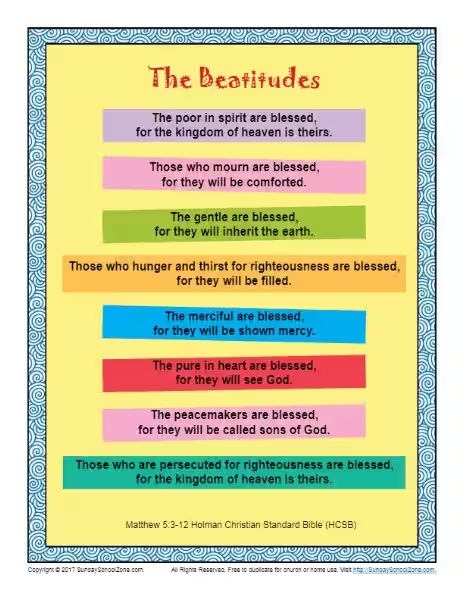
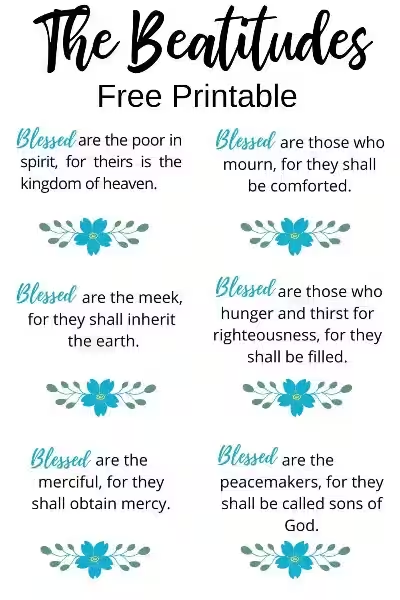
Let’s explore each of these profound pronouncements. The first, “Blessed are the poor in spirit, for theirs is the kingdom of heaven,” speaks to a profound humility. It’s not about material poverty, but about recognizing our utter dependence on God. When we understand that we have nothing to offer God on our own merit, and that all our gifts come from Him, we open ourselves to receive His grace. This spiritual poverty is the fertile ground upon which the kingdom of heaven can flourish within us.
The Beatitudes in Action: Living the Virtues
The subsequent Beatitudes build upon this foundation of humility, guiding us toward a life of active virtue and spiritual maturity. “Blessed are those who mourn, for they shall be comforted,” encourages us to acknowledge the suffering in the world and within ourselves, and to approach it with a compassionate heart. This mourning is not about self-pity, but about a deep empathy that leads to a yearning for healing and restoration, both for ourselves and for others. The Catholic religion emphasizes that this sorrow, when united with Christ’s own suffering, can lead to profound spiritual comfort.
“Blessed are the meek, for they shall inherit the earth.” Meekness, often misunderstood as weakness, is in fact a powerful self-control, a willingness to surrender our own will to God’s. It’s about exercising strength with gentleness and humility, recognizing that true power lies not in domination, but in service. The Beatitudes Catholic teaching on meekness invites us to embrace patience and restraint, trusting that God will ultimately reward our fidelity.
Blessed are the poor in spirit: Recognizing our dependence on God.
Blessed are those who mourn: Experiencing empathy and longing for healing.
Blessed are the meek: Exercising gentleness and self-control.
“Blessed are those who hunger and thirst for righteousness, for they shall be satisfied.” This is a fervent desire for justice and holiness, a deep longing to live in accordance with God’s will. It’s an active pursuit, not a passive wish. The Catholic religion calls us to be agents of God’s justice in the world, working to right wrongs and to build a society that reflects His love.
“Blessed are the merciful, for they shall receive mercy.” This Beatitude is perhaps one of the most challenging and rewarding. It calls us to extend forgiveness and compassion to others, just as God extends it to us. In a world often characterized by judgment and unforgiveness, the Beatitudes Catholic call to mercy shines as a beacon of hope, reminding us that our own experience of God’s mercy is contingent on our willingness to offer it to others.
“Blessed are the clean of heart, for they shall see God.” This refers to purity of intention and motive, a heart undivided in its love for God. It’s about living with integrity and sincerity, ensuring that our actions are aligned with our faith. The Catholic religion teaches that a pure heart is essential for experiencing a genuine encounter with the divine.
“Blessed are the peacemakers, for they shall be called children of God.” Peacemakers are not simply those who avoid conflict, but those who actively work to reconcile divisions, to foster understanding, and to build bridges of love. They embody Christ’s spirit of reconciliation, striving to bring God’s peace into every situation. The Beatitudes Catholic vision of peacemaking is a transformative force, capable of healing broken relationships and communities.
Finally, “Blessed are those who are persecuted for righteousness’ sake, for theirs is the kingdom of heaven.” This Beatitude acknowledges the reality that living a life dedicated to God’s will may bring opposition and suffering. However, it assures us that this persecution, when endured for the sake of righteousness, is a sign that we are on the right path and that our heavenly reward is assured. The Catholic religion finds solace and strength in the example of the saints who bravely faced persecution for their faith.
The Beatitudes: A Living Tradition in the Catholic Faith
The Beatitudes Catholic tradition isn’t confined to ancient texts; they are a living, breathing guide for contemporary Catholics. They inform our prayer life, our social justice initiatives, and our everyday interactions. When we encounter someone struggling, the Beatitudes prompt us to offer comfort and mercy. When we witness injustice, they call us to hunger and thirst for righteousness. When we face personal hardship, they remind us of the promise of comfort and the inheritance of the Kingdom.
The Catholic religion continually emphasizes the transformative power of the Beatitudes. They are not a checklist of items to be completed, but a profound invitation to cultivate a heart that mirrors Christ’s own. By striving to live out these eight blessings, we are not just seeking personal holiness; we are actively participating in the building of God’s Kingdom here on earth, becoming instruments of His love, mercy, and justice.
In essence, the Beatitudes Catholic teachings offer a profound and enduring path to true happiness. They challenge us to look beyond fleeting worldly pleasures and to embrace a deeper, more meaningful joy found in aligning our lives with God’s divine plan. This unwavering commitment to Christ’s teachings is the very heart of the Catholic religion, guiding us towards eternal life and a profound encounter with the divine.
Frequently Asked Questions About the Beatitudes
What are the Beatitudes?
The Beatitudes are a set of teachings given by Jesus Christ in the Sermon on the Mount, found in the Gospel of Matthew (5:3-12). They are a series of blessings that describe the qualities and attitudes of those who are blessed by God and will inherit the Kingdom of Heaven.
The Beatitudes are primarily found in the Gospel of Matthew, chapter 5, verses 3 through 12. They are also echoed in Luke 6:20-23.
What is the significance of the Beatitudes in Catholicism?
In Catholicism, the Beatitudes are considered a cornerstone of Christian ethics and spirituality. They are seen as a summary of Jesus’ teachings on how to live a virtuous and blessed life, leading to spiritual fulfillment and eternal life with God. They offer a model for discipleship and spiritual perfection.
Are the Beatitudes commandments?
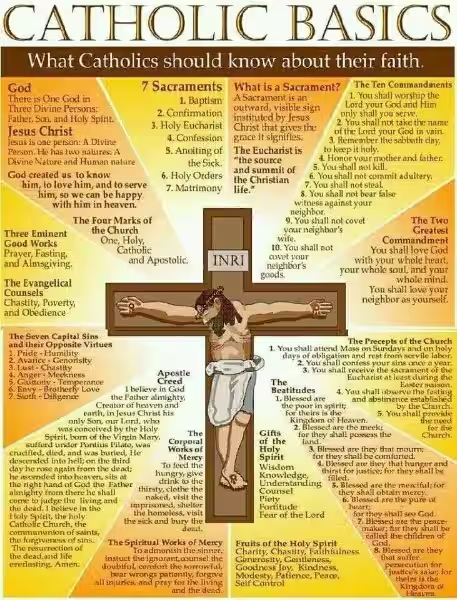
No, the Beatitudes are not commandments in the same way as the Ten Commandments. Instead, they are blessings and promises that describe the characteristics of those who are truly blessed in God’s eyes. While not direct commands, they are understood as calls to emulate these virtues.
What does it mean to be “poor in spirit”?
To be “poor in spirit” means to recognize one’s dependence on God, to be humble, and to not place one’s trust in worldly possessions or self-sufficiency. It’s an acknowledgment of spiritual need and a readiness to receive God’s grace.
How are the Beatitudes relevant to modern life?
The Beatitudes offer timeless guidance for navigating the complexities of modern life. They encourage virtues like compassion, forgiveness, peacemaking, and justice, which are essential for building a more humane and just society. They also provide a spiritual compass for personal growth and finding true happiness.
Are there other interpretations of the Beatitudes besides the Catholic one?
While the Catholic Church holds a specific understanding of the Beatitudes as part of its tradition, other Christian denominations and scholars may interpret them with varying emphases. However, the core message of Jesus’ teachings on blessedness and virtue is generally shared across Christianity.