We all carry within us a deeply ingrained, often unconscious, happiness script. This internal narrative, shaped by a myriad of influences from childhood conditioning to societal expectations, dictates what we believe will bring us lasting joy and fulfillment. For many, the whispers of this script are profoundly connected to their spiritual or religious beliefs. Religion, with its ancient wisdom, communal structures, and promise of something greater, has long offered a framework for understanding and achieving happiness, providing a compelling happiness script that has resonated for millennia.
But what exactly is this happiness script when viewed through the lens of faith? It’s more than just a set of rules; it’s a worldview that offers meaning, purpose, and a vision of an ultimate good. It often outlines a path, a series of actions, or a state of being that leads to contentment, both in this life and potentially in an afterlife. This article will delve into how various religious traditions have offered their unique interpretations of this happiness script, exploring the practical, emotional, and existential dimensions of faith’s contribution to human well-being.
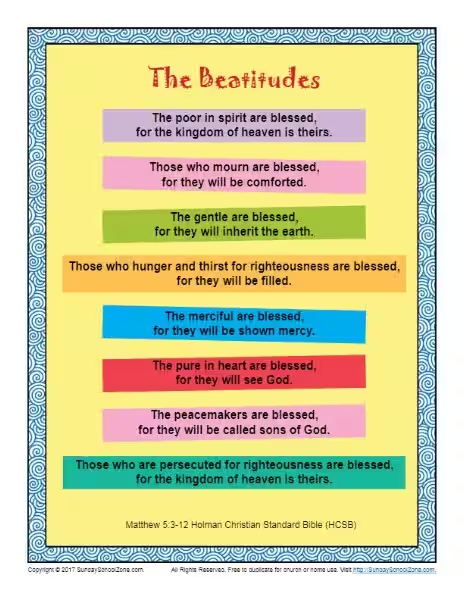
Many religions present a divine blueprint for living a happy and meaningful life. This blueprint isn’t arbitrary; it’s often rooted in a understanding of human nature and the cosmos. For instance, in Christianity, the Beatitudes, as spoken by Jesus in the Sermon on the Mount, offer a counter-cultural definition of blessedness and happiness, emphasizing humility, mercy, and peacemaking over worldly riches and power. These teachings suggest that true happiness isn’t found in accumulation, but in cultivating specific virtues that align with God’s will. This provides a clear, albeit sometimes challenging, happiness script for adherents.
Similarly, Buddhism offers a profound happiness script centered on the Four Noble Truths. The first truth acknowledges suffering, the second identifies its cause (attachment and craving), the third offers its cessation (nirvana), and the fourth outlines the path to achieve it – the Noble Eightfold Path. This path, encompassing right understanding, thought, speech, action, livelihood, effort, mindfulness, and concentration, provides a step-by-step guide to overcoming dissatisfaction and attaining enlightenment, which is understood as the ultimate form of happiness. This structured approach offers a tangible happiness script for those seeking inner peace.
Virtue as the Currency of Contentment
A common thread running through most religious happiness scripts is the emphasis on cultivating virtues. These aren’t just abstract ideals; they are seen as the very building blocks of a joyful existence. Consider the concept of charity in many faiths. Whether it’s tzedakah in Judaism, zakat in Islam, or the Christian emphasis on almsgiving, the act of giving to those in need is consistently linked to spiritual well-being and a sense of purpose. This outward focus, extending beyond oneself, redirects the happiness script from self-gratification to selfless service, often yielding profound internal rewards.
The virtue of gratitude also plays a pivotal role in the religious happiness script. Many prayers and rituals begin and end with expressions of thankfulness, acknowledging the blessings received, both big and small. This conscious practice of gratitude shifts our perspective, helping us appreciate what we have rather than dwelling on what we lack. For example, a daily prayer of thanks for health, family, or even the simple gift of a new day can reframe our entire outlook, reinforcing a positive and resilient happiness script that is less susceptible to the whims of circumstance.
Community and Belonging: The Shared Happiness Script
Religion rarely exists in isolation; it thrives within communities. This communal aspect is a powerful contributor to its efficacy as a happiness script. Belonging to a group that shares similar values and beliefs provides a sense of identity, support, and shared purpose. The rituals, festivals, and regular gatherings offered by religious institutions create opportunities for connection and mutual encouragement, combating the loneliness and alienation that can plague modern life.
Imagine the comfort derived from attending a place of worship during a difficult time, surrounded by people who understand your grief and offer prayers and practical assistance. This shared experience reinforces the belief that you are not alone, an essential element of any robust happiness script. Moreover, the collective pursuit of spiritual goals, whether it’s contributing to a shared charitable project or participating in communal prayer, amplifies the sense of accomplishment and belonging, making the happiness script feel more attainable and meaningful when pursued together.
The Rituals of Resilience: Practicing Happiness
Religious rituals are not merely symbolic gestures; they are active practices designed to shape our inner lives and guide us towards happiness. These can range from the daily prayers of Muslims to the contemplative meditation of Buddhists. These repeated actions serve as anchors, grounding us in our faith and reinforcing the tenets of our happiness script. By engaging in these practices regularly, individuals are essentially training their minds and hearts to embrace a particular way of being that is conducive to joy.
Consider the act of fasting, observed in various religions for spiritual purification and self-discipline. While it may seem like an act of deprivation, its underlying purpose within the religious happiness script is to foster self-control, empathy for the less fortunate, and a deeper appreciation for basic necessities. This deliberate practice of foregoing physical comforts can lead to a profound sense of spiritual clarity and a strengthened resolve, ultimately contributing to a more resilient and enduring form of happiness. These are not passive beliefs, but active engagements with a happiness script designed for transformation.
Meaning and Purpose: The Ultimate Happiness Script
Perhaps the most profound contribution of religion to our happiness script lies in its ability to provide a sense of ultimate meaning and purpose. In a world that can often feel chaotic and indifferent, faith offers a narrative that imbues life with significance. It answers fundamental questions about our existence: Why are we here? What is our role in the grand scheme of things? What happens after death?
For many, the belief in a benevolent God, a cosmic plan, or the potential for spiritual liberation provides an overarching framework that makes life’s challenges bearable and its joys more profound. This transcendent perspective elevates the happiness script beyond fleeting pleasures, grounding it in something eternal and unchanging. It allows individuals to see their struggles not as random misfortunes, but as opportunities for growth and learning within a divinely orchestrated journey, a truly powerful happiness script for navigating the complexities of life.
Hope as the Cornerstone of the Religious Happiness Script
At the heart of many religious narratives lies the unwavering beacon of hope. Hope is not just a passive wish; it’s an active expectation that good will ultimately prevail, that suffering is not the final word, and that a brighter future awaits. This is a crucial component of any effective happiness script, particularly when faced with adversity. Whether it’s the Christian promise of resurrection, the Jewish belief in a messianic age, or the Buddhist aspiration for enlightenment, these visions of a transformed future provide solace and motivation.
When individuals are grappling with loss, illness, or injustice, the hope offered by their faith can be a lifeline. It allows them to endure hardship with a sense of dignity and resilience, knowing that their present struggles are part of a larger, ultimately positive, narrative. This profound sense of hope transforms the happiness script from a pursuit of transient joy into a journey of enduring faith and the anticipation of ultimate fulfillment, making it a powerful force for well-being across the human experience.
Frequently Asked Questions about Happiness Script and Religion
What is the “Happiness Script”?
The “Happiness Script” is a concept that suggests we often operate based on internalized beliefs or societal expectations about what happiness should look like, how it’s achieved, and when it’s “supposed” to happen. It’s like an unconscious blueprint for happiness that can sometimes limit our ability to experience genuine joy or contentment because it doesn’t align with our actual experiences or values.
How does religion relate to the “Happiness Script”?
Religion can significantly influence an individual’s “Happiness Script.” Many religions offer frameworks for understanding suffering, purpose, and ultimate fulfillment, which directly shape beliefs about what constitutes happiness. For example:
Promises of afterlife joy: Some religions teach that true happiness is found in the afterlife, influencing a person’s “script” to potentially de-emphasize present earthly happiness or find contentment in enduring hardship for future reward.
Moral and ethical guidelines: Religious teachings often prescribe specific behaviors and attitudes deemed virtuous, which can become part of a person’s happiness script (e.g., “I will be happy if I am charitable,” “I will be happy if I live according to God’s will”).
Community and belonging: Religious communities can provide a strong sense of belonging and shared purpose, which can be a significant component of an individual’s happiness script, fostering a belief that happiness is found in communal worship and support.
Meaning and purpose: Religions often provide answers to existential questions, offering a sense of meaning and purpose that can be central to a person’s definition of happiness.
Can religious beliefs conflict with an individual’s “Happiness Script”?
Yes, absolutely. A person’s “Happiness Script” might be heavily influenced by their religious upbringing or beliefs. However, as they encounter new life experiences, perspectives, or develop their own understanding, they might find that their lived reality doesn’t perfectly match their religious “script” for happiness. This can lead to internal conflict, questioning, or a re-evaluation of what happiness means to them. Conversely, some individuals may find their religious beliefs provide a deeply fulfilling and harmonious “Happiness Script.”
Can re-evaluating religious beliefs change one’s “Happiness Script”?
Yes, re-evaluating religious beliefs can be a powerful catalyst for changing one’s “Happiness Script.” If someone’s script was largely dictated by specific religious doctrines or expectations, questioning or altering those beliefs can open up new possibilities for defining and pursuing happiness. This might involve:
Finding happiness in secular pursuits if religious frameworks no longer resonate.
Developing a more personal and less rigid interpretation of their faith.
Discovering that happiness can be found in ways not explicitly outlined by their previous religious understanding.
Shifting focus from external divine rewards to internal states of contentment and well-being.