In the tapestry of religious teachings, few passages resonate as profoundly and offer as practical a roadmap for living a meaningful and virtuous life as the Beatitudes. These eight pronouncements, delivered by Jesus in his Sermon on the Mount, are not merely abstract theological statements; they are actionable principles designed to guide our hearts, shape our character, and ultimately, lead us to a deeper connection with the divine and with one another. For anyone navigating the complexities of faith and seeking to live out their religious convictions, understanding and internalizing the Beatitudes offers an invaluable compass.
These are not promises of immediate earthly rewards, but rather declarations of spiritual blessedness, identifying those who embody certain virtues as fortunate and destined for a life of true fulfillment. They challenge conventional notions of success and happiness, suggesting that true blessedness is found not in worldly possessions or power, but in humility, compassion, and a sincere pursuit of righteousness. This article will explore each of the Beatitudes, weaving them into a narrative that illuminates their enduring relevance for believers across various religious traditions, offering insights and practical applications for living a life aligned with divine principles.
Understanding “Blessed” in the Context of the Beatitudes
The word “blessed” or “poor in spirit” in the opening Beatitude, “Blessed are the poor in spirit, for theirs is the kingdom of heaven,” might initially sound discouraging. However, in its religious context, it doesn’t imply a state of destitution or inadequacy. Instead, it speaks to a profound spiritual humility, a recognition of our absolute dependence on God. It’s the opposite of arrogance or self-sufficiency. This humble heart is open to receive divine grace and wisdom, understanding that true riches are spiritual, not material.
Think of it like a cup that is empty. An empty cup is ready to be filled with something precious, whereas a cup already full can receive nothing more. Similarly, those who are “poor in spirit” acknowledge their spiritual emptiness and their need for God’s presence and guidance. This acknowledgment of need is the very foundation upon which a relationship with the divine is built, opening the door to eternal spiritual treasures. It’s a state of inner receptivity, a willingness to be shaped and transformed by faith.
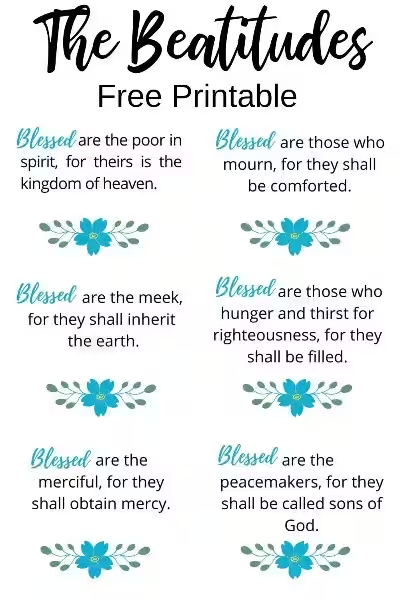
The Humble Heart: “Blessed are the poor in spirit, for theirs is the kingdom of heaven.”
This first Beatitude sets the tone for the entire list. It’s a radical redefinition of blessedness, shifting the focus from external achievements to an internal disposition. Being “poor in spirit” is about recognizing our spiritual poverty in the face of God’s infinite greatness. It’s an admission that without divine intervention, we are incomplete and lost. This humility of spirit allows us to be teachable, to be guided, and to ultimately experience the profound joy of belonging to God and participating in His heavenly reign.
Consider a child asking their parent for help. The child’s implicit trust and reliance on the parent’s ability is a beautiful analogy for being poor in spirit. They don’t pretend to know everything or be capable of everything; they willingly depend on a greater power. This reliance on divine grace is what unlocks the “kingdom of heaven,” not as a distant place, but as a present reality of spiritual connection and belonging.
The Power of Grief and Compassion
The next two Beatitudes speak to our experiences of sorrow and our capacity for empathy. “Blessed are those who mourn, for they shall be comforted,” and “Blessed are the meek, for they shall inherit the earth.” Mourning, in this context, is not just about personal sadness but also about grieving over the brokenness of the world, our own sins, and the suffering of others. This deep empathy and sorrow can be a powerful catalyst for spiritual growth and action.
When we mourn sincerely, we acknowledge the pain and injustice that exist. This acknowledgment of suffering can lead to a profound understanding and a desire for healing, both for ourselves and for the world. The promise of comfort suggests that this authentic grief will ultimately lead to solace, peace, and a deeper understanding of God’s restorative power. It’s a journey from sorrow to a renewed sense of hope.
Mourning with Hope: “Blessed are those who mourn, for they shall be comforted.”
This Beatitude invites us to consider our response to the world’s suffering. It’s not about wallowing in despair, but about feeling deeply the pain that surrounds us, both personally and collectively. When we mourn, we are acknowledging that things are not as they should be, and this recognition of imperfection is a crucial step towards seeking and creating change. The comfort promised is not a magical erasure of pain, but a deep inner peace that comes from aligning ourselves with God’s redemptive work.
Imagine witnessing a friend in pain. Your genuine concern and shared sorrow create a bond and a desire to help. This is similar to mourning in the spiritual sense. It’s about extending our hearts to the suffering and knowing that in that act of compassion, we are also drawing closer to the source of all comfort. This is where spiritual resilience begins to take root.
The Gentle Strength: “Blessed are the meek, for they shall inherit the earth.”
Meekness is often misunderstood as weakness, but in religious discourse, it signifies gentle strength and self-control. It’s the ability to yield without being broken, to be firm in conviction without arrogance, and to respond to provocation with grace rather than aggression. This humble strength is what allows individuals to truly engage with the world and leave a positive and lasting impact.
Think of a strong river that flows gently, carving its path through the landscape over time, rather than a raging torrent that causes destruction. True meekness is a quiet power, a force for good that perseveres and transforms. This attribute of patience and resilience is what allows individuals to build enduring relationships and contribute to the stability and well-being of communities.
The Hunger for Righteousness and Mercy
The Beatitudes continue by highlighting the desire for justice and compassion. “Blessed are those who hunger and thirst for righteousness, for they shall be filled,” and “Blessed are the merciful, for they shall receive mercy.” These are not passive states but active longings. A hunger and thirst imply an intense desire, a driving need that propels action and transformation.
To hunger and thirst for righteousness is to have an unwavering commitment to what is just and good, to actively seek to live according to divine principles and to see justice prevail. Similarly, to be merciful is to extend compassion, forgiveness, and understanding to others, recognizing their flaws and struggles. This embrace of empathy and fairness is a cornerstone of a life lived in accordance with religious ideals.
The Unquenchable Thirst: “Blessed are those who hunger and thirst for righteousness, for they shall be filled.”
This Beatitude speaks to a deep spiritual yearning. It’s a desire that goes beyond superficial goodness; it’s a passionate pursuit of moral and spiritual integrity. When we hunger and thirst for righteousness, we are actively seeking to align our lives with divine will, to do what is good, and to resist what is evil. This ardent pursuit is what ultimately leads to spiritual fulfillment, a sense of being truly satisfied and complete in God’s presence.
Imagine feeling intensely dehydrated on a hot day. That overwhelming need for water is a metaphor for the spiritual hunger described here. It’s a driving force that compels us to seek out what nourishes our souls and aligns us with the divine. This pursuit of moral excellence is a lifelong journey that promises ultimate satisfaction.
The Empathic Heart: “Blessed are the merciful, for they shall receive mercy.”
Mercy is the active practice of compassion and forgiveness. It’s about looking at others with understanding, rather than judgment, and offering them the same grace we hope to receive. When we are merciful, we acknowledge our own imperfections and extend kindness and leniency to those who fall short. This generosity of spirit not only blesses others but also opens us up to receiving divine mercy in return.
Think of a time when someone showed you unexpected kindness when you made a mistake. That feeling of relief and gratitude is a glimpse of what it means to receive mercy. By extending that same grace and understanding to others, we create a ripple effect of compassion that ultimately touches our own lives. This virtue of forgiveness is a powerful force for healing and reconciliation.
Purity of Heart and the Peacemakers
The Beatitudes continue to delve into the inner workings of our souls, emphasizing internal purity and the active pursuit of harmony. “Blessed are the pure in heart, for they shall see God,” and “Blessed are the peacemakers, for they shall be called sons of God.” Purity of heart refers to an unwavering devotion and integrity of intention. It’s about having a single, clear focus on God and living with unblemished motives.
To be a peacemaker is to actively work towards reconciliation, harmony, and understanding. It’s about bridging divides, resolving conflicts, and fostering an environment of unity and peace. This dedication to creating harmony is not about avoiding confrontation but about engaging in ways that promote healing and understanding.
The Unclouded Vision: “Blessed are the pure in heart, for they shall see God.”
Purity of heart signifies an uncomplicated and undivided devotion to the divine. It means having single-minded intentions and a life free from hypocrisy or hidden agendas. When our hearts are pure, our vision becomes clearer, allowing us to perceive the divine presence in the world and in our lives with greater clarity. This clarity of spiritual perception is a profound blessing.
Imagine looking through a clean window. You can see the world outside with sharp detail. Now imagine a dirty window; the view is obscured. A pure heart is like that clean window, allowing us to see and experience God more fully. This integrity of character is the key to spiritual insight.
The Architects of Harmony: “Blessed are the peacemakers, for they shall be called sons of God.”
Peacemakers are not simply those who avoid conflict; they are active agents of reconciliation. They are individuals who bridge divides, foster understanding, and work tirelessly to bring about harmony between people, communities, and even within themselves. Their dedication to fostering peace reflects the very nature of the divine and earns them a special place in God’s eyes.
Think of a skilled mediator who helps opposing parties find common ground. This is the essence of peacemaking. It’s about active engagement in building bridges and creating an environment where understanding and reconciliation can flourish. This commitment to unity aligns us with the divine purpose of bringing about a world of peace and love.
Enduring Persecution with Faith
The final Beatitude addresses the inevitable challenges and opposition that can arise from living a life of faith. “Blessed are those who are persecuted for righteousness’ sake, for theirs is the kingdom of heaven.” This is not about seeking out trouble, but about standing firm in one’s convictions even when faced with adversity, misunderstanding, or outright hostility. This resilience in the face of opposition is a testament to the strength of one’s faith.
When we are persecuted for living righteously, it means our actions and beliefs are being challenged because they shine a light on injustice or call for a higher standard. This can be difficult, but the Beatitude offers a profound promise: “theirs is the kingdom of heaven.” This reinforces the idea that true reward and fulfillment are found in spiritual alignment, not in worldly approval.
The Steadfast Soul: “Blessed are those who are persecuted for righteousness’ sake, for theirs is the kingdom of heaven.”
This final Beatitude acknowledges that living a life of faith and integrity can sometimes lead to hardship, criticism, or even persecution. It doesn’t promise an easy path, but it offers a powerful assurance of spiritual reward. When we face opposition for standing up for what is right and good, we are aligning ourselves with a higher purpose, and that alignment brings its own profound blessings. This endurance in conviction is a powerful demonstration of faith.
Consider a scientist whose groundbreaking discoveries are initially met with skepticism but eventually change the world. Their willingness to persevere despite opposition is a testament to their belief. In the religious realm, standing firm in one’s faith despite societal pressure or personal cost leads to a deep and abiding connection with the divine, and a participation in the eternal kingdom.
In conclusion, the Beatitudes offer a transformative framework for living. They are not a rigid set of rules but a gentle invitation to cultivate a heart of humility, compassion, and integrity. By embracing these principles, we can navigate the complexities of life with greater purpose and peace, finding true blessedness not in fleeting worldly gains, but in the enduring riches of a life lived in alignment with divine love and truth. This spiritual journey, guided by the Beatitudes, promises a fulfillment that transcends the temporary and resonates with the eternal.
Frequently Asked Questions About the Beatitudes
What are the Beatitudes?
The Beatitudes are a set of eight blessings or pronouncements of happiness spoken by Jesus in the Sermon on the Mount in the Gospel of Matthew (Matthew 5:3-12). They describe the qualities of people who are spiritually blessed and will inherit the Kingdom of Heaven.
Where can I find the Beatitudes?
The Beatitudes are primarily found in the New Testament of the Christian Bible, specifically in the Gospel of Matthew, chapter 5, verses 3 through 12. They are part of Jesus’s Sermon on the Mount.
What is the religious significance of the Beatitudes?
In Christianity, the Beatitudes are considered a foundational teaching of Jesus, outlining the characteristics and values of those who are truly blessed in the eyes of God. They are seen as a spiritual roadmap for discipleship, emphasizing humility, mercy, peacemaking, and righteousness. They offer comfort and hope to the poor, the meek, and those who suffer for righteousness.
Can you list the Beatitudes?
Here are the Beatitudes as they appear in the Gospel of Matthew (King James Version):
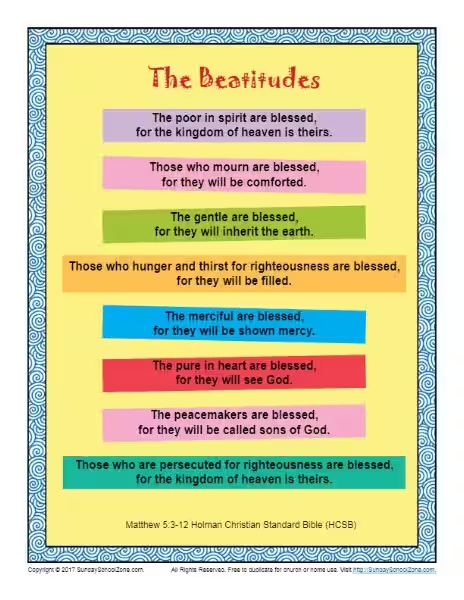
“Blessed are the poor in spirit: for theirs is the kingdom of heaven.”
“Blessed are they that mourn: for they shall be comforted.”
“Blessed are the meek: for they shall inherit the earth.”
“Blessed are they which do hunger and thirst after righteousness: for they shall be filled.”
“Blessed are the merciful: for they shall obtain mercy.”
“Blessed are the pure in heart: for they shall see God.”
“Blessed are the peacemakers: for they shall be called the children of God.”
“Blessed are they which are persecuted for righteousness’ sake: for theirs is the kingdom of heaven.”