The intersection of the Bible and the concept of the poor is not a mere footnote in religious texts; it is a central, recurring theme that has shaped theological discourse and inspired countless acts of compassion throughout history. From the earliest narratives of scripture to the teachings of Jesus, a profound and consistent emphasis is placed on the plight of the marginalized, the destitute, and those lacking material possessions. This isn’t a superficial acknowledgment; it’s a deep-seated concern that permeates the very fabric of biblical understanding, urging believers to engage with poverty not as an abstract problem, but as a lived reality demanding a response rooted in faith and love.
Understanding the biblical perspective on the poor requires us to move beyond modern economic definitions. Scripture often speaks of those who are “poor in spirit,” acknowledging a spiritual poverty that can afflict anyone, regardless of their material wealth. However, the more prevalent discourse in the Bible addresses those who are materially disadvantaged, lacking basic necessities, and often subject to societal oppression. These individuals are not presented as inherently lacking worth or faith, but rather as recipients of special divine attention and as those who can teach profound spiritual lessons to the affluent. The Bible consistently challenges the comfortable to recognize and minister to the needs of the poor, seeing it as a direct reflection of their commitment to God.
The foundational texts of the Old Testament lay a robust groundwork for understanding the relationship between God, the people of Israel, and the poor. The Mosaic Law, for instance, is replete with provisions designed to protect and uplift the vulnerable. These weren’t optional suggestions; they were divine commandments, integral to the covenant relationship between God and His people. Think of the gleaning laws, which mandated that farmers leave the edges of their fields unharvested so that the poor and the stranger could gather food – a tangible expression of communal responsibility. Similarly, the concept of the Sabbath year and the Jubilee year aimed to prevent the perpetual accumulation of wealth and the entrenchment of poverty, offering periodic resets and opportunities for those who had fallen into debt or servitude to regain their footing.
Furthermore, the prophets frequently railed against injustice and exploitation, directly condemning those who oppressed the poor for personal gain. Figures like Amos and Isaiah delivered powerful sermons, denouncing the rich who “trample on the needy” and sell “the righteous for silver, and the needy for a pair of sandals.” These pronouncements reveal a God who is acutely aware of and deeply concerned with the suffering of the poor, and who holds those in positions of power accountable for their actions. The message is clear: a nation’s or community’s faithfulness to God is measured, in large part, by how it treats its most vulnerable members, making care for the poor an essential component of true worship and obedience.
Provisions for the Vulnerable: Laws of Compassion
The legal framework established by God for ancient Israel was remarkably progressive in its concern for the poor. Beyond the agricultural stipulations, the Law addressed issues like lending without exorbitant interest, ensuring that a fellow Israelite wouldn’t be driven further into destitution by debt. It also mandated fair treatment for laborers, forbidding the withholding of wages, especially for the poor who depended on daily earnings for survival. These laws were not merely about charity; they were about systemic justice, aimed at creating a society where the poor could live with dignity and have opportunities for a better life.
Consider the case of a widow or an orphan in ancient times. They were often the most vulnerable members of society, lacking the traditional male providers and protectors. The Bible repeatedly commands special care and protection for them, viewing their welfare as a litmus test of societal righteousness. This comprehensive approach underscores that the biblical concern for the poor was multifaceted, addressing immediate needs while also striving for a more equitable societal structure. It highlights a God who champions the cause of the downtrodden and expects His followers to do the same.
Jesus and the Poor: A Radical Embrace
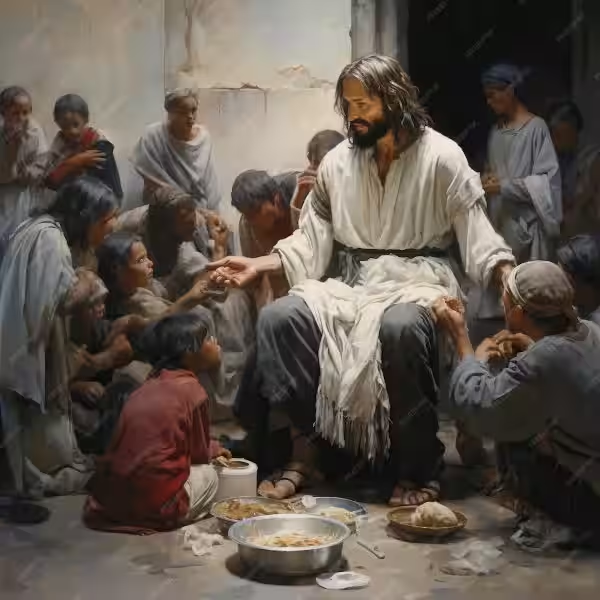
The arrival of Jesus Christ marked a revolutionary intensification of the biblical focus on the poor. His ministry was, in many ways, a direct embodiment of God’s preferential option for the marginalized. He spent his time with the outcasts, the tax collectors, the lepers, and the destitute, offering them not just material aid but also spiritual healing and a sense of belonging. His teachings frequently warned the wealthy about the dangers of materialism and the spiritual blindness it can induce, famously stating that “it is easier for a camel to go through the eye of a needle than for someone who is rich to enter the kingdom of God.” This stark imagery emphasizes the immense challenge of prioritizing spiritual wealth over material possessions.
Jesus’ parables are filled with characters from the margins of society, often portraying the poor as the ones who truly understand God’s kingdom. The parable of the Rich Man and Lazarus, for example, starkly contrasts the opulent lifestyle of one man with the suffering of the other, ultimately showing Lazarus welcomed into paradise while the rich man faces torment. This narrative powerfully illustrates the divine inversion of societal values, demonstrating that true blessedness is found not in earthly riches but in faithfulness and humility before God. Jesus’ life and teachings consistently elevated the status of the poor, making their well-being a central tenet of his message of salvation and redemption.
The Beatitudes: Blessed Are the Poor
Perhaps one of the most iconic declarations of Jesus regarding the poor is found in the Beatitudes, delivered at the beginning of his Sermon on the Mount. He declares, “Blessed are the poor in spirit, for theirs is the kingdom of heaven.” This statement is profound because it acknowledges both spiritual and material poverty as conditions that can lead to a deeper reliance on God. While “poor in spirit” encompasses humility and a recognition of one’s utter dependence on God, it also resonates with those who are materially destitute, whose very circumstances often force a reliance on divine provision and human kindness.
The subsequent beatitudes continue this theme, blessing those who mourn, the meek, those who hunger and thirst for righteousness, and the merciful. These are qualities often cultivated or amplified in the lives of the poor, who may experience hardship that leads to mourning, require meekness to endure, develop a deep longing for justice, and understand the need for mercy through their own experiences. Jesus’ pronouncements are not calls for people to embrace suffering, but rather affirmations that God sees, values, and often empowers those who are marginalized and who live lives of faith amidst their struggles. This radical blessing of the poor reshaped the understanding of who God favors and how true blessedness is attained.
The Early Church and the Poor: A Community of Sharing
The early Christian church, as depicted in the Book of Acts, was characterized by a radical commitment to its members, particularly the poor. The followers of Jesus established a model of communal living and radical generosity, where possessions were often shared, and no one among them was in need. This wasn’t a forced communism, but a voluntary outpouring of love and a practical demonstration of their newfound faith and fellowship. The apostles specifically appointed deacons to ensure that the distribution of resources was fair and that the widows, who were particularly vulnerable, were adequately cared for, demonstrating a structured approach to addressing the needs of the poor. This communal sharing was a powerful testament to the transformative power of the Gospel, showing that faith in Christ led to tangible concern for the well-being of others.
This emphasis on caring for the poor extended beyond the immediate Christian community. As the church grew, its acts of charity and compassion became known throughout the wider Roman world. Christians were often seen caring for the sick, the orphaned, and the destitute, even those outside their faith, earning a reputation for selfless service. This practical demonstration of love and justice, rooted in their biblical convictions, was a significant factor in the spread of Christianity. The Bible calls believers to be salt and light in the world, and for the early church, this meant actively ministering to the needs of the poor as a core expression of their faith.
Acts of Generosity: A Shared Life
The accounts in Acts paint a vivid picture of a church that actively sought to meet the material needs of its members. Barnabas, for instance, sold his land and gave the proceeds to the apostles to distribute among the needy. Ananias and Sapphira, though their story has a tragic end, illustrate the expectation of generous giving within the community. The core principle was that faith in Jesus Christ necessitated a reordering of priorities, placing the welfare of the community, especially the poor, above personal accumulation of wealth. This voluntary sharing created a strong sense of solidarity and mutual support.
This commitment to the poor wasn’t just about providing handouts; it was about fostering a community where everyone felt valued and supported. It was about recognizing the inherent dignity of each person, regardless of their economic status. The Bible, through these early examples, presents a compelling vision of what a faith-filled community looks like in practice – one that actively seeks out and addresses the needs of the least among them. This enduring legacy continues to inspire charitable organizations and individuals striving to live out biblical principles today.
The Enduring Relevance: The Bible’s Call to Action Today
The conversation between the Bible and the poor is far from a historical relic; it remains incredibly relevant for contemporary society. The scriptures continue to challenge individuals and communities to confront the pervasive issues of poverty, inequality, and marginalization. The biblical narrative provides a moral framework and a spiritual impetus for taking action, urging believers to move beyond passive observation to active engagement. It reminds us that our faith is not meant to be confined to private devotion but should manifest in tangible acts of justice and compassion that alleviate suffering and promote human dignity.
In a world still grappling with immense disparities in wealth and opportunity, the biblical emphasis on the poor offers a powerful counter-narrative to societal indifference. It calls for a reevaluation of our values, our economic systems, and our personal responsibilities. Whether through supporting aid organizations, advocating for systemic change, or simply extending kindness to those struggling in our immediate communities, the Bible provides a timeless mandate for loving our neighbors, especially those who are most vulnerable. The call to care for the poor is a fundamental aspect of living out a faith that is both authentic and transformative.
Yes, the Bible addresses poverty extensively. It portrays poverty as a significant social issue and offers numerous teachings and narratives related to it. The Old Testament, for instance, contains laws designed to protect the poor and vulnerable, such as gleaning laws (allowing the poor to harvest leftover crops) and prohibitions against usury. The Prophets frequently condemned the oppression of the poor and called for justice. In the New Testament, Jesus’ ministry heavily involved ministering to the poor, and his teachings often emphasized compassion and generosity towards them.
Does the Bible condemn poverty?
The Bible doesn’t necessarily condemn poverty itself as a moral failing of the individual. Instead, it often condemns the systems and actions that cause poverty and the mistreatment of the poor. It highlights the negative consequences of poverty and calls for relief and justice for those who suffer from it. While it associates wealth with potential spiritual dangers, it doesn’t automatically equate poverty with righteousness.
What does the Bible say about the rich?
The Bible has a complex view of wealth and the rich. It acknowledges that wealth can be a blessing from God, but it also warns of the dangers associated with it, such as pride, greed, and the temptation to rely on riches rather than God. Numerous passages caution that it is difficult for a rich person to enter the Kingdom of God. The Bible also calls the rich to be generous, responsible stewards of their wealth, and to use it to help the poor and further God’s purposes.
Are there verses that suggest the poor are blessed?
Yes, there are verses that speak of the spiritual blessings or favored status of the poor in God’s eyes. The most famous example is Jesus’ beatitude in the Sermon on the Mount: “Blessed are the poor in spirit, for theirs is the kingdom of heaven” (Matthew 5:3). This refers to those who recognize their spiritual need and dependence on God. Other passages highlight that God hears the cries of the oppressed and that the poor are often more receptive to the message of the Gospel.
How does the Bible advocate for the poor?
The Bible advocates for the poor through various means:
* Laws and social justice: The Old Testament established laws to protect the poor and ensure fair treatment.
* Prophetic denunciation: Prophets consistently spoke out against the exploitation and neglect of the poor.
* Jesus’ example and teachings: Jesus identified with the poor, ministered to them, and taught radical compassion, generosity, and the importance of caring for the needy.
* Early church practices: The early Christian communities were encouraged to share their possessions and care for the needs of all members, especially the poor.
* Emphasis on stewardship: Believers are called to be good stewards of their resources and to use them to benefit others, particularly the less fortunate.
Does the Bible promote a specific economic system?
The Bible does not explicitly endorse a single, modern economic system like capitalism or socialism. Instead, it provides ethical principles that can inform economic practices. These principles include fairness, honesty, compassion, justice, and the responsible stewardship of resources. The emphasis is on how people treat each other within any economic framework, with a strong concern for the well-being of the poor and vulnerable.