For centuries, the Roman Catholic Church has held a deeply ingrained tradition of burial, viewing the human body as a sacred vessel created in the image of God and destined for resurrection. This reverence for the physical remains has historically led to the practice of interment. However, in recent decades, a significant evolution has occurred regarding the Church’s stance on cremation. This article will explore the historical context, the theological underpinnings, and the practical considerations surrounding cremation within the Roman Catholic Church, aiming to provide a comprehensive and accessible understanding for those seeking clarity.
The journey from a strong preference for burial to a more open acceptance of cremation has been a gradual one, influenced by societal changes, practical necessities, and a deeper theological reflection. Understanding this shift requires delving into the core tenets of Catholic belief and how they are applied to the modern world. We will examine the nuances of this evolving practice, offering insights that are both informative and relatable for individuals and families navigating these important end-of-life decisions.
Historical Roots: Burial as the Traditional Catholic Practice
Historically, the Roman Catholic Church has consistently advocated for bodily burial. This practice was deeply intertwined with the theological understanding of resurrection of the body. For Catholics, the body is not merely a temporary vessel but an integral part of the human person, destined to be reunited with the soul at the end of time. Therefore, preserving the body, even in death, was seen as a tangible expression of faith in this future resurrection. This belief was so central that it shaped funeral rites and burial customs for millennia.
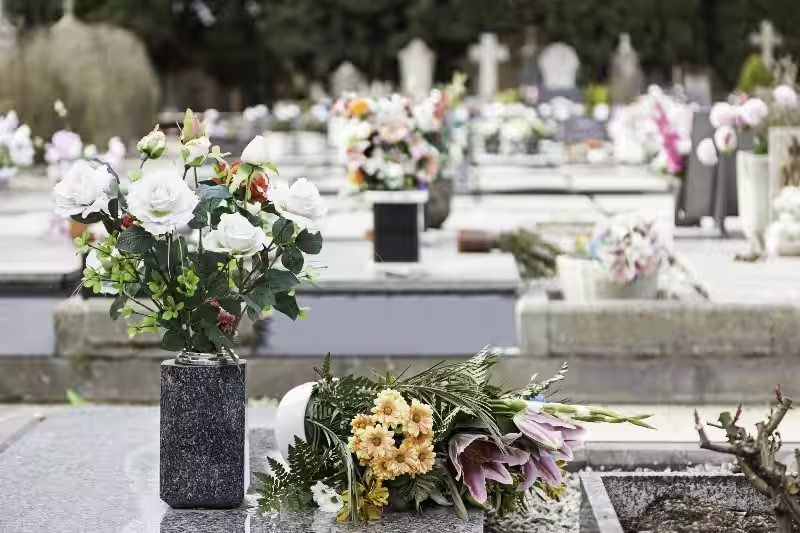
The emphasis on burial was also rooted in the reverence for the humanity of Christ, who was himself buried. Early Christian communities often buried their dead in cemeteries, sometimes near the tombs of martyrs, further solidifying the link between burial and veneration. The sacredness of the human body, even after death, was paramount, and burial was the customary way to honor and protect it. This historical preference for burial is a foundational element when discussing the Roman Catholic Church and cremation.
Theological Basis for Reverence of the Body
At the heart of the Catholic understanding of burial lies the belief in the incarnation and the resurrection. Jesus Christ, the Son of God, took on a human body, and through his own death and resurrection, he sanctified human flesh. This means that every human body, having been united with Christ in baptism, is considered a temple of the Holy Spirit and is destined for a glorious resurrection. Therefore, the physical body, even in its decomposed state, holds a profound dignity and is intrinsically linked to our eternal destiny. This is why the Roman Catholic Church traditionally favored practices that allowed for the body’s preservation, or at least its dignified resting place.
The theological concept of “dust to dust” also plays a role, but it is interpreted within the framework of hope and resurrection, not annihilation. While the body returns to the earth, the individual’s soul is immortal and awaits the resurrection. The Church’s teachings have always aimed to affirm the enduring dignity of the person, body and soul, and burial was the most consistent way to express this belief. This deep theological conviction is crucial for understanding the Church’s historical hesitation regarding cremation.
The Shift: Changing Societal Norms and Church Adaptation
Over the past century, societal norms surrounding death and disposition have undergone a dramatic transformation. Increased urbanization, changing living arrangements, and a growing appreciation for environmental considerations have led to a significant rise in the popularity of cremation. This societal shift naturally prompted questions and discussions within the Roman Catholic Church about its long-held practices. The Church, while steadfast in its core theological tenets, has also demonstrated a capacity for adaptation to changing circumstances, always seeking to minister effectively to its faithful.
The Instruction “Ad Resurgendum cum Christo” issued by the Congregation for the Doctrine of the Faith in 2016 marked a pivotal moment in this evolution. This document officially permitted cremation, provided that it is not chosen as a denial of faith or Christian doctrine. This was a significant step, acknowledging the practical realities and personal preferences of many Catholics while reaffirming the Church’s fundamental beliefs. The Roman Catholic Church and cremation were no longer in direct opposition, but rather in a state of nuanced coexistence.
When Cremation Became Permissible
The initial prohibition against cremation within the Roman Catholic Church stemmed from concerns that it might be a rejection of the resurrection of the body, or a materialistic view of the human person. However, as cremation became more common and often driven by practical reasons such as cost, space limitations, or personal preference rather than theological dissent, the Church began to re-evaluate its position. The abolition of the prohibition in 1963 by the Holy See was a landmark change, but it was accompanied by specific stipulations.
The key condition for the Church’s acceptance of cremation is that it must not be performed in a way that “indicates a denial of faith, spiritualism, or similar errors.” In essence, the Church permits cremation when it is done out of practical necessity, family preference, or for other non-ideological reasons. This distinction is vital for understanding the current guidelines surrounding cremation within the Roman Catholic Church. The intention behind the choice is paramount.
Guidelines and best practices for Cremation in the Roman Catholic Church
While cremation is now permitted, the Roman Catholic Church still encourages burial as the primary means of disposing of the body, as it is seen as a more direct expression of belief in the resurrection of the body. However, when cremation is chosen, there are specific guidelines to be followed to ensure that the practice remains consistent with Catholic teaching. These guidelines are designed to uphold the dignity of the deceased and the sanctity of the human person.
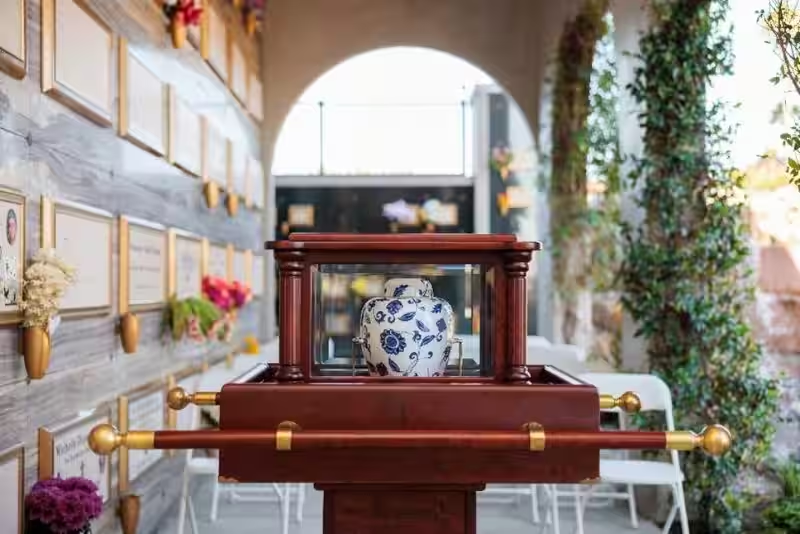
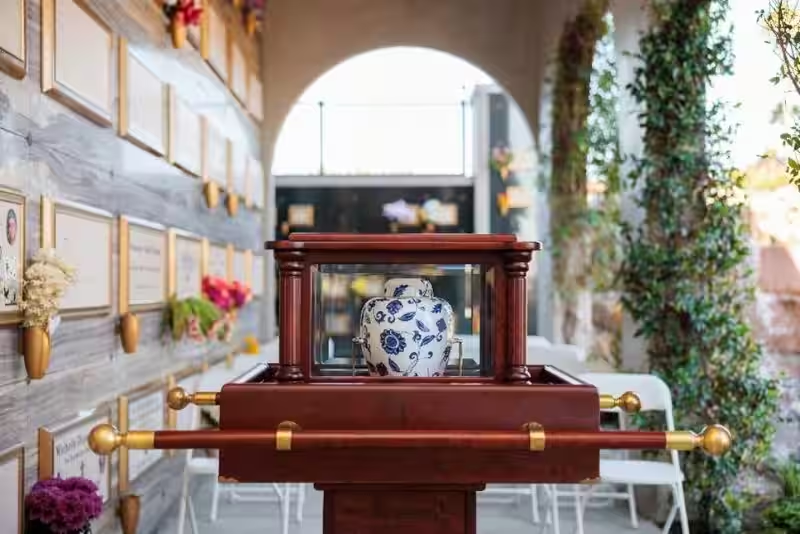
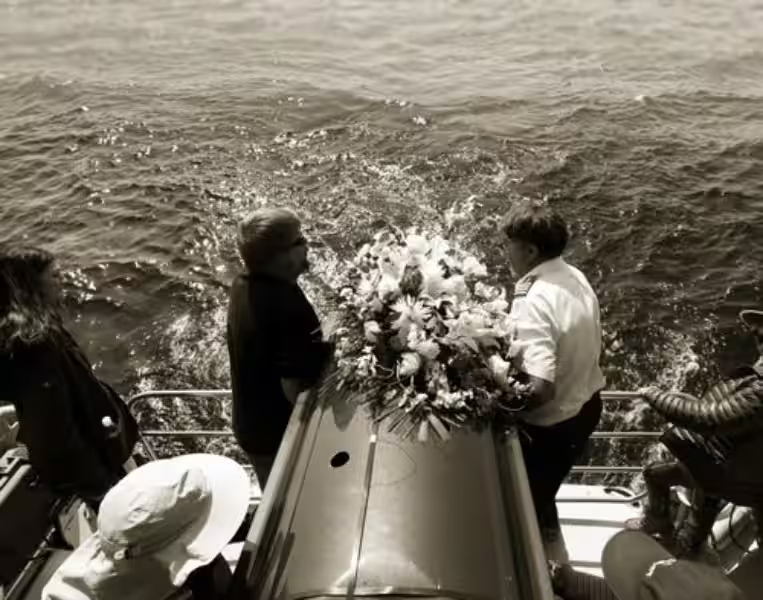
Crucially, the ashes of the deceased are to be treated with respect, just as the body would be. This means they should not be scattered, divided among family members, or kept in jewelry. Instead, the ashes should be entombed in a sacred place, such as a cemetery or a columbarium (a building or structure with niches for urns). This practice, often referred to as “burial of cremated remains,” continues the tradition of a designated resting place and a focus on future resurrection. The Roman Catholic Church and cremation are thus reconciled through respectful disposition of the ashes.
The Proper Disposition of Cremated Remains
The Instruction “Ad Resurgendum cum Christo” provides clear directives for the disposition of cremated remains. The primary recommendation is burial in a cemetery or columbarium. This allows for a place of remembrance and prayer for the departed, maintaining a tangible connection to the individual and the community of faith. Keeping ashes in a place that is not consecrated, such as at home, is discouraged, as it can diminish the sense of reverence and communal mourning.
In cases where a cemetery or columbarium is unavailable or impractical, the local Ordinary (bishop) may grant permission for other appropriate sacred spaces. The core principle remains: the dignity of the human person, even in the form of ashes, must be preserved. This ensures that the practice of cremation, when undertaken by Catholics, is always framed within the context of faith in the resurrection and eternal life. For those seeking to understand the Roman Catholic Church’s view on cremation, these guidelines are essential.
Understanding the Pastoral Implications and Support
The shift in the Roman Catholic Church’s stance on cremation has significant pastoral implications. It allows priests and parish communities to better minister to families who choose cremation, offering comfort and guidance within the framework of Catholic teaching. Previously, a family opting for cremation might have felt alienated or unsupported by their faith community. Now, the Church can embrace and support these families, affirming their faith and offering the solace of Catholic funeral rites.
Parish priests play a vital role in educating parishioners about the Church’s updated guidelines and explaining the theological reasoning behind them. This pastoral care involves reassuring individuals that choosing cremation, when done with the right intentions, does not jeopardize their salvation or their hope in the resurrection. The Roman Catholic Church’s approach to cremation is ultimately one of compassion and understanding, seeking to meet people where they are while remaining true to its enduring beliefs.
Navigating End-of-Life Decisions with Faith
For individuals and families planning for end-of-life decisions, understanding the nuances of the Roman Catholic Church’s position on cremation can be incredibly helpful. It allows for informed choices that are both personally meaningful and consistent with their faith. While burial remains the preferred option for many, the Church’s acceptance of cremation offers a vital avenue for those who, for various reasons, choose this path.
The key takeaway is that the Roman Catholic Church’s endorsement of cremation is conditional on its intent. It is permitted as a respectful disposition of the body when not done to deny faith. By following the guidelines for the respectful interment of ashes, Catholics can ensure that their end-of-life choices are a testament to their enduring faith in God’s love and the promise of eternal life. This journey of understanding highlights the Church’s ability to adapt while holding firm to its core spiritual truths.
Frequently Asked Questions: Cremation and the Roman Catholic Church
Can Roman Catholics be cremated?
Yes, Roman Catholics can be cremated. The Church’s stance on cremation changed in 1963. While burial remains the preferred practice, cremation is now permitted, provided it does not demonstrate a denial of faith in the resurrection of the body.
What are the requirements for cremation in the Catholic Church?
The ashes of the deceased must be treated with respect and kept in a sacred place, such as a columbarium, a grave, or a church. Scattering ashes, dividing them among family members, or keeping them in jewelry or keepsakes at home are not permitted as they do not honor the deceased’s dignity or the belief in the resurrection.
Why does the Church prefer burial over cremation?
Historically, the Church preferred burial because it symbolized the resurrection of the body and followed the practice of Jesus’ burial. The tradition of burial was seen as a more tangible reminder of faith in the resurrection. However, the Church does not consider cremation inherently contrary to its teachings.
What is the significance of the body in Catholic belief?
Catholics believe that the body is a temple of the Holy Spirit and will be resurrected on the last day. This belief in the resurrection of the body is central to Catholic eschatology. The Church’s pastoral care for the deceased, whether through burial or cremation, aims to respect the dignity of the human person and express hope in the resurrection.
Can a Catholic funeral Mass be celebrated if the body is cremated?
Yes, a Catholic funeral Mass can be celebrated with the cremated remains present. The cremated remains should be treated with the same respect as a body and placed in a suitable container.
What are the guidelines for the ashes of a cremated Catholic?
The cremated remains should be stored in a sacred place, such as a cemetery, mausoleum, or church columbarium. This ensures that the dignity of the deceased is maintained and that the ashes are treated with respect, reflecting the belief in the resurrection.