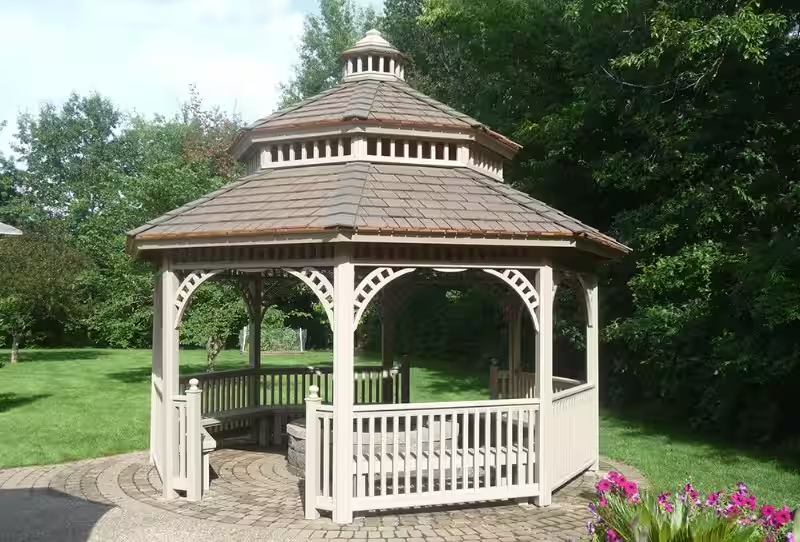
The gentle rustle of leaves, the dappled sunlight filtering through an open-air structure, the quiet hum of nature as a backdrop – this is the essence of a traditional gazebo. More than just an attractive garden feature, this iconic architectural element has, throughout history, quietly woven itself into the fabric of human spiritual expression. Its open yet defined form, its connection to the natural world, and its inherent sense of tranquility have made it a surprisingly potent space for religious contemplation, communal prayer, and personal devotion.
From ancient pagodas that touched the heavens to the humble garden shelters of more recent centuries, the concept of a dedicated, often elevated, space for spiritual connection has persisted. The traditional gazebo, with its characteristic octagonal or hexagonal shape, its pitched roof, and its open sides, embodies a timeless desire for a sanctuary that is both integrated with the earth and open to the divine. It’s a place where the boundaries between the earthly and the spiritual can blur, fostering a profound sense of peace and presence.
From Ancient Altars to Garden Sanctuaries: A Spiritual Genealogy
While the term “gazebo” might evoke images of Victorian gardens, the underlying principle of an open-air spiritual enclosure has roots stretching back millennia. Early civilizations often designated sacred groves or open-air altars as places for worshipping deities and offering sacrifices. These were not enclosed buildings but rather natural clearings or simple structures that allowed for a direct connection with the sky and the elements, mirroring the openness and accessibility that a traditional gazebo offers today.
Consider the ancient Greek temples, many of which were open to the sky, with altars placed in courtyards. The emphasis was on communion with the divine in the natural world. Similarly, many indigenous cultures around the globe have long utilized sacred circles, sweat lodges, or simple ceremonial platforms that serve as focal points for spiritual gatherings, all echoing the fundamental idea of a demarcated space for sacred activity. The traditional gazebo, in its more modern iteration, inherits this legacy, providing a readily accessible and aesthetically pleasing manifestation of this age-old human need for a dedicated spiritual haven.
The traditional gazebo, by its very design, invites a sense of sacredness. Its open sides symbolize an unrestricted flow of energy and spirit, allowing participants to feel connected to the surrounding environment – the earth beneath their feet, the sky above, and the gentle breezes that whisper through the structure. This unimpeded connection to nature is often seen as a reflection of the divine, a tangible manifestation of a higher power present in all things.
The roof of a gazebo, even as it provides shelter, also acts as a visual anchor connecting the earthly realm to the celestial. It’s a canopy that offers protection, much like a divine embrace, while simultaneously drawing the eye upwards, encouraging thoughts of the heavens and the transcendent. This duality of grounding and aspiration makes the traditional gazebo a potent symbol, a miniature universe where the sacred can be experienced both internally and externally.
Finding Solace and Community: Gazebos in Religious Practice
Throughout history and across various faiths, the traditional gazebo has served as a versatile space for a range of religious activities. For individuals seeking personal reflection and prayer, its quietude offers an escape from the distractions of daily life. Imagine a devout Christian finding solace in a private gazebo for daily devotions, the quiet rustling of leaves a natural hymn. Or a Buddhist monk retreating to a serene gazebo for meditation, the open structure facilitating a deep connection with the present moment.
Beyond individual spiritual pursuits, the traditional gazebo also fosters a sense of religious community. Its open design encourages gathering, making it ideal for small group prayers, Bible studies, or even informal discussions about faith. Think of a Jewish community using a beautifully appointed gazebo for a Sukkot celebration, its open walls and roof symbolizing the temporary dwellings of their ancestors. Or a Unitarian congregation holding a thought-provoking discussion group in a peaceful gazebo, encouraging open dialogue and shared exploration of spiritual themes. The inherent inclusivity of the traditional gazebo makes it a natural focal point for shared faith experiences.
Symbolism and Spirituality: The Deeper Meanings of a Gazebo
The shape of a traditional gazebo, often octagonal or hexagonal, carries significant symbolic weight in many spiritual traditions. The octagon, for instance, is often associated with rebirth and renewal, representing the eight days of creation or the eightfold path in Buddhism. The hexagon, with its symmetry and balance, can symbolize harmony and perfection, reflecting the order and beauty of the divine creation. These geometric underpinnings add a layer of sacred geometry to the structure, subtly enhancing its spiritual resonance.
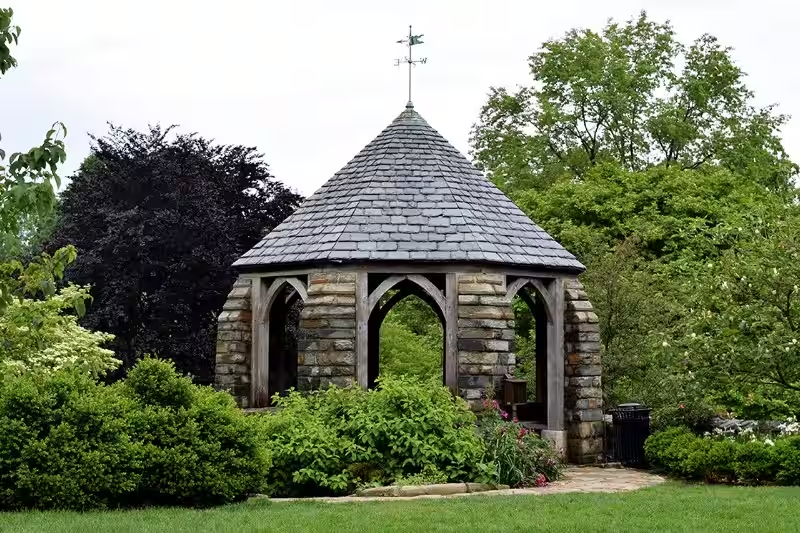
Furthermore, the materials used in a traditional gazebo can also contribute to its spiritual significance. Natural wood, for example, connects the structure directly to the earth and signifies growth, life, and resilience. Stone elements can evoke steadfastness and permanence, reminiscent of enduring faith. Even the placement of a gazebo in a garden, amidst blooming flowers or beside tranquil water features, can enhance its spiritual aura, aligning it with the beauty and peace of the natural world, often seen as a reflection of divine artistry.
The Gazebo as a Modern Sanctuary for Spiritual Growth
In our increasingly fast-paced and digitally saturated world, the need for quiet sanctuaries for spiritual connection is more pronounced than ever. The traditional gazebo, with its enduring appeal and inherent sense of peace, continues to offer a valuable space for faith and reflection. Whether situated in a bustling city park, a private garden, or the grounds of a religious institution, its presence invites pause, contemplation, and a renewed connection to what truly matters.
From interfaith dialogues held under a shared gazebo to individual moments of deep spiritual connection, the traditional gazebo remains a testament to the enduring human search for meaning and the sacred. Its simplicity belies its profound capacity to foster inner peace and communal bonds, proving that sometimes, the most sacred spaces are the ones that are most open to the world around us. The traditional gazebo stands as a quiet, elegant reminder of our innate desire to connect with something larger than ourselves, a timeless haven for the soul.
Frequently Asked Questions about Traditional Gazebos
What is a traditional gazebo?
A traditional gazebo is a freestanding, open-sided structure, often octagonal or hexagonal in shape, typically found in gardens or parks. It is designed to provide shade and shelter while offering an unobstructed view of the surrounding landscape. Historically, they were often used for recreation, contemplation, or as a focal point in a garden design.
Are there any religious associations with traditional gazebos?
While traditional gazebos themselves are not inherently religious structures, their design and function can sometimes lend themselves to religious or spiritual use. The peaceful and contemplative nature of a gazebo can make it a suitable place for quiet prayer, meditation, or reflection. In some garden designs, a gazebo might be placed in a serene spot that evokes a sense of spiritual tranquility. However, this is a matter of personal interpretation and use, rather than a defined religious purpose of the structure itself.
Can a gazebo be used for religious ceremonies?
Yes, a gazebo can be an appropriate and beautiful setting for small religious ceremonies, such as intimate weddings, baptisms, or blessings, particularly if the surrounding environment is conducive to such an event. Its open design allows for a connection with nature, which many find enhances a spiritual experience. However, it’s important to consider the specific requirements of any religious denomination or officiant regarding the suitability of the location.
Are there specific religious symbols or designs incorporated into traditional gazebos?
Generally, traditional gazebos do not feature specific religious symbols or designs as a standard element. Their aesthetic is typically focused on architectural beauty and harmony with the landscape. However, some owners may choose to personalize their gazebo with subtle decorative elements that hold personal spiritual significance. This is a customization, not a common feature of the traditional gazebo itself.