For many, the journey of faith is a lifelong exploration, a constant seeking of deeper understanding and connection. In this quest, the scriptures often serve as a profound guide, a window into the divine. When embarking on this sacred reading, the choice of translation can significantly shape the experience. One such translation that has garnered significant attention and respect within the Catholic Church is the Revised Standard Version Catholic Edition. It represents a thoughtful evolution in biblical scholarship, aiming to provide a text that is both accurate to the original languages and accessible to the modern reader.
This particular edition isn’t just another book on the shelf; it’s a meticulously crafted tool designed to illuminate the richness of Catholic teaching and tradition. Its creation was a deliberate effort to honor the scholarly advancements in understanding ancient Hebrew, Aramaic, and Greek texts, while simultaneously ensuring its suitability for liturgical use and personal devotion. Understanding the nuances of the Revised Standard Version Catholic Edition can unlock a more profound engagement with the Word of God.
Understanding the Genesis of the Revised Standard Version Catholic Edition
The story of the Revised Standard Version Catholic Edition begins with the desire for a more faithful and contemporary rendering of the Bible. Building upon the foundation of the King James Version, the original Revised Standard Version (RSV) was published in the mid-20th century by Protestant scholars. Its aim was to provide a translation that was highly literal, adhering closely to the grammatical structures and vocabulary of the original biblical languages. This commitment to fidelity was a significant step forward in biblical studies, offering a text that scholars and interested laypeople could rely on for its exegetical value.
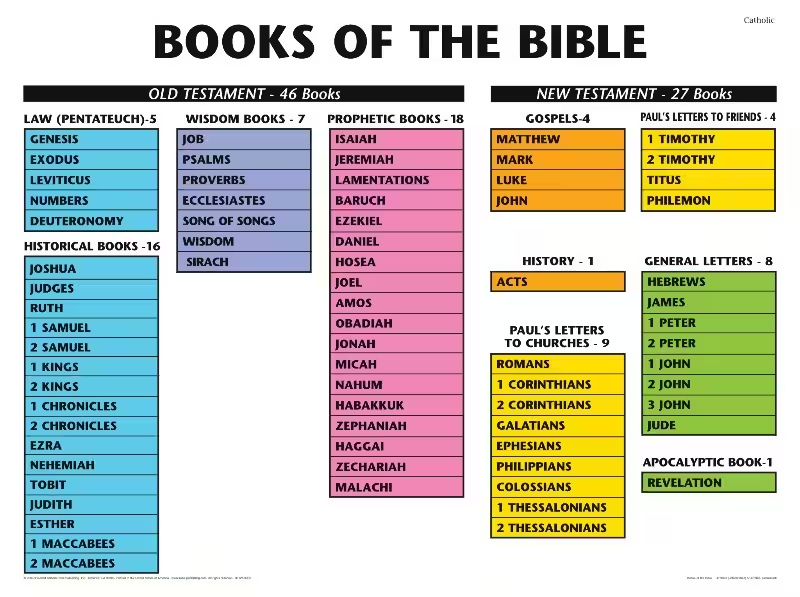
However, the Catholic Church, while appreciating the scholarly rigor of the RSV, also recognized the need for certain specific inclusions and nuances that are central to Catholic doctrine. This led to the development of the Revised Standard Version Catholic Edition, a collaborative effort that incorporated the deuterocanonical books (often referred to as the Apocrypha by Protestants) into the Old Testament. Furthermore, the translation was reviewed by Catholic theologians and scholars to ensure its consistency with Catholic hermeneutics and its suitability for use in Catholic contexts, including the Mass. This careful addition and review process makes the Revised Standard Version Catholic Edition a uniquely valuable resource for Catholics.
The Importance of Accuracy and Accessibility in Scripture
The central tenet behind the creation of the Revised Standard Version Catholic Edition was the pursuit of both accuracy and accessibility. In religious contexts, a translation needs to be more than just a word-for-word rendering; it must convey the intended meaning and theological weight of the original text. For instance, when Jesus says, “This is my body,” the precise wording and its implications are crucial for understanding the doctrine of the Eucharist. The RSV aimed for a precise and scholarly translation, and the Catholic Edition continued this commitment.
Simultaneously, a Bible translation that is overly technical or archaic can become a barrier to understanding for the average believer. The Revised Standard Version Catholic Edition strives for a balance. While it retains a formal equivalence in its translation philosophy, meaning it aims to mirror the grammatical structure of the original languages as much as possible, it employs clear and understandable English. This allows readers to engage with the profound messages of scripture without being bogged down by obscure vocabulary or convoluted sentence structures. Think of it like a meticulously translated poem: it aims to preserve the original rhythm and imagery while still resonating with contemporary readers.
Key Features and Benefits of the Revised Standard Version Catholic Edition
One of the most significant advantages of the Revised Standard Version Catholic Edition is its inclusivity of the deuterocanonical books. These books, such as Tobit, Judith, Wisdom, Sirach, Baruch, and 1 and 2 Maccabees, are an integral part of the Catholic canon of Scripture and hold significant theological and historical importance. Their inclusion means that Catholics using this edition have a complete biblical resource that aligns with their faith tradition. These books offer rich narratives and profound wisdom that complement the rest of the Old Testament.
Beyond the canonical scope, the Revised Standard Version Catholic Edition is also lauded for its clarity in theological language. When concepts like “grace,” “justification,” or the “sacraments” are presented, the translation aims to use English that is faithful to the original Greek or Hebrew, while also being readily understood within a Catholic theological framework. For example, the translation of certain passages related to the role of Mary or the authority of the Church is carefully rendered to reflect Catholic understanding developed through tradition and magisterial teaching. This makes the Revised Standard Version Catholic Edition a trusted companion for catechesis and spiritual growth.
Navigating the Text for Deeper Spiritual Insight
Engaging with the Revised Standard Version Catholic Edition can be a deeply rewarding spiritual experience. It encourages a contemplative reading of scripture, allowing the reader to not just absorb information but to encounter God. For instance, when reading the Psalms in this edition, the poetic language and theological depth are preserved, offering moments of prayer and reflection. The clear prose allows the reader to easily identify the emotional and spiritual sentiments being expressed, fostering a more personal connection to the psalmist’s experience.
Furthermore, the Revised Standard Version Catholic Edition is an excellent resource for liturgical study. The readings proclaimed during Mass are often drawn from this or similar scholarly translations. By familiarizing oneself with this edition, parishioners can better follow and understand the biblical texts presented during the liturgy, enhancing their participation in the Mass. This familiarity can transform passive listening into active engagement, making the Word of God spoken during worship more impactful and meaningful in the reader’s daily life. It’s like having a well-annotated map for a journey you’re already on.
The Revised Standard Version Catholic Edition in Practice
For many Catholic families and individuals, the Revised Standard Version Catholic Edition has become a staple for personal prayer and study. It’s the Bible that might be found on a nightstand, used for morning prayer, or consulted during family discussions about faith. The consistent translation style and the inclusion of the full Catholic canon make it a reliable and comprehensive tool for anyone seeking to deepen their understanding of Catholic teachings through scripture. This edition provides a solid foundation for exploring the theological nuances that underpin Catholic beliefs.
Moreover, educators and catechists often recommend the Revised Standard Version Catholic Edition for its balance of scholarly integrity and readability. When explaining complex theological concepts to students or adult learners, having a translation that is both accurate and accessible is paramount. For example, when discussing the covenant in the Old Testament, the precise language used in this edition can help illustrate the evolving nature of God’s relationship with His people. This makes the Revised Standard Version Catholic Edition a valuable asset in faith formation across all age groups.
A Testament to Enduring Faith and Scholarship
Ultimately, the Revised Standard Version Catholic Edition stands as a testament to the enduring power of scripture and the ongoing work of biblical scholarship within the Catholic Church. It bridges the gap between the ancient world of the Bible and the modern experience of faith, offering a text that is both historically grounded and spiritually relevant. Its commitment to accuracy, clarity, and the inclusion of the full Catholic canon makes it a preferred choice for many seeking a deeper, more informed relationship with God’s Word.
Whether you are a seasoned theologian, a new convert, or simply someone seeking to understand your faith better, the Revised Standard Version Catholic Edition offers a pathway to a richer encounter with the sacred texts. It is a trusted companion for prayer, study, and a lifelong journey of discovery within the vibrant tradition of the Catholic Church. This edition serves as a reliable and insightful guide on that journey, illuminating the timeless truths that continue to shape lives of faith.
Frequently Asked Questions: Revised Standard Version Catholic Edition
What is the Revised Standard Version Catholic Edition (RSV-CE)?
The Revised Standard Version Catholic Edition is a scholarly translation of the Bible that adheres to the original Hebrew, Aramaic, and Greek texts. It was specifically revised to include the deuterocanonical books (also known as the apocrypha in some traditions) as part of the Old Testament, making it acceptable for Catholic use.
What is the difference between the RSV-CE and other Bible translations?
The RSV-CE is known for its fidelity to the original languages and its more formal, literary style of English. Unlike translations that may use dynamic equivalence (focusing on conveying the general meaning), the RSV-CE aims for a more literal translation. Its inclusion of the deuterocanonical books sets it apart from Protestant versions of the RSV.
Why are the deuterocanonical books included in the RSV-CE?
The deuterocanonical books are part of the canon of Scripture accepted by the Catholic Church and have been used in the Church’s liturgy and theological reflection for centuries. Their inclusion in the RSV-CE ensures that the translation aligns with the official list of inspired books recognized by Catholicism.
Is the RSV-CE considered an authoritative translation for Catholics?
Yes, the RSV-CE has received an imprimatur from Catholic authorities, indicating that it is free from doctrinal or moral error and is therefore considered suitable for Catholic readers and use in Catholic contexts.
What are some of the key features of the RSV-CE?
Key features include its scholarly accuracy, its formal and dignified English style, and its inclusion of the deuterocanonical books. It is often praised for its readability and its suitability for both private study and public worship.
Where can I find the RSV-CE?
The RSV-CE is widely available in print from various publishers, as well as in digital formats through Bible apps and online resources.