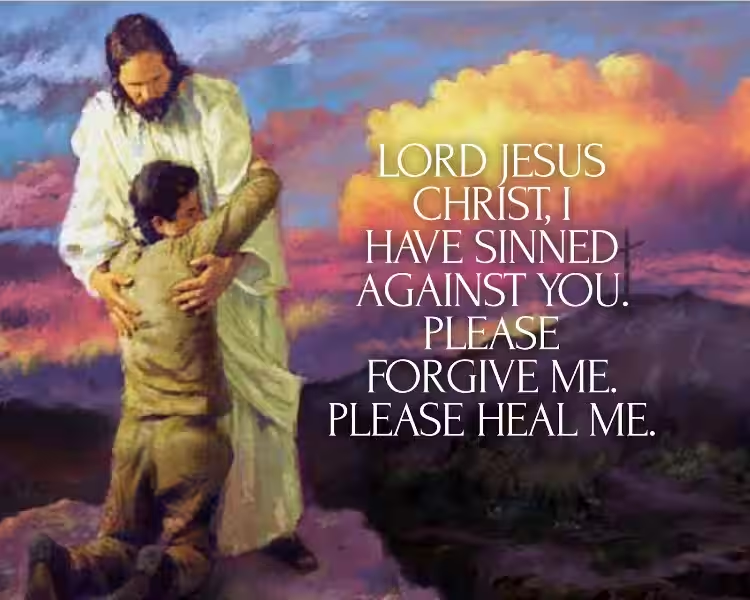
The question of what are the sins that God will not forgive is a profound and often unsettling one that has echoed through the annals of religious thought for millennia. It’s a query that can bring a chill to the heart, prompting introspection and a deep examination of our actions and intentions. Many faith traditions grapple with the concept of transgressions so severe that they fall outside the realm of divine pardon. Understanding these distinctions is not about fear-mongering, but rather about gaining clarity on the nature of sin, the scope of God’s mercy, and the pathways to reconciliation that different religions offer.
This exploration delves into these solemn questions, aiming to provide a useful, relatable, and informative perspective. We’ll journey through various religious viewpoints, seeking to illuminate the theological underpinnings of unforgivable sins while emphasizing the overarching theme of divine grace and redemption that is central to most spiritual paths. It’s a delicate balance, acknowledging the gravity of certain offenses while holding onto the hope of ultimate forgiveness.
Understanding the Concept of “Unforgivable Sin” Across Religions
The idea that some sins are inherently unforgivable is a tenet that appears in different forms across various religious traditions. It’s crucial to recognize that the interpretation and categorization of these transgressions can vary significantly. However, a common thread often emerges: these are not simply minor mistakes or lapses in judgment, but rather actions or states of being that represent a deliberate and persistent rejection of the divine or a fundamental opposition to core spiritual principles. The very definition of what constitutes an unforgivable act is, in itself, a subject of deep theological debate.
In many faiths, the emphasis is less on the act itself and more on the attitude and intent behind it. A sin might be considered unforgivable not because of its inherent wickedness, but because the perpetrator remains unrepentant and steadfast in their defiance of God. This persistent hardness of heart, this willful turning away from grace, is often seen as the true barrier to forgiveness. It’s akin to someone refusing to open a door that is being held wide open for them. The door of mercy is always there, but one must be willing to step through it.
The Christian Perspective: Blasphemy Against the Holy Spirit
Within Christianity, the most prominent and often discussed unforgivable sin is blasphemy against the Holy Spirit, as mentioned in the Gospels (Matthew 12:31-32, Mark 3:28-29, Luke 12:10). This has been a source of much contemplation and, at times, anxiety for believers. The context in which Jesus speaks of this sin is crucial: he is addressing the Pharisees who, witnessing his miraculous works, attributed them to demonic power rather than to God. This wasn’t a momentary accusation, but a deliberate and hardened misrepresentation of divine power.
Theologians often interpret this unforgivable sin not as an isolated curse word or an accidental insult directed at the Holy Spirit, but as a persistent, willful, and hardened rejection of the Spirit’s work and testimony. It implies a deep-seated antagonism towards the very source of God’s grace and truth, a refusal to acknowledge or accept God’s divine intervention. For example, someone who has experienced profound spiritual awakening or witnessed undeniable acts of God, yet consistently chooses to deny its divine origin and attribute it to evil, might be seen as treading on dangerous ground. This is not about a slip of the tongue, but a fundamental opposition to the divine nature. The key here is the unrepentant heart that actively attributes good to evil.
It’s important to understand that Jesus’ words were directed at a specific group with a particular hardened attitude. The implication is that this sin is not easily committed by the average believer struggling with guilt or doubt. The grace of God is vast, and genuine repentance is always welcomed. The unforgivable aspect lies in the final and irreversible hardening of the heart against the Holy Spirit’s convicting power, a state from which the individual refuses to be moved. This could manifest as a continuous denial of God’s truth even when confronted with overwhelming evidence.
Consider the example of someone who, after contemplating the existence of God and the validity of religious claims, concludes with absolute certainty that all religious faith is a delusion and actively works to dismantle religious institutions and beliefs, not out of genuine intellectual reasoning, but out of a deep-seated hatred or contempt for the divine. This persistent and deliberate opposition to what they perceive (or have been shown) as God’s truth, without any willingness to consider alternative perspectives or to repent, is what many understand as the essence of blasphemy against the Holy Spirit. It’s a conscious and unyielding defiance. The finality of such a stance is what makes it unforgivable.
Theological Nuances: Unforgivability vs. Unrepentance
Across many religious traditions, the distinction between a sin being inherently unforgivable and a sin remaining unforgiven due to lack of repentance is a critical one. Most faiths believe that God’s mercy is boundless and that there is no sin too great for Him to forgive, provided there is genuine remorse and a turning away from the transgression. The concept of unforgivable sins often points to a state of being rather than a specific act. It’s about a willful and persistent refusal to seek forgiveness, a hardened heart that actively rejects God’s outstretched hand.
Think of it like a doctor offering a cure for a serious illness. The cure is available, but if the patient refuses to take the medicine or follow the doctor’s advice, the illness will not be cured. The doctor’s ability to heal is not in question, but the patient’s willingness to be healed is the determining factor. Similarly, God’s capacity for forgiveness is considered infinite, but the individual’s readiness to accept that forgiveness, through repentance and a commitment to change, is paramount. The obstacles to forgiveness are often internal, residing within the individual’s own will and heart, rather than in God’s unwillingness to grant it. This is a crucial point to grasp: the power of choice plays a central role.
The Persistence of Sin and Divine Rejection
Some interpretations suggest that the unforgivable sins are those committed with full knowledge and deliberate intent, coupled with an unwavering refusal to seek reconciliation. This isn’t about a single, grave mistake made in a moment of weakness, but a sustained pattern of behavior and attitude that actively opposes divine will. It signifies a conscious and ongoing choice to reject God’s love, truth, and mercy. The individual essentially builds an impenetrable wall between themselves and the divine, a wall they refuse to dismantle.
Consider the example of a leader who, knowing the devastating consequences of their actions, deliberately perpetuates injustice, cruelty, and oppression, not out of ignorance or coercion, but out of a deep-seated malice and a desire to inflict suffering. Furthermore, when confronted with their wrongdoing and offered a path to redemption, they stubbornly refuse to acknowledge their guilt or seek amends, continuing their destructive path with full awareness. This persistent embrace of evil and rejection of any call to righteousness is what can lead to a state where forgiveness, though still offered in principle, is ultimately unreceived due to the individual’s unyielding resistance. The finality of such a rejection is what defines it as unforgivable.
Other Religious Perspectives on Unforgivable Transgressions
While Christianity has a specific theological construct around blasphemy against the Holy Spirit, other religions also identify certain actions or attitudes that are considered exceptionally grave and potentially unforgivable, particularly if they remain unrepented. In Judaism, while the concept of inherently unforgivable sins is less explicitly defined in the same way as in Christianity, idolatry, murder, and sexual immorality are considered severe transgressions. However, the emphasis remains strongly on teshuvah (repentance), which can atone for most sins, even severe ones, provided it is sincere and accompanied by a commitment to change.
In Islam, the gravest sin is Shirk, the association of partners with Allah, which is considered the ultimate form of disbelief and is unforgivable if one dies without repenting from it. Other major sins like murder, consuming the wealth of an orphan, and usury are also viewed with extreme seriousness. However, similar to Judaism, the Quran repeatedly emphasizes Allah’s vast mercy and His willingness to forgive those who sincerely repent. The key is not the nature of the sin itself, but the unrepentant heart that refuses to turn back to Allah. The door of repentance is always open until the moment of death.
The Importance of Repentance and a Contrite Heart
Across the Abrahamic faiths, and indeed many other spiritual traditions, the thread that runs through the discussion of unforgivable sins is the critical role of repentance. A truly contrite heart, one that genuinely grieves over its transgressions and has a sincere desire to amend its ways, is seen as the key that unlocks the door to divine forgiveness. This implies a conscious turning away from sin and a commitment to living a life that aligns with divine principles. It’s not about earning salvation through perfect behavior, but about acknowledging one’s flaws and seeking God’s grace to overcome them.
For example, a person who has committed a serious offense, such as theft, might feel deep remorse. They not only confess their sin to God but also actively try to make amends by returning what was stolen or compensating the victim. This act of making restitution and expressing genuine sorrow is what constitutes true repentance. The effort to rectify the wrong is a tangible demonstration of a changed heart. Without this genuine remorse and the intention to change, even lesser sins can remain a barrier to experiencing God’s full forgiveness, while a sincere repentance can bridge the gap for even the most grievous offenses. The sincerity of the turning is vital.
What About Simple Mistakes and Human Weakness?
It’s crucial to distinguish between intentional, hardened sin and the inevitable mistakes, misjudgments, and moments of human weakness that all individuals experience. Most religious teachings acknowledge that humanity is flawed and prone to error. These are not typically considered unforgivable offenses. Instead, they are seen as opportunities for growth, learning, and reliance on God’s grace. The struggle with temptation and the occasional falling short are part of the human condition, and divine mercy is readily available for those who acknowledge their failings and seek strength to do better.
Think of a child learning to walk. They will stumble, fall, and sometimes cry. Their parents don’t disown them for these moments; instead, they offer encouragement, pick them up, and help them try again. This loving support for growth and learning is analogous to God’s relationship with humanity. We are not expected to be perfect from the outset, but to strive towards perfection with God’s help. The gentleness of divine understanding for those who are genuinely trying is a cornerstone of most faiths. The journey of faith is often a process of continuous correction and improvement.
The Comfort of God’s Infinite Mercy
Ultimately, the overwhelming message in most religious traditions regarding what are the sins that God will not forgive is one of hope and the boundless nature of divine love and mercy. While certain attitudes or persistent rejections of the divine might be presented as standing outside the scope of what is typically forgiven, the emphasis is almost always on God’s desire to reconcile with humanity. The concept of unforgivable sin often serves as a stark warning against the dangers of hardened hearts and willful defiance, urging believers towards repentance, humility, and a constant seeking of God’s grace.
The comfort lies in knowing that God’s mercy is greater than our sins. For anyone burdened by guilt or fear about their transgressions, the path forward is generally one of turning to God with a sincere heart, confessing their faults, and seeking His forgiveness. This act of humble surrender is often the very thing that opens the channels of divine grace. The assurance of God’s willingness to forgive the repentant is a powerful and comforting truth that underpins the spiritual lives of billions. It’s a call to constant seeking and unwavering faith, knowing that the door to reconciliation is always ajar for those who approach it with a genuine desire for it. The promise of redemption is a beacon of hope.
Frequently Asked Questions: Sins God Will Not Forgive
What are the sins that God will not forgive?
In many religious traditions, particularly within Christianity, the concept of “unforgivable sin” is often understood as the sin of blasphemy against the Holy Spirit. This is typically interpreted not as a specific act, but as a persistent, unrepentant rejection of God’s grace and the Holy Spirit’s work in one’s life. It’s generally considered to be a state of heart rather than a singular transgression, where a person hardens themselves against God’s mercy and refuses to seek forgiveness. Other interpretations may vary depending on the specific denomination or theological perspective.