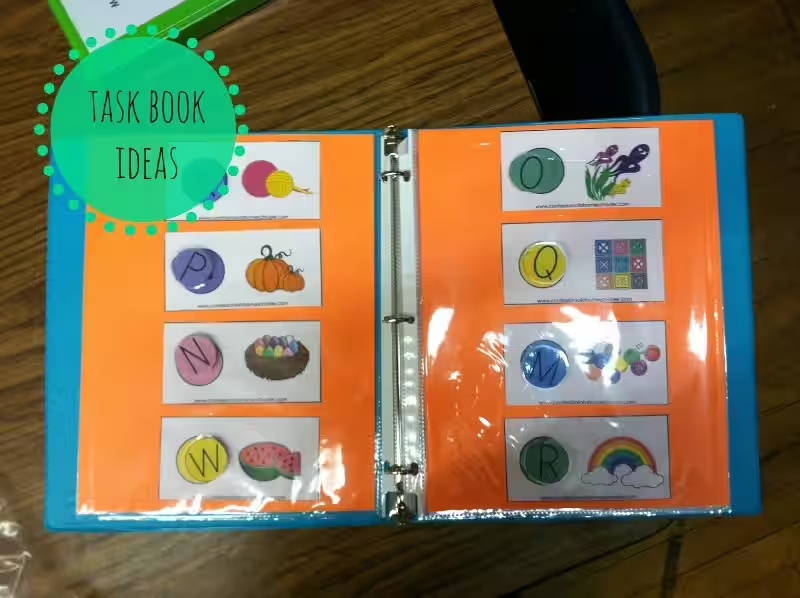
In the pursuit of spiritual growth and a more profound connection with faith, many of us find ourselves seeking tools that go beyond passive reading. While scripture and theological texts offer invaluable knowledge, the act of engaging with this wisdom actively can be a game-changer. This is where the power of task books comes into play. These carefully designed resources are not just collections of exercises; they are pathways to personal revelation, practical application, and a more vibrant religious life. Whether you’re exploring ancient traditions, modern interpretations, or simply seeking to deepen your personal practice, task books offer a structured yet flexible approach to making religious teachings resonate on a deeper level.
The beauty of a well-crafted task book lies in its ability to bridge the gap between abstract concepts and lived experience. Instead of simply memorizing doctrines or reciting prayers, a task book invites you to do. It encourages introspection, journaling, reflection, and even creative expression. For instance, a task book focused on a particular denomination might include prompts for writing a personal creed, meditating on specific parables, or researching the historical context of key rituals. These are not arbitrary assignments; they are carefully curated experiences designed to illuminate the core tenets of the faith and help you integrate them into your daily existence. The very act of completing a task, however small, fosters a sense of accomplishment and reinforces learning in a way that passive consumption rarely can.
Religion, at its heart, is not merely a set of beliefs to be held, but a way of life to be lived. This distinction is crucial, and it’s precisely where task books excel. They shift the paradigm from theoretical understanding to practical application, allowing individuals to actively engage with the spiritual principles that guide them. Think of it like learning a musical instrument. Reading a book about playing the guitar will give you knowledge, but it won’t make you a musician. You need to pick up the instrument, practice scales, and learn chords. Similarly, a task book provides the “instrument” and guides you through the “practice sessions” of your faith journey, helping you translate sacred texts and teachings into tangible actions and transformed perspectives.
Consider the experience of someone grappling with the concept of forgiveness within their religious tradition. A typical approach might involve reading sermons or theological explanations. However, a dedicated task book on forgiveness could offer a series of carefully crafted exercises. These might include journaling about personal experiences of hurt and resentment, writing letters of forgiveness (even if not sent), practicing mindful meditation on compassion, or researching stories of reconciliation from sacred texts. Each task book activity is designed to break down a complex emotional and spiritual concept into manageable, actionable steps, fostering genuine understanding and facilitating personal growth. This active engagement cultivates a more profound and personal relationship with the divine and the teachings that underpin it.
Specific Applications of Task Books in Religious Study
The versatility of task books makes them invaluable across a wide spectrum of religious exploration. For those delving into the foundational texts of their faith, a task book might offer guided readings with accompanying questions that prompt critical thinking and deeper interpretation. Imagine a task book on the Psalms, where each chapter includes prompts for creative writing inspired by the verses, or exercises for identifying themes of praise, lament, or petition. This approach moves beyond rote memorization, encouraging a personal connection with the ancient words. Furthermore, these books often incorporate elements of historical context, helping readers understand the cultural and societal influences that shaped religious narratives, thereby enriching their overall comprehension. This detailed exploration ensures that the learning is not superficial but deeply ingrained.
Beyond textual study, task books are exceptionally effective for cultivating specific spiritual disciplines. For example, a task book designed for developing a prayer life might include daily reflection prompts, guided meditation techniques, and suggestions for creating a personal prayer space. It could offer different approaches to prayer, such as intercessory prayer, contemplative prayer, or thanksgiving prayer, with specific exercises for each. Similarly, a task book focused on acts of service or charity within a religious framework might provide actionable steps for identifying needs in the community, planning volunteer activities, and reflecting on the spiritual significance of selfless giving. These practical applications transform abstract ideals into concrete, meaningful actions, solidifying the connection between faith and practice.
Task Books for Personal Spiritual Development
One of the most significant benefits of incorporating task books into one’s religious journey is the profound impact on personal spiritual development. These resources provide a structured framework for self-discovery and introspection, allowing individuals to explore their beliefs, values, and relationship with the divine in a deeply personal way. A task book on mindfulness and meditation, for instance, might guide individuals through a series of daily practices, offering prompts for journaling their experiences and noting any shifts in their emotional or spiritual state. This consistent engagement with mindful practices, facilitated by the task book, can lead to a greater sense of peace, clarity, and connection to their inner spiritual core. The task book acts as a trusted companion on this inner journey.
Moreover, task books can be instrumental in navigating challenging aspects of faith or personal growth. For individuals wrestling with doubt, a task book might offer exercises for exploring their questions, researching different theological perspectives, and finding solace in communal wisdom. It could encourage them to articulate their doubts through writing, engage in dialogue with trusted spiritual mentors, or explore stories of faith amidst uncertainty found in sacred literature. By providing a safe and structured space for these explorations, task books empower individuals to confront their challenges head-on, fostering resilience and a more robust faith. The process is often one of gradual unfolding, where each completed section of the task book contributes to a larger tapestry of understanding and self-acceptance.
While task books are incredibly powerful for individual study, their utility extends significantly to community and group settings. Imagine a Bible study group or a religious education class using a shared task book. This fosters a sense of collective exploration and shared learning, where participants can engage with the material individually and then come together to discuss their insights and experiences. A task book designed for a small group might include discussion questions, group reflection activities, and even collaborative projects, such as creating a shared prayer journal or planning a community service initiative. This communal aspect can deepen bonds, broaden perspectives, and create a more dynamic and supportive spiritual environment. The task book becomes a catalyst for shared spiritual growth.
Furthermore, task books can be invaluable for religious leaders and educators seeking to facilitate engaging and impactful learning experiences. Instead of relying solely on lectures, educators can leverage task books to empower their congregants or students to become active participants in their own spiritual education. For example, a teacher might assign specific chapters of a task book on world religions, with each chapter focusing on a different tradition and including comparative analysis prompts or research tasks. This approach not only diversifies the learning methods but also encourages independent thinking and a more thorough understanding of diverse spiritual paths. The structured nature of the task book provides a clear roadmap for both the educator and the learner, ensuring that the curriculum is comprehensive and engaging.
Choosing and Utilizing the Right Task Book
Selecting the ideal task book is a crucial step in maximizing its benefits. Consider your current spiritual needs, your level of familiarity with the subject matter, and your preferred learning style. Are you looking for a general introduction to a faith, a deep dive into a specific theological concept, or a resource to cultivate a particular spiritual discipline? For example, if you’re seeking to deepen your understanding of the teachings of Jesus, you might opt for a task book that focuses on the Gospels, featuring exercises like journaling reflections on his parables, practicing acts of compassion inspired by his example, or researching the historical context of his ministry. Conversely, if your goal is to enhance your contemplative practice, a task book offering guided meditations and reflective journaling prompts would be more appropriate. The market offers a vast array of options, from general devotional guides to highly specialized academic explorations, ensuring that there’s a task book for every individual’s journey.
Once you’ve chosen a task book, the key to its effectiveness lies in consistent and intentional engagement. Don’t view the exercises as mere chores; approach them with an open mind and a spirit of curiosity. Set aside dedicated time for working through the material, whether it’s a few minutes each day or a longer session each week. Be honest and reflective in your journaling, and don’t be afraid to explore your questions and doubts. If the task book includes suggestions for discussion or practice with others, embrace those opportunities to share your insights and learn from different perspectives. Remember, a task book is a tool, and like any tool, its usefulness depends on how well you wield it. By actively participating in the process, you unlock its potential to transform your understanding and deepen your religious practice, making your faith a living, breathing part of your existence. The commitment to completing the tasks, no matter how challenging, is where the real transformation begins.
Frequently Asked Questions: Task Books and Religion
What are task books in the context of religion?
Task books, in a religious context, are typically journals or notebooks designed for individuals to record their spiritual progress, reflections, prayers, scripture study notes, or goals. They can serve as a personal tool for spiritual discipline and growth.
How can task books be used for religious study?
Religious task books can be used to jot down insights from sermons, record key takeaways from scripture readings, outline personal interpretations of religious texts, or track the completion of specific religious practices or study programs.
Are there specific types of task books for different religions?
While the concept of a personal journal for spiritual reflection is universal, specific task books might be tailored to the practices and beliefs of individual religions. For example, a Catholic task book might include sections for daily Mass reflections, while a Buddhist task book might focus on meditation logs and mindfulness exercises.
Can task books help me deepen my religious practice?
Yes, by providing a structured way to engage with religious teachings, record personal experiences, and set spiritual goals, task books can be a powerful tool for deepening your religious practice and fostering a more consistent spiritual life.
How do I start using a religious task book?
You can start by dedicating a notebook or journal to your religious reflections. Decide what you want to track (e.g., daily prayers, scripture verses, spiritual insights, gratitude) and begin writing regularly. There’s no single “right” way; the best approach is one that is meaningful to you.