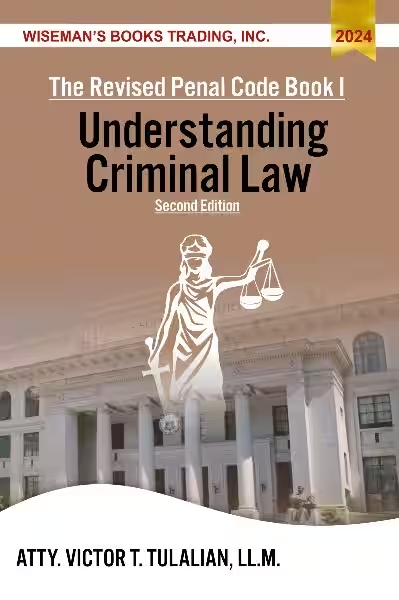
The very concept of a penal law book, a compendium of rules designed to govern behavior and prescribe punishments, is not a purely modern invention. Its origins are deeply intertwined with the earliest expressions of organized society, and it’s here, in the foundational texts and oral traditions of religious communities, that we find the seeds of our contemporary legal systems. Long before the printing press and the codified laws of nation-states, religious doctrines provided the moral compass and behavioral guidelines that shaped communal order.
Consider the ancient Mesopotamian civilization, where the Code of Hammurabi, while a significant legal document, was presented as divinely ordained, handed down by the god Shamash. Similarly, in the Abrahamic traditions, the Ten Commandments, etched in stone, served as a fundamental blueprint for ethical conduct, with violations carrying both spiritual and, implicitly, social consequences. These early pronouncements weren’t just abstract moral pronouncements; they were practical directives for living together, outlining what was considered right and wrong, and what would happen to those who transgressed. This profound connection between the divine and the legal is a recurring theme when we look back at the evolution of any penal law book.
From Divine Judgment to Human Legislation: The Evolution of the Penal Law Book
As societies grew more complex, the direct interpretation of divine will through religious leaders began to transition towards more formalized, human-driven legislative processes. However, the underlying principles and ethical frameworks established by religious texts often remained influential, shaping the very language and structure of these emerging legal codes. The fear of divine retribution, a powerful motivator in earlier times, gradually gave way to the understanding of law as a tool for maintaining social harmony and protecting citizens, but the echoes of religious morality were undeniable.
Think about the development of laws against theft or murder. While the specific penalties might differ across cultures and time periods, the fundamental prohibition against these acts is a nearly universal tenet, found in virtually every major religious canon. The concept of “an eye for an eye,” while perhaps seen as harsh today, was a revolutionary concept in its time, aiming to limit retaliation and establish a proportionate response. This principle, derived from ancient religious texts, laid the groundwork for the development of legal systems that sought to standardize and regulate the administration of justice, a core function of any penal law book.
It is almost impossible to discuss the historical development of legal principles without acknowledging the profound impact of the Ten Commandments. These ancient religious injunctions, often considered the bedrock of Judeo-Christian ethics, provide a clear and concise list of prohibitions that still resonate with our modern understanding of criminal behavior. When we examine a contemporary penal law book, we can see the faint, yet persistent, shadows of these divine pronouncements.
The commandments against murder, adultery, theft, and bearing false witness are direct precursors to many criminal statutes found in today’s legal codes. While the theological implications of violating these commandments are no longer the primary focus of secular legal systems, the underlying societal harm that these prohibitions aim to prevent remains a central concern. For instance, the commandment “Thou shalt not kill” directly informs laws against homicide, a cornerstone of any penal law book designed to protect human life. Similarly, “Thou shalt not steal” underpins laws against larceny and burglary, safeguarding property rights.
Religious Texts and the Morality Behind the Law
Beyond specific prohibitions, religious texts have historically provided a rich tapestry of moral philosophy that has informed the ethical underpinnings of law. Concepts such as compassion, fairness, and the inherent dignity of individuals, while not always explicitly codified in early legal documents, were deeply embedded in religious teachings. These values have subtly but surely permeated the development of legal systems, influencing how laws are interpreted and applied.
Consider the concept of mercy in sentencing. While a penal law book might dictate a range of punishments, the application of discretion by judges, often influenced by a desire for justice that extends beyond mere retribution, can be seen as a secularized echo of religious calls for forgiveness and understanding. For example, a judge might consider mitigating circumstances in a theft case, perhaps due to extreme poverty or duress, a decision that aligns with a broader moral framework that values empathy, a concept frequently emphasized in religious teachings. This moral dimension adds a crucial layer of humanity to the often stark pronouncements of a penal law book.
Contemporary Legacies: Religion’s Subtle Presence in Modern Penal Law Books
While modern legal systems in most secular nations are designed to operate independently of religious doctrine, the historical influence of religion on the very structure and principles of justice remains. The ethical frameworks and moral intuitions that shaped early legal concepts continue to inform our societal understanding of right and wrong, even if the divine origin is no longer explicitly invoked.
A prime example can be seen in the concept of intent or mens rea in criminal law. The idea that a crime requires not just a wrongful act but also a guilty mind is a principle that has deep roots in theological discussions about moral culpability. This focus on the mental state of the accused, a crucial element when prosecuting any offense outlined in a penal law book, reflects an ancient understanding that true wrongdoing involves a conscious choice to violate moral or legal boundaries.
The Challenge of Pluralism and the Secular Penal Law Book
In today’s increasingly diverse and pluralistic societies, the relationship between religion and the penal law book presents unique challenges. How do we create legal systems that are fair and equitable to individuals of all faiths, and no faith, while acknowledging the historical and cultural impact of religious traditions? This requires a delicate balancing act, ensuring that laws are based on universally accepted principles of justice rather than the doctrines of any single religious group.
For instance, debates surrounding religious freedom and its potential conflicts with secular laws often bring this tension to the forefront. A penal law book might prohibit certain actions, but if those actions are deeply ingrained in the religious practices of a minority group, complex legal and ethical questions arise. The legal system must navigate these situations by seeking common ground in fundamental human rights and the need for public order, a process that requires careful consideration and a commitment to impartiality. This ongoing dialogue is crucial for the continued evolution of responsible and inclusive penal law.
The Enduring Quest for Justice: A Shared Human Endeavor
Ultimately, whether we look to the ancient scrolls of religious law or the modern statutes of a penal law book, the underlying human quest remains the same: to establish order, protect the vulnerable, and strive for a just society. Religion, in its myriad forms, has provided a powerful framework for conceptualizing justice for millennia, shaping not only our moral landscapes but also the very legal structures we rely on today. While the explicit divine pronouncements may have receded from the forefront of legal discourse, the ethical intuitions and moral imperatives that they fostered continue to guide our understanding of what it means to be just.
The evolution of the penal law book is a testament to humanity’s ongoing effort to codify and uphold principles that promote well-being and discourage harm. This journey, spanning from sacred texts to secular legislation, highlights the persistent human need for a framework that delineates acceptable behavior and ensures accountability. Recognizing this deep historical connection allows us to appreciate the layered origins of our legal systems and the enduring pursuit of justice as a shared, fundamental human endeavor.
Frequently Asked Questions: Penal Law and Religion
Can religious beliefs be a defense against criminal charges?
Generally, religious beliefs themselves are not a direct defense against criminal charges. However, in certain limited circumstances, sincerely held religious beliefs may be considered in relation to specific defenses such as duress or necessity, or in sentencing. The law primarily focuses on the act itself and whether it violates established legal statutes, regardless of the perpetrator’s religious motivations.
Are there specific laws in the penal code that deal with religious offenses?
Yes, many penal codes contain provisions that address offenses related to religion. These can include acts of blasphemy, sacrilege, disturbing religious worship, or desecrating religious sites or symbols. The specifics and severity of these offenses vary significantly by jurisdiction.
How does freedom of religion interact with penal law?
Freedom of religion, often protected by constitutional law, generally means individuals are free to practice their religion without government interference. However, this freedom is not absolute. Penal laws can restrict religious practices if they infringe upon the rights of others, endanger public safety or health, or violate other fundamental legal principles. For example, a religious practice that involves harm to individuals would likely be prosecuted under existing penal laws.
Can laws be challenged if they are perceived to violate religious freedom?
Yes, laws can be challenged in court if they are perceived to violate constitutionally protected religious freedom. Courts will typically examine whether the law serves a compelling government interest and if it is narrowly tailored to achieve that interest without unduly burdening religious exercise. This is often a complex legal process.
Are religious institutions subject to the same penal laws as individuals?
Religious institutions, like other organizations and individuals, are generally subject to the same penal laws. This means they can be held liable for criminal acts committed by their members or employees acting within the scope of their duties, or for failing to prevent such acts when legally required to do so.