In a world often characterized by chaos and uncertainty, the image of a shepherd, steadfast and caring, offers a profound and timeless metaphor for navigating life’s journey. Beyond the pastoral scenes depicted in ancient texts, the shepherd scriptures reveal a deep wellspring of wisdom, offering guidance for both personal growth and our relationships with others. These scriptures aren’t just historical records; they are living insights that speak to our deepest needs for direction, protection, and belonging. We are all, in a sense, both sheep needing guidance and, at times, called to be shepherds ourselves.
Throughout history, the role of a shepherd was not merely an occupation; it was a vital responsibility. Shepherds were entrusted with the well-being of their flocks, often facing harsh elements and dangerous predators. This profound connection between shepherd and sheep is mirrored in spiritual narratives, illustrating a divine care that extends to humanity. Understanding these shepherd scriptures can illuminate pathways to a life lived with greater purpose, resilience, and a deeper connection to the divine.
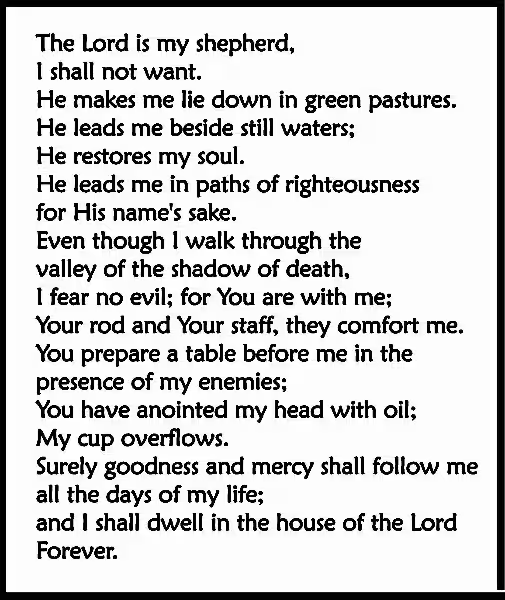
Perhaps the most compelling and comforting aspect of the shepherd scriptures is the portrayal of God as our ultimate Shepherd. The Psalms, in particular, resonate with this theme. Psalm 23, a universally cherished passage, famously declares, “The Lord is my shepherd; I shall not want.” This isn’t simply a poetic expression; it’s a bold assertion of trust in a benevolent power that actively watches over us, ensuring our provision and safety. Think of a parent lovingly guiding a child through a new and daunting experience; the divine shepherd offers a similar, albeit infinitely greater, sense of security.
This divine shepherding is characterized by active engagement. It’s not a passive observation from afar, but a hands-on involvement in our lives. The scriptures speak of God leading us beside “still waters” and restoring our souls, implying a conscious effort to bring us peace and renewal. This imagery suggests that even in moments of distress or exhaustion, there is a divine presence working to replenish our spirits and guide us toward places of rest and refreshment. The shepherd’s constant vigilance ensures that no sheep is left behind, no matter how lost or weary they may become.
Leading Through Difficult Terrain: Guidance in Times of Trial
Life, much like the rugged landscapes a shepherd navigates, is rarely a smooth path. We encounter challenges, moments of fear, and periods of profound uncertainty. It is in these very moments that the shepherd scriptures offer their most potent solace and direction. The shepherd doesn’t abandon the flock when the terrain becomes difficult; instead, they lead with greater intention and care. Similarly, our divine shepherd is present even in the “valley of the shadow of death,” offering comfort and protection.
Consider the example of a shepherd carefully guiding their flock across a treacherous mountain pass. They would move slowly, patiently, and with an intimate knowledge of the safest route, perhaps even carrying a struggling lamb. This analogy underscores the personalized care we receive. The scriptures assure us that God understands our individual struggles and walks with us, not just through the easy meadows, but also through the steep and challenging climbs. This assurance is a powerful antidote to feelings of isolation and helplessness when facing adversity.
The Shepherd’s Tools: Lessons in Service and Responsibility
Beyond the divine perspective, the shepherd scriptures also provide invaluable lessons for how we are to interact with and care for one another. The concept of stewardship is intrinsically linked to the shepherd’s role. Just as a shepherd is responsible for the flock entrusted to them, we are called to be responsible stewards of various aspects of our lives and the lives of those around us.
This responsibility extends to our families, our communities, and even the wider world. The shepherd’s tools – the staff and the rod – symbolize both gentle guidance and firm protection. The staff could be used to gently nudge a wandering sheep back into line, while the rod was a defensive weapon against predators. This dual nature of the shepherd’s authority highlights the importance of balanced leadership. We are called to lead with compassion and encouragement, but also to set boundaries and offer correction when necessary, always with the ultimate goal of the well-being of those under our care.
Nurturing the Vulnerable: Empathy and Compassion in Action
The shepherd’s heart is one of profound empathy, particularly for the vulnerable members of the flock. The scriptures often highlight the shepherd’s concern for the young, the weak, and the lost. Jesus, in the Gospel of John, identifies himself as the “good shepherd” who “lays down his life for the sheep,” a powerful testament to selfless sacrifice. This paints a vivid picture of prioritizing the needs of others, especially those who are most susceptible to harm.
This principle translates into our own lives as a call to actively nurture and protect those who are marginalized or struggling. It means being willing to go the extra mile, to offer support without judgment, and to sacrifice our own comfort for the sake of another’s well-being. Much like a shepherd would search tirelessly for a single lost lamb, we too are called to extend our care to those who might feel overlooked or forgotten in the busyness of life. This is the essence of compassionate service, a direct echo of the shepherd’s dedication.
Becoming a Shepherd: Cultivating Leadership Qualities
The shepherd scriptures aren’t just about receiving care; they also call us to embrace the role of a shepherd in our own spheres of influence. Whether we are parents, mentors, leaders, or simply individuals who can offer support, we are all equipped with the potential to guide and nurture others. This requires cultivating specific qualities that are central to the shepherd’s character.
Key among these qualities is discernment. A shepherd must be able to distinguish between healthy grass and poisonous weeds, and to recognize the subtle signs of distress in an animal. In our lives, this translates to developing the ability to discern truth from falsehood, to understand the needs of others, and to make wise decisions. Another crucial quality is patience. Guiding a flock, especially through difficult terrain, requires immense patience. Similarly, effective leadership and nurturing require the capacity to endure setbacks and to continue offering support without becoming discouraged. The shepherd’s journey is one of continuous learning and adaptation, mirroring our own growth as leaders and caregivers.
The Flock Within: Self-Care and Personal Guidance
Interestingly, the metaphor of the shepherd also points inward, reminding us of the importance of self-shepherding. Just as a shepherd must care for their own physical and emotional well-being to effectively lead their flock, we too must prioritize our own spiritual and mental health. Neglecting ourselves will inevitably diminish our capacity to care for others.
This involves recognizing our own needs for rest, renewal, and guidance. The shepherd scriptures encourage us to seek out places of spiritual nourishment, to find solace in prayer and reflection, and to actively tend to our own inner lives. Just as a shepherd might lead their sheep to a good pasture for grazing, we must intentionally seek out environments and practices that will replenish our souls. Understanding this aspect of personal shepherding is not selfish; it is a foundational principle for effective outward service.
Conclusion: The Enduring Echo of the Shepherd’s Call
The shepherd scriptures offer a rich tapestry of wisdom that continues to resonate with profound relevance today. From the divine assurance of unwavering care to the practical lessons in leadership and empathy, these ancient texts provide a blueprint for a life well-lived. They remind us that we are never truly alone, that there is a guiding hand always present, and that we too are called to extend that same care and guidance to others.
Whether we are feeling lost and in need of a shepherd’s presence, or feeling empowered to step into that role for someone else, the shepherd scriptures offer a guiding light. By embracing the principles of trust, responsibility, compassion, and self-care, we can cultivate a life that is not only fulfilling for ourselves but also a source of strength and inspiration for those around us. The echo of the shepherd’s call is an invitation to live with greater purpose, deeper connection, and enduring hope.
Frequently Asked Questions about Shepherd Scriptures and Religion
What are “Shepherd Scriptures”?
The term “Shepherd Scriptures” is not a standard or widely recognized term within major religious traditions. It’s possible it refers to specific texts or interpretations within a particular denomination, a personal study, or a misunderstanding of existing terminology. If you encountered this term in a specific context, further clarification of that context would be needed to provide a precise answer.
What is religion?
Religion is a complex and multifaceted phenomenon that generally involves a set of beliefs, practices, and rituals concerning the nature of reality, particularly the supernatural or divine. It often includes moral codes, ethical frameworks, and a sense of community among its adherents. Religions can provide meaning, purpose, and guidance for individuals and societies.
Are Shepherd Scriptures related to the Bible?
As “Shepherd Scriptures” isn’t a recognized term, its relation to the Bible is unclear. However, the Bible does contain passages that speak metaphorically or literally about shepherds and their flocks. For instance, Psalm 23 is a famous example, and Jesus is referred to as the “Good Shepherd” in the New Testament. If “Shepherd Scriptures” refers to these types of biblical passages, then yes, they would be part of the Bible.
What is the role of shepherds in religious texts?
In many religious traditions, particularly those with roots in the ancient Near East, shepherds held significant cultural and symbolic importance. They were responsible for the care, protection, and guidance of their flocks. This role often translated into religious symbolism, where leaders, prophets, or divine figures were depicted as shepherds guiding their people, who were seen as the flock.
Can you give examples of “shepherd” themes in major religions?
Judaism: The patriarchs Abraham, Isaac, and Jacob were shepherds. Moses was a shepherd before he led the Israelites from Egypt. The concept of God as the shepherd of Israel is prevalent in the Psalms and prophetic books.
Christianity: Jesus is famously called the “Good Shepherd” who lays down his life for his sheep (John 10:11). The early apostles were also metaphorically seen as shepherds of the nascent Christian community.
Islam: Prophets in Islam, such as Moses and Muhammad, are described as having been shepherds, emphasizing humility, responsibility, and care for others.
What are some common religious beliefs about guidance and leadership?
Many religions emphasize the importance of divine guidance and righteous leadership. Whether through scriptures, prophets, spiritual leaders, or direct divine revelation, followers often seek direction and wisdom. The metaphor of a shepherd guiding a flock is a common way to illustrate this concept of benevolent and protective leadership.