Life, in its beautiful and often bewildering complexity, can feel like a journey fraught with both sun-drenched meadows and shadowed valleys. We navigate personal challenges, societal shifts, and the inherent uncertainties of existence. In these moments, where do we turn for assurance, for a steady hand, and for a profound sense of peace? For countless individuals, particularly within the Roman Catholic tradition, the answer echoes through centuries in the timeless words of the 23rd Psalm. This beloved psalm, often recited during times of solace, remembrance, and hope, offers a powerful metaphor for God’s unwavering presence in our lives.
The 23rd Psalm Roman Catholic version, deeply ingrained in the spiritual fabric of believers, is more than just a poetic recitation; it’s a personal declaration of faith and a profound expression of trust in a divine shepherd who guides, sustains, and protects. Its verses speak to our deepest needs, offering a message of hope that resonates across ages and experiences. Whether you are grappling with a personal crisis, celebrating a joyous occasion, or simply seeking a deeper connection with the divine, understanding and internalizing the 23rd Psalm can be a transformative experience.
“The Lord is my shepherd; I shall not want.” – The Foundation of Trust
This opening declaration sets the entire tone of the psalm. It’s a bold assertion, a complete surrender of our anxieties to a higher power. For a Roman Catholic, this means recognizing Jesus Christ as the ultimate shepherd, the one who lays down his life for his sheep (John 10:11). It’s not about a passive wish; it’s an active acknowledgment of divine providence. This belief assures us that our fundamental needs – spiritual, emotional, and even material – are understood and will be met by God, often in ways we might not anticipate.
Think of a shepherd tending to their flock. They don’t just wave a wand and make food appear. They actively lead their sheep to lush pastures and fresh water, they protect them from predators, and they guide them through difficult terrain. This imagery conveys a personal and active involvement of God in our lives. When we say, “I shall not want,” we are essentially saying, “I trust that my shepherd will provide all that is truly necessary for my well-being, even if it’s not what I think I want in the moment.” This trust liberates us from the relentless pursuit of fleeting desires and anchors us in a deeper, more enduring contentment.
“He maketh me to lie down in green pastures; he leadeth me beside still waters.” – The Gifts of Rest and Peace
In our fast-paced world, the concept of tranquil rest can seem like a distant dream. The 23rd Psalm Roman Catholic version reminds us that our shepherd provides not just sustenance, but also essential moments of repose. “Green pastures” symbolize abundance and nourishment, places where the sheep can graze peacefully without fear. This speaks to the spiritual nourishment we receive through prayer, the sacraments, and the teachings of the Church. These are the “green pastures” of our faith, where our souls are fed and refreshed.
“Still waters” are equally vital. Imagine sheep gathered by a rushing river – they would be agitated and unable to drink. But by the calm, serene waters, they can drink deeply and quench their thirst. This represents the inner peace and tranquility that God offers amidst life’s storms. In the midst of chaos, worry, or confusion, the 23rd Psalm Roman Catholic version offers a promise of a guiding presence that leads us to these oases of peace. It’s a reminder that even when the world feels turbulent, we can find inner stillness by leaning on our faith and allowing God’s grace to calm our restless spirits.
“He restoreth my soul; he leadeth me in paths of righteousness for his name’s sake.” – Renewal and Moral Direction
Our souls, like our bodies, can become weary, discouraged, or even wounded. The phrase “He restoreth my soul” is a powerful promise of spiritual renewal. It signifies a healing process, a restoration of our inner vitality and our connection to God. This restoration comes through confession and reconciliation, through acts of charity and forgiveness, and through deepening our relationship with Christ. It’s about being brought back to life, to a state of grace and spiritual vibrancy.
Furthermore, the psalm assures us that our shepherd “leadeth me in paths of righteousness.” This isn’t just about avoiding wrong turns; it’s about being actively guided towards actions that are pleasing to God and that align with His divine will. For a Roman Catholic, this means following the teachings of the Church, embodying the virtues, and striving to live a life that honors God’s name. This guidance is not arbitrary; it’s for “his name’s sake,” meaning our righteous living reflects God’s own character and brings Him glory. This path of righteousness, though sometimes challenging, ultimately leads to true fulfillment and purpose.
“Yea, though I walk through the valley of the shadow of death, I will fear no evil; for thou art with me; thy rod and thy staff they comfort me.” – Courage in the Face of Adversity
This is perhaps the most poignant and relatable section of the 23rd Psalm Roman Catholic version. The “valley of the shadow of death” is a metaphor for our greatest fears, our deepest sorrows, and our most profound losses. It can represent sickness, grief, betrayal, or any situation that feels overwhelming and isolating. Yet, in the midst of this darkness, the psalm declares, “I will fear no evil.” This isn’t bravado; it’s a fearless trust rooted in the knowledge that “thou art with me.”
The “rod” and “staff” are not instruments of punishment, but of guidance and protection. The rod was used to defend the flock from predators, while the staff, with its crook, was used to gently guide sheep back from straying or to lift them if they fell. This imagery reassures us that God’s presence is a protective shield and a gentle guide. Even when facing what feels like the end, the comfort of His presence allows us to walk through these dark valleys with courage and unwavering hope. This is a profound testament to God’s love and steadfastness.
“Thou preparest a table before me in the presence of my enemies; thou anointest my head with oil; my cup runneth over.” – Blessing and Abundance Amidst Opposition
Even when surrounded by adversity or opposition, the psalm promises that God doesn’t abandon us; instead, He lavishly blesses us. “Thou preparest a table before me” signifies a feast of divine favor, a banquet of God’s grace and provision, laid out even when surrounded by those who might wish us harm. This is a powerful reminder that God’s blessings are not contingent on our circumstances, but on His unconditional love. We are invited to partake in His abundance, even when the world feels hostile.
The anointing of the head with oil was a sign of honor, healing, and consecration. In ancient times, it was done for royalty, for guests of honor, and for those being healed. Similarly, God anoints us with His grace, setting us apart and showering us with His favor. And finally, “my cup runneth over” is a vivid image of overflowing abundance. It’s not just enough; it’s more than enough, a constant stream of God’s blessings in every aspect of our lives. This generosity of spirit from our divine shepherd is a source of eternal gratitude and wonder.
“Surely goodness and mercy shall follow me all the days of my life; and I will dwell in the house of the Lord for ever.” – The Promise of Eternal Hope
The final verses of the 23rd Psalm Roman Catholic version bring us to the ultimate promise of faith: eternal security and communion with God. “Goodness and mercy shall follow me all the days of my life” is a declaration of unwavering divine care. It means that God’s benevolence and compassion are not fleeting; they are constant companions, pursuing us relentlessly throughout our earthly journey. Every sunrise, every breath we take, is a testament to this ongoing, pervasive love.
The ultimate destination, “and I will dwell in the house of the Lord for ever,” speaks to the eternal hope that Roman Catholics cherish – the promise of heaven. This is the final, ultimate pasture, the eternal dwelling place where we will be in unbroken communion with our Good Shepherd. It is the culmination of a life lived in trust and obedience, a reward of eternal peace and joy. This hope anchors us, giving meaning and purpose to our present lives and a glorious anticipation of what is to come. The 23rd Psalm Roman Catholic version thus serves as a constant reminder of God’s guiding hand, His protective presence, and His eternal love, offering solace and strength for every step of our journey.
Frequently Asked Questions – The 23rd Psalm (Roman Catholic Version)
What is the Roman Catholic version of the 23rd Psalm?
The Roman Catholic version of the 23rd Psalm, as found in the New American Bible Revised Edition (NABRE), reads:
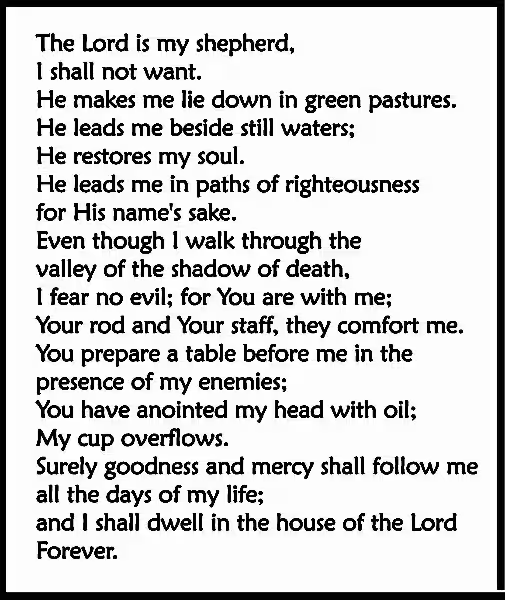
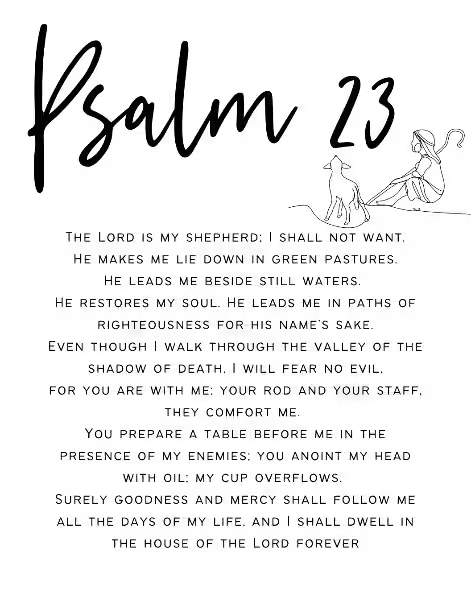
“The Lord is my shepherd; I shall not want.
He makes me lie down in green pastures;
He leads me beside still waters;
He restores my soul.
He guides me in paths of righteousness for his name’s sake.
Even though I walk through the valley of the shadow of death,
I will fear no evil, for you are with me;
your rod and your staff comfort me.
You set a table before me in the sight of my enemies;
you anoint my head with oil; my cup overflows.
Indeed, goodness and mercy shall follow me all the days of my life;
I will dwell in the house of the Lord for ever.”
What is the significance of the 23rd Psalm in Roman Catholicism?
The 23rd Psalm is one of the most beloved and frequently recited Psalms in the Roman Catholic tradition. It is cherished for its profound message of God’s loving care, guidance, and protection, offering comfort and assurance to believers throughout their lives and especially in times of difficulty or approaching death. It is often used in funeral rites and prayers for the deceased.
How does the Roman Catholic translation of the 23rd Psalm differ from other versions?
While the core message remains the same, translations can vary slightly. The NABRE, commonly used in the Catholic Church in the United States, is known for its scholarly approach and aims to be both accurate to the original Hebrew and accessible to contemporary readers. Differences might be found in word choices or sentence structure compared to, for example, the King James Version or other Protestant translations. For instance, the NABRE uses “The Lord” consistently, whereas some older translations might use “The LORD” (representing the Tetragrammaton, YHWH) or “Jehovah.”
Where is the 23rd Psalm found in the Bible?
The 23rd Psalm is found in the Old Testament of the Holy Bible, specifically in the Book of Psalms, chapter 23.
What are the main themes of the 23rd Psalm?
The main themes of the 23rd Psalm include:
* Divine Providence and Care: God as a shepherd who provides for all needs (“I shall not want,” “green pastures,” “still waters”).
* Guidance and Restoration: God’s direction and spiritual renewal (“restores my soul,” “guides me in paths of righteousness”).
* Protection and Comfort in Adversity: God’s presence and solace in difficult times (“valley of the shadow of death,” “fear no evil,” “rod and your staff comfort me”).
* Abundance and Blessing: God’s generous blessings and favor (“table before me,” “cup overflows”).
* Eternal Hope and Dwelling with God: The ultimate promise of everlasting life in God’s presence (“dwell in the house of the Lord for ever”).