The act of serving communion, often referred to as the Eucharist, the Lord’s Supper, or the Mass, is a cornerstone of Christian worship across a vast spectrum of denominations. It’s more than just a ritualistic practice; it’s a deeply symbolic and transformative experience, a tangible representation of faith, community, and the central tenet of Christianity: the sacrifice and resurrection of Jesus Christ. For many, the moment of receiving communion is a sacred pause in the week, a time for reflection, spiritual nourishment, and a profound connection to something larger than oneself. Understanding the nuances of serving communion, both from the perspective of those who administer it and those who receive it, can illuminate its enduring significance in the lives of believers.
This profound act, woven into the fabric of religious life, invites a tangible experience of the divine. Whether it’s the quiet dignity of a small parish or the grand liturgy of a cathedral, the core elements remain: bread and wine, representing the body and blood of Christ. The preparation, the distribution, and the reception are all imbued with a sense of reverence, transforming a simple meal into a powerful sacrament. It’s in these moments, when we are invited to partake, that the abstract becomes concrete, and our faith is given a physical form.
The Significance of Serving Communion: More Than Just a Symbol
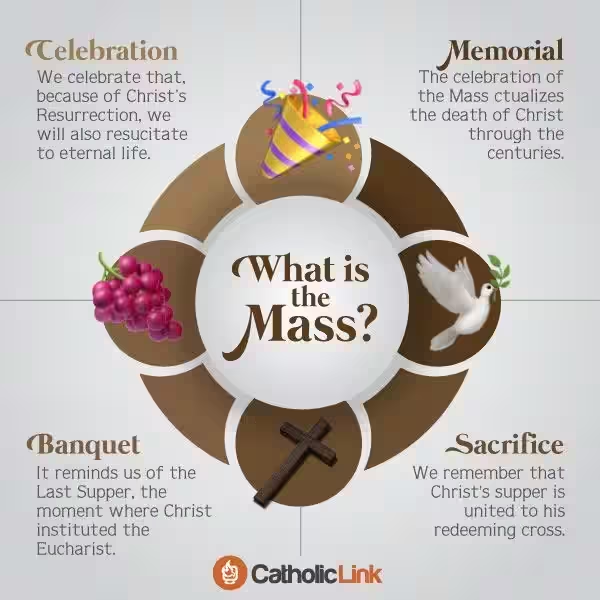
At its heart, serving communion is an act of remembrance. Jesus himself instructed his followers, “Do this in remembrance of me” (Luke 22:19). This command is central to the practice, calling believers to recall his sacrifice on the cross and the new covenant established through his blood. It’s a living memorial, not a static one. When we serve communion, we are actively participating in this act of remembrance, ensuring that the central message of the Gospel continues to be proclaimed and experienced by each generation.
Beyond remembrance, communion is understood as a means of grace. Many traditions believe that through the consecrated elements, believers receive spiritual strength, forgiveness of sins, and a deeper union with Christ. It’s a moment where the divine intersects with the human, offering sustenance for the soul just as food and drink sustain the body. Imagine a weary traveler finding a spring of fresh water in a desert; communion offers a similar kind of vital refreshment and renewal for the spirit, equipping believers for their journey of faith.
The Preparations: A Foundation of Reverence
The act of serving communion begins long before the elements are distributed. It starts with prayer and reflection. Those who will be serving often engage in personal prayer, seeking to be in a right spiritual state to handle something so sacred. This might involve confessing any known sins, meditating on the meaning of the sacrament, and asking for guidance and purity of heart. This internal preparation is crucial, ensuring that the ministers approach their task with the humility and awe it deserves.
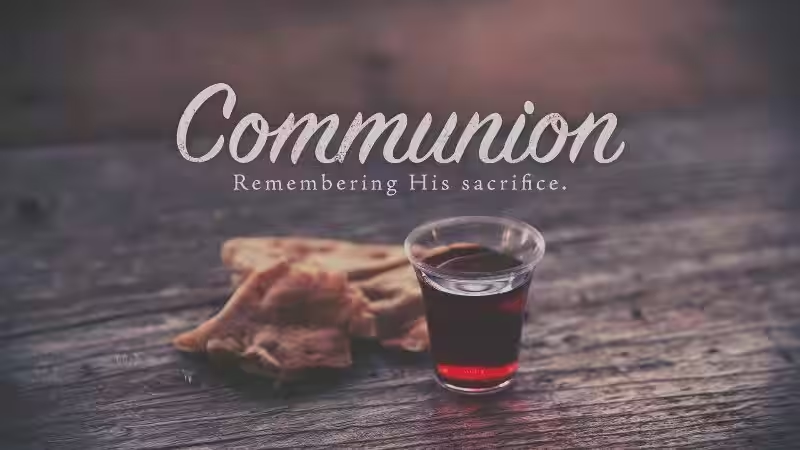
Physical preparations are also vital, symbolizing the care and respect given to the sacred. This includes ensuring the bread and wine are of appropriate quality. Many churches use unleavened bread, often in the form of wafers, to symbolize Christ’s sinless nature, while others use a small loaf. The wine is typically red, representing the blood Christ shed. The vessels used, such as the chalice and paten, are often ornate and consecrated, further highlighting the sanctity of the occasion. The meticulous attention to detail in these preparations underscores the belief that even the earthly elements are being elevated for a divine purpose.
The Ritual of Distribution: A Shared Experience
The distribution of communion is a highly structured and meaningful part of the service. As the minister, whether it be a priest, pastor, elder, or lay person appointed for the task, approaches each worshiper, there’s an unspoken exchange of profound significance. The words spoken, though simple, carry immense weight. Phrases like, “The Body of Christ, broken for you” or “The Blood of Christ, shed for you,” are not mere pronouncements but invitations to receive the very essence of their faith.
The manner of distribution can vary greatly. In some traditions, communicants approach a central altar or rail, receiving the elements directly from the minister’s hands. In others, ushers or deacons may bring the elements to the pews. Regardless of the specific practice, the intent is to ensure that every eligible member of the congregation has the opportunity to partake. This inclusivity emphasizes that communion is for the whole body of Christ, a shared meal that binds believers together in their common faith and their individual relationship with God.
Receiving the Elements: Personal Encounter and Community Bond
When you step forward to receive communion, you are engaging in a personal encounter with the divine. You hold out your hands, open and ready to receive. The bread, a simple wafer or piece of bread, is placed in your palm. You then raise it to your lips, consuming it as the words echo in your mind, a reminder of Christ’s sacrifice. This act of eating and drinking is a physical manifestation of spiritual nourishment and acceptance of Christ’s sacrifice. It’s a moment of quiet intimacy, where the external ritual connects with your internal faith.
Simultaneously, receiving communion is a powerful affirmation of community. As you observe others around you partaking, you are reminded that you are part of something larger than yourself – the universal church. You are connected to believers throughout history and across the globe who engage in this same sacred act. This shared experience fosters a sense of belonging and unity, a visible sign of the bonds that tie Christians together in their journey of faith. It’s like a family gathering, where sharing a meal reinforces their connection and shared heritage.
Variations in Practice: A Diverse Christian Landscape
While the core meaning of serving communion remains consistent, the specific practices and theological understandings can differ significantly among Christian denominations. For example, Catholic and Orthodox traditions often practice what is known as transubstantiation, believing that the bread and wine are miraculously transformed into the actual body and blood of Christ. This belief imbues the elements with an extraordinary sanctity, and the role of the priest in consecrating them is paramount.
Other traditions, such as Protestant denominations, may hold different views. Some, like Lutherans, believe in a sacramental union where Christ is truly present in, with, and under the elements. Others, like Baptists and many non-denominational churches, view communion as a memorial, a symbolic act of remembrance without a supernatural change in the elements themselves. These variations highlight the rich diversity within Christianity and the ongoing theological reflection surrounding this central sacrament, but the act of serving communion continues to be a focal point of worship.
The Role of the Minister: A Humble Servant
The individual serving communion, often referred to as the minister, plays a crucial role in facilitating this sacred encounter. They are not merely distributors of food and drink; they are conduits through which the grace of God is believed to be conveyed. This requires a deep understanding of the theology of communion relevant to their tradition and a commitment to serving with humility and reverence. Their actions and words are carefully considered, as they are entrusted with a sacred responsibility.
The minister must also be mindful of the spiritual readiness of those receiving. In many traditions, a period of self-examination and confession is encouraged before partaking. The minister’s role is to create an atmosphere where individuals feel welcomed and encouraged to participate faithfully. This can involve clear instructions at the beginning of the service and a gentle demeanor throughout the distribution. Their service is a testament to their faith and their commitment to the spiritual well-being of the congregation, embodying the servant leadership of Christ himself.
Conclusion: A Timeless Invitation to Connection
Serving communion is a practice that has endured for millennia, adapting to different cultural contexts and theological understandings, yet retaining its core significance. It remains a powerful and intimate way for believers to connect with God, with Christ, and with one another. Whether it’s a weekly observance or a less frequent gathering, each time communion is served, it offers a fresh opportunity for spiritual renewal and a deeper appreciation of the foundational truths of Christianity.
The simple act of breaking bread and sharing a cup is a profound reminder of love, sacrifice, and the promise of eternal life. It’s an invitation to step away from the mundane and enter into a sacred space, to receive spiritual sustenance, and to strengthen the bonds of faith that unite a community. The enduring power of serving communion lies in its ability to continually re-present the central message of Christianity in a tangible, participatory, and deeply personal way, offering a moment of grace and connection that resonates long after the elements are consumed.
Frequently Asked Questions About Serving Communion
What is Communion?
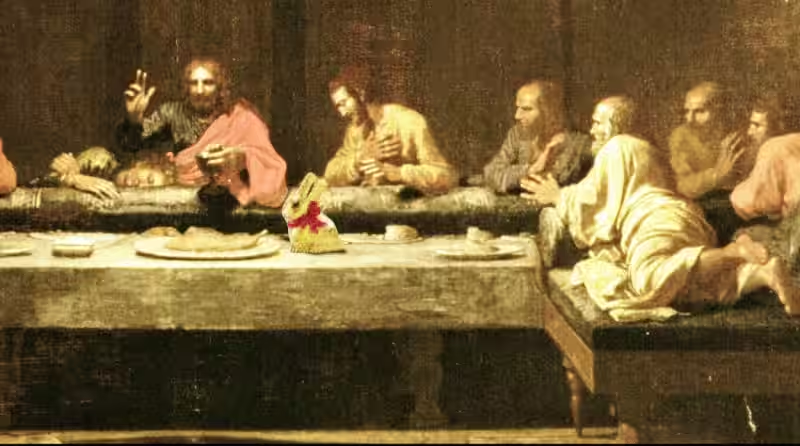
Communion, also known as the Eucharist or the Lord’s Supper, is a sacrament observed by many Christian denominations. It commemorates the Last Supper of Jesus Christ with his disciples and is understood as a spiritual nourishment and a remembrance of his sacrifice.
What are the essential elements for serving Communion?
The essential elements typically include bread (often unleavened) and wine (or grape juice). These elements are consecrated through prayer and are then distributed to the congregation.
Who is authorized to serve Communion?
The authority to serve Communion varies by denomination. In many traditions, it is reserved for ordained clergy (pastors, priests, ministers). In others, trained lay people (elders, deacons, communion stewards) may be authorized to assist or lead in the distribution.
What is the role of the person serving Communion?
The person serving Communion is responsible for preparing the elements, leading or assisting in the consecration prayer, and distributing the bread and wine to the communicants with reverence and care.
How should the bread and wine be distributed?
Practices vary. Some churches use individual cups and small pieces of bread, while others use a common cup and a loaf of bread. Distribution may be done by passing trays, or communicants may come forward to a central location.
Can anyone receive Communion?
Again, this depends on the denomination’s policies. Many churches practice “open communion,” meaning anyone who believes in Jesus Christ is welcome to partake. Others practice “closed communion,” which may require membership in that specific church or denomination, or a statement of faith.
What if someone cannot consume gluten or alcohol?
Most churches are sensitive to dietary restrictions. They typically offer gluten-free bread or wafers and non-alcoholic grape juice as alternatives. It is advisable to inquire beforehand if you have such concerns.
What is the significance of the prayers during Communion?
The prayers, often called the Words of Institution or the Eucharistic Prayer, are central to the sacrament. They typically recall Jesus’ actions at the Last Supper, acknowledge his sacrifice, and ask for God’s blessing upon the elements and the participants.
How should participants prepare themselves for Communion?
Preparation often involves self-examination, repentance, and prayer. Many denominations encourage believers to examine their lives and reconcile with God and others before partaking in the sacrament.
What happens to the remaining elements?
Typically, any remaining consecrated elements are consumed by the clergy or elders, or sometimes are set aside respectfully and disposed of later. They are not to be treated as ordinary food or drink.