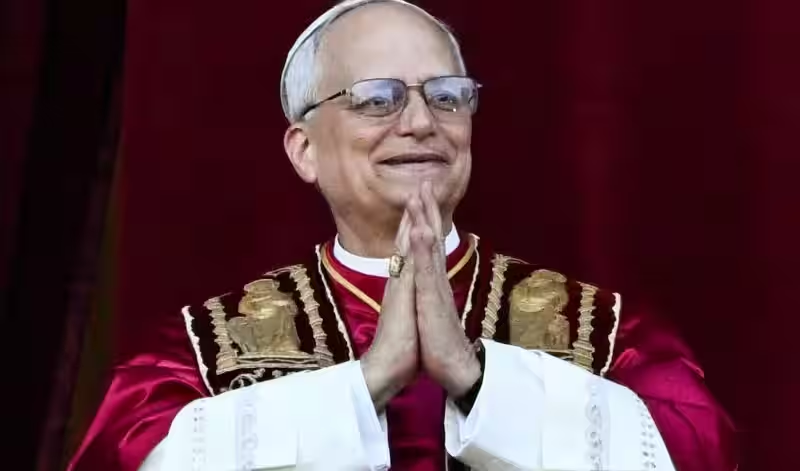
The image of the Pope traveling through crowds, waving to adoring faithful, is an iconic one in the modern era. At the heart of this visual is the Pope-Mobile, a vehicle that has evolved significantly over the centuries, transforming from simple carriages to the technologically advanced, transparent-walled marvels we see today. This evolution isn’t just about engineering; it’s deeply intertwined with the evolving role of the Pope and the religion he leads, reflecting a desire for greater visibility, security, and a more intimate connection with the global Catholic community. The journey of the Pope-Mobile mirrors the journey of faith itself – adapting, growing, and always seeking to reach people where they are.
Think of it this way: centuries ago, a Pope might have been carried in a litter, a symbol of his exalted status, but also a barrier between him and the people. As transportation evolved, so did the means by which the Pontiff interacted with the faithful. The advent of the automobile presented a new opportunity. Early papal vehicles were often standard luxury cars, perhaps with special modifications, but the true transformation began when the need for public visibility became paramount, especially during large gatherings. This shift marked a profound change, signaling a move towards a more open and accessible papacy, a core tenet of modern religion. The Pope-Mobile, in its various forms, has become an indispensable tool in this outreach.
The Papal Carriage: Precursors to the Modern Pope-Mobile
Before the roar of engines filled the squares of Rome, the Pontiff’s journeys were undertaken in a variety of carriages, each a testament to the era’s craftsmanship and the Church’s influence. These were not mere modes of transport; they were expressions of papal authority and the solemnity of religious processions. Imagine a richly adorned sedan chair, carried by sturdy attendants, or a grand horse-drawn carriage, its gilded panels reflecting the sunlight as it moved through the streets. These were the original “Pope-Mobiles,” facilitating the Pope’s presence at ceremonies and his occasional visits to different parts of the city, always within the context of a deeply religious society.
These early papal conveyances served a dual purpose: they enabled the religious leader to fulfill his duties and also served as a visible symbol of the Church’s continuity and its presence within the lives of the people. The religion of the time was deeply interwoven with daily life, and the Pope’s movements were significant events. While lacking the technological sophistication of today’s vehicles, these historical predecessors laid the groundwork for the modern concept of a dedicated papal transport, emphasizing accessibility and the symbolic importance of the Pope’s physical presence in the lives of the faithful. The sheer gravitas associated with these vehicles reinforced the spiritual leadership they represented.
The Horse-Drawn Era: Dignity and Tradition
In the era before automobiles, a Pope-Mobile was a much grander, slower affair. Think of ornate carriages, often elaborately decorated with religious iconography and papal insignia. These vehicles were designed to convey dignity and authority, allowing the Pope to be seen by the crowds gathered for significant religious events. The slow pace of these processions, often accompanied by clergy and guards, allowed for a more prolonged and visible display of the Church’s power and the Pope’s spiritual leadership. The religion was, in many ways, a spectacle, and these carriages were part of that grand presentation.
These horse-drawn vehicles were not just practical; they were steeped in tradition and symbolism. The selection of horses, the design of the carriage, even the attire of the attendants all contributed to a powerful visual narrative. For the common people, seeing the Pontiff in such a magnificent conveyance was a tangible connection to their faith and its central figure. It was a moment of awe and reverence, a reminder of a spiritual hierarchy that guided their lives and offered solace. The absence of the enclosed, modern Pope-Mobile meant a more direct, albeit still mediated, form of interaction.
The 20th century brought about a seismic shift with the invention and widespread adoption of the automobile. It was inevitable that this new technology would eventually influence the transportation of the Pope. While the initial adoption might have been cautious, the religion of Catholicism, like any evolving institution, needed to adapt to the modern world. Early papal automobiles were often standard luxury models, perhaps modified to offer a slightly elevated seating position or enhanced comfort for the Pontiff. The idea of a dedicated, highly publicized Pope-Mobile was still in its nascent stages, but the seeds of change were sown.
The transition from horse-drawn carriages to automobiles represented more than just a technological upgrade; it signified a change in the pace and accessibility of papal travel. Suddenly, longer distances could be covered more quickly, and the potential for reaching larger, more dispersed gatherings became a real possibility. This was crucial for a religion with a global reach. The early automobiles, while not as specialized as today’s models, began to bridge the gap between the isolated pontiff of old and the more visible, approachable figure that the papacy would increasingly become, especially in the post-World War II era.
The Modern Pope-Mobile: Safety, Visibility, and Connection
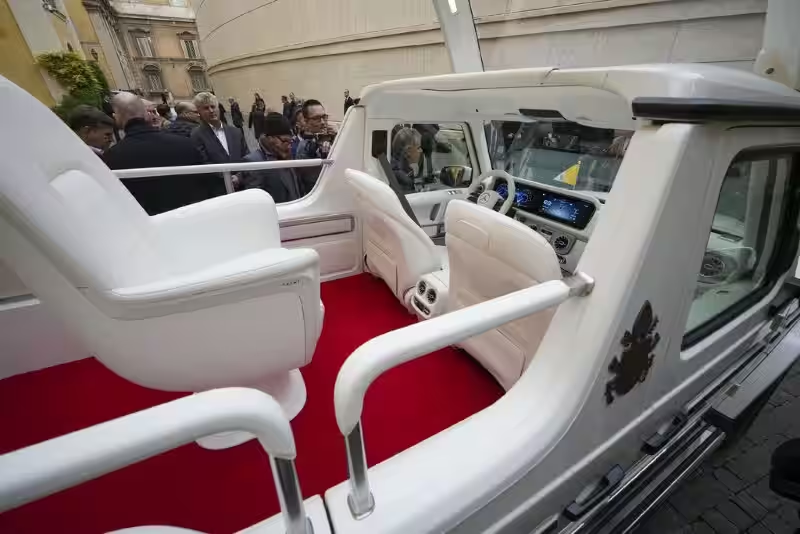
The modern Pope-Mobile is a marvel of engineering, designed with a singular purpose: to allow the Pope to be seen and to connect with millions of people safely. The iconic transparent walls, often made of bulletproof glass, are perhaps the most striking feature. This design is not about ostentation; it’s a direct response to the realities of the modern world and the need to protect the Pontiff while simultaneously offering him maximum visibility. The religion, at its core, is about bringing people together, and the Pope-Mobile facilitates this on a grand scale.
Consider the sheer volume of people at papal events in places like St. Peter’s Square or during international travels. The Pope-Mobile allows the Pontiff to traverse these vast crowds, offering blessings and waves, creating moments of personal connection that would be impossible otherwise. It’s a carefully curated experience, blending security with the very essence of religious outreach. The ability to be seen, to be a tangible presence, is vital for maintaining the spiritual bond between the Pope and the faithful, reinforcing the message of a Church that is present and engaged with its followers.
Security Meets Accessibility: The Bulletproof Bubble
The evolution of the Pope-Mobile has been heavily influenced by security concerns, particularly after the assassination attempt on Pope John Paul II in 1981. This tragic event spurred the development of vehicles with enhanced protective features, leading to the now-familiar armored enclosures. These are not designed to isolate the Pope, but rather to safeguard him, allowing his public appearances to continue without undue risk. The religion demands that its leader be protected, but this protection is carefully balanced with the need for the Pope to be accessible to the faithful.
The bulletproof nature of the Pope-Mobile might seem like a barrier, but in reality, it enables greater interaction. Without these safety measures, large public appearances might be deemed too dangerous, limiting the Pope’s ability to connect with the masses. The transparent walls are crucial here; they allow the faithful to see the Pope clearly, creating a sense of intimacy despite the physical separation. It’s a delicate dance between safeguarding a spiritual leader and fostering the direct, visible connection that is so central to how many experience their religion.
Elevated Platforms and Open-Air Designs: Tailoring the Experience
Not all Pope-Mobiles are the same, and their design often reflects the specific needs of an event or a region. While the armored, enclosed models are common for general public tours, there are also open-air variants and vehicles with elevated platforms. These designs prioritize visibility, allowing the Pope to stand and be easily seen by larger crowds, offering blessings and engaging directly with the people. This adaptability underscores the practical considerations behind the Pope-Mobile’s functionality within the context of religious gatherings.
For instance, during a procession through a densely packed square, an open-air vehicle might be preferred to maximize the Pope’s visibility and the people’s ability to see him. Conversely, for travel in areas with heightened security risks, the enclosed, armored version offers essential protection. This thoughtful variety in the Pope-Mobile’s design demonstrates a commitment to facilitating the Pope’s ministry, ensuring he can effectively convey his message and connect with followers, regardless of the specific circumstances. The ultimate goal remains the same: to foster faith and unity through presence.
The Pope-Mobile and Religious Engagement
The Pope-Mobile is far more than just a car; it’s a powerful tool for religious engagement. It symbolizes the Pope’s presence among the people, bringing the teachings and spirit of the religion directly to them in a tangible way. When people see the Pope waving from his vehicle, it’s not just a celebrity sighting; it’s a moment of spiritual significance. This connection, facilitated by the vehicle, reinforces their faith and their belonging to the Catholic community.
Think about the impact of seeing the Pope in person, even from a distance, as he passes by in his Pope-Mobile. For many, this is a once-in-a-lifetime experience, a moment they will treasure for years. It makes the abstract concept of religion and its leader feel incredibly real and personal. The Pope-Mobile is the bridge that allows this powerful, emotional connection to occur, transcending geographical and social barriers and bringing the heart of the Church directly to the people.
A Symbol of Inclusivity and Outreach
The very existence of the Pope-Mobile speaks volumes about the modern Catholic Church’s commitment to inclusivity and outreach. It signifies a desire to meet people where they are, to be visible and approachable, and to extend the Church’s embrace to as many individuals as possible. The vehicle allows the Pope to traverse diverse landscapes and to be present in communities that might otherwise never have the opportunity to see him. This proactive approach is a hallmark of contemporary religion.
Imagine a Pope visiting a remote village or a large urban center. The Pope-Mobile is instrumental in making such visits impactful. It allows for the Pope’s presence to be felt throughout an area, bringing messages of hope, peace, and spiritual guidance to a broad audience. This deliberate effort to reach out and connect reinforces the idea that the religion is for everyone, and the Pope-Mobile plays a crucial role in making that message a visible reality.
Facilitating Direct Interaction and Blessings
The Pope-Mobile is meticulously designed to facilitate direct interaction, even if it’s through a wave, a smile, or a spoken blessing. The elevated seating, the transparent walls, and the open-air options are all geared towards maximizing the opportunities for the Pontiff to connect with the faithful. This is not about passive observation; it’s about active engagement within the framework of religious practice and personal devotion.
When the Pope travels in his Pope-Mobile, he is actively blessing the crowds, offering words of encouragement, and sharing in their moments of joy and prayer. These are not merely ceremonial gestures; they are deeply meaningful acts that strengthen the spiritual bond between the leader and his flock. The religion thrives on these moments of shared humanity and spiritual connection, and the Pope-Mobile serves as the vital conduit for such exchanges.
Conclusion: The Enduring Significance of the Pope-Mobile
The Pope-Mobile, in its various iterations, has transcended its status as mere transportation to become a profound symbol within the religion of Catholicism. It represents the Pope’s commitment to being present among his people, a tangible manifestation of his spiritual leadership and the Church’s mission of outreach. From its humble, carriage-like beginnings to the advanced vehicles of today, the Pope-Mobile has consistently adapted to serve the evolving needs of the papacy and the faithful.
Ultimately, the Pope-Mobile is a testament to the enduring power of connection in religion. It allows for moments of shared humanity, visible blessings, and a palpable sense of unity between the Pontiff and millions around the world. As long as the Pope continues his vital role as a spiritual leader, his trusted Pope-Mobile will undoubtedly remain an indispensable part of his sacred journey, bridging the gap between the divine and the everyday for countless believers.
Frequently Asked Questions about Pope and Religion
What is the Pope’s role in the Catholic Church?
The Pope is the Bishop of Rome and the visible head of the Catholic Church. He is considered the successor of Saint Peter and holds supreme authority in matters of faith, morals, and governance for Catholics worldwide.
Is the Pope the founder of Catholicism?
No, the Pope is not the founder of Catholicism. Christianity, including Catholicism, traces its origins to Jesus Christ. The Catholic Church believes that Jesus appointed Saint Peter as the first Pope, establishing a line of succession.
How is the Pope elected?
The Pope is elected by the College of Cardinals during a papal conclave. This is a secret meeting held in the Sistine Chapel where cardinals, typically those under the age of 80, gather to deliberate and vote until a two-thirds majority is reached for a candidate.
What is the significance of the Pope’s pronouncements?
Papal pronouncements carry significant weight within the Catholic Church. Teachings delivered “ex cathedra” (from the chair) by the Pope on matters of faith and morals are considered infallible, meaning they are believed to be without error. Other teachings, such as encyclicals and apostolic exhortations, are highly authoritative and guide the faithful.
Does the Pope have political power?
The Pope is the head of state of Vatican City, an independent city-state within Rome. In this capacity, he engages in diplomatic relations with other countries, but his primary influence is spiritual and moral rather than political in a secular sense.
What is the relationship between the Pope and other Christian denominations?
The Pope is the leader of the Catholic Church, which is one of the major branches of Christianity. While there have been historical divisions, the Catholic Church, under the leadership of the Pope, actively engages in ecumenical dialogue with other Christian denominations in an effort to foster unity.