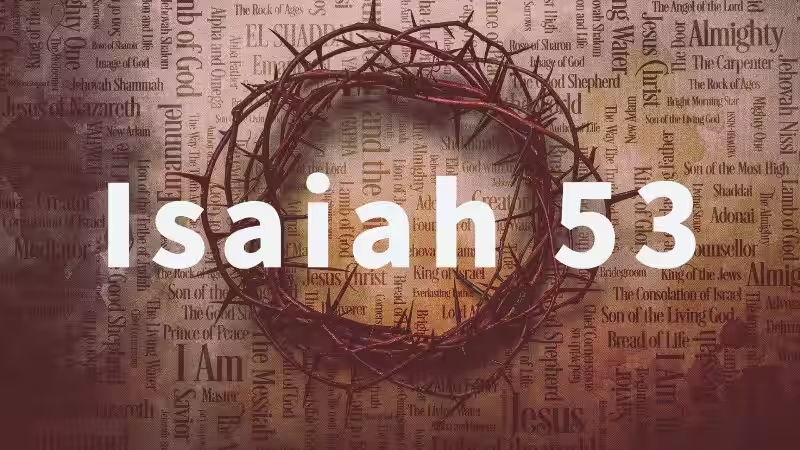
The Bible, a tapestry woven with divine threads, offers countless passages that speak to the human condition, offering solace, guidance, and profound revelation. Among these, the prophecy of Isaiah 53 stands as a cornerstone, a breathtaking glimpse into the heart of God’s redemptive plan. This chapter, often referred to as the “Suffering Servant” passage, has resonated with believers for millennia, igniting countless sermons on Isaiah 53 that explore its layers of meaning and its ultimate fulfillment.
For many, encountering Isaiah 53 for the first time can be an overwhelming experience. The stark imagery of a man bearing our iniquities, punished for our transgressions, and ultimately despised and rejected, is both unsettling and deeply moving. Yet, within this profound depiction lies the very essence of religion, particularly the Christian faith: a God who not only understands suffering but actively intervenes to conquer it. This article will delve into the enduring power of sermons on Isaiah 53, exploring its historical context, its theological significance, and its ongoing relevance for seekers of truth and spiritual nourishment.
Before we can fully grasp the impact of sermons on Isaiah 53, it’s crucial to understand the context in which this prophecy was delivered. Isaiah, a prophet who ministered in ancient Judah, spoke of a coming Messiah, a figure who would bring salvation and restoration. However, unlike some prophecies that paint a picture of immediate earthly triumph, Isaiah 53 presents a radically different, yet ultimately more powerful, vision of redemption through suffering.
The prophet’s words, penned centuries before the events they describe, paint a vivid portrait of a servant who would be “pierced for our transgressions,” “crushed for our iniquities,” and “bear the punishment that brought us peace.” This wasn’t a future king conquering his enemies with military might, but a humble servant willingly taking on the pain and shame of humanity. The very idea of a divine figure experiencing such profound suffering was, and remains, a testament to the depth of God’s love and his commitment to reconciling a broken world. These themes are the bedrock upon which many powerful sermons on Isaiah 53 are built.
The Heart of the Message: Redemption Through Sacrifice
At the core of every compelling sermon on Isaiah 53 lies the undeniable truth of redemption through sacrifice. The passage doesn’t simply describe suffering; it meticulously details why this suffering occurs and for whom. It’s not an arbitrary affliction, but a deliberate act of substitution, a cosmic exchange where the innocent bears the burden of the guilty. This is a foundational tenet of many religions, but Isaiah 53 offers a uniquely specific and personal articulation of it.
Think of it like this: imagine a community plagued by a terrible disease, and the only cure requires someone to absorb all the sickness into themselves, suffering immensely but ultimately eradicating the illness for everyone else. Isaiah 53 presents a similar, albeit infinitely more profound, scenario. The servant, identified by Christian theology as Jesus Christ, willingly steps into this role, absorbing the spiritual sickness of sin and its devastating consequences, thereby offering healing and reconciliation to all who believe. The power of sermons on Isaiah 53 lies in their ability to illuminate this profound act of love and its implications.
The identity of the “Suffering Servant” has been a subject of intense theological debate and exploration throughout history, fueling countless sermons on Isaiah 53. While some interpretations have seen this figure as a collective representation of Israel or a righteous individual, the overwhelming consensus among Christian scholars and believers points to Jesus Christ as the ultimate fulfillment of this prophecy. The detailed descriptions of his suffering, his silent endurance, and his unjust condemnation are seen as mirroring the Gospel accounts of Jesus’ passion.
The relatability of this divine figure is part of his power. He isn’t a distant deity observing from afar; he is one who has intimately experienced the depths of human pain, rejection, and suffering. This understanding allows for a deeper connection with God, creating a sense of divine empathy that resonates with individuals facing their own trials. Sermons on Isaiah 53 often highlight this aspect, emphasizing that in our darkest moments, we are not alone; our suffering has been borne by the one who ultimately brings victory.
The Cost of Sin and the Price of Peace
The economic language used in Isaiah 53 (“punishment that brought us peace,” “his wounds are healing us”) underscores the immense cost of sin and the incredible price of peace that was paid. Sin, in theological terms, creates a separation between humanity and a holy God. This separation has consequences, manifesting in brokenness, suffering, and ultimately, spiritual death. Sermons on Isaiah 53 frequently address this, explaining that the servant’s sacrifice was the only way to bridge this chasm.
Consider a damaged relationship. Reconciliation often requires a sacrifice – an apology, a gesture of forgiveness, a willingness to mend what has been broken. The servant’s sacrifice represents an infinitely greater act of reconciliation, a divine intervention that re-establishes fellowship between God and humanity. The power of these sermons lies in their ability to articulate this profound truth in ways that are both intellectually stimulating and emotionally resonant, offering a tangible path to spiritual wholeness.
Application and Relevance: Living the Prophecy Today
The enduring power of sermons on Isaiah 53 lies not just in their theological depth but in their practical application to our daily lives. This prophecy isn’t a historical curiosity; it’s a living message that calls us to a deeper understanding of faith, love, and discipleship. It challenges us to consider the implications of the servant’s sacrifice on our own attitudes, actions, and relationships.
The themes of sacrifice, suffering, and redemption are woven into the fabric of human experience. We all encounter moments of pain, injustice, and loss. Sermons on Isaiah 53 can help us to reframe these experiences, not as meaningless afflictions, but as opportunities to participate, in some small way, in the ongoing work of redemption. They encourage us to extend grace, to forgive those who have wronged us, and to bear our own burdens with a spirit of resilience, knowing that our suffering is not in vain.
Embracing the Servant’s Example
The Suffering Servant offers a powerful example for all who seek to live a life of faith. His willingness to endure hardship, to be misunderstood, and to ultimately lay down his life for others is a radical call to selflessness. Sermons on Isaiah 53 often challenge listeners to consider: How can we, in our own spheres of influence, embody this servant spirit? How can we prioritize the needs of others above our own?
This doesn’t mean we are expected to endure physical torture or unjust condemnation. Rather, it’s about cultivating a heart of humility and service. It means being willing to make sacrifices, to extend compassion, and to stand up for what is right, even when it’s difficult. The impact of these sermons can inspire individuals to become agents of positive change, reflecting the servant’s love in tangible ways within their families, communities, and workplaces.
The Hope of Resurrection and Eternal Life
Crucially, sermons on Isaiah 53 rarely end with the depiction of suffering. The narrative points towards a glorious culmination, a victory that transcends death itself. The servant’s suffering is not the final act; it is the prelude to resurrection and eternal life. This hope is the bedrock of Christian religion, offering a profound assurance that even in the face of death, life and redemption are ultimately triumphant.
The passage states, “he will see his offspring and prolong his days.” This is not merely a biological continuation but a spiritual one, a testament to the enduring power of his redemptive work. Sermons on Isaiah 53 inspire believers with the promise of a future where sin and death are no more, a future secured by the sacrifice of the Suffering Servant. This message of hope is invaluable, providing comfort and strength to navigate the uncertainties of life and the inevitability of death.
Conclusion: A Timeless Message of Love and Salvation
In conclusion, the prophecy found in Isaiah 53 remains one of the most powerful and transformative passages in all of scripture. Through countless sermons on Isaiah 53, the profound truth of God’s redemptive love, enacted through the sacrifice of his Son, continues to inspire, challenge, and offer hope to millions. This chapter speaks to the core of religion, offering a tangible demonstration of God’s willingness to endure suffering for the sake of humanity’s salvation.
Whether you are encountering these themes for the first time or have studied them for years, the Suffering Servant offers a timeless message. It reminds us of the depth of our need for redemption, the immeasurable cost of sin, and the boundless grace of a God who, in his infinite love, sent his only Son to bear our iniquities. The lessons from Isaiah 53 are not confined to ancient texts; they are a living invitation to embrace a faith that is both deeply personal and universally transformative, offering spiritual renewal and the promise of eternal life.
Frequently Asked Questions about Sermons on Isaiah 53
What is Isaiah 53?
Isaiah 53 is a chapter in the Old Testament of the Bible that is widely interpreted by Christians as a prophecy about the suffering and atonement of Jesus Christ. It describes a “servant” who will bear the sins of many and be wounded for their transgressions, leading to their healing.
What are the main themes of Isaiah 53?
The primary themes include the suffering of the innocent servant, his vicarious atonement for the sins of others, his rejection and humiliation, and his ultimate vindication and the salvation he brings.
How is Isaiah 53 interpreted in Christian sermons?
Christian sermons typically present Isaiah 53 as a clear and powerful prediction of Jesus’ sacrificial death on the cross. The “servant” is identified as Jesus, whose suffering and death are understood to be for the atonement of humanity’s sins, enabling reconciliation with God.
What is the significance of Isaiah 53 for Christian belief?
It is considered a pivotal text that demonstrates the foreknowledge of God and the fulfillment of prophecy in Jesus Christ. It underpins the Christian understanding of salvation through Christ’s sacrifice and the concept of atonement.
Are there other religious interpretations of Isaiah 53?
Jewish interpretations of Isaiah 53 often view the “suffering servant” as representing the nation of Israel or a righteous individual within Israel, rather than a single messianic figure. These interpretations generally do not identify the servant with Jesus.
How can I find sermons on Isaiah 53?
You can find sermons on Isaiah 53 by searching online for “sermons Isaiah 53,” “Isaiah 53 sermon series,” or by visiting the websites of various Christian churches and denominations, many of which offer audio or video recordings of their sermons.
What should I look for in a sermon on Isaiah 53?
A good sermon on Isaiah 53 will likely explore the historical context of the prophecy, its detailed descriptions of suffering and atonement, and its theological implications for Christian faith and practice. It should offer insightful explanations and connect the ancient text to contemporary Christian life.