At the heart of nearly every faith tradition lies a fundamental yearning, a deep-seated desire for something more than the transient realities of our earthly existence. This quest often leads us to contemplate the profound concept of salvation, a doctrine that speaks to deliverance from suffering, sin, or spiritual peril, and the attainment of a state of ultimate well-being. Whether envisioned as eternal life, enlightenment, liberation, or reconciliation with the divine, the salvation doctrine offers a roadmap, a promise, and a framework for understanding our place in the cosmos and our potential for transcendence. It’s a concept that resonates across cultures and time, shaping individual lives and entire civilizations.
The idea of salvation isn’t a monolithic entity; it’s a rich tapestry woven with diverse threads of belief, practice, and theological interpretation. From the ancient rituals aimed at appeasing powerful deities to the introspective journeys of spiritual awakening, religions offer myriad pathways to this ultimate prize. Understanding the salvation doctrine requires delving into the specific tenets of various faiths, recognizing their unique understandings of what needs saving from and what salvation ultimately entails. It’s about more than just avoiding punishment; it’s often about transformation, redemption, and the restoration of a broken relationship.
At its most basic, salvation refers to being saved from something undesirable. In a religious context, this “something” can be incredibly varied. For many, it’s salvation from the consequences of sin, a concept that implies wrongdoing, moral failing, or a separation from a holy or perfect divine being. This separation, in turn, often leads to suffering, both in this life and potentially in an afterlife. The salvation doctrine in these traditions posits that human beings are inherently flawed or fallen, incapable of achieving righteousness on their own, and thus require external intervention or a divinely provided means of atonement.
Beyond the realm of sin, salvation can also be understood as liberation from the cycles of suffering and rebirth, as seen in traditions like Buddhism. Here, the focus is on escaping the cycle of samsara, driven by ignorance and attachment. The ultimate goal is nirvana, a state of profound peace and freedom. In other traditions, salvation might mean achieving union with the divine, a profound sense of oneness or communion with God or a higher power. Regardless of the specific threat or the ultimate destination, the common thread is the promise of a better state of being, a release from limitations and imperfections.
Salvation from Sin: The Christian Perspective
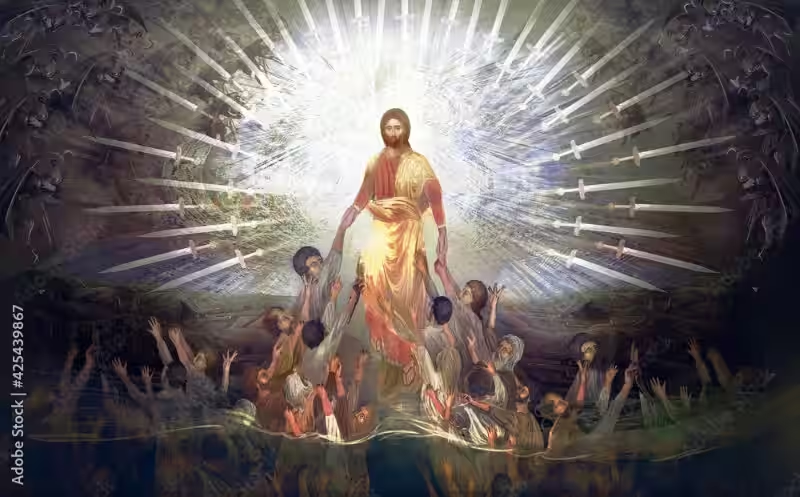
Perhaps one of the most widely recognized interpretations of the salvation doctrine is found within Christianity. Here, salvation is primarily understood as deliverance from sin and its eternal consequences. The core belief is that humanity, due to the sin of Adam and Eve, is born into a state of separation from God, deserving of divine judgment. The cornerstone of Christian salvation is the sacrificial death and resurrection of Jesus Christ, believed to be the Son of God. His atoning sacrifice, according to Christian theology, pays the penalty for humanity’s sins, offering a way to be reconciled with God.
The mechanism for receiving this salvation typically involves faith in Jesus Christ as Lord and Savior, coupled with repentance – a turning away from sin. This is often accompanied by baptism, a symbolic act of cleansing and new life. Different denominations may offer slightly varied emphases on the role of sacraments, good works, or divine grace, but the central tenet remains: salvation is a gift from God, made possible through Christ’s sacrifice, and received through a personal relationship with Him. This is not about earning one’s way to heaven through perfect behavior, but rather accepting the grace offered through faith. For example, a person who has made significant mistakes in their life can, through genuine faith and repentance, be forgiven and offered a path to eternal life.
Salvation as Liberation: Eastern Traditions
In contrast to the emphasis on sin and atonement, many Eastern religious traditions frame salvation in terms of liberation from suffering and the cycle of existence. In Hinduism, for instance, the concept of moksha represents liberation from the cycle of birth, death, and rebirth (samsara). This is achieved through various paths, known as yogas, which can include the path of knowledge (jnana yoga), devotion (bhakti yoga), action (karma yoga), and meditation (raja yoga). The underlying principle is to overcome ignorance, desires, and attachments that bind individuals to the material world and its inherent suffering.
Buddhism offers a similar perspective with the goal of achieving nirvana. The Buddha taught that suffering is an inherent part of life, caused by craving and attachment. Through the Eightfold Path – which includes right understanding, right thought, right speech, right action, right livelihood, right effort, right mindfulness, and right concentration – individuals can extinguish the fires of greed, hatred, and delusion, leading to the cessation of suffering and the attainment of a state of peaceful liberation. The focus is on inner transformation and understanding the impermanent nature of reality, rather than on divine intervention for forgiveness. The journey is intensely personal, emphasizing self-discipline and wisdom.
The Role of Works and Grace in Salvation
A significant point of discussion within the salvation doctrine across various religions revolves around the interplay between divine grace and human works. Grace, in a religious context, is often understood as unmerited favor from God or the divine. It’s a gift that cannot be earned or deserved. Works, on the other hand, refer to actions, deeds, and adherence to religious laws or ethical principles.
In some traditions, particularly within certain Protestant Christian denominations, the emphasis is heavily placed on salvation by grace through faith alone. The belief is that human efforts are insufficient to achieve righteousness, and it is God’s grace, freely given, that saves. Good works are seen as a natural consequence of salvation, a demonstration of a transformed heart, rather than a means to earn it. In contrast, other faiths, and even some Christian traditions, view works as an integral part of the salvific process. For example, in Catholicism, while grace is essential, good works and participation in sacraments are considered vital for cooperating with God’s grace and growing in holiness, thereby contributing to one’s salvation.
Works as Evidence of Faith
Many religious traditions see good works not as a way to earn salvation, but as tangible evidence of a genuine inner transformation. If someone truly believes in the tenets of their faith and has experienced a spiritual awakening, their actions will naturally reflect this change. For instance, a person who professes to follow a religion that emphasizes compassion and service to others would be expected to engage in acts of kindness, charity, and support for those in need. These actions are not seen as a transaction for salvation, but as a living testament to the reality of their faith.
In Islam, for example, while Allah’s mercy is paramount, the performance of the Five Pillars of Islam (faith, prayer, charity, fasting, and pilgrimage) is considered essential. These acts are not just rituals; they are expressions of submission to God’s will and a way to cultivate spiritual discipline. Similarly, in Judaism, adherence to the Mitzvot (commandments) is central to living a righteous life and maintaining a covenantal relationship with God. These actions are seen as a vital component of a life lived in accordance with divine will, contributing to one’s ultimate spiritual well-being.
Grace as the Primary Driver
Conversely, the salvation doctrine in many spiritual paths strongly emphasizes divine grace as the primary and ultimate salvific force. Human beings are viewed as inherently incapable of reaching a state of perfection or spiritual fulfillment through their own efforts. It is the boundless love, mercy, and power of God, or the universal divine energy, that initiates and sustains the process of salvation. This perspective highlights the humility required in the spiritual journey, acknowledging our dependence on something greater than ourselves.
In many Christian denominations, the concept of predestination also comes into play, suggesting that God, in His infinite wisdom and sovereignty, has chosen certain individuals for salvation before they are even born. While this can be a complex theological point, it underscores the idea that salvation is ultimately a divine initiative. Even in traditions that emphasize personal effort, the underlying assumption is often that the capacity to seek and achieve spiritual liberation is itself a gift from the divine. It’s like a parent helping a child learn to walk; the child must make the effort, but the parent’s support and guidance are crucial for success.
The salvation doctrine is not merely an abstract theological concept; it is a living, breathing reality that manifests in the diverse practices and rituals of religious life. These practices serve as pathways, guiding adherents towards their ultimate spiritual goal. They provide structure, community, and a means to actively participate in their own salvation, whether through devotion, self-discipline, or acts of service.
These pathways can be as varied as the traditions themselves, encompassing everything from communal worship and prayer to solitary meditation and asceticism. The journey of salvation is often portrayed as a process of transformation, requiring consistent effort and a willingness to confront one’s own limitations and desires. It’s a lifelong endeavor, marked by moments of profound insight and periods of struggle.
Rituals and Sacraments as Aids to Salvation
Many religions employ rituals and sacraments as tangible means through which divine grace is mediated and spiritual progress is fostered. These ceremonies are often seen as sacred acts that connect individuals to the divine, offering forgiveness, purification, and empowerment. For Christians, sacraments like baptism and communion are central to the salvation doctrine, symbolizing new life in Christ and participation in His sacrifice. These are not just symbolic gestures but are believed to be channels of God’s grace.
In Judaism, the observance of the Sabbath and various festivals, along with rituals like circumcision and Bar/Bat Mitzvah, serve to reinforce the covenant between God and His people and guide them in living a life of holiness. In Hinduism, pujas (acts of worship), pilgrimages to sacred sites, and the recitation of mantras are all practices aimed at drawing closer to the divine and accumulating spiritual merit. These sacred acts provide a framework for spiritual growth and offer a sense of connectedness to something larger than oneself, aiding in the journey toward ultimate liberation or union.
The Importance of Community and Spiritual Guidance
While the journey of salvation can be deeply personal, the role of community and spiritual guidance is often indispensable. Religious communities provide support, encouragement, and a shared understanding of the faith’s teachings. They offer a space for collective worship, mutual accountability, and the transmission of traditions from one generation to the next. The fellowship found within a religious group can be a powerful source of strength when facing spiritual challenges.
Furthermore, spiritual leaders such as priests, imams, rabbis, gurus, or monks often serve as guides, offering wisdom, interpretation of sacred texts, and counsel. Their role is to help individuals navigate the complexities of their faith, understand the nuances of the salvation doctrine, and overcome obstacles on their spiritual path. They can offer clarity when doctrines seem confusing and provide encouragement during times of doubt. This guidance is crucial, as the path to salvation can be intricate and requires both personal effort and the wisdom of those who have walked the path before.
Contemporary Relevance of the Salvation Doctrine
In our modern, increasingly secular world, the salvation doctrine might seem like an anachronism to some. However, the underlying human needs that religions address – the desire for meaning, purpose, forgiveness, and a hope for something beyond suffering – remain profoundly relevant. Even for those who do not subscribe to a specific religious tradition, the search for deliverance from life’s difficulties, whether personal, societal, or existential, continues.
The principles embedded within the salvation doctrine can offer valuable insights into ethical living, personal responsibility, and the pursuit of inner peace. The emphasis on compassion, forgiveness, and the pursuit of a life of purpose resonates across belief systems and can inform how individuals approach their own challenges and their relationships with others. The very concept of being “saved” can be reinterpreted in secular terms, such as achieving mental well-being, overcoming addiction, or finding resilience in the face of adversity.
Finding Meaning and Purpose Beyond Suffering
The salvation doctrine fundamentally offers a framework for understanding and navigating human suffering. It provides a narrative that suggests that suffering is not the end, but can be a part of a larger process leading to redemption or transcendence. This can be incredibly comforting and empowering for individuals facing personal crises, loss, or systemic injustice. The belief that there is a potential for a better state, a future free from the present pain, can inspire hope and resilience.
Even outside of religious contexts, the human drive to find meaning and purpose in life is a powerful force. The stories of overcoming adversity, of finding inner strength, and of contributing to a greater good all echo the themes found within religious narratives of salvation. The quest for a life of integrity and virtue, for example, can be seen as a personal journey of salvation from the destructive impulses of selfishness or apathy. The salvation doctrine, in its broadest sense, speaks to our innate desire for a life that matters and a future that holds promise.
The Enduring Human Quest for Deliverance
Ultimately, the salvation doctrine, in its myriad forms, speaks to a deeply ingrained human aspiration: the desire for deliverance. Whether it’s deliverance from guilt, from the fear of death, from the cycle of suffering, or from a sense of purposelessness, the human spirit yearns for a state of wholeness and well-being. Religions offer a structured and time-tested approach to this quest, providing not only a theological framework but also practical guidance and a supportive community.
While the specific beliefs and practices may differ significantly, the underlying message of hope, transformation, and the possibility of a better future remains a constant. The exploration of the salvation doctrine, therefore, is not just an academic exercise; it is an invitation to reflect on our own deepest desires, our understanding of human nature, and our enduring hope for a life that transcends the limitations of our current existence. It’s a reminder that the search for meaning and liberation is a timeless and universal human endeavor.
Frequently Asked Questions about Salvation Doctrine
What is salvation in Christianity?
Salvation, in Christian theology, refers to the deliverance from sin and its consequences, leading to eternal life with God. It is generally understood to be a gift from God, received through faith in Jesus Christ.
How is salvation achieved according to Christian doctrine?
The core belief is that salvation is achieved through grace, by faith in the atoning sacrifice of Jesus Christ on the cross. This faith is often understood as a belief in Jesus as the Son of God and Savior, coupled with repentance for sins and a commitment to follow Him. Different denominations may emphasize specific aspects, such as baptism or good works, as outward expressions or necessary components of this faith.
Is salvation available to everyone?
Christian doctrine generally teaches that salvation is universally available to all who believe. The message of salvation is considered to be for all nations and all people. However, the condition for receiving it is typically faith in Jesus Christ.
What is the role of Jesus Christ in salvation?
Jesus Christ is central to Christian salvation doctrine. He is believed to be the Son of God who, through his death and resurrection, atoned for the sins of humanity, making reconciliation with God possible. His sacrifice is seen as the means by which believers are forgiven and receive eternal life.
What is the difference between salvation and eternal security?
Salvation is the act of being delivered from sin and death. Eternal security, or the doctrine of perseverance of the saints, is the belief that those who are truly saved will remain saved and will not lose their salvation. Different Christian traditions hold varying views on the certainty and revocability of salvation.
Does one need to be part of a specific church or denomination to be saved?
While many Christians believe that being part of a community of faith (a church) is important for spiritual growth and practice, the doctrine of salvation itself is generally understood to be based on a personal relationship with God through Christ, rather than membership in a particular denomination. However, some denominations may hold a stronger view on the necessity of their specific church for salvation.