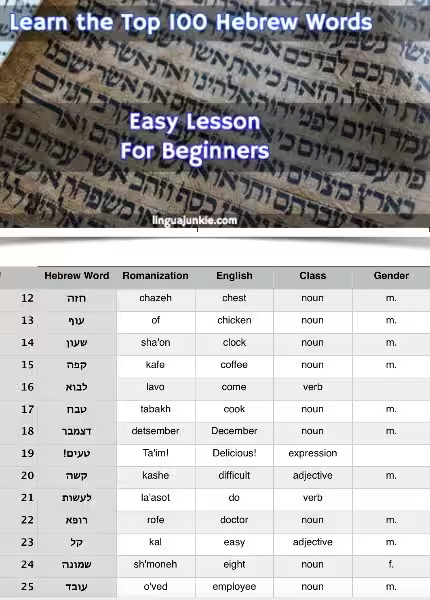
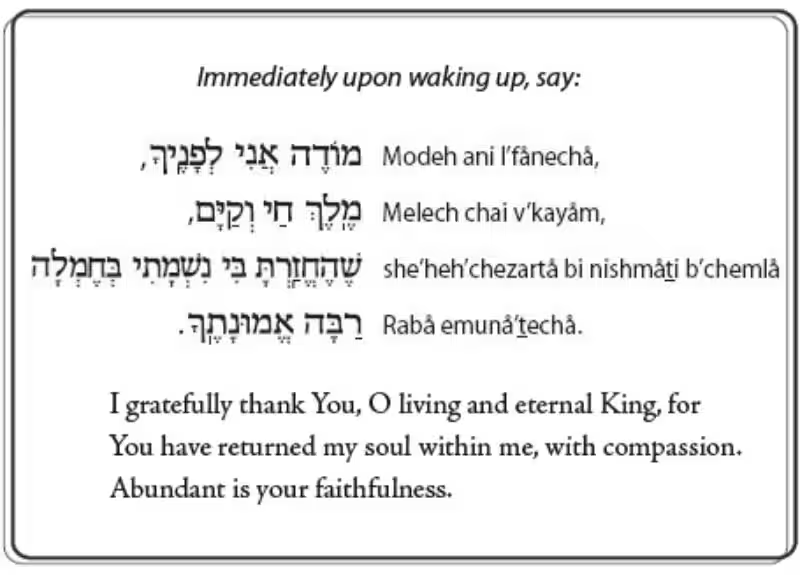
The Hebrew language, lashon hakodesh (לשון הקודש), literally meaning “the holy tongue,” is far more than just a communication tool for the Jewish people. It is the lively thread that connects generations, the sacred vessel holding millennia of spiritual thought, and the very language of prayer and covenant. For anyone seeking to understand the depth of Jewish religion, delving into its Hebrew roots is an essential and enriching journey. From the foundational texts of the Torah to the intimate whispers of personal prayer, Hebrew words and phrases imbue religious practice with profound meaning and unparalleled resonance.
Exploring these linguistic treasures isn’t just an academic exercise; it’s an invitation to experience Judaism on a deeper level. Imagine the power of understanding the very names of God, such as Elohim (אֱלֹהִים) or Adonai (אֲדֹנָי), not just as translations but as windows into His attributes and our relationship with Him. This article will guide you through some of the most significant Hebrew words and phrases that form the bedrock of Jewish religious life, offering insights that are both informative and deeply relatable.
The Cornerstone: Understanding Key Hebrew Terms in Jewish Religion
At the heart of Jewish religion lies a rich tapestry of Hebrew vocabulary, each word carrying layers of historical, theological, and practical significance. These terms are not static relics of the past; they are living, breathing components of Jewish identity and religious observance. Understanding them unlocks a deeper appreciation for the laws, customs, and ethical principles that guide Jewish life.
One of the most fundamental concepts is Halakha (הֲלָכָה), the body of Jewish law derived from the Torah and rabbinic interpretation. This isn’t a rigid, unyielding set of rules, but rather a dynamic framework for living a life dedicated to God. For instance, the observance of Shabbat (שַׁבָּת), the Sabbath, is a central pillar, a day of rest and spiritual rejuvenation. From the intricate details of kashrut (כַּשְׁרוּת), the dietary laws, to the precise timings for daily tefillah (תְּפִלָּה), prayer, every aspect of Halakha is infused with the intention of bringing holiness into the everyday.
Torah and its Sacred Vocabulary
The Torah (תּוֹרָה), the first five books of Moses, is the central text of Judaism and the source of much of its religious vocabulary. Within its verses, we find the foundational commandments, the stories of the patriarchs and matriarchs, and the very divine narrative that shapes Jewish belief. The word “Torah” itself means “teaching” or “instruction,” emphasizing its role as a guide for living.
Within the Torah, we encounter mitzvot (מִצְווֹת), the commandments, which are seen as divine obligations designed to sanctify life. These range from the well-known commandments like “honor your father and your mother” to more specific ritual observances. The concept of brit (בְּרִית), covenant, is also paramount, referring to the sacred relationship established between God and the Jewish people, notably exemplified by the covenant with Abraham. Understanding these core terms provides a vital lens through which to interpret the entirety of Jewish religious law and practice.
Prayer: Speaking with the Divine
Prayer in Judaism, or tefillah (תְּפִלָּה), is a deeply personal and communal act of communicating with God. The Hebrew language elevates this communication, imbuing each word with spiritual weight. The traditional prayer services, often recited from a siddur (סִדּוּר), a prayer book, contain a rich collection of psalms, blessings, and petitions.
A central element of Jewish prayer is the Shema (שְׁמַע), the foundational declaration of Jewish faith: “Shema Yisrael Adonai Eloheinu Adonai Echad” (שְׁמַע יִשְׂרָאֵל ה’ אֱלֹהֵינוּ ה’ אֶחָד), meaning “Hear, O Israel, the Lord our God, the Lord is One.” This declaration is not merely a statement of monotheism but a profound affirmation of God’s absolute sovereignty and unity. The Amidah (עֲמִידָה), also known as the Shemoneh Esrei (eighteen blessings), is another cornerstone of prayer, recited standing and often considered the essence of Jewish worship.
Beyond the Basics: Nuances and Expressions in Jewish Religious Life
As we delve deeper into Hebrew words and phrases related to Jewish religion, we uncover a wealth of nuance and cultural expression. These terms offer not just a glimpse into doctrine, but into the lived experience of faith, the emotional landscape of devotion, and the communal bonds that strengthen religious practice.
The concept of tzedakah (צְדָקָה), often translated as “charity,” is a profound ethical imperative in Judaism. However, its Hebrew root signifies “righteousness” or “justice,” suggesting that giving to those in need is not just an act of kindness, but a fundamental requirement of a just society. This emphasis on social responsibility is deeply woven into the fabric of Jewish religious thought and practice, encouraging active participation in creating a better world.
Holidays and Celebrations: A Hebrew Lexicon of Joy and Remembrance
Jewish holidays are vibrant expressions of faith, history, and community, each marked by unique Hebrew terms and traditions. Pesach (פֶּסַח), Passover, commemorates the Exodus from Egypt, with its central Seder meal featuring symbolic foods and the retelling of the story, known as the Haggadah (הַגָּדָה). The unleavened bread eaten during Passover is called matzah (מַצָּה), a reminder of the haste with which the Israelites left Egypt.
Another significant holiday is Rosh Hashanah (רֹאשׁ הַשָּׁנָה), the Jewish New Year, a time of introspection and renewal. It is marked by the blowing of the shofar (שׁוֹפָר), a ram’s horn, whose piercing sound serves as a spiritual wake-up call. Later in the year, Yom Kippur (יוֹם כִּפּוּר), the Day of Atonement, is the holiest day in the Jewish calendar, a day of fasting and prayer dedicated to seeking forgiveness and spiritual purification. Understanding these terms allows for a richer appreciation of the customs and meanings behind these important observances.
Ethical and Spiritual Concepts: The Hebrew Soul of Judaism
Beyond rituals and laws, Hebrew words and phrases illuminate the ethical and spiritual core of Jewish religion. The concept of teshuvah (תְּשׁוּבָה), often translated as “repentance,” goes beyond mere regret. It signifies a turning back towards God, a profound inner transformation involving acknowledging wrongdoing, regretting it, resolving to change, and asking for forgiveness.
Another crucial concept is kavanah (כַּוָּנָה), which refers to intention or concentration, particularly during prayer. It emphasizes that religious practice should be performed with heartfelt sincerity and focused awareness, rather than mechanically. The pursuit of wisdom and understanding is also central, encapsulated in the Hebrew word chochmah (חָכְמָה). These terms highlight that Jewish religion is a holistic endeavor, encompassing not only outward actions but also the inner landscape of the heart and mind.
In conclusion, engaging with Hebrew words and phrases offers an unparalleled gateway into the heart of Jewish religion. From the foundational texts of the Torah to the intimate nuances of prayer and ethical living, these sacred terms provide a vibrant and meaningful connection to a tradition that has shaped history and continues to inspire millions. By exploring lashon hakodesh, we don’t just learn about Judaism; we begin to experience its profound spiritual depth and its enduring relevance.
Frequently Asked Questions: Hebrew Words and Phrases, Religion
What are some common Hebrew greetings?
Shalom (שָׁלוֹם): This is the most common greeting and means “peace.” It can be used for hello, goodbye, and peace.
Boker tov (בּוֹקֶר טוֹב): Good morning.
Erev tov (עֶרֶב טוֹב): Good evening.
Laila tov (לַיְלָה טוֹב): Good night.
What does “Mazel Tov” mean?
“Mazel Tov” (מַזָּל טוֹב) literally translates to “good luck,” but it’s used to express congratulations on a happy occasion, such as a birthday, engagement, wedding, or birth of a child.
What is the significance of the word “Tikkun Olam”?
“Tikkun Olam” (תִּיקוּן עוֹלָם) means “repair of the world.” It is a concept in Judaism that refers to the responsibility of humanity to engage in acts of social justice and repair the world, making it a better place.
What is the Torah?
The Torah (תּוֹרָה) is the central sacred text of Judaism. It comprises the first five books of the Hebrew Bible (Genesis, Exodus, Leviticus, Numbers, and Deuteronomy). It contains laws, narratives, and teachings considered foundational to Jewish faith and practice.
What are the major branches of Judaism?
The major branches of Judaism are Orthodox, Conservative, and Reform. These branches differ in their interpretation of Jewish law, tradition, and practice.
What is the Sabbath (Shabbat)?
Shabbat (שַׁבָּת) is the Jewish day of rest and spiritual observance, observed from Friday sundown to Saturday sundown. It is a time for prayer, family, and refraining from work.
Who are some important figures in Jewish history and religion?
Key figures include Abraham (considered the patriarch), Moses (who received the Torah), King David (a revered king and psalmist), and various prophets and rabbis throughout history.
What is the significance of the Star of David?
The Star of David (מָגֵן דָּוִד, Magen David) is a symbol of Judaism and Jewish identity, consisting of two overlapping equilateral triangles that form a hexagram. It is often seen on synagogues and Jewish cultural items.
What is the concept of “Mitzvah”?
A “Mitzvah” (מִצְוָה) is a commandment or good deed. In Judaism, there are traditionally 613 mitzvot derived from the Torah that guide religious observance and ethical behavior.