In the tapestry of religious history, few threads are as vibrant and persistent as the veneration of saint’s relics. These tangible fragments, often bone, cloth, or even personal possessions of individuals recognized for their extraordinary faith and piety, have captivated believers for centuries. They are more than just historical artifacts; they are potent symbols, bridges between the earthly and the divine, offering a palpable connection to those who walked the path of righteousness before us. For many, encountering a saint’s relic isn’t merely an act of historical curiosity, but a deeply spiritual experience.
Imagine holding a shard of glass said to have once contained the tears of a saint, or gazing upon a worn wooden cross that a martyr clutched in their final moments. These are the kinds of experiences that saint’s relics offer, imbuing the intangible concept of faith with a tangible anchor. This article will delve into the profound significance of these sacred objects within various religions, exploring their historical context, their spiritual impact on individuals and communities, and why, in our modern world, they continue to hold such immense power and relevance.
At its core, a saint’s relic is a physical remnant of a person deemed holy by their religious tradition. These can range from primary relics, such as bones, hair, or blood, to secondary relics, which are items that the saint directly touched or used, like clothing, tools, or even soil from their burial place. The belief underpinning the veneration of relics is rooted in the idea of divine grace and intercession. It is believed that the sanctity of the saint, having been so closely aligned with God during their earthly life, imbues these physical remnants with a special spiritual power. This power is not inherent in the object itself, but rather flows through it, serving as a conduit for the saint’s prayers and influence.
The importance of relics stems from their ability to make the lives of saints relatable and accessible. Instead of abstract narratives, believers can engage with something concrete, something that belonged to a person who faced similar human struggles, temptations, and triumphs. This tangible connection fosters a sense of companionship in faith. For instance, a young person struggling with doubt might find solace in contemplating a relic of a saint who persevered through immense personal suffering, knowing that their prayers are being heard by someone who truly understands. This is why the religious significance of saint’s relics extends far beyond mere historical preservation; it is a living, breathing aspect of faith for millions.
The Historical Roots of Relic Veneration
The practice of venerating saint’s relics has deep historical roots, stretching back to the early days of Christianity and mirrored in other spiritual traditions. In the nascent Christian communities, the martyrs, those who died for their faith, were particularly revered. Their burial sites, often marked by humble tombs, became places of pilgrimage and prayer. Early Christians believed that the blood of these martyrs was a testament to their unwavering devotion, and their earthly remains were seen as precious links to their heroic sacrifice. This reverence was not about worshipping the saint, but about honoring their witness and seeking their intercession with God.
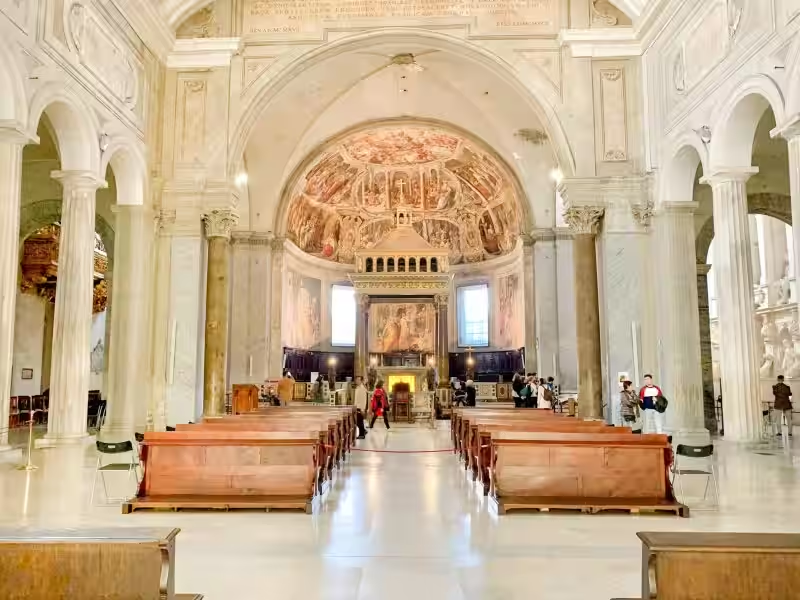
As Christianity spread and matured, the collection and veneration of relics became more organized. Churches were often built over the tombs of saints, and their relics were frequently enshrined within altars. This practice served multiple purposes: it sanctified the church building, provided a focal point for communal worship, and attracted pilgrims who would bring offerings and seek spiritual blessings. For example, the early church and saint’s relics played a crucial role in solidifying Christian identity and fostering a shared sense of community across vast geographical distances. The careful authentication and display of these sacred objects became an important aspect of religious life, a testament to the enduring power of faith.
The Spiritual Impact on Believers Today
In the modern era, the spiritual impact of saint’s relics remains profound and multifaceted. For many, encountering a relic is an immersive experience that transcends the intellectual. It can evoke feelings of awe, humility, and a deep sense of connection to the Communion of Saints. Imagine standing before a reliquary in a ancient cathedral, the cool stone enclosing a fragment of a beloved saint’s bone. This tangible presence can stir emotions, prompting personal reflection, prayer, and a renewed commitment to one’s faith journey. The spiritual power of saint’s relics is often described as a subtle but powerful energy, a reminder of God’s presence in the world and the ongoing efficacy of prayer.
Furthermore, relics serve as potent reminders of the virtues of the saints. Their lives, as documented in hagiographies, offer blueprints for living a life of faith, hope, and charity. When a believer beholds a relic, they are not just looking at a physical object; they are contemplating the life lived, the sacrifices made, and the unwavering devotion to God. This can inspire individuals to emulate these virtues in their own lives, whether it’s through acts of kindness, perseverance in the face of adversity, or a deepened commitment to prayer. For instance, a person facing illness might draw strength from a relic of a saint known for their healing ministry, finding not just comfort but also the inspiration to face their own challenges with courage.
Relics in Different Religious Traditions
While the concept of venerating sacred remnants is most prominently associated with Christianity, similar practices can be observed in other religious traditions. In Buddhism, for instance, Buddha’s relics, often referred to as sarira, are highly revered. These are typically cremated remains, such as bone fragments or pearls, that are enshrined in stupas, sacred mounds or structures that serve as pilgrimage sites. The contemplation of these relics is believed to aid in meditation and foster spiritual development, connecting practitioners to the enlightened wisdom of the Buddha.
In Islam, while the direct veneration of relics is not as widespread as in some other faiths, the tomb of the Prophet Muhammad in Medina is a site of immense spiritual significance and pilgrimage. Muslims visit the tomb to pray and seek blessings, feeling a profound connection to the founder of their religion. Similarly, the personal effects of the Prophet, such as his hair or cloak, held in reverent safekeeping, are considered blessed and are objects of deep respect. These examples highlight a universal human desire to connect with the sacred through tangible means, demonstrating that the impulse behind saint’s relics resonates across diverse spiritual landscapes.
Navigating the World of Relics: Authenticity and Respect
The profound reverence for saint’s relics has, throughout history, also presented challenges, particularly concerning authenticity and the potential for exploitation. In periods of fervent relic collecting, unscrupulous individuals sometimes created fraudulent relics, blurring the lines between genuine devotion and commercial gain. This led to the development of rigorous processes for authentication of relics within religious institutions. Bishops and Church authorities often established protocols to verify the origin and authenticity of relics, ensuring that believers were venerating objects with genuine historical and spiritual provenance.
For the modern believer encountering relics, it is important to approach them with a spirit of respect and discernment. The primary focus should always be on the spiritual dimension – the connection to the saint and their intercessory power – rather than on the material value of the object. Understanding that the veneration of relics is an act of honor and a means of strengthening one’s faith, rather than a form of idolatry, is crucial. When visiting churches or shrines housing relics, observing the customs and traditions of the place, such as kneeling in prayer or maintaining a reverent silence, demonstrates a deep appreciation for the sacred nature of these objects and the spiritual journey they represent.
Modern Interpretations and Enduring Relevance
Even in an increasingly secularized world, the enduring relevance of saint’s relics is undeniable. They continue to draw millions of pilgrims to sacred sites, offering solace, inspiration, and a sense of belonging. The narrative of a saint, amplified by the tangible presence of their relics, speaks to a fundamental human need for meaning, hope, and connection to something larger than ourselves. The enduring appeal of saint’s relics lies in their ability to bridge the gap between the abstract and the concrete, the past and the present, the human and the divine.
For many, relics are not a quaint relic of the past but a vibrant and living aspect of their faith. They serve as powerful reminders that the spiritual journey is one of continuous striving, marked by the examples of those who have gone before. Whether it’s a humble fragment of cloth or a meticulously preserved bone, each saint’s relic carries within it a story of faith, a testament to divine grace, and an enduring invitation to draw closer to God. Their continued veneration underscores a profound truth: that sometimes, holding onto a physical piece of the past can help us better navigate the present and shape our future in faith.
Frequently Asked Questions: Saint’s Relics
What are saint’s relics?
Saint’s relics are the physical remains or personal belongings of saints that are venerated in some Christian traditions, such as Catholicism and Orthodoxy. These can include bones, clothing, or objects that the saint touched or used during their lifetime.
Relics are venerated because they are believed to be tangible connections to holy individuals who lived lives of exceptional faith and virtue. They are seen as instruments through which God can work miracles and offer spiritual graces. The veneration is directed towards God and the saint’s intercession, not towards the relic itself as an object of worship.
What are the different classes of relics?
Relics are often categorized into three classes:
* First-class relics: These are the physical remains of a saint, such as bones, flesh, or hair.
* Second-class relics: These are items that the saint owned or frequently used, such as their clothing, a cross they carried, or personal writings.
* Third-class relics: These are objects that have been touched to a first-class relic of a saint.
Are saint’s relics biblical?
The concept of relics and their miraculous power is not explicitly detailed in the Bible. However, some Christians point to instances where physical objects were used by God to perform miracles, such as the bones of the prophet Elisha healing a dead man (2 Kings 13:20-21) or handkerchiefs and aprons that had touched Paul bringing healing (Acts 19:11-12).
How are relics authenticated?
The authentication process for relics varies, but in the Catholic Church, it is typically overseen by diocesan bishops and involves rigorous examination of historical documentation and, in some cases, scientific analysis. For a relic to be publicly venerated, it must be accompanied by a certificate of authenticity from the relevant ecclesiastical authority.
Can anyone possess a saint’s relic?
While some smaller relics might be distributed more broadly, the possession of significant relics is generally restricted to churches, shrines, or religious institutions, often under the care of bishops or religious orders. Public veneration usually takes place in designated sacred spaces.
Is the veneration of relics important in all Christian denominations?
No, the veneration of saint’s relics is a practice primarily found in the Catholic Church and Eastern Orthodox Churches. Most Protestant denominations do not practice or endorse the veneration of relics, viewing it as potentially leading to idolatry or lacking biblical foundation.
What is the theological significance of relics?
Relics are seen as a reminder of the communion of saints, the spiritual bond between believers on earth and those in heaven. They help to inspire faith, encourage prayer, and serve as a tangible link to the history of Christianity and the exemplary lives of those who have gone before.