In the tapestry of human experience, threads of vulnerability, hope, and the yearning for security are woven deeply. Throughout history, individuals and communities have sought solace and strength in various forms, and for many, the concept of a protection saint offers a profound and personal connection to the divine. This article explores the rich history, practical application, and enduring relevance of invoking these heavenly intercessors.
Religion, in its myriad forms, has always provided frameworks for understanding our place in the universe and navigating its challenges. Within many Christian traditions, the belief in saints as intermediaries, those who have lived exemplary lives and now reside in God’s presence, offers a unique dimension to spiritual practice. A protection saint is not merely a historical figure but a living, breathing connection to the divine, capable of offering comfort, guidance, and advocacy in our earthly struggles.
A protection saint acts as a celestial guardian, a patron chosen by individuals or communities to watch over them and intercede on their behalf. This concept stems from the belief that saints, having achieved heavenly glory, possess a unique closeness to God and can present our prayers and petitions with an added weight of authority. It’s akin to having a trusted elder or advocate who knows the right people and can speak effectively on your behalf in a crucial situation.
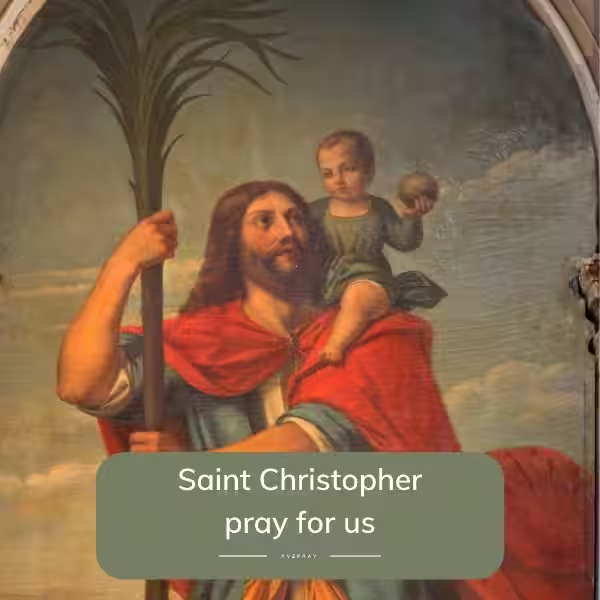
The selection of a protection saint is often a deeply personal journey. Some may feel drawn to a saint whose life story resonates with their own struggles, while others might choose a saint associated with their profession, a specific ailment, or a particular geographical location. For instance, a parent might pray to Saint Gerard Majella for the well-being of their children, or a traveler might invoke Saint Christopher for safe passage. This personal connection is paramount, fostering a sense of intimacy and trust in the saint’s intercessory power.
Choosing Your Patron: A Personal Connection
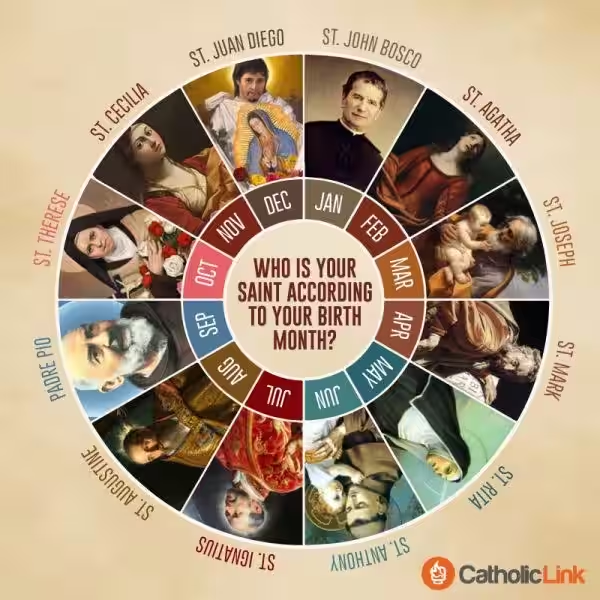
The process of choosing a protection saint is less about a formal decree and more about a heartfelt connection. It often involves prayer, reflection, and perhaps research into the lives and patronage of various saints. Think of it as forging a friendship, albeit a celestial one. You might discover a saint who faced similar adversities, possessed qualities you admire, or whose feast day holds personal significance. This exploration can be a deeply enriching spiritual exercise, deepening your understanding of Christian history and the diverse paths to holiness.
For example, someone struggling with anxiety might find solace in praying to Saint Dymphna, the patron saint of the mentally afflicted. Their prayers might focus on specific aspects of Dymphna’s life and her own challenges, seeking her understanding and intercession. Likewise, an artist might feel a kinship with Saint Luke the Evangelist, traditionally depicted as an artist himself, and ask for his guidance and inspiration. The key is to find a saint whose story and mission speak to your soul and inspire you to live a more virtuous life.
Historical Significance and Religious Tradition
The veneration of saints and their role as intercessors is a cornerstone of many Christian denominations, particularly within Catholicism and Orthodoxy. This practice, deeply rooted in early Christian history, evolved from the reverence shown to martyrs who died for their faith. These individuals were seen as heroes of the faith, whose sacrifices were considered to have earned them a special place in heaven and the ability to pray for those still on earth.
Over centuries, the list of recognized saints grew, encompassing not only martyrs but also ascetics, theologians, healers, and those who lived lives of exceptional charity and devotion. Each saint became associated with specific causes, professions, or needs, leading to the development of protection saints for diverse aspects of life. This rich tradition provides a vast pantheon of heavenly helpers, each with their own unique story and offering of intercession. The understanding of a protection saint is not about worshipping the saint, but about recognizing them as beloved companions of God who can offer spiritual assistance.
The Theology of Intercession
The theological basis for invoking a protection saint rests on the belief in the communion of saints. This doctrine suggests that those in heaven, on earth, and in purgatory are united in Christ. Therefore, saints in heaven are not distant figures but active participants in the ongoing life of the Church, able to pray for us and present our needs before God. They are seen as friends of God who can offer a unique perspective and a powerful intercessory voice.
It’s important to clarify that the prayers offered to a protection saint are not meant to replace direct prayer to God. Instead, they are seen as an extension of prayer, much like asking a friend here on earth to pray for you. The saint’s intercession is believed to magnify the efficacy of our prayers, bringing them before the throne of God with greater favor. This nuanced understanding emphasizes the saint’s role as a conduit to God’s grace, not as a divine being in themselves. Their power lies in their closeness to God and their love for humanity.
Practical Ways to Engage with Your Protection Saint
Invoking a protection saint can be a deeply personal and profoundly practical aspect of one’s faith journey. It’s about cultivating a relationship, fostering devotion, and seeking their guidance and intercession in tangible ways. This engagement can manifest through various forms of prayer, acts of charity, and the adoption of certain spiritual disciplines.
One of the most direct ways to connect with your protection saint is through prayer. This can involve reciting traditional prayers dedicated to them, offering a personal prayer in your own words, or simply speaking to them as you would a trusted confidant. Many find it helpful to have a small statue or icon of their protection saint in their home or workspace as a visual reminder and focal point for prayer. Additionally, reading about their lives and emulating their virtues can be a powerful way to draw closer to their spirit and encourage their intercession.
Prayer and Devotion
Developing a consistent prayer life with your protection saint can bring immense comfort and strength. This might involve praying a daily novena, a nine-day period of prayer, seeking their specific intercession for a particular need. For instance, if you are facing a difficult decision, you might pray to Saint Thomas Aquinas, patron of students and philosophers, for wisdom and clarity. Another common practice is to offer a simple prayer before starting a task or embarking on a journey, asking for their watchful eye.
Beyond formal prayers, simply speaking to your protection saint throughout the day can be incredibly meaningful. Share your joys, your struggles, your fears, and your hopes with them. They are believed to hear and understand our hearts. Consider lighting a candle in their honor or placing a petition in a shrine dedicated to them. These acts of devotion serve to strengthen your bond and remind you of their constant presence and advocacy.
A protection saint is not just someone to ask for favors; they are also role models for living a virtuous life. By studying their biographies and understanding their struggles and triumphs, we can gain inspiration and practical advice for our own lives. If your protection saint is known for their patience, reflect on how you can cultivate greater patience in your daily interactions. If they were known for their courage, consider how you can be more courageous in facing your own challenges.
Seeking guidance from your protection saint can involve discerning God’s will in your life. Before making significant decisions, you might pray for their intercession, asking them to illuminate the path that aligns with God’s plan. This discernment process, fueled by prayer and reflection on the saint’s life, can lead to profound personal growth and a deeper understanding of your faith. Ultimately, the relationship with a protection saint is about mutual growth – they advocate for us, and we strive to live lives that honor their example.
Finding Comfort in Times of Need
Life is replete with moments of uncertainty, fear, and hardship. In these challenging times, the belief in a protection saint can be a powerful source of comfort and reassurance. Knowing that there is a dedicated heavenly intercessor who understands our struggles and advocates for us can alleviate anxiety and foster a sense of hope.
Whether facing illness, financial difficulties, relationship problems, or spiritual dryness, the invocation of a protection saint offers a tangible link to divine assistance. It is a reminder that we are not alone in our battles and that there is a benevolent force working on our behalf. This spiritual support can provide the strength needed to persevere and the peace to navigate even the darkest of times. The very act of praying to a protection saint can be a therapeutic balm for the soul.
A Guardian Through Life’s Trials
Imagine a parent entrusting their child to the care of a trusted guardian before embarking on a perilous journey. Similarly, the belief in a protection saint involves placing our trust and our concerns into their capable spiritual hands. For someone battling a chronic illness, praying to Saint Peregrine, the patron saint of those suffering from cancer, can offer not just hope for healing but also the fortitude to endure pain and maintain faith. The saint’s own journey of suffering and eventual healing can serve as a powerful testament to God’s mercy.
In moments of crisis, such as job loss or natural disasters, turning to a protection saint can provide a sense of grounding and spiritual resilience. The prayers offered may not immediately alter the external circumstances, but they can profoundly shift our internal landscape, imbuing us with courage, peace, and a renewed sense of purpose. This spiritual anchor helps individuals weather storms, reminding them of the enduring love and support available through their faith and their protection saint.
Hope and Resilience in a Changing World
In our rapidly evolving world, where challenges can feel immense and overwhelming, the enduring presence of a protection saint offers a constant source of hope. These heavenly intercessors represent a timeless connection to divine grace and a reminder that faith can provide stability amidst flux. Their lives, often marked by perseverance through immense adversity, serve as beacons of inspiration, encouraging us to cultivate resilience in our own lives.
The act of actively engaging with your protection saint can foster a deeper sense of spiritual security and inner strength. This relationship, nurtured through prayer and devotion, becomes a wellspring of hope, empowering individuals to face the future with greater confidence. It is a testament to the enduring power of religion and the profound comfort found in the belief that we are watched over by those who love us in the divine embrace. A protection saint embodies this unwavering celestial guardianship.
Frequently Asked Questions about Patron Saints
What is a patron saint?
A patron saint is a Catholic or Orthodox Christian saint who has been chosen as the heavenly advocate or protector of a person, place, group, or profession.
How is a patron saint chosen?
Patron saints can be chosen in several ways. Historically, people might choose a saint whose life and ministry resonated with their own profession or needs. Sometimes, a saint becomes associated with a particular place due to their life or miracles occurring there. For groups or organizations, a saint might be chosen because their virtues or actions align with the group’s mission. In some cases, a devotion to a particular saint can lead to them being recognized as a patron.
Can I have more than one patron saint?
Yes, it is possible to have more than one patron saint. Some individuals choose a patron saint for their baptism, another for their confirmation, and perhaps another for their profession or a specific need.
What is the role of a patron saint?
A patron saint is believed to intercede with God on behalf of those they protect. They are seen as spiritual guides and intercessors who can pray for individuals, communities, or professions, asking for God’s grace, protection, and assistance in various aspects of life.
How do I find out about patron saints?
You can learn about patron saints through various resources. Religious texts, church history books, online databases dedicated to saints, and discussions with clergy or knowledgeable individuals in your religious community can provide this information. Many saints are associated with specific causes, professions, countries, or even everyday objects.
Does being a patron saint mean the saint “owns” me or my profession?
No, a patron saint does not “own” anyone or any profession. The relationship is one of spiritual advocacy and intercession. It’s about having a heavenly friend who can pray for you and guide you in your spiritual life.
Is the concept of patron saints found in other religions?
While the specific term “patron saint” is rooted in Christianity, particularly Catholicism and Orthodoxy, the concept of seeking intercession from holy individuals or venerated figures for protection or guidance exists in various forms across different religions. For example, in some traditions, ancestral spirits or revered prophets are invoked for similar purposes. However, the structured system of assigned patron saints as understood in Catholicism and Orthodoxy is unique to those denominations.