The Bible, a foundational text for billions, doesn’t shy away from the complex realities of poverty. Across its pages, we encounter a consistent theme: God’s deep concern for the vulnerable and a challenging perspective on the accumulation of wealth. These poverty bible verses offer more than just pronouncements; they are invitations to introspection, compassion, and action. Understanding these scriptural insights can profoundly shape our personal views on wealth, generosity, and our responsibility towards those in need. It’s a journey that requires us to examine not just the words themselves, but the underlying principles of justice, mercy, and love that permeate the entire biblical narrative.
This exploration delves into what the Bible says about poverty, the blessings associated with it, the dangers of excessive wealth, and the profound call to care for the less fortunate. We’ll uncover how these ancient texts remain remarkably relevant in our modern world, offering timeless wisdom for individuals and communities alike. By engaging with these poverty bible verses, we can foster a deeper understanding of divine principles and cultivate a more Christ-like approach to socio-economic issues.
From the earliest accounts of creation to the prophetic pronouncements and the teachings of Jesus, God consistently displays a profound compassion for the poor. This isn’t a passive sympathy; it’s an active, unwavering concern for the well-being of those who are marginalized, oppressed, and lacking basic necessities. The Old Testament prophets, in particular, were vocal in their condemnation of injustice and exploitation, often highlighting the plight of the poor as a direct indicator of a society’s faithfulness to God. For instance, Isaiah declared, “Woe to you who add house to house and field to field until no one is left for you to live in the land!” (Isaiah 5:8). This isn’t just about material possessions; it speaks to a systemic disregard for human dignity when greed takes precedence.
Jesus, throughout his ministry, prioritized and elevated the poor. His teachings, parables, and actions consistently pointed to the Kingdom of God being accessible to the humble and the needy. He famously proclaimed, “Blessed are the poor in spirit, for theirs is the kingdom of heaven” (Matthew 5:3). This beatitude is often misinterpreted as a call to spiritual destitution. However, it’s more accurately understood as a recognition of spiritual dependence and humility, a willingness to acknowledge one’s need for God. It’s about recognizing that true wealth lies not in earthly possessions but in a right relationship with the divine. This fundamental shift in perspective is crucial for grasping the biblical stance on poverty and wealth.
The Poor as Inheritors of Blessing
The Bible presents a fascinating paradox: while often highlighting the dangers of wealth, it also points to the poor as being in a position to receive unique spiritual blessings. This isn’t to say poverty itself is desirable, but rather that certain attitudes and spiritual realities are more readily embraced by those who are not encumbered by material riches. Jesus’ declaration, “Blessed are the poor, for theirs is the kingdom of God” (Luke 6:20), underscores this point. It suggests that those who lack earthly possessions may be more open to the spiritual riches of God’s kingdom, unhindered by the pride or complacency that wealth can sometimes foster.
Consider the story of the rich young ruler in the Gospels. He possessed everything materially but was unable to follow Jesus because of his attachment to his wealth. In contrast, Jesus often praised the faith of humble individuals who had little. The Bible suggests that humility and dependence on God are spiritual assets that can be more easily cultivated in the absence of abundant material resources. This perspective encourages us to look beyond superficial markers of success and to recognize the profound spiritual truths that can be revealed in lives marked by simplicity and reliance on divine provision.
The Dangers and Temptations of Wealth
While the Bible acknowledges that wealth itself is not inherently evil, it issues stern warnings about the dangers and temptations of wealth. The accumulation of riches can easily lead to pride, self-sufficiency, and a dangerous detachment from the needs of others. Jesus himself stated, “It is easier for a camel to go through the eye of a needle than for someone who is rich to enter the kingdom of God” (Mark 10:25). This vivid imagery highlights the immense difficulty that wealthy individuals can face in relinquishing their reliance on material security and embracing God’s sovereignty. It’s a stark reminder that our hearts can become so attached to our possessions that they obstruct our spiritual journey.
The scriptures frequently caution against the idolatry of money. The apostle Paul wrote, “For the love of money is a root of all kinds of evil. Some people, eager for money, have wandered from the faith and pierced themselves with many pains” (1 Timothy 6:10). This verse is crucial: it’s not the money itself, but the “love of money” – the excessive desire, the misplaced trust, and the prioritizing of wealth above all else – that leads to spiritual decay. This can manifest in various ways, such as greed, exploitation, and a hardening of the heart towards those less fortunate.
The Rich Fool: A Cautionary Tale
One of the most poignant illustrations of the perils of wealth is Jesus’ parable of the rich fool. In Luke 12:16-21, a wealthy man’s fields produced an abundant harvest, and he decided to tear down his barns and build bigger ones to store all his grain. He then thought, ““Soul, you have ample possessions for many years; relax, eat, drink, be merry.”” But God said to him, ““Fool! This night your soul is required of you; and the things that you have prepared, whose will they be?”” This parable serves as a powerful reminder that material wealth offers no true security and can distract us from what truly matters: our relationship with God and our eternal destiny.
This story challenges us to reflect on our own priorities. Are we accumulating wealth for the sake of security, comfort, or status, or are we stewarding our resources with an eternal perspective? The rich fool’s focus was entirely on his earthly possessions and his own comfort, completely neglecting his spiritual accountability. The poverty bible verses implicitly challenge this mindset by consistently pointing to a different kind of wealth – spiritual richness, generosity, and a life lived in service to God and others.
The Bible doesn’t just speak about poverty; it issues a clear and consistent biblical mandate to care for the poor. This responsibility is woven throughout both the Old and New Testaments, presented not as an optional act of charity but as a core tenet of faith and justice. From the laws governing the harvest to Jesus’ explicit commands, caring for the vulnerable is a non-negotiable aspect of following God. The Old Testament law included provisions for gleaning fields, leaving the corners unharvested and the gleanings for the poor and the foreigner (Leviticus 19:9-10). This was a systemic way to ensure that the less fortunate had access to sustenance.
In the New Testament, Jesus’ teachings further amplify this imperative. He stated in the Sermon on the Mount, “Give to the one who asks you, and do not turn away from the one who wants to borrow from you” (Matthew 5:42). This is a radical call to generosity and a willingness to meet the needs of others. Furthermore, Jesus identified himself with the poor, saying, “Truly I tell you, whatever you did for one of the least of these brothers and sisters of mine, you did for me” (Matthew 25:40). This establishes a profound connection between our actions towards the needy and our relationship with God.
Generosity as a Reflection of God’s Character
The act of generosity is presented as a reflection of God’s own character. God is inherently generous, providing for all of creation. When we share our resources with those in need, we are participating in God’s benevolent nature. The psalmist declared, “The Lord executes justice and righteousness for all who are oppressed. He made his ways known to Moses, his deeds to the children of Israel” (Psalm 103:6-7). This justice and righteousness extend to ensuring that the oppressed and the poor are not forgotten.
Scripture encourages a spirit of cheerful giving. Second Corinthians 9:7 famously states, “Each of you should give what you have decided in your heart to give, not reluctantly or under compulsion, because God loves a cheerful giver.” This highlights that our giving should stem from a willing heart, motivated by love and a desire to emulate Christ. The poverty bible verses remind us that true faith is expressed in tangible acts of love and compassion, especially towards those who are struggling.
Practical Applications of Biblical Principles
Applying biblical principles to the issue of poverty involves more than just occasional donations. It calls for a holistic approach that addresses the root causes of poverty and advocates for systemic change. This can include:
Advocacy: Speaking out against injustice and policies that perpetuate poverty.
Stewardship: Managing our own resources responsibly, avoiding excessive accumulation, and prioritizing generosity.
Empowerment: Supporting initiatives that provide education, job training, and opportunities for self-sufficiency.
Compassion: Cultivating empathy and understanding for those experiencing hardship.
Community Support: Participating in or establishing programs that provide practical assistance to the poor.
Ultimately, the Bible’s perspective on poverty and wealth is a call to a transformed worldview. It challenges us to re-evaluate our priorities, to cultivate a generous spirit, and to actively participate in bringing about justice and relief for the oppressed. The poverty bible verses are not abstract theological concepts; they are living, breathing calls to action that can shape our lives and communities for the better, reflecting the heart of a God who deeply cares for all his creation, especially the least among us.
Frequently Asked Questions: Poverty and the Bible
What does the Bible say about poverty?
The Bible offers a complex perspective on poverty. It acknowledges its existence as a reality in the world and often depicts the poor as vulnerable and in need of compassion and justice. Verses highlight the importance of caring for the poor, the marginalized, and the oppressed.
Are there specific Bible verses about helping the poor?
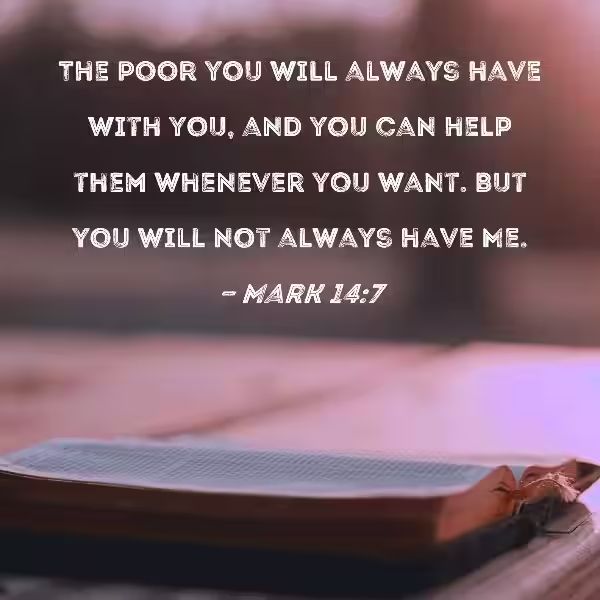
Yes, many. For example, Proverbs 19:17 states, “Whoever is generous to the poor lends to the LORD, and he will repay him for his deed.” Deuteronomy 15:11 says, “For there will never cease to be poor in the land. Therefore I command you, you shall open your hand to your brother, to the needy and to the poor, in your land.” Jesus also famously said in Matthew 26:11, “For you always have the poor with you, but you will not always have me.”
Does the Bible suggest poverty is a punishment for sin?
While the Bible does connect sin to negative consequences, it does not present poverty solely or directly as a punishment for individual sin. Many biblical figures who were righteous experienced poverty, and the Bible often attributes poverty to systemic issues, injustice, exploitation, and lack of resources, as well as personal misfortune or lack of opportunity.
What is the Christian perspective on wealth and poverty?
Christian teachings generally emphasize that wealth is a tool that can be used for good or ill. While the Bible doesn’t condemn wealth itself, it warns against the dangers of greed, materialism, and the love of money (1 Timothy 6:10). The emphasis is often on generous stewardship, sharing resources, and ensuring that wealth does not lead to neglecting the needs of others, especially the poor.
How should Christians respond to poverty based on biblical teachings?
Biblical teachings call for compassion, justice, generosity, and advocacy for the poor. This can manifest in various ways, including direct aid, supporting charitable organizations, working towards systemic change that addresses the root causes of poverty, and treating all individuals with dignity and respect, regardless of their economic status.