The urgency of feeding the poor isn’t just a matter of social justice; it’s a profound spiritual imperative woven into the very fabric of biblical teaching. Across both the Old and New Testaments, the call to care for those in need, particularly the hungry, echoes with a consistent and powerful message. This isn’t a suggestion; it’s a divine mandate, a testament to God’s heart for the vulnerable and a reflection of the values we are called to embody as followers of faith. We’ll explore the rich tapestry of biblical verses that address this critical issue, understand its theological significance, and discover practical ways we can answer this timeless call in our own lives.
The act of feeding the poor is more than just providing sustenance; it’s an act of radical love and obedience. It’s about recognizing the inherent dignity of every human being, created in the image of God, and responding to their basic needs with generosity and compassion. Throughout scripture, we see examples of individuals and communities who actively embraced this responsibility, demonstrating that faith without works, especially works of mercy, is incomplete.
In the Old Testament, the concept of caring for the poor and hungry is deeply embedded in the Mosaic Law and the prophetic tradition. The laws given to the Israelites were not merely rules; they were designed to foster a just and compassionate society. Consider Deuteronomy 15:11, which states, “For there will never cease to be poor in the land. Therefore I command you, you must open your hand to your brother, to the needy and to the poor, in your land.” This verse underscores that poverty is a reality that will persist, and our responsibility to address it is therefore continuous and unwavering. It’s a powerful reminder that compassion is not optional; it’s a core tenet of our covenant with God.
The prophets, in particular, were fierce advocates for the marginalized. They condemned those who exploited the poor and celebrated those who demonstrated genuine charity. Isaiah 58:7 famously asks, “Is not this the fast that I choose: to break off the кандай of the wicked, to undo the straps of the yoke, to let the oppressed go free, and to break every yoke? Is it not to share your bread with the hungry and to bring the outcasts into your house; when you see the naked, to cover him, and to hide not yourself from your own flesh?” This passage powerfully illustrates that true worship and fasting are not just religious rituals, but are intimately connected to tangible acts of feeding the poor and alleviating suffering. It’s about actively dismantling systems of oppression and sharing our resources with those who are struggling.
Justice and Generosity in the Law
The Old Testament laws provided concrete mechanisms for ensuring the poor had access to food. For instance, the concept of gleaning, as described in Leviticus 19:9-10 and Deuteronomy 24:19-22, instructed landowners to leave the edges of their fields and fallen produce for the poor and the sojourner. This wasn’t charity in the modern sense of a handout, but rather a system of justice that guaranteed a means of sustenance for the vulnerable. It allowed individuals to earn their food by gathering what was left behind, preserving their dignity and independence.
Furthermore, the concept of the tithe, while often misunderstood, had a significant component dedicated to supporting the poor and needy within the community. This established a structured system of redistribution, ensuring that resources were shared and that no one was left to starve. It demonstrated a societal commitment to collective responsibility, where the well-being of the community was intrinsically linked to the well-being of its most vulnerable members. This principle of shared prosperity is a foundational element of the biblical worldview.
Jesus and the New Testament: The Living Example
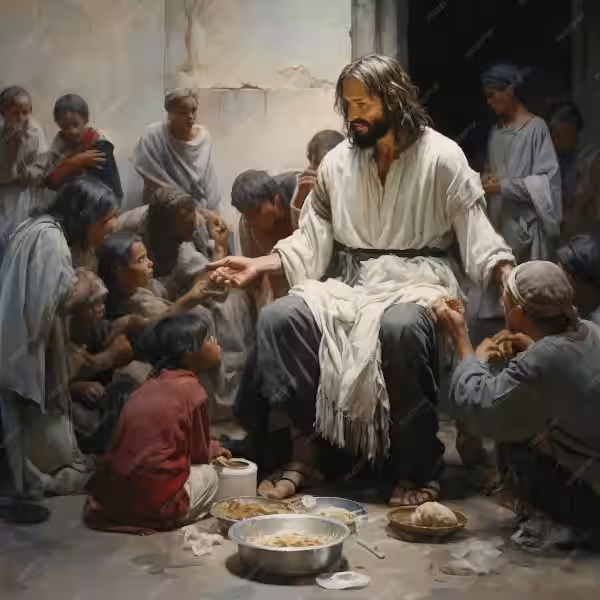
Jesus’ ministry was characterized by an unwavering focus on the poor and the hungry. He not only preached about the importance of compassion but also embodied it through his actions. His miracles often involved feeding the multitudes, a clear demonstration of his divine concern for physical needs. The feeding of the five thousand, described in all four Gospels, is a prime example. Jesus saw the hungry crowd and, without hesitation, multiplied loaves and fish to satisfy their hunger. This act wasn’t just about filling stomachs; it was a sign of his messianic authority and his deep empathy for human suffering.
In the parable of the Sheep and the Goats, found in Matthew 25:31-46, Jesus makes it strikingly clear that our eternal destiny is intertwined with how we treat the “least of these.” He states, “For I was hungry and you gave me something to eat, I was thirsty and you gave me something to drink, I was a stranger and you welcomed me… Truly I tell you, whatever you did for one of the least of these brothers and sisters of mine, you did for me.” This is perhaps one of the most direct and powerful feed the poor bible verse passages, highlighting that acts of service to the hungry are acts of service to Christ himself. It compels us to see Christ’s image in every person, especially those in desperate need.
The Early Church: A Community of Sharing
The early Christian church was renowned for its generosity and its commitment to caring for its members and the wider community. The Book of Acts describes a community where believers shared their possessions, ensuring that no one was in need. Acts 4:32-35 paints a vivid picture: “All the believers were one in heart and mind. No one claimed that any of their possessions was their own, but they shared everything they had.” This radical communal living extended to ensuring that “there were no needy persons among them.”
This spirit of mutual aid and selfless giving was not just a practical arrangement; it was a theological expression of their faith. They understood that their blessings were meant to be shared, and that feeding the poor was a fundamental expression of their love for God and for one another. This model serves as a powerful inspiration for modern faith communities, challenging us to examine our own practices and to cultivate a culture of generosity and selfless service.
In our modern world, the challenge of feeding the poor remains as urgent as ever. The principles laid out in feed the poor bible verse passages are not relics of the past; they are living commands that call us to action. We live in a world of abundance, yet hunger and food insecurity persist. This is a moral and spiritual contradiction that demands our attention and our response. Understanding these biblical calls empowers us to move beyond passive sympathy to active engagement.
Our faith calls us to be agents of change, to not only pray for the hungry but to actively work towards solutions. This can manifest in countless ways: volunteering at food banks, supporting organizations that fight hunger, advocating for policies that address poverty, and, on a personal level, sharing our resources with those in need. It’s about recognizing that the blessings we have received are entrusted to us for a purpose, and that purpose includes alleviating the suffering of others.
Practical Ways to Make a Difference
So, how can we practically embody the biblical call to feed the poor? The opportunities are vast and varied. Here are a few actionable steps:
Support local food banks and pantries: These organizations are on the front lines of combating hunger. Donating food, money, or your time can make a significant impact. Consider organizing a food drive at your church, school, or workplace.
Volunteer with soup kitchens or homeless shelters: Many of these organizations rely heavily on volunteers to prepare and serve meals. This offers a direct way to serve the hungry and connect with them on a personal level.
Advocate for systemic change: Hunger is often a symptom of deeper societal issues like poverty, lack of access to education, and unfair economic practices. Engage with your elected officials and support policies that aim to address these root causes.
Practice hospitality and generosity in your own life: This can be as simple as inviting a neighbor who might be struggling to share a meal, or making a conscious effort to share your abundance with those around you.
Educate yourself and others: Understand the realities of hunger in your community and globally. The more informed we are, the more effectively we can respond. Sharing information about feed the poor bible verse and its implications can inspire others.
Ultimately, the call to feed the poor is a call to live out our faith in tangible ways. It’s about reflecting the boundless compassion of God and embodying the radical love of Christ. By embracing this divine imperative, we not only nourish the bodies of those in need but also nourish our own souls, drawing closer to God and contributing to a more just and merciful world. The impact of feeding the poor extends far beyond a single meal; it’s about restoring hope and affirming the inherent worth of every human being.
Frequently Asked Questions: Feeding the Poor in the Bible
What does the Bible say about feeding the poor?
The Bible consistently emphasizes the importance of caring for the poor and needy. Numerous verses highlight that generosity and compassion towards the less fortunate are pleasing to God and are a reflection of true faith. This includes providing food, clothing, and shelter.
Are there specific Bible verses that encourage feeding the poor?
Yes, many verses highlight this. For example, Proverbs 19:17 states, “Whoever is generous to the poor lends to the LORD, and he will repay him for his deed.” Isaiah 58:7 asks, “Is not this the fast that I choose: to loose the bonds of wickedness, to undo the straps of the yoke, to let the oppressed go free, and to break every yoke? Is it not to share your bread with the hungry and bring the homeless into your house; when you see the naked, to cover him, and to hide not yourself from your own kin?” Jesus himself commanded in Matthew 25:35, “For I was hungry and you gave me food, I was thirsty and you gave me drink, I was a stranger and you welcomed me.”
What is the religious significance of feeding the poor?
In many religions, including Christianity, Judaism, and Islam, feeding the poor is considered a fundamental act of worship and a core commandment. It is seen as a way to emulate divine attributes of mercy and generosity, to demonstrate love for one’s neighbor, and to actively participate in God’s redemptive work in the world. It is often linked to justice and righteousness.
How does feeding the poor relate to the concept of religion?
Feeding the poor is a practical expression of religious beliefs and values. It moves faith from abstract doctrines to tangible actions that alleviate suffering and promote human dignity. Many religious traditions teach that true devotion is demonstrated not just through prayer and ritual, but also through benevolent actions towards fellow human beings, especially those in need.
Does the Bible suggest that feeding the poor is a requirement for salvation?
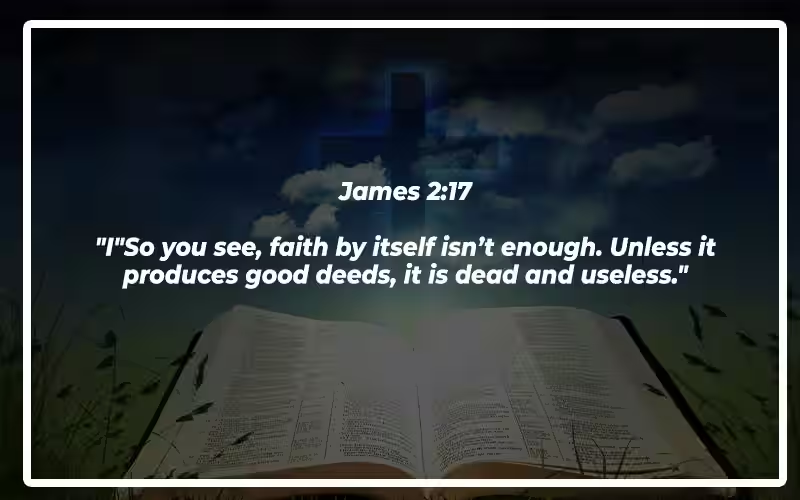
While the Bible teaches that salvation is by grace through faith in Jesus Christ, it also emphasizes that genuine faith is evidenced by good works. Verses like James 2:17 say, “So also faith by itself, if it does not have works, is dead.” Therefore, while not the means of salvation, actively caring for the poor is presented as a natural and expected outcome of a transformed heart and a living faith.