In the vast tapestry of religious history, certain threads stand out with remarkable resilience, shaping not only ancient civilizations but also continuing to resonate in the spiritual lives of millions today. Among these foundational elements is the concept of the old covenant. This term, deeply rooted in the Abrahamic traditions, refers to a series of sacred agreements initiated by God with humanity, laying down principles of relationship, obedience, and divine promise. Understanding the old covenant isn’t just an academic exercise; it’s a journey into the very bedrock of religious thought, offering profound insights into how faith, law, and personal connection with the divine have been understood and practiced for millennia. It’s a story of divine initiative and human response, a narrative that continues to inform our understanding of spiritual commitment and the nature of God’s involvement in the world.
The old covenant represents a pivotal moment in the development of monotheistic religions, particularly Judaism. It signifies God’s deliberate act of choosing individuals and communities, entering into a binding relationship with them, and establishing a framework for their existence. This framework wasn’t merely a set of rules; it was a dynamic interaction, a covenant that demanded faithfulness and offered blessings in return. The echoes of these ancient agreements can be heard in liturgical practices, in moral teachings, and in the very identity of religious communities, serving as a constant reminder of a divinely ordained path and the enduring power of promises made long ago.
The Genesis of the Old Covenant: Promises and Purpose
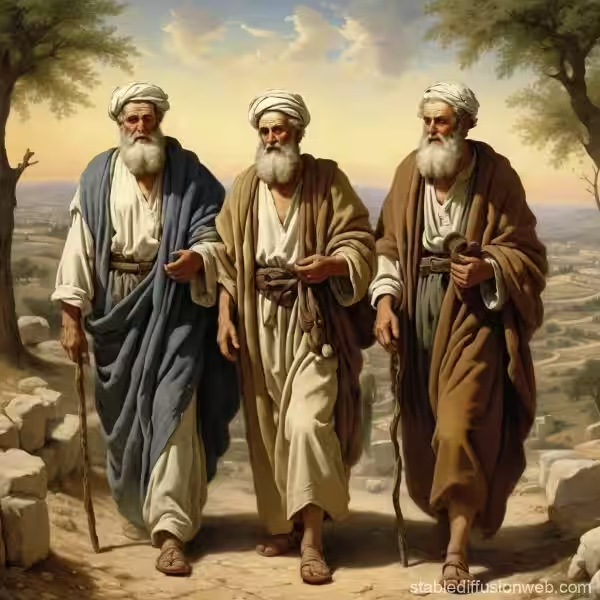
The narrative of the old covenant begins with a series of profound promises and divine pronouncements. Consider the covenant with Abraham, often seen as the precursor and cornerstone of subsequent agreements. God promised Abraham descendants as numerous as the stars, a vast inheritance of land, and that through him, all nations would be blessed. This was not a contract based on Abraham’s merit, but a unilateral act of grace on God’s part, establishing a chosen lineage and a divine purpose. This initial promise set the stage for a relationship characterized by faith and obedience, where the faithfulness of one man would have ripple effects for generations to come.
The purpose of these early stages of the old covenant was multifaceted. It was about establishing a distinct people set apart for a special relationship with God. It was about defining a moral and spiritual compass that would guide their lives and distinguish them from surrounding cultures. Furthermore, it was about laying the groundwork for a future redemption, a promise that extended beyond immediate circumstances. For instance, the liberation of the Israelites from slavery in Egypt and the subsequent covenant at Mount Sinai weren’t just historical events; they were the unfolding of this divinely initiated plan, solidifying the old covenant with specific laws and rituals that would serve as tangible expressions of their commitment.
The Mosaic Covenant: Law, Ritual, and Relationship
Perhaps the most well-known manifestation of the old covenant is the Mosaic Covenant, established at Mount Sinai. Following their miraculous exodus from Egypt, the Israelites entered into a direct agreement with God, mediated by Moses. This covenant involved the giving of the Ten Commandments, a foundational set of ethical and spiritual laws, alongside a complex system of sacrificial offerings, festivals, and purity laws. These were not arbitrary rules; they were designed to instruct the people on how to live in a holy manner, reflecting the character of their divine Lawgiver, and to maintain their unique relationship with God amidst a pagan world.
The Mosaic Covenant provided a tangible framework for living out the old covenant relationship. The tabernacle and later the Temple became central to this, serving as physical representations of God’s presence among His people and the focal point for their worship. The detailed instructions for sacrifices, for example, served a dual purpose: to atone for sin, thereby maintaining the relationship, and to teach the profound gravity of sin and the necessity of divine forgiveness. These rituals, while seemingly distant to modern readers, were vital for the ancient Israelites, providing them with a constant reminder of their covenantal obligations and the sacredness of their walk with God.
The Enduring Legacy of the Old Covenant in Religious Practice
The principles and practices established under the old covenant have left an indelible mark on religious traditions. The concept of a sacred covenant itself, a binding agreement between the divine and the human, is a recurring theme. The emphasis on divine law and ethical conduct, as articulated in the Ten Commandments and the wider Torah, continues to inform moral frameworks in many faiths. Furthermore, the understanding of worship as a structured and reverent act, involving prayer, praise, and remembrance, finds its roots in the ancient covenantal practices.
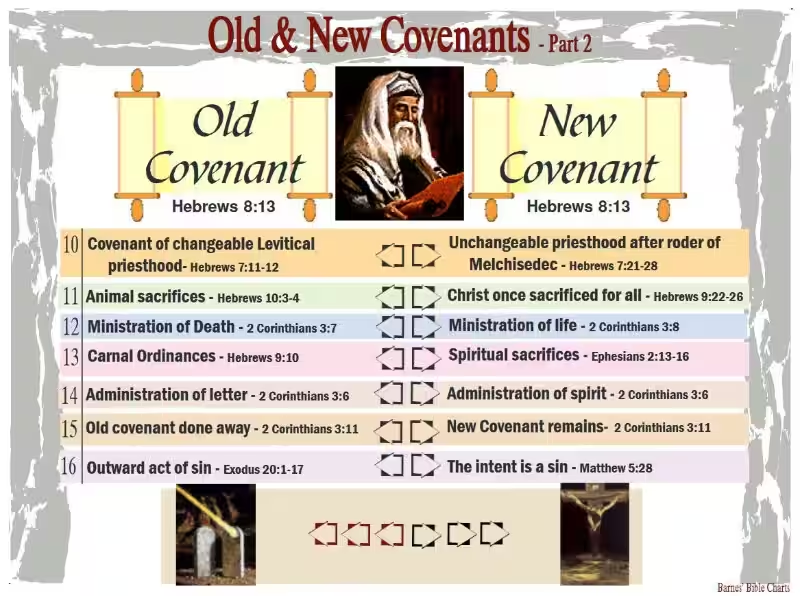
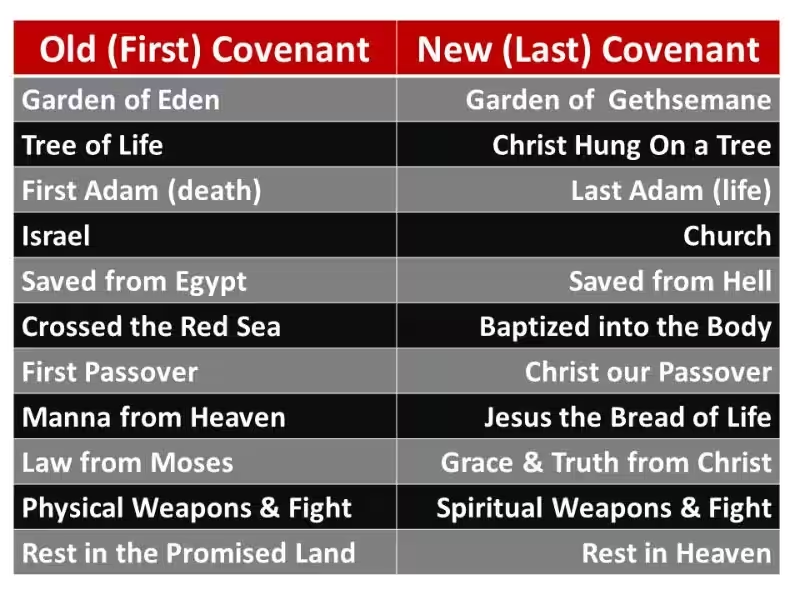
Even as new spiritual dispensations emerged, the old covenant was not entirely discarded but often reinterpreted. For instance, in Christianity, Jesus is often presented as the mediator of a “new covenant,” fulfilling and superseding aspects of the old. However, the foundational narratives, the moral imperatives, and the understanding of God’s faithfulness embedded within the old covenant remain a crucial part of the spiritual heritage. The stories of Abraham’s faith, Moses’ leadership, and the unwavering commitment of God to His people continue to inspire and instruct believers, reminding them of the long arc of divine love and redemptive purpose.
From Ritual to Relationship: Evolving Understandings
A key development in understanding the old covenant is the shift from a purely external adherence to law and ritual to an internalization of its principles. While the Mosaic Law provided a necessary structure, prophets throughout the Old Testament era often spoke of a deeper, more heartfelt obedience. They lamented when outward observance replaced genuine devotion, emphasizing that God desired a contrite heart and a willing spirit above mere ritualistic performance. This foreshadowed a move towards a more personal and transformative faith experience.
This evolving understanding highlights that the old covenant was not static; it was a dynamic narrative pointing towards something greater. The emphasis on covenant faithfulness wasn’t just about following rules; it was about cultivating a deep, abiding trust in God’s promises and character. The concept of atonement through sacrifice, while central to the old covenant, also pointed towards the profound need for a perfect and ultimate sacrifice that would bring about lasting reconciliation. This journey from outward observance to inward transformation is a testament to the enduring relevance of the old covenant’s core message: the profound and essential connection between God and humanity.
Frequently Asked Questions About the Old Covenant
What was the Old Covenant?
The Old Covenant, also known as the Mosaic Covenant or the Law of Moses, was a divine agreement established between God and the Israelites through the prophet Moses. It outlined a system of laws, commandments, and rituals intended to guide their spiritual, moral, and social life, and to set them apart as God’s chosen people.
When was the Old Covenant established?
The Old Covenant was established at Mount Sinai after the Israelites’ exodus from Egypt, as described in the Book of Exodus. God gave Moses the Ten Commandments and other laws, which formed the basis of this covenant.
What were the key components of the Old Covenant?
Key components included:
* The Ten Commandments: Fundamental moral and religious laws.
* The Levitical Priesthood: A system of priests who mediated between God and the people, offering sacrifices.
* Sacrificial System: Various offerings and sacrifices to atone for sin and express devotion.
* Dietary Laws: Specific rules concerning food consumption.
* Festivals and Holy Days: Commemorative observances throughout the year.
* Circumcision: A physical sign of the covenant for males.
The Old Covenant served several purposes:
* To reveal God’s character and His will for humanity.
* To establish a relationship between God and Israel.
* To teach the Israelites about sin and the need for atonement.
* To set them apart from other nations as a holy people.
* To provide a framework for a just and ordered society.
* To foreshadow the coming of a Messiah.
Did the Old Covenant apply to everyone?
The Old Covenant was specifically made with the nation of Israel. While its moral principles have broader relevance, its detailed laws and rituals were binding on the Israelites. Gentile proselytes who wished to fully join the Israelite community would also adhere to its requirements.
How is the Old Covenant related to the New Covenant?
Christian theology views the Old Covenant as a precursor to the New Covenant established through Jesus Christ. The New Covenant, fulfilled in Christ’s atoning sacrifice, is seen as superseding and perfecting the Old Covenant. While the moral law of the Old Covenant is often understood to be upheld, the ceremonial and judicial laws are generally considered fulfilled in Christ and no longer binding in the same way.
Is the Old Covenant still in effect?
From a Christian perspective, the Old Covenant in its entirety is considered fulfilled by Jesus Christ and no longer binding. Believers in the New Covenant are saved by grace through faith in Jesus, not by adherence to the Mosaic Law. From a Rabbinic Jewish perspective, the Old Covenant (Torah) remains the divine law for the Jewish people.
What does the Old Covenant teach about sin?
The Old Covenant powerfully demonstrates the seriousness of sin and its consequences. The sacrificial system highlighted that sin separates humanity from God and requires a shedding of blood for atonement. It revealed that no human effort under the Law could perfectly atone for sin, thus pointing towards a need for a greater sacrifice.