The concept of God’s chosen people has resonated through millennia, sparking curiosity, debate, and profound faith. For many, this phrase conjures images of ancient Israelites, a lineage divinely selected for a specific purpose. But who were these individuals, what did their “chosenness” entail, and does this concept hold relevance for us today? This exploration delves into the heart of this sacred relationship, seeking to illuminate its meaning and enduring impact, offering insights that are both informative and deeply relatable.
The journey of understanding God’s chosen people is not merely an academic exercise; it’s an invitation to ponder the nature of divine love, human responsibility, and the unfolding of a grand cosmic narrative. It’s about recognizing that the choice wasn’t about inherent superiority, but about a unique calling and covenant, a partnership designed to bring light and blessing to the world.
The Genesis of Chosenness: Abraham and the Covenant
The foundational narrative of God’s chosen people begins with a single man, Abraham, a figure whose faith was tested and ultimately rewarded. God made a profound promise to Abraham, a promise that laid the groundwork for a lineage that would bear a special relationship with the Divine. This wasn’t an arbitrary selection; it was initiated by God’s gracious initiative, a deliberate act of love and purpose.
This covenant, often referred to as the Abrahamic Covenant, was multifaceted. It promised Abraham numerous descendants, a vast land, and, most importantly, that through him and his lineage, all the nations of the earth would be blessed. Think of it like a parent choosing one child to be the designated keeper of a precious family heirloom, not because that child is better than the others, but because they are trusted to protect and eventually share its value with everyone. This initial selection was the seed from which the identity of God’s chosen people would grow.
The covenant with Abraham was not a one-time event; it was a living promise that echoed through generations. His grandson, Jacob (later renamed Israel), had twelve sons, who became the progenitors of the twelve tribes of Israel. These tribes, collectively, are often identified as the primary recipients of the status of God’s chosen people in the Old Testament. Their journey from nomadic wanderers to a nation enslaved in Egypt and then miraculously delivered by God solidified their collective identity and their dependence on divine intervention.
The subsequent deliverance from Egypt, led by Moses, is a pivotal moment in the story of God’s chosen people. The Exodus was not just about liberation from physical bondage; it was about God revealing Himself and establishing a formal relationship with Israel at Mount Sinai. Here, the Ten Commandments were given, and a Mosaic Covenant was formed, outlining the laws and principles by which this chosen nation was to live, demonstrating that chosenness came with significant responsibilities and a moral framework.
The Purpose of Chosenness: More Than Just Privilege
It’s crucial to understand that the concept of God’s chosen people was never intended to imply their inherent superiority over other nations. Instead, their selection was about a divine mission and a salvific purpose. They were chosen to be a light to the nations, a people through whom God would reveal His character, His laws, and His plan for humanity. This understanding shifts the focus from exclusive privilege to inclusive blessing.
Imagine a talented artist who is exceptionally skilled at portraying beauty and truth. God might choose this artist to create a masterpiece, not just for their own enjoyment, but for the world to witness and be inspired by. Similarly, God’s chosen people were meant to be a conduit of divine truth and goodness, demonstrating to the world what it looked like to live in relationship with the Creator. Their lives, their laws, and their worship were meant to be a living testament.
The primary purpose of chosenness was to serve as a witness. Through their obedience and devotion, they were to showcase the blessings of living according to God’s ways. Conversely, even their failures and periods of disobedience served as a cautionary tale, illustrating the consequences of turning away from the Divine. This dual role of positive example and negative illustration was integral to God’s broader plan for humanity.
The prophets, such as Isaiah and Jeremiah, frequently called the people back to their covenantal responsibilities, reminding them that their chosen status was not a guarantee of automatic favor but a call to righteous living and justice. They were to be a nation of priests, mediating God’s presence and will to the surrounding cultures. This involved not only religious observance but also a commitment to social justice and compassion.
Expanding the Covenant: The Christian Perspective
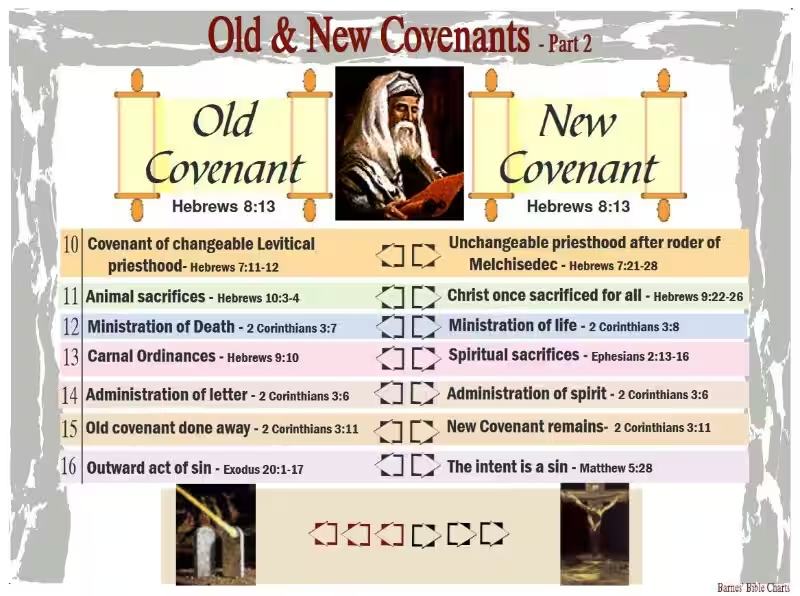
The narrative of God’s chosen people takes a significant turn with the advent of Jesus Christ. For Christians, Jesus is the ultimate fulfillment of the promises made to Abraham and the covenant people. He is seen as the Messiah, the descendant through whom the promised blessings are fully realized and extended beyond the original ethnic lineage. This understanding introduces a new dimension to the concept of chosenness.
In the Christian faith, the idea of God’s chosen people expands to encompass all who put their faith in Jesus Christ. This is not based on ethnic heritage but on a spiritual adoption through belief and baptism. The Apostle Paul, in his letters, frequently elaborates on this, explaining that those who are in Christ are now part of Abraham’s spiritual offspring, inheriting the promises.
A New Identity in Christ
The concept of chosenness in Christ signifies a profound transformation. It moves away from a strictly nationalistic identity to one that is inclusive and universal. Anyone, regardless of their background, can become part of this spiritual community. This is a powerful message of grace and redemption, where the choice is not based on merit or birthright, but on the transformative power of faith.
This new identity comes with a renewed mandate to spread the Gospel. Just as the ancient Israelites were meant to be a light, believers in Christ are called to share the message of salvation and love with the world. The emphasis shifts from being a chosen nation to being a chosen community of faith, empowered by the Holy Spirit to live out God’s purposes in every sphere of life. This means that for believers today, who were God’s chosen people is a history that informs, and a present reality that calls them to action.
Frequently Asked Questions about God’s Chosen People and Religion
Who were God’s chosen people?
In the Abrahamic religions, particularly Judaism and Christianity, the concept of “God’s chosen people” primarily refers to the descendants of Abraham, specifically the Israelites (also known as the Hebrews or Jews). This designation signifies a special covenantal relationship with God, a divine calling to a particular purpose, and a responsibility to uphold God’s laws and be a light to the nations. While the term has specific historical and theological connotations within these traditions, the broader understanding in some interpretations extends to all who believe in and follow God’s will.
What is religion?
Religion is a complex system of beliefs, practices, and rituals that typically center around a supernatural power or powers, a divine being, or ultimate reality. It often provides a framework for understanding the meaning of life, morality, and the universe. Religions commonly involve worship, prayer, ethical codes, sacred texts, and community gatherings. They can offer comfort, guidance, and a sense of belonging to their adherents.