In the rich tapestry of Catholic tradition, literature has always played a pivotal role, serving as a guide, a comfort, and a catalyst for deeper faith. For centuries, countless books have illuminated the path of believers, offering profound insights into the teachings of Christ, the lives of saints, and the enduring wisdom of the Church. Whether you’re a lifelong Catholic seeking to deepen your understanding or a newcomer exploring the faith, a well-chosen selection of books can be an invaluable companion on your spiritual journey.
Navigating the vast ocean of Catholic literature can feel overwhelming. Where do you begin? What are the essential texts that have shaped Catholic thought and practice for generations? This article aims to provide a curated list of seven essential books every Catholic should consider reading. These selections are not merely academic exercises; they are invitations to encounter God more profoundly, to understand the Church’s mission more clearly, and to live out your faith with greater conviction and joy. Each book offers a unique perspective, contributing to a holistic understanding of what it means to be a practicing Catholic in the modern world.
Before delving into specific theological works, it’s crucial to understand the bedrock of Catholic faith: Sacred Scripture and Sacred Tradition. These two inseparable sources form the living Word of God, guiding the Church throughout history. The Bible, of course, is paramount. However, understanding its context, interpretation, and how it has been lived out through the ages requires more than just reading the text alone. The Church, through its ongoing Tradition, provides the lens through which Scripture is best understood.
For any Catholic, a personal and prayerful engagement with the Bible is non-negotiable. This isn’t just about intellectual study; it’s about encountering the living God who speaks through its pages. Equally important is recognizing that the Catholic Church doesn’t simply rely on the Bible in isolation. Instead, it understands Sacred Tradition – the teachings and practices passed down from the Apostles – as a vital complement. This dynamic interplay between Scripture and Tradition is what gives the Catholic faith its depth and richness, ensuring that its teachings remain vibrant and relevant across millennia.
1. The Holy Bible: The Divine Word
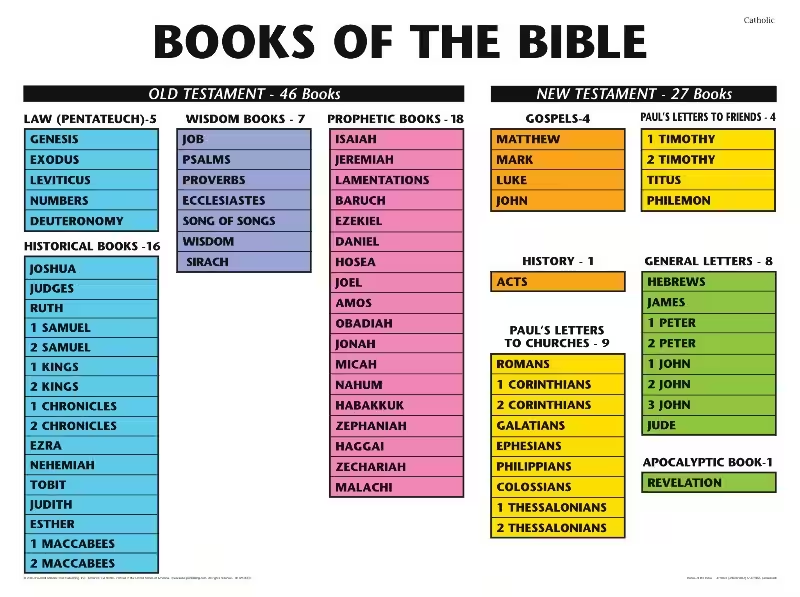
It might seem obvious, but the Holy Bible stands as the absolute cornerstone of Catholic belief and practice. It is the divinely inspired Word of God, revealing His plan for salvation and His unfailing love for humanity. For Catholics, the Bible is not a static historical document, but a living and active revelation that continues to speak to us today. It’s a library of books, encompassing the Law, the Prophets, the Writings, the Gospels, and the Epistles, each offering a unique perspective on God’s relationship with His people.
Reading the Bible should be a prayerful and attentive exercise. Consider starting with the Gospels, which present the life, teachings, death, and resurrection of Jesus Christ, the very heart of our faith. Following that, explore the Acts of the Apostles to understand the early Church and the spread of the Gospel. Throughout your reading, pray for the guidance of the Holy Spirit to illuminate the meaning of the text. Resources like a Catholic Study Bible, which often includes footnotes and cross-references, can be incredibly helpful in understanding the historical, cultural, and theological context of each passage. Think of it as having a wise guide walking alongside you, explaining the profound truths contained within.
Beyond the foundational text of Scripture, the Church has produced a wealth of theological and spiritual writings that have shaped generations of Catholics. These works offer deeper dives into specific doctrines, provide models for virtuous living, and inspire a more intimate relationship with God. They are the wise voices of saints, theologians, and pastors who have wrestled with the mysteries of faith and sought to articulate them for others.
These literary treasures offer varied perspectives, from the grand theological treatises to the intimate reflections of a saint’s diary. They are not meant to be read passively but to be actively engaged with, allowing their truths to challenge, comfort, and transform us. By immersing ourselves in these writings, we connect with the living stream of Catholic tradition and gain a richer appreciation for the depth and beauty of our faith.
2. The Catechism of the Catholic Church: A Comprehensive Guide
For any Catholic seeking a clear and authoritative summary of the faith, the Catechism of the Catholic Church is an indispensable resource. It’s not just a book of rules, but a beautiful exposition of the core beliefs, sacraments, moral teachings, and prayer life of the Catholic Church. It’s structured to provide a comprehensive overview, moving from the profession of faith, to the celebration of the Christian mystery, to life in Christ, and finally to Christian prayer.
Think of the Catechism as the Church’s own roadmap to understanding itself. It answers fundamental questions like “What do Catholics believe about God?” or “What is the significance of the Mass?” It’s a perfect place to turn when you encounter questions about Church teachings or when you want to solidify your understanding of a particular doctrine. While it can be dense at times, its clear language and logical structure make it remarkably accessible. It’s a book you can return to again and again, discovering new layers of meaning with each reading.
3. The Imitation of Christ by Thomas à Kempis: A Call to Inner Discipleship
Written in the 15th century, The Imitation of Christ by Thomas à Kempis is a timeless classic of Christian spirituality. This profound work focuses on the inner life of the believer, emphasizing humility, detachment from worldly desires, and a sincere pursuit of Christ’s teachings. It’s not about grand theological debates, but about the practical, everyday striving to live a life that truly imitates Jesus.
The book is divided into four parts, each offering meditations on themes like the spiritual life, the blessed sacrament, interior solace, and the blessed sacrament. Kempis’s message is direct and often challenging: true happiness is found in surrender to God’s will, not in the fleeting pleasures of the world. He encourages a constant examination of our hearts and a deep interior disposition of prayer and conformity to Christ. Reading it can feel like a gentle but firm hand guiding you towards a more virtuous and Christ-centered existence, reminding us that faith is lived out in the quiet moments of our lives.
4. The Story of a Soul by Thérèse of Lisieux: The Little Way of Love
The autobiography of Saint Thérèse of Lisieux, The Story of a Soul, offers a unique and deeply personal perspective on holiness. Thérèse, a Carmelite nun who died young at the end of the 19th century, shares her journey of faith through what she called her “Little Way.” This is a path of profound love and trust in God, accomplished through ordinary actions performed with extraordinary love.
Her simple yet profound insights reveal that sanctity is not reserved for the extraordinary, but can be found in the smallest acts of kindness, patience, and obedience. Thérèse’s writings are incredibly relatable, showing how she, a seemingly ordinary young woman, found immense spiritual depth through her unwavering devotion. Reading her story is like having a conversation with a dear friend who deeply understands the struggles and joys of seeking God in the mundane. It’s a powerful testament to the fact that great love can be found in small gestures, a message that resonates deeply in our busy lives.
Catholicism is a faith rich in mystery and intellectual depth. The Church’s history is punctuated by brilliant minds who have grappled with complex theological questions, seeking to articulate the ineffable truths of God. These thinkers have provided frameworks for understanding our faith that continue to inspire and challenge us today, offering pathways to deeper contemplation and intellectual engagement.
Exploring these works allows us to connect with the intellectual heritage of the Church, to understand the reasoning behind its doctrines, and to appreciate the profound philosophical and theological explorations that have shaped its understanding of God and humanity. They invite us to move beyond a superficial understanding of faith and to engage with its deeper mysteries with both heart and mind.
5. Introduction to Christianity by Joseph Ratzinger (Pope Benedict XVI): A Modern Apology
For those who appreciate a deeply intellectual yet accessible approach to Catholic theology, Joseph Ratzinger’s Introduction to Christianity is a masterful work. Originally delivered as lectures to university students, Ratzinger (later Pope Benedict XVI) systematically unpacks the core tenets of the Christian faith, particularly within the Catholic tradition. He addresses fundamental questions about God, Christ, and the Church in a way that is both rigorous and profoundly pastoral.
Ratzinger’s genius lies in his ability to connect ancient truths with contemporary concerns. He doesn’t shy away from complex philosophical ideas but thoughtfully explains them, making them understandable for a broader audience. This book is an excellent resource for anyone seeking to defend their faith intelligently or to simply gain a clearer, more reasoned understanding of what Catholics believe and why. It demonstrates that faith and reason are not adversaries but powerful allies in the quest for truth.
6. The Confessions by Augustine of Hippo: A Journey of Transformation
Saint Augustine’s Confessions is far more than an autobiography; it is a transformative spiritual memoir that has resonated with readers for over 1,500 years. Augustine recounts his early life, his intellectual and spiritual searching, his struggles with sin, and his eventual, dramatic conversion to Christianity. It’s a raw and honest exploration of the human condition, the search for meaning, and the overwhelming mercy of God.
What makes Confessions so enduring is Augustine’s profound introspection and his eloquent articulation of the soul’s longing for God. He famously wrote, “You have made us for yourself, O Lord, and our heart is restless until it rests in you.” This central theme speaks to a universal human experience. Reading Augustine is like peering into the depths of another’s soul and finding your own experiences mirrored there, offering hope and assurance in God’s redemptive power.
Living the Faith in the World Today
Catholic faith is not meant to be lived in isolation; it is a dynamic force that calls us to engage with the world, to serve others, and to be a leaven for good. The Church’s teachings on social justice, evangelization, and discerning God’s will in our daily lives are crucial for living out our baptismal call. These books offer practical guidance and inspiration for navigating the complexities of modern life with faith and integrity.
These final selections focus on practical application and evangelization, encouraging Catholics to embrace their mission in the world. They help us understand how to integrate our faith into our professional lives, our family relationships, and our commitment to building a more just and compassionate society. They are calls to action, urging us to be active participants in God’s ongoing work of creation and redemption.
7. The Joy of the Gospel (Evangelii Gaudium) by Pope Francis: A Call to Evangelization
Pope Francis’s apostolic exhortation, The Joy of the Gospel (Evangelii Gaudium), is a powerful and inspiring call to missionary discipleship. It articulates a vision for the Church in the 21st century, emphasizing the joyful proclamation of the Gospel and the need for a renewed evangelization that reaches out to all people, especially the marginalized and forgotten. It’s a document that breathes fresh air into the Church’s mission.
Francis challenges Catholics to move beyond a static understanding of faith and to embrace a dynamic and outward-looking evangelization. He speaks about the importance of joy, hope, and the transformative power of encountering Jesus Christ. This book is a vital read for any Catholic who wants to understand the current direction of the Church and to be equipped to share their faith with authenticity and love. It encourages us to be missionaries of joy, sharing the Good News with a world that desperately needs it.
These seven books represent a rich and diverse landscape of Catholic thought and spirituality. They are not meant to be read and then forgotten, but to be contemplated, discussed, and lived out. Each one offers a unique pathway to a deeper relationship with God and a fuller understanding of the Catholic faith. May your journey through these pages be one of enlightenment, inspiration, and profound spiritual growth.
Frequently Asked Questions: 7 Books Every Catholic Should Read
What are some essential books for Catholics to read?
While “essential” can be subjective, here are 7 highly recommended books that offer profound insights into Catholic faith, tradition, and spirituality:
The Imitation of Christ by Thomas à Kempis
The Interior Castle by St. Teresa of Ávila
Mere Christianity by C.S. Lewis
Introduction to the Devout Life by St. Francis de Sales
The Catechism of the Catholic Church
The Confessions by St. Augustine
The Story of a Soul by St. Thérèse of Lisieux
Why is reading important for Catholics?
Reading is a vital spiritual discipline for Catholics. It allows for deeper understanding of Scripture, Church teachings, and the lives of saints. Through reading, Catholics can grow in their faith, deepen their prayer life, and better articulate their beliefs.
Where can I find these books?
These books are widely available through online retailers, Catholic bookstores, and public libraries. Many are also available in e-book format or as audiobooks.
Are there other important books for Catholics besides this list?
Absolutely. This list is a starting point. The Catholic literary tradition is vast and rich. Depending on your interests, you might also explore works by Church Fathers, contemporary Catholic theologians, apologetics, or biographies of various saints.
What if I’m new to the Catholic faith? Which book should I start with?
For those new to the faith, The Catechism of the Catholic Church is an excellent foundational text. Mere Christianity by C.S. Lewis is also a superb and accessible introduction to Christian beliefs from a Catholic perspective.