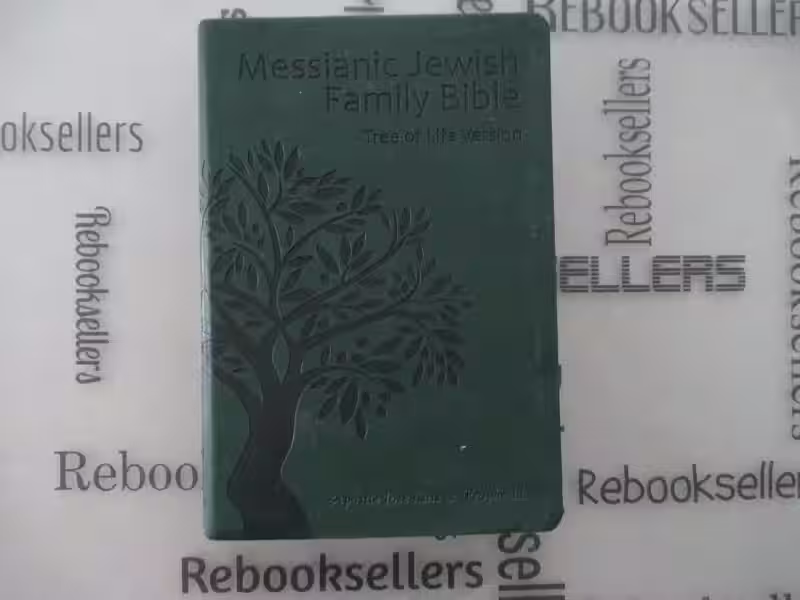
In the tapestry of religious observance, the concept of a Messianic Family Bible offers a particularly rich and deeply personal thread. It’s more than just a collection of sacred texts; it represents a unified spiritual endeavor, a cornerstone of faith passed down and lived out within the home. For families seeking to imbue their lives with meaning, connection, and a profound understanding of their spiritual heritage, the Messianic Family Bible serves as an invaluable resource and a powerful symbol.
This article aims to explore the multifaceted nature of the Messianic Family Bible, delving into its significance for contemporary families. We will uncover what makes a Bible “Messianic” in this context, how it can be a living document in your household, and the practical ways it can foster a stronger faith community within your own walls. Whether you are new to the concept or have been exploring it for some time, understanding the depth and breadth of a Messianic Family Bible can truly transform your approach to faith and family life.
Understanding the “Messianic” in the Messianic Family Bible
The term “Messianic” when applied to a family Bible often carries specific implications, particularly within certain Christian traditions that emphasize the fulfillment of Old Testament prophecies in Jesus Christ. It signifies a focus on the Jewish roots of Christianity and a desire to see the New Testament through the lens of ancient Hebrew understanding. A Messianic Family Bible, therefore, might highlight connections between the Old and New Covenants, emphasizing the continuity of God’s plan throughout history.
This understanding isn’t about replacing one faith with another, but rather about a richer, more integrated perspective. For example, a family might use a Messianic Family Bible to explore how passages in Isaiah are understood as prophetic pronouncements about the Messiah, and then read the Gospels to see how Jesus’ life and ministry are presented as the fulfillment of those prophecies. It’s about seeing the Bible as one unified narrative of redemption, from Genesis to Revelation, with Jesus as the central figure and the Messiah foretold. This approach fosters a deeper appreciation for the historical and cultural context of scripture, making the message of faith even more resonant.
The Messianic Family Bible as a Foundation for Family Worship
A Messianic Family Bible is not merely a static object; it’s an active participant in the life of the family. It becomes the central text for family worship, a shared space where parents and children can gather to read, discuss, and pray together. Imagine a Sunday evening where the family gathers around the table, not just for a meal, but for a spiritual feast, with the Messianic Family Bible open before them. This can be a time to explore a chapter, discuss its relevance to modern life, and even identify practical applications for faith in their daily actions.
The intentionality behind using a Messianic Family Bible for family worship is key. It’s about creating sacred moments that reinforce spiritual values and build a shared understanding of scripture. This might involve reading stories of faith from the Old Testament and then connecting them to Jesus’ teachings in the New Testament, illustrating the unifying theme of God’s love and redemption. For instance, a family might read about Abraham’s faith and then discuss how Jesus calls his followers to have similar faith, demonstrating the enduring principles that transcend time and covenant. This consistent practice cultivates a spiritual legacy that can endure for generations.
Choosing and Utilizing Your Messianic Family Bible Effectively
Selecting the right Messianic Family Bible is a personal and prayerful process. Many editions are available, each with varying features. Some may include extensive commentary that highlights Messianic interpretations, others might offer cross-references to key prophetic passages, and some even include historical maps and cultural insights to enhance understanding. Consider what resonates most with your family’s learning style and spiritual needs. A study Bible with detailed footnotes, for example, can be incredibly beneficial for deeper dives into theological concepts and historical context.
Once you have your Messianic Family Bible, the real work begins: making it a lived-in part of your family’s spiritual journey. This involves more than just occasional readings. It means integrating its teachings into everyday conversations, using it to address challenges, and celebrating its promises. For example, when facing a difficult decision, a family can turn to scripture for guidance, searching for verses of wisdom and encouragement. The Messianic Family Bible can become a trusted companion, a source of strength and direction in all of life’s circumstances. This active engagement ensures the Bible isn’t just a book on a shelf, but a vibrant guide for your family’s faith.
Nurturing Faith Through Shared Study and Discussion
One of the most profound benefits of a Messianic Family Bible is its ability to facilitate shared spiritual growth. Regular study sessions become opportunities for open dialogue and mutual learning. Parents can explain complex theological concepts in age-appropriate ways, while children can ask questions that often lead to deeper insights for everyone. This collaborative approach fosters a sense of ownership and engagement with scripture, making faith a truly family affair.
For instance, when encountering a parable of Jesus, a family might read it aloud and then discuss its meaning. A parent might explain the symbolism of the sower and the seeds, relating it to how different people receive God’s word. Children might offer their own interpretations, perhaps connecting the parable to experiences at school or with friends. This kind of interactive learning not only deepens understanding but also builds stronger family bonds founded on shared spiritual exploration. The discussions themselves become acts of worship, a testament to the living power of God’s word within the home.
Beyond Reading: Living Out the Messianic Message as a Family
Ultimately, the Messianic Family Bible is a catalyst for transforming faith into action. The teachings and principles found within its pages are meant to guide how a family lives, loves, and interacts with the world. This involves embodying the Messianic values of compassion, forgiveness, service, and justice in all aspects of life. It’s about translating biblical truths into tangible acts of love and kindness.
Consider how a family might read about Jesus’ command to love their neighbors. This can lead to discussions about how they can actively show love to their actual neighbors, perhaps by offering to help with yard work, sharing meals, or simply offering a kind word. The Messianic Family Bible provides the blueprint for a life lived in accordance with God’s will, and for families, this means collectively striving to reflect the love and teachings of the Messiah in their daily lives. This application of faith is what truly brings the Messianic Family Bible to life, making it a dynamic force within the home and community.
Frequently Asked Questions: Messianic Family Bible
What is the Messianic Family Bible?
The Messianic Family Bible is a version of the Holy Scriptures specifically designed for families who embrace Messianic Judaism. It aims to provide a clear and accessible translation that honors the Jewish roots of faith in Yeshua (Jesus) as the Messiah. Often featuring commentary, study aids, and historical context relevant to Messianic believers, it seeks to foster a deeper understanding of the biblical narrative from a Jewish perspective.
Messianic Judaism is a religious movement that combines Jewish religious traditions and practices with a belief in Yeshua (Jesus) as the Messiah. Adherents typically observe Jewish holidays and customs, study the Torah, and believe the Tanakh (Hebrew Bible) is divinely inspired. They also hold that Yeshua is the promised Messiah of Israel and the Son of God.
What is the religion of Messianic Family Bible users?
Users of the Messianic Family Bible are generally adherents of Messianic Judaism. This is a distinct religious expression that seeks to integrate Jewish heritage and practice with faith in Yeshua. It is not considered part of mainstream Rabbinic Judaism, nor is it the same as traditional Christianity, though it shares core tenets with Christianity regarding the divinity and messiahship of Yeshua.
How does the Messianic Family Bible differ from a traditional Christian Bible?
While both contain the same core biblical texts (Old and New Testaments), the Messianic Family Bible often differs in its translation choices, emphasis, and supplementary materials. It may:
* Use Hebrew names for God (e.g., Elohim, Adonai) and Yeshua.
* Retain Hebrew terms for concepts and practices.
* Include commentary that highlights Jewish context, historical background, and theological perspectives relevant to Messianic belief.
* Organize biblical texts in a way that emphasizes the continuity between the Old and New Testaments from a Jewish viewpoint.
* Be translated with an aim to be more faithful to the original Hebrew and Aramaic understanding of the texts.