The Bible, a cornerstone of faith for billions, is a text rich with layers of meaning, historical context, and theological depth. For many, understanding these intricate layers can be a lifelong pursuit. One fascinating avenue through which to explore these depths is through Messianic Bible translations. These specialized renditions of scripture offer a unique perspective, particularly for those interested in the Jewish roots of Christianity and the figure of Jesus as the promised Messiah. They don’t just translate words; they aim to translate a worldview, allowing readers to encounter the New Testament, and even the Old Testament, through a distinctly Jewish lens.
Navigating the vast landscape of biblical scholarship and translation can feel daunting. However, by focusing on Messianic Bible translations, we can unlock a more nuanced appreciation for the original context and intent of the biblical authors. These translations serve as powerful tools for bridging historical, cultural, and theological divides, fostering a deeper connection to the narrative and its enduring message. Whether you’re a seasoned theologian or a curious newcomer, exploring these specialized translations can profoundly enrich your understanding of religion and its foundational texts.
The term “Messianic” in this context refers to a perspective that emphasizes the fulfillment of Old Testament prophecies in the life and person of Jesus of Nazareth. It’s a viewpoint that sees the entire biblical narrative, from Genesis to Revelation, as a coherent story pointing towards the coming of the Messiah. Messianic Bible translations often go beyond simple linguistic equivalence to convey this theological emphasis. They might choose specific wordings or incorporate explanatory notes to highlight these connections, making them particularly valuable for readers seeking to understand the Jewish context of early Christianity.
This approach is rooted in the understanding that Jesus himself was a Jew, and his first followers were also Jewish. Therefore, to truly grasp their teachings and experiences, one must engage with the cultural and religious milieu of first-century Judea. Messianic Bible translations strive to recreate this environment for the modern reader, illuminating how concepts like covenant, sacrifice, and redemption would have been understood by those who first heard these words. For instance, understanding the sacrificial system in Leviticus becomes more profound when viewed through the lens of how Messianic Bible translations might connect it to the ultimate sacrifice of the Messiah.
The Importance of Contextual Nuance
The significance of Messianic Bible translations lies in their commitment to contextual nuance. Without understanding the historical and cultural backdrop, many passages can be misinterpreted or their full weight lost. For example, a simple translation of “Son of Man” might not fully convey the rich Old Testament allusions to Daniel’s vision of a divine figure receiving dominion. Messianic Bible translations, however, often use phrasing or footnotes to draw attention to these connections, allowing the reader to see the echoes of ancient prophecy resonating in the New Testament narratives.
Consider the concept of “shalom”, a Hebrew word often translated as “peace.” While “peace” is accurate, “shalom” encompasses a far broader sense of wholeness, well-being, and completeness. Messianic Bible translations might sometimes retain the Hebrew word or use more descriptive English terms to convey this fuller meaning, enriching the reader’s understanding of God’s desired state for humanity. This attention to semantic depth is a hallmark of their approach to religion and scripture.
Bridging the Old and New Testaments
One of the most powerful aspects of Messianic Bible translations is their ability to organically connect the Old and New Testaments. They often highlight how events, figures, and prophecies in the Hebrew Bible serve as foreshadowing or preparation for the coming of the Messiah. This can be particularly illuminating for individuals who may have primarily engaged with only one testament or for those seeking to understand the continuity of God’s redemptive plan throughout history.
For example, passages in Isaiah that speak of a suffering servant are often presented by Messianic Bible translations in a way that directly links them to Jesus’ suffering and subsequent exaltation. This isn’t about imposing an interpretation from the outside, but rather about showcasing the internal connections that early Jewish believers would have recognized. Understanding these connections can transform a reader’s perception of religion, revealing a unified narrative of salvation that spans millennia.
When exploring Messianic Bible translations, several distinctive features often stand out. These translations are not merely linguistic exercises; they are theological statements designed to guide the reader towards a particular understanding of the biblical narrative and its central figure. They often aim to present the New Testament in a way that is more accessible and understandable to those familiar with Jewish tradition, while also offering a fresh perspective for Gentile believers.
These translations are characterized by a deliberate effort to maintain the Jewish flavor of the original texts. This can involve using Hebrew names for people and places, incorporating Jewish holidays and customs into the narrative, and employing terminology that reflects a Jewish understanding of scripture. The goal is to immerse the reader in the world from which these sacred texts emerged, making the stories and teachings more vivid and relatable.
Terminology and Names
A common characteristic of Messianic Bible translations is the use of Hebrew names and terms. Instead of consistently using English transliterations, they might opt for the original Hebrew names for people like Yeshua (Jesus), Moshe (Moses), or David. Similarly, Hebrew terms like “Torah” (Law), “Nevi’im” (Prophets), and “Ketuvim” (Writings), collectively forming the Tanakh (Hebrew Bible), are often used. This deliberate choice instantly grounds the reader in the Jewish context and highlights the continuity between the Old and New Testaments.
This attention to original names and terms helps to dispel the perception of a radical break between Judaism and early Christianity. Instead, it emphasizes the fact that Jesus and his first disciples were Jewish, and their movement was initially a part of Judaism. For instance, when a Messianic Bible translation refers to Yeshua’s followers as talmidim (disciples), it evokes a deeper sense of apprenticeship and discipleship within the Jewish educational tradition. This linguistic choice can profoundly impact one’s understanding of religion and its origins.
Explanatory Notes and Annotations
Many Messianic Bible translations are accompanied by extensive explanatory notes, footnotes, or appendices. These annotations serve to clarify potentially unfamiliar Jewish concepts, explain historical allusions, and highlight the connections between Old Testament prophecies and New Testament events. They act as invaluable guides, offering insights that might otherwise be missed by readers lacking a deep background in Jewish history and theology.
These notes can be particularly helpful when encountering passages that discuss Jewish law or ritual. For example, a footnote in a Messianic Bible translation might explain the significance of the Passover Seder and its symbolic connections to Yeshua’s Last Supper. This allows the reader to grasp the deeper theological implications of these events and how they fit within the broader narrative of salvation history. Such annotations are crucial for understanding the intricate tapestry of religion as presented in scripture.
Focus on Fulfillment of Prophecy
A central tenet for Messianic Bible translations is the emphasis on the fulfillment of Old Testament prophecies in the life of Jesus. They actively seek to draw the reader’s attention to specific verses in the Hebrew Bible that are understood to point towards the coming of the Messiah, and then demonstrate how these prophecies are realized in the New Testament accounts. This approach aims to build a strong case for Yeshua’s messianic identity from within the biblical text itself.
This focus can transform how one reads the Old Testament, seeing it not just as a historical record or a set of laws, but as a roadmap leading to God’s ultimate redemptive plan. Messianic Bible translations often use cross-references and specific wording to make these prophetic connections explicit, encouraging the reader to see the unified story of religion unfolding across centuries.
Who Benefits from Messianic Bible Translations?
The beauty of Messianic Bible translations is their broad appeal, offering unique benefits to a diverse range of readers. Whether you are deeply entrenched in a particular faith tradition or are exploring spiritual questions for the first time, these translations can provide a fresh and illuminating perspective. They are not exclusive to one group but rather offer a valuable resource for anyone seeking a deeper understanding of the biblical text and its profound implications for religion.
These specialized translations can serve as bridges, connecting different cultural and theological viewpoints. They acknowledge the historical and spiritual lineage of Christianity, emphasizing its roots in Judaism. This can be particularly enriching for individuals who feel a pull towards understanding these origins or for those who wish to see the biblical narrative as a continuous and cohesive story of God’s interaction with humanity.
Jewish Believers in Jesus
For Jewish individuals who have come to believe in Jesus as the Messiah, Messianic Bible translations are often indispensable. These translations speak to their heritage and identity, presenting the New Testament in a way that resonates with their cultural and religious background. They help to affirm that belief in Yeshua is not a rejection of Judaism but rather a fulfillment of its deepest hopes and promises.
These translations often use language and concepts that are familiar and meaningful within Jewish culture, making the message of the gospel more accessible and relatable. They can help to bridge any perceived gap between their Jewish identity and their faith in Yeshua, fostering a more integrated and holistic understanding of their spirituality and religion.
Gentile Believers Seeking Deeper Roots
Many Gentile believers find Messianic Bible translations to be incredibly enriching as they seek to understand the Jewish roots of their faith. These translations offer a window into the world of Jesus and his first followers, providing context that is often missing in more traditional translations. They help to reveal the continuity of God’s covenant with Israel and how the New Covenant in Yeshua builds upon that foundation.
By highlighting the Jewishness of the Bible, these translations can deepen a believer’s appreciation for the historical and cultural origins of their faith. They can also foster a greater understanding and respect for the Jewish people and their ongoing role in God’s plan. This journey of discovery can lead to a more profound and nuanced understanding of religion as a whole.
Scholars and Students of Religion
Academics, theologians, and students of religion also find immense value in Messianic Bible translations. These specialized translations provide unique insights into the linguistic, cultural, and theological nuances of the biblical texts. They offer alternative interpretations and highlight connections that might not be apparent in standard translations, contributing to a more comprehensive scholarly understanding.
By presenting the biblical narrative through a distinctly Jewish lens, these translations facilitate critical analysis and comparative study. They allow scholars to explore the interplay between Jewish and early Christian thought and to better understand the historical development of religious ideas. The meticulous attention to detail in Messianic Bible translations makes them an essential resource for anyone engaged in serious biblical scholarship.
Exploring Messianic Bible Translations Today
The world of Messianic Bible translations is rich and varied, offering readers a multitude of options for deepening their understanding of scripture. Each translation has its own strengths and nuances, reflecting the particular goals and perspectives of its creators. Whether you are drawn to a more literal rendering or one that emphasizes contextual explanation, there is likely a Messianic Bible translation that will resonate with you.
Embarking on this journey of exploration can be a transformative experience. It’s an invitation to engage with the Bible on a new level, to uncover hidden layers of meaning, and to connect with the ancient roots of religion in a profound way. By embracing the insights offered by Messianic Bible translations, you can unlock a more complete and vibrant understanding of the biblical narrative and its enduring message of hope and redemption.
Choosing the Right Translation for You
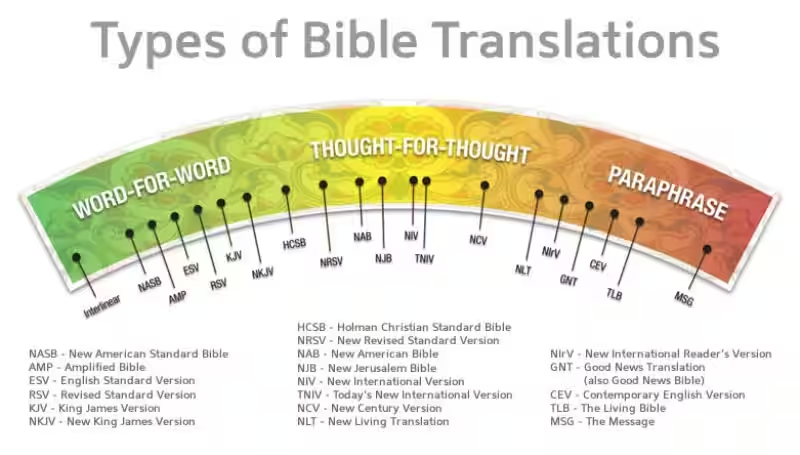
When selecting a Messianic Bible translation, consider your personal goals and preferences. Some translations prioritize rendering the original Hebrew and Greek as closely as possible, while others focus on providing extensive commentary and explanations. Websites and bookstores specializing in religious texts often feature reviews and descriptions that can help you make an informed choice. It’s also beneficial to read sample passages from different translations to see which style best suits your reading habits.
Ultimately, the “best” translation is the one that helps you connect most meaningfully with the biblical text and its message. Don’t be afraid to experiment and explore. The exploration itself is a valuable part of the journey toward a richer understanding of religion and its foundational scriptures.
Where to Find These Translations
Messianic Bible translations are increasingly accessible, both online and in physical bookstores. Many Christian and Messianic Jewish bookstores carry a selection of these specialized translations. Online retailers also offer a wide array, often with detailed product descriptions and customer reviews. Look for publishers known for their commitment to biblical accuracy and their focus on Jewish context.
Additionally, many Messianic Bible translations are available in digital formats, making them convenient to access on e-readers or mobile devices. This accessibility ensures that the insights offered by these unique translations are within reach for a broad audience interested in exploring the depths of religion and its sacred texts.
A Messianic Bible translation is a version of the Bible that has been translated with the understanding and perspective of Jewish people who believe Yeshua (Jesus) is the Messiah. These translations often seek to restore Hebrew names and terms, provide context for Jewish customs and holidays, and present the New Testament in a way that is more accessible and meaningful to a Jewish audience.
How do Messianic translations differ from traditional translations?
The primary difference lies in their interpretive lens. Messianic translations are produced by individuals and communities who affirm Yeshua as the Messiah within a Jewish framework. This often leads to:
* Restoration of Hebrew Names: Using names like “Yeshua” for Jesus, “Elohim” for God, and “Adonai” for Lord, instead of their Greek or Latinized counterparts.
* Emphasis on Jewish Context: Explaining passages in light of Jewish history, culture, and the Tanakh (Old Testament).
* Linguistic Nuances: Sometimes incorporating Hebrew or Aramaic terms that may not have direct English equivalents, or providing their meanings clearly.
* Theological Perspective: Presenting the New Testament as the fulfillment of Old Testament prophecies and the continuation of God’s covenant with Israel.
Are Messianic translations considered part of Judaism or Christianity?
Messianic translations are a product of the Messianic Jewish movement, which bridges Judaism and Christianity. They are used by Messianic Jews who consider themselves both Jewish and followers of Yeshua. While they originate from a Jewish perspective, they are not typically accepted as standard texts within mainstream Rabbinic Judaism. Christians who are interested in a more Jewish understanding of the scriptures may also find these translations valuable.
What are some examples of Messianic Bible translations?
Some notable Messianic Bible translations include:
* The Complete Jewish Bible (CJB): A popular translation that aims to present the Bible from a Jewish perspective, restoring Hebrew names and meanings.
* Tree of Life Version (TLV): A newer translation that emphasizes a Jewish heritage and includes various features to highlight this connection.
* The New Covenant Aramaic English New Testament: While not a complete Bible, this translation focuses on rendering the New Testament from an Aramaic perspective, which is believed to be the original language of many New Testament texts.
Can I use a Messianic translation for academic study?
Messianic translations can be a valuable resource for academic study, particularly for those interested in the historical and cultural context of the biblical texts, Jewish backgrounds of early Christianity, and the development of Messianic Judaism. However, for purely textual criticism or historical linguistic analysis, scholars may also consult a range of other translations and scholarly editions that represent different critical approaches. It’s often recommended to compare multiple translations when conducting in-depth study.