The quest for understanding meditation, God, and religion is a journey as old as humanity itself. For countless individuals, these concepts are not separate entities but intertwined threads in the tapestry of existence, each informing and deepening the other. Meditation, often perceived as a secular practice of mindfulness, can also serve as a profound gateway to experiencing the divine, a way to connect with that which we call God within the context of our chosen religion, or even in a spirit of universal faith.
Exploring the relationship between meditation and the divine is not about dogma or strict adherence to any single creed. Instead, it’s about uncovering universal truths and personal experiences that resonate across traditions. Whether you are a devout follower of a specific religion, a spiritual seeker, or simply curious about the profound impact of inner stillness, this exploration offers valuable insights into how meditation, God, and religion can enrich your life.
The Ancient Roots of Inner Stillness and Divine Connection
From the earliest spiritual traditions, we find practices designed to quiet the mind and open the heart to something greater. These methods, while termed differently across cultures and eras, share a common purpose: to facilitate a deeper connection with the God or divine principle that underpins reality. The practice of meditation, in its myriad forms, has always been a cornerstone of religion in its most authentic and potent expression.
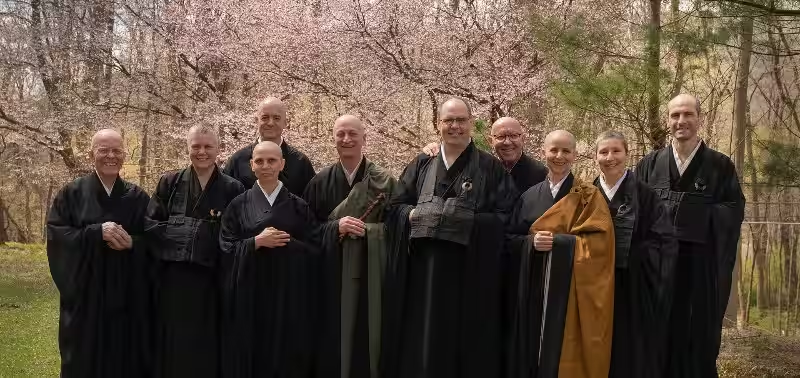
Think of the ancient yogis in India, their deep contemplative states aimed at realizing Brahman, the ultimate reality, which they understood as the supreme God. Consider the monks in Buddhist monasteries, their Vipassana or Samatha meditations designed to cultivate insight and enlightenment, a profound understanding of the nature of existence and the interconnectedness of all things, often viewed as a form of the divine. Even in the Abrahamic faiths, figures like Moses on Mount Sinai or the prophets in their solitary vigils engaged in states of intense contemplation, seeking direct communion with God. These are all powerful examples of how meditation, God, and religion have been inextricably linked throughout history.
Meditation as a Bridge to the Divine
The act of meditation, at its core, is about stilling the external noise to hear the internal whispers. In the context of religion, these whispers are often understood as the voice of God, or the divine presence that guides and sustains us. By focusing our attention, whether on the breath, a mantra, or a sacred image, we begin to detach from the incessant chatter of the ego and the mundane world, creating space for a more profound awareness to emerge.
This cultivated awareness is not merely a psychological phenomenon; for many, it is a direct experience of the divine. It’s like tuning a radio to a specific frequency. The radio itself doesn’t create the music; it receives the broadcast. Similarly, our minds, when quieted through meditation, can become receptive to the divine broadcast of God’s presence and wisdom that is always present, irrespective of our external circumstances or religious affiliations. This makes meditation, God, and religion a powerful trinity in the pursuit of spiritual fulfillment.
Experiencing God Beyond Ritual
While rituals, prayers, and scripture are vital components of most religions, meditation offers a path to experiencing the God they speak of in a more immediate and personal way. It transcends the intellectual understanding of faith and moves into the realm of direct perception. This experiential understanding can deepen devotion and make religious tenets feel more alive and relevant.
For instance, a Christian might meditate on a passage from the Gospels, not just to understand the words, but to feel the presence of Jesus and the love that emanates from his teachings. A Muslim might engage in dhikr (remembrance of God) through meditative repetition of divine names, seeking to feel the transcendence of Allah. A Hindu practitioner might meditate on a deity’s form, seeing it as a manifestation of the divine essence that pervades all existence. In each case, meditation, God, and religion are working in concert to foster a profound, embodied knowing of the divine.
Different Paths: Meditation in Various Religious Frameworks
The beauty of meditation, God, and religion lies in its adaptability and its capacity to manifest in diverse forms, each reflecting the unique cultural and theological landscape from which it arises. While the underlying principle of inner stillness remains constant, the specific techniques and the conceptualization of the divine vary significantly. Understanding these variations can offer a richer appreciation for the universal human impulse to connect with the sacred.
It’s important to remember that meditation is not a one-size-fits-all practice. Each religion has developed its own sophisticated methods for guiding practitioners towards God, tailored to its specific understanding of the divine and the human condition. These methods are not just about achieving a state of relaxation; they are often seen as sacred disciplines designed to purify the mind, cultivate virtue, and foster a genuine connection with the divine.
Buddhist Meditation: Seeking Enlightenment and the Nature of Reality
In Buddhism, meditation is central to the path towards enlightenment, a state of profound understanding and liberation. While Buddhism does not typically focus on a personal creator God in the Abrahamic sense, its concept of ultimate reality, Nirvana, or the Buddha-nature, is often experienced as a profound, all-encompassing presence. Practices like Vipassana (insight meditation) aim to develop clear comprehension of impermanence, suffering, and non-self, leading to wisdom and compassion.
Samatha (calm abiding meditation), on the other hand, focuses on developing concentration and mental tranquility, which creates a stable foundation for insight. Through these practices, practitioners aim to dissolve the illusions of the self and the dualistic perception of reality, thereby experiencing a state of oneness that many would equate with the absolute, or a universal God. The interconnectedness of all things, a key Buddhist teaching, is deeply felt through meditative practice, illustrating how meditation, God, and religion can find common ground in the experience of unity.
Contemplative Prayer in Abrahamic Traditions
Within Christianity, Judaism, and Islam, meditation often takes the form of contemplative prayer. This is not simply reciting words, but a deepening of one’s inner dialogue with God. Christian mystics like Teresa of Avila and John of the Cross described stages of prayer that involved silent waiting, inner listening, and the experience of divine union. These are profound meditative states, aimed at fostering a more intimate relationship with God.
In Judaism, practices like Kabbalistic meditation involve contemplating divine names and symbols to draw closer to the Ein Sof (the Infinite God). Islamic Sufism, the mystical dimension of Islam, places a strong emphasis on dhikr (remembrance of God) and muraqabah (watchfulness or contemplation), often involving the repetition of divine names or phrases to achieve states of fana (annihilation of the self in God) and baqa (subsistence in God). These traditions clearly demonstrate how meditation, God, and religion are interwoven in the pursuit of divine intimacy.
Hinduism offers a vast array of meditative practices, all pointing towards the realization of Brahman, the ultimate reality, often understood as the supreme God. From the chanting of mantras and the visualization of deities to the practice of Jnana Yoga (the yoga of knowledge) and Bhakti Yoga (the yoga of devotion), meditation is the primary tool for spiritual liberation (moksha).
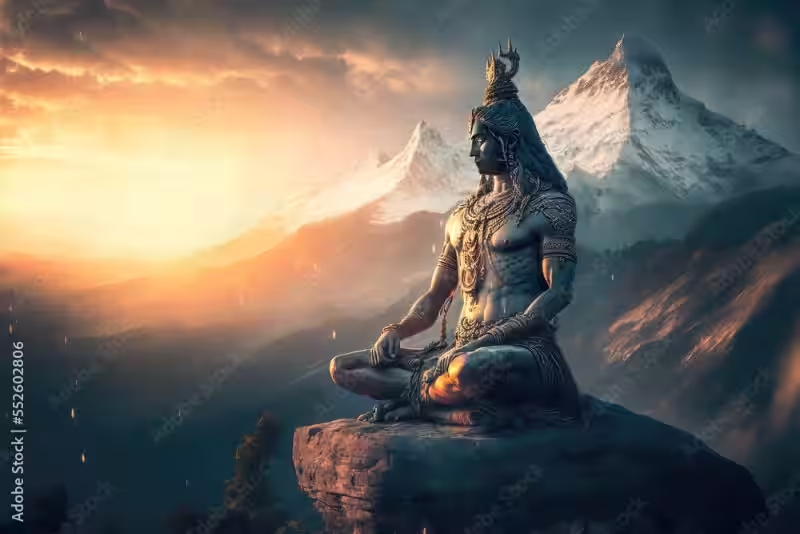
Practitioners might meditate on the sacred syllable “Om”, believing it to be the sound of creation itself, a direct expression of God. Others engage in Puja (worship), which often involves meditative elements of offering and devotion to specific deities like Vishnu, Shiva, or Devi, seeing them as manifestations of the one divine consciousness. The core principle is to transcend the individual self and realize the unity of the Atman (individual soul) with Brahman, a profound meditative achievement within the framework of meditation, God, and religion.
Cultivating Your Personal Practice: Integrating Meditation, God, and Religion
Understanding the historical and theological connections between meditation, God, and religion is inspiring, but the true power lies in integrating these insights into your own life. Developing a personal practice that resonates with your beliefs and spiritual aspirations can be a deeply transformative experience, leading to a richer, more meaningful connection with the divine. It’s about finding what speaks to your soul.
Starting a meditation practice, especially one connected to your faith, doesn’t require years of study or grand pronouncements. It’s about consistent effort and a willingness to explore. The journey of meditation, God, and religion is a personal one, and the most effective path is the one you can sustain and that brings you closer to your understanding of the divine.
Finding Your Spiritual Anchor
The first step is to identify what aspect of “God” or the divine resonates most deeply with you within your religious framework, or even in a broader spiritual sense. Are you drawn to the idea of a loving creator, an immanent presence, or a transcendent intelligence? Your chosen religion likely offers rich language and imagery to describe this.
Once you have a focal point, you can begin to explore meditative techniques that align with it. For example:
For those who feel a strong connection to a personal God: Try meditating on passages of scripture that speak of God’s love, mercy, or power. You might also engage in rosary prayer or the repetition of divine names that evoke these qualities. The goal is to feel God’s presence as a loving companion.
For those drawn to God’s transcendent nature: Focus on meditations that cultivate awe and wonder, perhaps contemplating the vastness of the universe or the intricate beauty of nature as reflections of divine order. Silent contemplation can be powerful here, allowing the mind to grasp infinite concepts.
For those who experience God as an inner light or consciousness: Practices that focus on inner stillness, awareness, and the dissolution of egoic boundaries can be particularly fruitful. This aligns with many Eastern contemplative traditions but can also be found in the mystical streams of Western faiths.
These are starting points; the journey of meditation, God, and religion is one of ongoing discovery.
Practical Steps for Daily Practice
To truly benefit from the synergy of meditation, God, and religion, consistency is key. Even a few minutes each day can make a significant difference. Here are some practical steps:
Set aside a dedicated time and space: Find a quiet, comfortable place where you won’t be disturbed. This could be a corner of your home, a sanctuary at your place of worship, or even a peaceful spot in nature.
Start small: Begin with 5-10 minutes of meditation each day and gradually increase the duration as you feel comfortable. Consistency is more important than duration.
Choose your focus: This could be your breath, a sacred word or phrase (mantra), a divine name, or a religious image. The key is to have something to gently return your attention to when your mind wanders.
Be patient and kind to yourself: Your mind will wander; it’s natural. The practice is not about achieving a perfectly still mind, but about gently bringing your attention back each time it drifts. This act of returning is itself a profound spiritual discipline.
Incorporate spiritual reading: After your meditation, spend a few minutes reading from your sacred texts or spiritual literature. This can help to deepen your understanding and integrate your meditative experience with your religious faith.
By actively engaging with meditation, God, and religion, you are not just performing rituals; you are embarking on a path of deep personal transformation, uncovering a profound connection to the divine that lies at the heart of all genuine spiritual seeking. This sacred journey, walked with intention and openness, promises to illuminate your path and enrich your understanding of yourself and the universe.
Frequently Asked Questions: Meditation, God, and Religion
What is the relationship between meditation and the concept of God?
Meditation can be a practice that enhances one’s connection to the divine, however one defines God. For some, meditation is a way to commune with God, to feel God’s presence, or to deepen their faith. For others, the concept of God is not central to their meditation practice, and they may focus on inner peace, mindfulness, or self-awareness. It is a personal journey and the relationship is defined by the individual.
Can meditation be practiced by people of different religious backgrounds?
Absolutely. Meditation is a secular practice that can be incorporated into any religious or spiritual framework, or practiced independently of religion. Many religions have their own meditative traditions, such as contemplative prayer in Christianity, Dhyana in Hinduism, or Vipassana in Buddhism. People from all faiths, or no faith, can find benefits in meditation.
Does meditation require belief in a specific deity or religious doctrine?
No, meditation does not require belief in any specific deity or religious doctrine. While some meditative practices are rooted in religious traditions, the core techniques of focusing attention, cultivating awareness, and promoting relaxation are accessible to everyone, regardless of their beliefs.
How can meditation help with religious or spiritual questions?
Meditation can provide a space for introspection and self-reflection, which can be invaluable when exploring religious or spiritual questions. By quieting the mind, one may gain clarity, intuition, and a deeper understanding of their personal beliefs and values. It can foster a sense of connection to something larger than oneself, which can inform spiritual inquiry.
Is there a conflict between meditation and certain religious teachings?
Generally, no. Most major religions embrace or have compatible contemplative practices. However, as with any aspect of spirituality, individuals may encounter specific interpretations or traditions within a religion that may seem at odds with certain meditative approaches. It is always advisable to consult with trusted religious leaders or resources if such concerns arise.