In a world that often feels like a relentless torrent of notifications and demands, the quiet act of stepping back, of pausing, has become less of a luxury and more of a vital necessity. This pause, this intentional space for introspection, is the heart of what we call meditation reflection. It’s not just about emptying the mind, as some misconceptions suggest. Instead, it’s about deepening our understanding, about cultivating a mindful awareness that allows us to process our experiences, our emotions, and our very existence. This practice, in its myriad forms, has been a cornerstone of spiritual traditions across the globe for millennia, weaving itself intricately into the fabric of religion.
When we speak of meditation reflection, we are essentially talking about a conscious engagement with our inner landscape. It’s an invitation to turn our gaze inward, away from the external cacophony, and to observe with gentle curiosity. This inward journey is often profoundly intertwined with religious belief systems, providing a practical pathway to connect with the divine, to understand sacred texts more deeply, or simply to foster a greater sense of peace and spiritual grounding. Whether you identify with a particular faith or are exploring your own sense of spirituality, the practice of meditation reflection offers a universal language of the soul.
The Roots of Reflection: Ancient Traditions and Inner Journeys
For countless centuries, the practice of meditative contemplation has been an integral part of religious life. Think of the monks in ancient monasteries, spending hours in silent prayer and focused thought. Consider the yogis in India, seeking enlightenment through disciplined postures and breathwork, all aimed at achieving a state of profound inner awareness. These weren’t just abstract philosophical exercises; they were practical, embodied methods for seeking truth, for understanding the nature of suffering, and for connecting with a reality beyond the mundane. The goal was often to transcend the limitations of the ego and to merge with a higher power or universal consciousness.
Across diverse religious landscapes, we find echoes of this emphasis on inner stillness. In Buddhism, Vipassanā meditation is a cornerstone, focusing on observing sensations and thoughts without judgment to cultivate insight into the impermanent nature of all things. In Christianity, the tradition of contemplative prayer encourages a silent, loving communion with God, often involving the repetition of a sacred word or phrase to focus the mind and open the heart. Even in Islam, Sufi mystics have long employed dhikr, the remembrance of God through chanting and rhythmic movement, as a path to spiritual ecstasy and deeper connection. These practices, while distinct in their expression, share a common thread: the recognition that true spiritual growth often comes from within, nurtured by periods of deliberate meditation reflection.
Meditation Reflection in Action: Cultivating Sacred Awareness
The beauty of meditation reflection lies in its adaptability. It doesn’t require elaborate rituals or specific dogma to be effective. At its core, it’s about creating a sacred space, both physically and mentally, where you can simply be. This might involve finding a quiet corner in your home, sitting comfortably with your spine erect, and gently closing your eyes. You might then bring your attention to your breath, noticing the sensation of air entering and leaving your body. When thoughts arise, as they inevitably will, the practice is not to suppress them but to acknowledge them kindly, like clouds drifting across the sky, and then gently guide your attention back to your anchor – be it your breath, a mantra, or a sacred image.
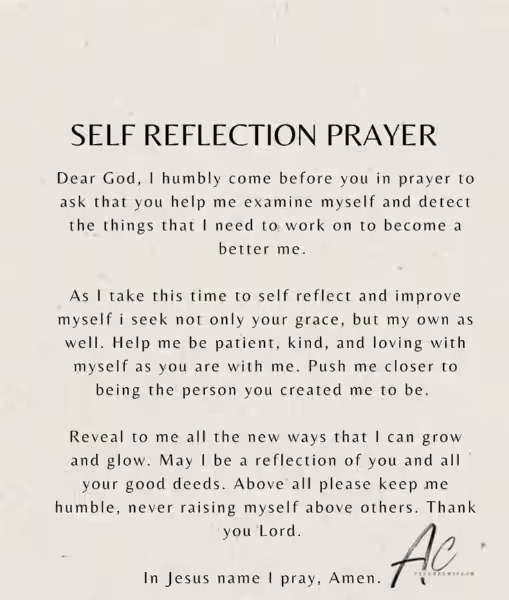
For those who find meditation reflection within a religious framework, the practice can be infused with specific intentions. For instance, a Christian might use their meditation to reflect on a passage from the Gospels, contemplating Jesus’ teachings and imagining themselves present in those scenes. A Hindu practitioner might focus on a particular deity, meditating on their divine attributes and seeking to embody those qualities in their own life. This integration of religious devotion with meditative practice deepens the experience, making it not just an exercise in mindfulness but a form of prayerful communion. The goal is to allow the insights gained during reflection to permeate one’s daily life, influencing one’s actions and fostering a more compassionate and ethical existence.
Bridging the Gap: The Interplay of Meditation, Reflection, and Modern Spirituality
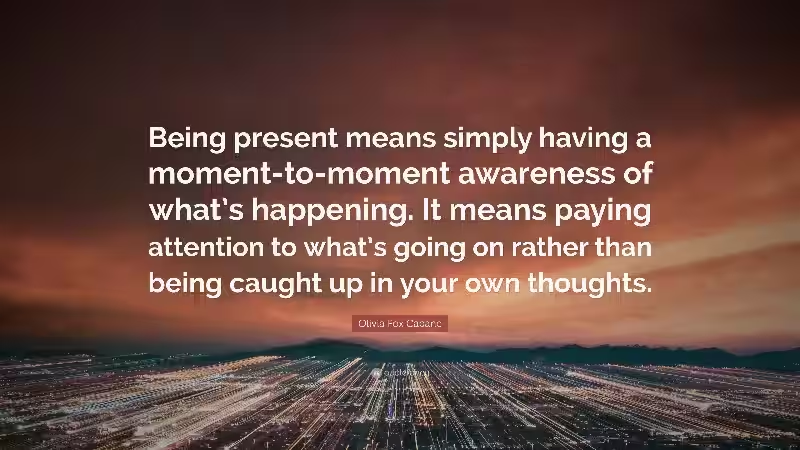
In our fast-paced modern world, the concept of meditation reflection is often embraced outside of traditional religious structures. Many individuals, regardless of their religious affiliation or lack thereof, turn to meditation as a tool for stress reduction, improved focus, and enhanced emotional well-being. This secular approach recognizes the inherent psychological and physiological benefits of quieting the mind and cultivating present moment awareness. However, even in these secular contexts, the echoes of ancient spiritual practices are undeniable. The emphasis on inner peace, self-discovery, and a deeper connection to something larger than oneself often mirrors the aspirations found in religious traditions.
The integration of meditation reflection into contemporary life doesn’t diminish its religious significance; rather, it highlights its universal appeal. For many, the practice serves as a bridge, allowing them to explore their spiritual beliefs in a more personal and experiential way. It provides a sacred pause in the midst of daily routines, offering opportunities for meaningful introspection and a reconnection with fundamental human values. Whether you’re sitting in a monastery, a yoga studio, or simply your own living room, the act of turning inward with intentional awareness can unlock profound insights and foster a deeper sense of purpose and belonging.
The Fruits of the Inner Garden: Transformation Through Reflection
The rewards of consistent meditation reflection are often subtle yet profound. Over time, individuals typically report a greater sense of calmness and resilience in the face of life’s challenges. The ability to observe thoughts and emotions without immediately reacting fosters emotional regulation and reduces the tendency towards habitual reactivity. This cultivated inner stillness can lead to a more objective perspective, allowing for clearer decision-making and more constructive interactions with others. It’s akin to looking at a turbulent ocean from a high vantage point; you can see the waves, but you also understand the vastness and depth beneath the surface.
Furthermore, meditation reflection can deepen our understanding of our own religious convictions. By quieting the external noise, we create a space for divine whispers to be heard more clearly. Reflecting on scriptures, prayers, or the lives of spiritual exemplars becomes a richer, more personal experience. This practice can lead to a transformative faith, where belief is not just an intellectual assent but a lived reality, infused with gratitude, compassion, and a profound sense of connection to the sacred. The sacred pause becomes a fertile ground for spiritual growth, allowing the seeds of devotion to blossom into a life lived with greater intention and divine awareness.
Frequently Asked Questions about Meditation, Reflection, and Religion
What is meditation?
Meditation is a practice where an individual uses a technique – such as mindfulness, or focusing the mind on a particular object, thought, or activity – to train attention and awareness, and achieve a mentally clear and emotionally calm and stable state.
How does meditation relate to reflection?
Meditation often involves a form of reflection, where one observes thoughts, feelings, and sensations without judgment. This mindful observation is a key aspect of self-reflection, leading to greater self-awareness and understanding.
Absolutely. Meditation is a secular practice that can be beneficial for anyone, regardless of their religious beliefs or lack thereof. Many people find meditation enhances their well-being and mental clarity through non-religious means.
Does religion require meditation or reflection?
Many religions incorporate practices that involve meditation and reflection as a way to connect with the divine, deepen spiritual understanding, or cultivate specific virtues. However, the specific practices and their emphasis vary greatly between different faiths.
Can meditation help me understand my own religion better?
Yes, meditation can be a powerful tool for deepening one’s understanding of their religious or spiritual path. By quieting the mind, one can create space for prayer, contemplation, and a more personal connection to religious teachings and experiences.
Are there specific meditation techniques for religious purposes?
Many religions have their own unique contemplative practices that can be considered forms of meditation. These might include prayer, chanting, devotional reading, or specific visualization exercises aimed at spiritual growth within that religious tradition.
How can reflection deepen my religious faith?
Reflection allows individuals to process their religious beliefs, experiences, and values. By thoughtfully considering scripture, prayer, and their own spiritual journey, individuals can foster a more profound and personal connection to their faith.
Is there a conflict between meditation and my religion?
For most religions, there is no inherent conflict. In fact, many find that meditation and reflection can complement and enhance their religious devotion. If you have specific concerns, it’s often helpful to consult with religious leaders or scholars within your tradition.
Can I combine secular meditation with my religious practices?
Many people successfully integrate secular meditation techniques into their religious lives. They may find that the mindfulness and focus cultivated in secular meditation enhance their ability to pray, meditate, or engage in other spiritual disciplines.
What is the role of personal reflection in religious life?
Personal reflection is often central to religious life, encouraging individuals to examine their actions, thoughts, and motivations in light of their faith’s teachings. It is a pathway to spiritual growth, repentance, and a closer relationship with the divine.