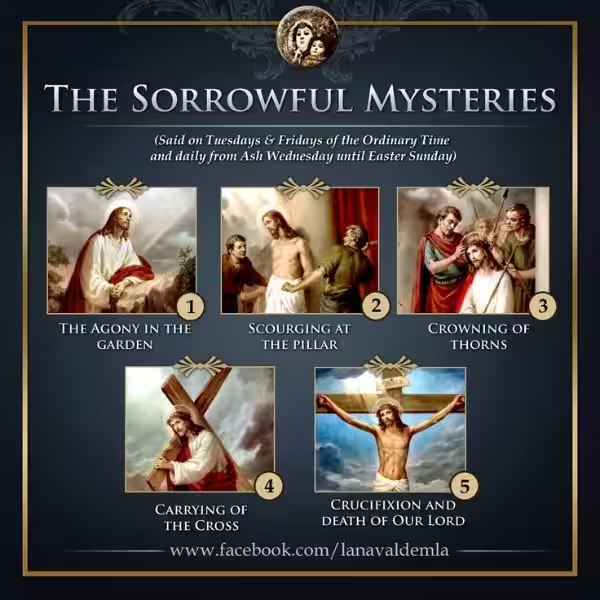
The Rosary, a profound prayer in the Catholic tradition, offers a unique way to meditate on the life of Jesus Christ and the Blessed Virgin Mary. Among its most moving meditations are the Sorrowful Mysteries. These illuminations invite us to contemplate the immense suffering Christ endured for humanity, a journey that, while steeped in sadness, ultimately leads to the joy of redemption. Engaging with the Scriptural Rosary Sorrowful Mysteries is not merely a recitation; it’s an immersion into the very heart of our faith, a deeply personal encounter with compassion, sacrifice, and unconditional love.
This article will guide you through the Scriptural Rosary Sorrowful Mysteries, exploring their significance, offering relatable insights, and demonstrating how this devotional practice can enrich your spiritual life. We will delve into each mystery, drawing from the Gospels to understand its scriptural foundation and its profound implications for our own journey of faith. By focusing on these powerful events, we can cultivate a deeper understanding of Jesus’ passion and develop a more profound appreciation for the salvation He won for us.
Understanding the Significance of the Sorrowful Mysteries
The Sorrowful Mysteries are traditionally prayed on Tuesdays and Fridays, days often associated with penance and remembrance of Christ’s sacrifice. They are a powerful reminder of the cost of sin and the depth of God’s love, which was willing to pay that price. These mysteries are not intended to dwell in despair, but rather to foster a spirit of penitence, gratitude, and empathy towards Christ’s suffering. By contemplating His pain, we can better understand our own struggles and find strength in His example.
The Scriptural Rosary Sorrowful Mysteries stand out because they ground our prayer in the actual events recorded in the Gospels. This provides a solid foundation for our meditation, moving beyond abstract concepts to concrete narratives of love and suffering. It’s like looking at a historical photograph versus reading a description; the visual, the tangible, makes the experience more immediate and impactful. Through these mysteries, we are invited to stand alongside Mary at the foot of the cross, to feel the weight of Christ’s agony, and to ultimately witness the triumph of His love over death.
The First Sorrowful Mystery: The Agony in the Garden
Our journey into the Sorrowful Mysteries begins with the Agony in the Garden of Gethsemane. Here, Jesus, fully aware of the immense suffering that awaits Him, withdraws to pray. The Gospels depict His profound distress, His “sweat of blood,” as He wrestles with the divine will and the burden of humanity’s sins. This is a moment of intense spiritual anguish, a testament to His humanity and His complete surrender to the Father’s plan.
Imagine a moment of profound personal crisis, where you know something incredibly difficult is about to happen, and you are completely alone with your thoughts and fears. Jesus experienced this, but on a cosmic scale. He felt the weight of every sin ever committed, and the agony was so intense that His very body reacted with physical manifestations of His inner torment. In this mystery, we are called to reflect on our own moments of trial and to pray for the grace of acceptance and strength in difficult times, recognizing that even in isolation, God’s presence is a source of comfort.
The Second Sorrowful Mystery: The Scourging at the Pillar
Next, we meditate on the Scourging at the Pillar. After His arrest, Jesus is brutally beaten with leather whips, often studded with bone or metal, leaving His body lacerated and bleeding. This act of inhuman violence was meant to humiliate and pain Him, yet He bore it in silence, His focus not on His own suffering but on the redemption it would bring. This is a stark depiction of innocent suffering and the ultimate act of atonement.
Think of the deepest injustice you’ve ever witnessed or experienced. The scourging is a physical manifestation of that injustice, multiplied a thousandfold. It’s a difficult image, but one that compels us to consider the enormity of the sacrifice Christ made. This mystery calls us to reflect on the pain inflicted by sin in the world and to pray for healing and justice, offering up our own sufferings as a small participation in His redemptive act.
The Third Sorrowful Mystery: The Crowning with Thorns
The Crowning with Thorns presents another brutal act of mockery and torture. Soldiers, seeking to deride His claim to kingship, fashion a crown of sharp thorns and press it onto His head. This act, meant to be a symbol of shame, becomes a powerful symbol of Christ’s true kingship, a reign not of worldly power but of selfless love and sacrifice. The Scriptural Rosary Sorrowful Mysteries draw our attention to the irony and pathos of this event.
This is like a cruel joke played on someone who has done nothing but good. The thorns, meant to inflict pain and humiliation, become a twisted halo. In this mystery, we are invited to ponder the nature of true authority and leadership, which is found not in domination but in service and compassion. It challenges us to question our own values and to seek a humble and loving heart, willing to bear discomfort for the sake of truth.
The Fourth Sorrowful Mystery: The Carrying of the Cross
The Carrying of the Cross depicts Jesus, weakened and bleeding, forced to bear the heavy wooden cross upon which He will be crucified. He stumbles, falls, and is aided by Simon of Cyrene. This mystery highlights Christ’s immense physical suffering and His willful embrace of His mission. It’s a profound image of resilience and determination in the face of overwhelming adversity, a central theme in the Scriptural Rosary Sorrowful Mysteries.
Imagine being tasked with an impossible burden, your strength failing, yet knowing you must continue. Jesus’ journey to Golgotha is the ultimate expression of this. This mystery encourages us to reflect on the crosses we carry in our own lives, the challenges that seem too great to bear. It reminds us that we are not alone; Christ Himself has walked this path, and in His strength, we can also carry our burdens with hope and perseverance.
The Fifth Sorrowful Mystery: The Crucifixion and Death
The culmination of Christ’s passion is the Crucifixion and Death. Nailed to the cross, Jesus endures extreme physical pain and spiritual abandonment, crying out, “My God, my God, why have you forsaken me?” Yet, even in His final moments, He demonstrates unfathomable love, forgiving His executioners and entrusting His mother to John. His death on the cross is the ultimate act of redemption, the sacrifice that bridges the gap between God and humanity.
This is the climax of the Sorrowful Mysteries, the ultimate testament to God’s love. It is a moment of profound sadness, but also of immense hope, as His death paves the way for His resurrection. In this mystery, we are called to contemplate the depth of our salvation and to respond with lives of gratitude and dedication. It asks us to consider: how do we live in response to such an immense gift?
Integrating the Scriptural Rosary Sorrowful Mysteries into Your Prayer Life
Incorporating the Scriptural Rosary Sorrowful Mysteries into your daily or weekly prayer routine can be a transformative experience. It’s not about adding another obligation, but about deepening your relationship with Jesus through contemplation and meditation. Start by setting aside a few quiet moments, perhaps in the morning or evening, to focus on these powerful events.
To make the Scriptural Rosary Sorrowful Mysteries more accessible and engaging, consider the following:
Read the Scripture: Before meditating on each mystery, read the corresponding passage from the Gospels. This will immerse you in the narrative and provide a richer context for your prayer.
Visualize the Scene: Close your eyes and try to picture yourself present at each event. What do you see, hear, and feel? Allow the scriptural accounts to come alive in your imagination.
Reflect on the Meaning: Consider how each mystery relates to your own life. What lessons can you learn? What virtues can you cultivate? How does Christ’s suffering speak to your own struggles and joys?
Use a Guide: There are many excellent resources available, including books, apps, and online videos, that offer guided meditations on the Scriptural Rosary Sorrowful Mysteries. These can be particularly helpful for beginners.
Pray with Others: The Rosary can be a beautiful communal prayer. Consider praying the Scriptural Rosary Sorrowful Mysteries with family, friends, or a prayer group. Sharing the experience can deepen your understanding and foster a sense of solidarity.
The Scriptural Rosary Sorrowful Mysteries offer a profound pathway to spiritual growth. By immersing ourselves in the passion of Christ, we can cultivate a deeper empathy, a stronger faith, and a more profound appreciation for the gift of salvation. This devotional practice is an invitation to walk closely with Jesus, to share in His suffering, and ultimately, to taste the joy of His resurrection.
The Scriptural Rosary is a form of praying the Rosary that involves meditating on a specific Scripture passage for each Hail Mary prayed during the recitation of each decade. It connects the traditional Rosary prayers with the Gospels.
What are the Sorrowful Mysteries?
The Sorrowful Mysteries are one of the four sets of meditations used when praying the Rosary. They focus on the passion and death of Jesus Christ.
When are the Sorrowful Mysteries traditionally prayed?
The Sorrowful Mysteries are traditionally prayed on Fridays and Sundays, and during the liturgical season of Lent.
What are the five Sorrowful Mysteries?
The five Sorrowful Mysteries are:
The Agony in the Garden
The Scourging at the Pillar
The Crowning with Thorns
The Carrying of the Cross
The Crucifixion and Death of our Lord
How is the Scriptural Rosary for the Sorrowful Mysteries prayed?
For each Hail Mary within a decade, a specific Scripture passage related to the mystery being meditated upon is read or contemplated. For example, during the Agony in the Garden, one might reflect on the Gospel account of Jesus praying in the Garden of Gethsemane before his arrest.
What is the purpose of meditating on Scripture during the Rosary?
Meditating on Scripture helps to deepen one’s understanding of the events of Christ’s life, death, and resurrection, making the Rosary a more profound prayer experience. It allows for a more personal encounter with the mysteries of faith.
Can anyone pray the Scriptural Rosary?
Yes, anyone who wishes to pray the Rosary is welcome to pray the Scriptural Rosary. It is a devotional practice open to all Christians who seek to grow in their faith.
Where can I find the Scripture passages for the Sorrowful Mysteries?
Many resources are available online, in Rosary guides, and in Catholic Bibles that provide the specific Scripture passages for each mystery in the Scriptural Rosary.
Does praying the Scriptural Rosary replace the traditional prayers of the Rosary?
No, the Scriptural Rosary incorporates the traditional prayers of the Our Father, Hail Mary, and Glory Be. The Scripture meditation is an addition to enhance the contemplation of the mysteries.
What is the role of the Blessed Virgin Mary in the Sorrowful Mysteries?
While the Sorrowful Mysteries primarily focus on Jesus’ suffering, Mary’s presence and sorrow are also central. Her “yes” to God and her silent suffering alongside her Son are integral to these meditations.