The human experience is a tapestry woven with threads of constant evolution. We are not static beings; rather, we are dynamic entities in a perpetual state of becoming. From the tentative steps of infancy to the wisdom-gathered reflections of old age, change is the only true constant. But what drives this metamorphosis? What are the catalysts that shift our perspectives, alter our behaviors, and redefine our very identities? This exploration delves into the intricate question of how people change, with a particular focus on the profound and often transformative influence of religion in this ongoing process.
Understanding the Mechanics of Human Transformation
The concept of how people change is multifaceted, encompassing psychological, social, and even biological shifts. It’s rarely a sudden, dramatic upheaval, but more often a gradual unfolding, a series of small adjustments that, over time, lead to significant alterations in who we are and how we navigate the world. Understanding these underlying mechanisms can empower us to embrace and even guide our own personal evolutions.
At its core, change often stems from new experiences and learning. When we encounter novel situations, are exposed to different ideas, or simply learn new skills, our brains forge new neural pathways. Think of learning to ride a bicycle; initially, it’s a clumsy, uncertain endeavor, but with practice and repetition, the movements become ingrained, transforming us from a wobbly novice into a confident rider. This principle applies to far more complex aspects of our lives, from adopting new career paths to developing deeper empathy for others.
Furthermore, significant life events, whether joyous or sorrowful, can act as powerful agents of change. The birth of a child can fundamentally alter priorities and foster a sense of profound responsibility. The loss of a loved one, while painful, can strip away superficial concerns and lead to a re-evaluation of what truly matters. These watershed moments often force us to confront our existing beliefs and values, prompting introspection and the potential for deep personal growth.
The Role of Internal Drivers: Beliefs, Values, and Motivation
While external factors certainly play a role, the most enduring and meaningful changes often originate from within. Our internal landscape of beliefs and values acts as the compass that guides our actions and shapes our understanding of the world. When these core tenets are challenged or evolve, the ripple effect throughout our lives can be substantial.
Consider the importance of personal motivation. Without a genuine desire to change, even the most compelling external circumstances may have little lasting impact. This internal drive can manifest in various forms, from a burning ambition to achieve a specific goal to a deep-seated yearning for a more meaningful existence. Understanding your “why” is often the crucial first step in initiating and sustaining personal transformation.
Our values are the fundamental principles that we hold dear, influencing our decisions and shaping our character. If someone deeply values honesty, they will likely strive to be truthful in their interactions, even when it’s difficult. Conversely, if a person’s values shift, perhaps prioritizing comfort over ambition, their behaviors and life choices will naturally adapt to reflect this new internal hierarchy. This internal recalibration is a key aspect of how people change.
The Impact of External Influences: Social Connections and Environment
We are, by nature, social creatures, and our interactions with others profoundly influence our development. The people we surround ourselves with can either reinforce our existing patterns or introduce us to new perspectives that spark change. A supportive group of friends can encourage us to step outside our comfort zones, while a critical or unsupportive environment can stifle growth.
The environment in which we live and work also plays a significant role. A stimulating and challenging workplace might foster innovation and adaptability, while a stagnant and repetitive one could lead to complacency. Similarly, exposure to diverse cultures and ideas through travel or education can broaden our horizons and challenge deeply held assumptions, thereby facilitating change. This interplay between our internal world and external influences is a constant dance that defines how people change.
Religion as a Catalyst for Profound Transformation
Throughout history and across cultures, religion has consistently emerged as a powerful force in shaping human lives and driving personal transformation. For many, faith provides a comprehensive framework for understanding existence, offering answers to fundamental questions about purpose, morality, and the afterlife. This structured belief system can be a potent catalyst for change, guiding individuals toward new ways of thinking, behaving, and experiencing the world.
The teachings and principles of various religions often offer a moral compass and a set of ethical guidelines. Concepts like compassion, forgiveness, humility, and service are frequently emphasized, encouraging adherents to cultivate these virtues. When individuals sincerely embrace these tenets, they can experience a profound shift in their character, moving away from self-centeredness toward a more altruistic and connected way of living. This is a tangible example of how people change under the influence of religious belief.
Spiritual Practices and Their Transformative Power
Beyond abstract doctrines, religious traditions offer a rich array of spiritual practices designed to foster inner transformation. These practices can include prayer, meditation, scripture study, communal worship, and acts of charity. Engaging in these disciplines regularly can cultivate a deeper connection to the divine and, consequently, to oneself and others.
Consider the practice of meditation common in many faiths. Through focused attention and breathwork, individuals can learn to quiet the incessant chatter of the mind, gain clarity, and develop greater emotional regulation. This inner stillness can lead to a more peaceful and resilient disposition, allowing individuals to navigate life’s challenges with greater equanimity. This is a clear demonstration of how people change through dedicated spiritual discipline.
Furthermore, communal worship and shared rituals foster a sense of belonging and reinforce the values espoused by the faith. Being part of a community that is striving for similar spiritual goals can provide encouragement, accountability, and mutual support. This collective journey amplifies the individual’s capacity for change, as they are uplifted and inspired by those around them.
The Redemptive and Reorienting Power of Faith
For individuals grappling with personal struggles, past mistakes, or a sense of emptiness, religion can offer a path to redemption and reorientation. The belief in a higher power and the possibility of forgiveness can be incredibly liberating, allowing people to shed the burden of guilt and shame and embark on a new chapter. This process of spiritual renewal is a significant aspect of how people change.
Imagine someone who has lived a life marked by regret. Upon finding faith, they might experience a profound sense of peace and absolution. This newfound freedom can empower them to make amends, offer forgiveness to others, and dedicate their lives to serving a higher purpose. This isn’t just a superficial alteration; it’s a deep-seated transformation of identity and perspective, driven by the redemptive power of their religious beliefs.
Moreover, religious narratives often provide a cosmic perspective, placing individual lives within a grander, eternal scheme. This can help individuals reframe their problems and challenges, seeing them not as insurmountable obstacles but as opportunities for growth within a divinely ordered universe. This shift in perspective can lead to a profound sense of hope and purpose, fundamentally altering an individual’s outlook on life.
Navigating Personal Change: Embracing the Journey
Ultimately, understanding how people change is not just an academic pursuit; it’s a deeply personal and often lifelong journey. Whether influenced by new experiences, shifting values, supportive relationships, or the profound embrace of faith, the capacity for transformation resides within each of us. By recognizing the various catalysts for change and actively engaging with them, we can cultivate a more fulfilling and meaningful existence.
Embracing the inevitability of change requires a certain level of openness and willingness. It means being prepared to let go of old beliefs and habits that no longer serve us, and to welcome new perspectives and possibilities. This can be challenging, as it often involves confronting our fears and stepping into the unknown. However, the rewards of personal growth and evolution are immeasurable.
The journey of transformation is rarely a solitary one. Seeking support from others, whether friends, family, mentors, or spiritual communities, can provide invaluable encouragement and guidance. By sharing our struggles and celebrating our triumphs, we reinforce our commitment to change and build resilience in the face of adversity. Remember, the process of how people change is often a collective endeavor, enriched by the connections we forge along the way.
Frequently Asked Questions about “How People Change” and Religion
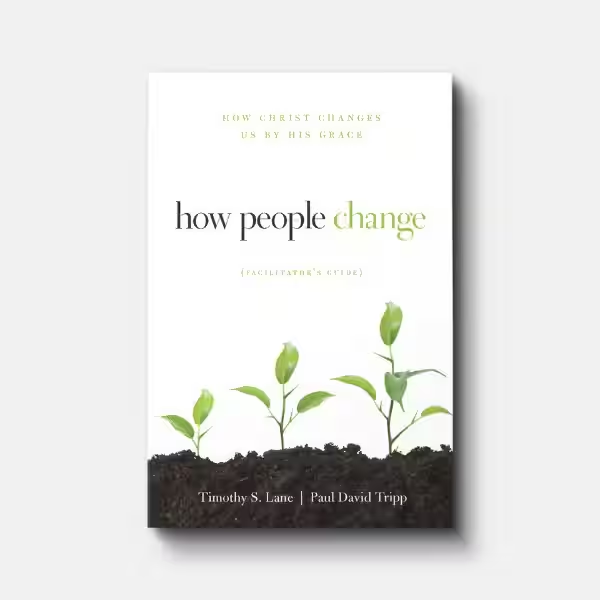
How does the book “How People Change” address religious beliefs and practices?
The book “How People Change” explores the psychological and sociological factors that influence human behavior, including how deeply held beliefs, whether religious or otherwise, can shape individual change. It examines the internal mechanisms and external influences that contribute to shifts in perspective and action, which can certainly encompass changes related to religious faith, adherence, or interpretation. The book doesn’t specifically focus on religion but provides a framework for understanding how any belief system, including religious ones, impacts an individual’s capacity and process of change.
Can the principles in “How People Change” be applied to understanding religious conversion or deconversion?
Yes, the principles outlined in “How People Change” can be highly relevant to understanding religious conversion or deconversion. The book discusses concepts such as cognitive dissonance, social influence, personal identity, and cognitive restructuring, all of which play significant roles in the processes of adopting or abandoning religious beliefs. It offers insights into the motivations, experiences, and outcomes associated with profound shifts in an individual’s religious landscape.
Does “How People Change” suggest that religious faith is an obstacle or a facilitator of personal growth?
“How People Change” does not make a blanket statement about religion being an obstacle or facilitator. Instead, it suggests that the role of religion in personal growth is nuanced and depends heavily on the individual and the specific religious context. For some, religious faith might provide a strong moral compass, community support, and a sense of purpose that facilitates positive change. For others, rigid dogma or social pressures within a religious group might hinder personal exploration or adaptation. The book’s framework allows for an analysis of how religion, like any other belief system or social structure, can exert both positive and negative influences on an individual’s journey of change.