The concept of a Holy Door Jubilee Year is one of the most profound and spiritually resonant traditions within the Catholic Church. It’s more than just a historical event; it’s a vibrant, living experience that invites millions to embark on a personal journey of faith, seeking spiritual renewal and the profound grace of forgiveness. This special period, occurring typically every 25 years, transforms sacred spaces into gateways of divine mercy, offering a tangible sign of hope and reconciliation for believers worldwide. Understanding the significance and practice of the Holy Door Jubilee Year can illuminate its deep meaning for individuals and the broader religious community.
When the Church announces a Jubilee Year, it’s not a casual declaration. It signifies a period of extraordinary spiritual opportunity, a time when the faithful are encouraged to deepen their relationship with God and with each other. The central, iconic symbol of this special year is the Holy Door, an often-sealed entrance to a major basilica, which is ceremonially opened only during this sacred time. Passing through this door is not merely a physical act; it represents a profound spiritual passage, a step towards embracing the Jubilee’s unique blessings.
What is a Jubilee Year? Understanding the Core Concept
At its heart, a Jubilee Year is a special period of remission of sins and temporal punishment, a time set aside for reconciliation and spiritual celebration. The origins of the Jubilee can be traced back to the Old Testament, where a Jubilee year was proclaimed every 50 years. It was a time of liberty, where debts were forgiven, slaves were freed, and land was returned to its original owners. This ancient practice foreshadowed the spiritual liberation and abundance of grace that the Church’s Jubilee Year offers believers today.
The modern Catholic Jubilee Year, inspired by these ancient roots, offers a multifaceted path to spiritual growth. It’s a time when the Church emphasizes themes of mercy, forgiveness, and conversion. The opening of the Holy Door is the most visible and powerful manifestation of this spiritual invitation. It’s a moment when the faithful are called to acknowledge their human frailty, seek divine pardon, and recommit themselves to living a life of faith, love, and service. The Jubilee is a potent reminder that God’s mercy is always available, a boundless ocean ready to cleanse and renew.
The Sacred Symbolism of the Holy Door
The Holy Door is more than just a physical entrance; it is a potent symbol of Jesus Christ Himself. As the Gospel of John states, “I am the gate. Whoever enters through me will be saved.” The opening of this door during a Jubilee Year signifies Christ’s open invitation to all who seek His grace. It’s a tangible representation of God’s readiness to welcome us back, no matter our past failings. Imagine a parent waiting with open arms to embrace a child who has strayed; the Holy Door embodies this same boundless love and acceptance.
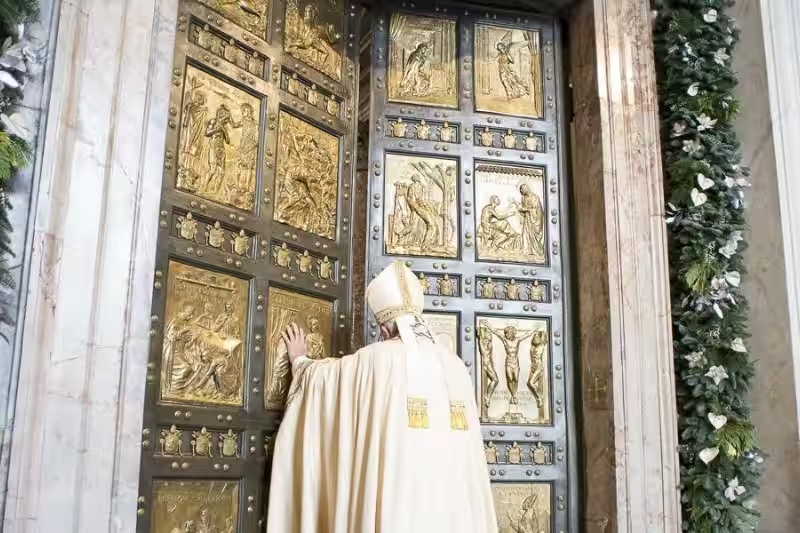
Each Holy Door is typically sealed with mortar and brick, symbolizing the closure and separation that sin can create. During the opening ceremony of a Jubilee Year, the Pope, or a designated bishop, breaks through this seal, signifying the breaking down of barriers between humanity and God. For the faithful who pass through it, the act is an act of faith, a commitment to leave behind their old selves and step into a new reality of spiritual freedom and divine favor. It’s a powerful visual and spiritual metaphor for leaving the past behind and embracing a fresh start.
Preparing for the Jubilee Year: A Journey of the Heart
A Jubilee Year is not something that simply happens; it is a period that calls for prayerful preparation and active participation. The Church encourages believers to engage in specific spiritual practices to fully benefit from the graces offered during this time. This preparation often involves acts of charity, confession and reconciliation, and a deeper study of scripture and Church teachings.
To truly experience the transformative power of a Holy Door Jubilee Year, individuals are encouraged to cultivate a spirit of penitence and reflection. This means examining one’s conscience, acknowledging areas where one has fallen short, and seeking the sacrament of Reconciliation (Confession). Confession during a Jubilee Year is particularly efficacious, as it brings with it the remission of temporal punishment due to sin. Think of it as shedding a heavy burden, preparing you to walk lighter and with a clearer heart towards the Holy Door.
Essential Spiritual Practices During the Jubilee
During a Jubilee Year, specific spiritual disciplines are highlighted to maximize the spiritual benefits. These typically include:
Making a pilgrimage: Traveling to a designated Holy Door, often in Rome or other significant churches, is a central practice. This journey itself can be a powerful metaphor for the spiritual journey of life.
Receiving the Sacrament of Reconciliation: As mentioned, confession is crucial for experiencing the Jubilee’s remission of sins and temporal punishment.
Participating in the Eucharist: The Holy Mass is the source and summit of Christian life, and its celebration during a Jubilee Year is especially significant.
Performing acts of mercy and charity: The Jubilee calls for a renewed commitment to serving the poor, the sick, and those in need, reflecting God’s own boundless mercy.
Praying for specific intentions: The Pope often designates specific intentions for the Jubilee, such as praying for peace, for the Church, or for the poor.
These practices are not arbitrary rules; they are pathways designed to open our hearts and minds to the extraordinary graces of the Jubilee. Engaging in them with sincerity and devotion allows the transformative power of the Holy Door Jubilee Year to truly take root in our lives, fostering personal growth and a deeper connection with the divine. It’s about actively seeking God’s grace and allowing it to reshape us from the inside out.
Passing Through the Holy Door: A Symbolic Act of Faith
The act of passing through the Holy Door is the most iconic and symbolic ritual of a Jubilee Year. It’s a moment of profound personal encounter with God’s mercy. As pilgrims approach the brightly lit opening, often adorned with symbols of the Jubilee, there’s a palpable sense of anticipation and reverence. This is not just walking through a doorway; it’s a deliberate step of faith, a conscious transition from one spiritual state to another.
When you walk through the Holy Door, you are symbolically leaving behind the burdens of your past – your sins, your regrets, your limitations – and stepping into the new life and unconditional love that God offers. It’s a moment to embrace the promise of forgiveness and to recommit to a life lived in alignment with God’s will. This simple, yet profound, act can be a powerful catalyst for spiritual renewal and lasting transformation, reminding us that no one is beyond the reach of God’s boundless mercy.
What Happens After You Pass Through?
Passing through the Holy Door is not the end of the Jubilee journey, but rather a significant milestone. The graces received are meant to inspire a lasting change in one’s life. Following this sacred act, individuals are encouraged to continue their spiritual growth through continued prayer, participation in the sacraments, and a commitment to living out the Gospel values in their daily lives. The Holy Door Jubilee Year is a springboard, not a destination.
The spiritual benefits of passing through the Holy Door during a Jubilee Year are immense. They include the remission of temporal punishment for sins already confessed, a profound sense of spiritual renewal, and a strengthened connection to the Church. It’s an opportunity to experience God’s mercy in a tangible way, fostering a deeper sense of peace and hope. This experience can equip believers with a renewed sense of purpose and the strength to face life’s challenges with faith and resilience.
The Legacy of the Holy Door Jubilee Year: Lasting Impact
The Holy Door Jubilee Year leaves an indelible mark on the lives of those who participate and on the Church as a whole. The spiritual renewal experienced by individuals often ripples outwards, inspiring greater acts of charity, compassion, and understanding within communities. The Jubilee serves as a powerful reminder of the Church’s mission to proclaim God’s mercy to the world.
The tradition of the Holy Door Jubilee Year continues to be a beacon of hope and a source of immense spiritual significance. It is a time when the faithful are called to a deeper encounter with God, a moment to experience His boundless mercy and profound love. Whether you are able to physically pass through a Holy Door or embrace the spirit of the Jubilee through prayer and acts of charity, the invitation to renewal and reconciliation remains open, offering a path to a more profound and meaningful spiritual life.
Frequently Asked Questions about the Holy Door Jubilee Year
What is a Jubilee Year?
A Jubilee Year, also known as a Holy Year, is a special period of remission of sins and also a time of universal pardon, indulgence, and celebration in the Catholic Church. It is traditionally celebrated every 25 years, though popes can call extraordinary Jubilee Years.
What is the Holy Door?
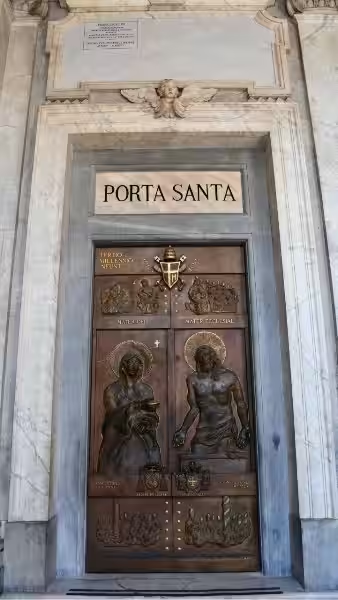
The Holy Door is a special door in one of the four major basilicas in Rome (St. Peter’s, St. John Lateran, St. Paul Outside the Walls, and St. Mary Major) and in several other cathedrals and shrines around the world. It is sealed shut and only opened by the Pope (or his delegate) at the beginning of a Jubilee Year, symbolizing an extraordinary passage into God’s grace.
What is the significance of passing through the Holy Door?
Passing through the Holy Door during a Jubilee Year is a symbolic act of pilgrimage. It represents entering into a deeper communion with God and the Church, and signifies a journey of conversion, repentance, and reconciliation. It is also an opportunity to receive a plenary indulgence.
What is a plenary indulgence?
A plenary indulgence is a remission of the temporal punishment due to sins that have already been forgiven in the Sacrament of Reconciliation. To receive it during a Jubilee Year, one typically must pass through the Holy Door, receive Holy Communion and the Sacrament of Reconciliation, pray for the Pope’s intentions, and be detached from all sin.
When is the next Jubilee Year?
The next ordinary Jubilee Year is scheduled for 2025.
Who can participate in the Holy Door Jubilee Year?
While the Holy Door is a central element for Catholics, the spirit of Jubilee and its call to mercy and reconciliation are intended for all people. The Church encourages everyone to reflect on themes of forgiveness and hope.
Where are the Holy Doors located outside of Rome?
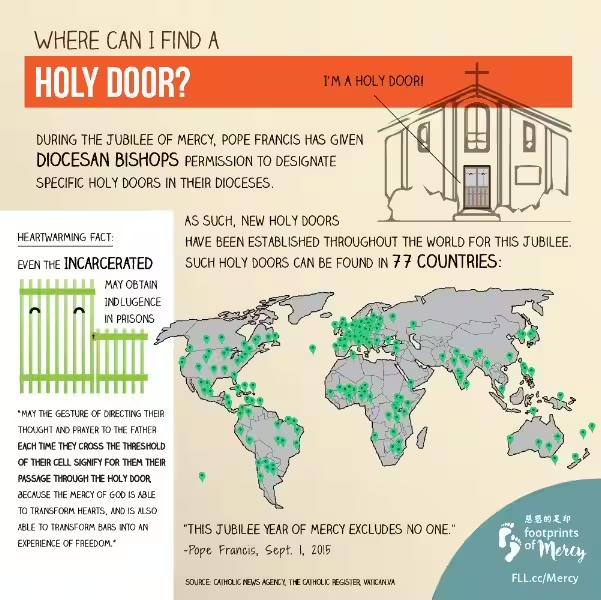
Many cathedrals and shrines around the world are designated as having a Holy Door for a Jubilee Year. Specific locations are announced by the Holy See and local bishops.
Is there a specific dress code for visiting the Holy Door?
While there isn’t a strict dress code, it is customary and respectful to dress modestly when visiting a sacred site like a basilica with a Holy Door. This generally means covering shoulders and knees.
What are the main themes of a Jubilee Year?
Jubilee Years often focus on themes of mercy, forgiveness, reconciliation, justice, and hope, encouraging a renewed commitment to faith and service.