In the quiet solemnity of our religious lives, certain symbols become so ingrained that we might overlook their profound significance. One such enduring emblem is the church seal. Far more than a mere decorative mark or a legalistic stamp, a church seal represents a deep wellspring of history, theology, and community identity. It’s a visual anchor, connecting us to centuries of tradition and the very essence of our faith. When we encounter a church seal, whether embossed on an official document, etched into the cornerstone of a building, or printed on a parish newsletter, we are being invited to consider the foundational principles and the collective journey of the religious body it represents.
This article will delve into the multifaceted world of the church seal, exploring its historical origins, the rich tapestry of its symbolic meanings, and its practical applications in modern religious life. We’ll uncover how these seemingly simple designs encapsulate complex theological ideas and serve as powerful tools for fostering unity and conveying authority within a faith community. By understanding the depth behind the church seal, we can gain a richer appreciation for the institutions that guide our spiritual paths and the visual language that has spoken volumes throughout history.
A Glimpse into the Past: The Genesis of the Church Seal
The practice of using seals to authenticate documents and signify authority is ancient, predating Christianity itself. However, as the Christian church grew and organized, the need for its own distinct mark became apparent. Early Christians, facing persecution and needing to communicate their identity and beliefs in a world often hostile to them, developed subtle yet potent symbols. The evolution of the church seal is intertwined with this historical development, emerging as a way to imbue official pronouncements, property deeds, and even personal correspondence with a sacred gravitas. Imagine the early days of the church: meetings held in secret, messages passed between scattered communities. A recognizable and meaningful symbol, a nascent church seal, would have been crucial for establishing legitimacy and recognizing fellow believers.
Initially, these seals often drew from biblical imagery, incorporating elements like the fish (ichthys), the dove, or the anchor, each carrying a specific theological meaning. As Christianity became the dominant religion, the use of seals became more formalized. Bishops, monasteries, and later, dioceses and individual parishes, began to commission their own unique seals. These were not arbitrary designs; they were carefully chosen to reflect the specific charisms, patron saints, or theological emphases of the religious entity. The intricate carvings on wax, the unique impression left upon parchment – each church seal was a testament to the growing structure and self-awareness of the Christian faith. They represented not just an administrative function but a declaration of spiritual stewardship and a commitment to preserving the integrity of religious doctrine and practice.
Common Motifs and Their Meanings: Decoding the Visual Language
The imagery found within a church seal is rarely accidental. Each element, however small, is imbued with layers of meaning, often rooted in scripture, tradition, or the lives of saints. For instance, the cross, in its myriad forms, is perhaps the most ubiquitous symbol, representing Christ’s sacrifice and the core of Christian redemption. A simple Latin cross might signify the universal church, while a Celtic cross, with its distinct circle, could represent eternity or the cosmic order. The dove is another powerful motif, symbolizing the Holy Spirit, peace, and the gentle presence of God. Think of the biblical account of the Holy Spirit descending like a dove at Jesus’ baptism – this imagery is frequently incorporated into seals to highlight the empowerment and guidance of the divine.
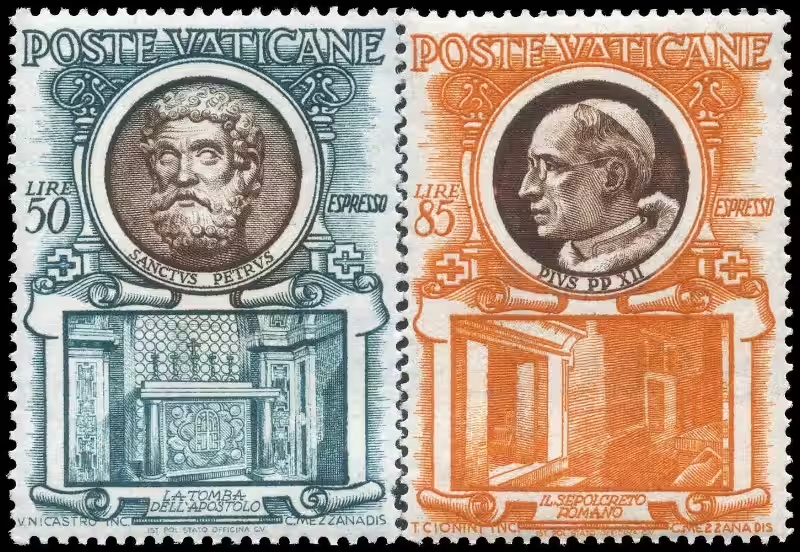
Beyond these universally recognized symbols, individual church seals often incorporate elements specific to their particular history or focus. A seal for a church dedicated to St. Peter might feature keys, referencing Jesus’ words to Peter, “I will give you the keys of the kingdom of heaven.” A monastery dedicated to a particular saint might feature an image of that saint or an object associated with their life, such as a shepherd’s crook for a patron saint of shepherds or a book for a learned saint. Even the shape of the seal itself can hold meaning; a circular seal might represent eternity or unity, while a shield-like shape could symbolize protection and defense of the faith. Understanding these common motifs allows us to decipher the silent theological narrative woven into the very fabric of the church seal.
Examples of Symbolic Elements:
The Alpha and Omega: Representing Christ as the beginning and the end.
An Anchor: Symbolizing hope and steadfastness in faith, particularly relevant in early Christianity.
A Lamb: The Paschal Lamb, signifying Jesus Christ as the sacrifice for sins.
A Chalice and Host: Directly referencing the Eucharist, the central sacrament of communion.
A Book (Bible): Representing the Word of God and the importance of scripture.
The Ministry and Mission: The Church Seal in Practice
The church seal is not merely a historical artifact; it plays a vital role in the ongoing life and ministry of a religious institution. In modern times, the church seal serves as a mark of authenticity and authority. When a bishop signs a decree, a parish issues a certificate of baptism or marriage, or a church organization makes an official statement, the presence of the church seal lends weight and legitimacy to these actions. It assures the recipient that the document or statement originates from a recognized and authorized body within the church structure. This is crucial for maintaining order, ensuring accountability, and fostering trust among the faithful and in the wider community.
Furthermore, the church seal acts as a powerful symbol of unity and shared identity. For members of a specific parish, diocese, or denomination, seeing their church seal can evoke a sense of belonging and shared purpose. It’s a visual reminder of the collective mission and the spiritual family they are a part of. Consider the pride a congregation feels when their distinctive church seal is prominently displayed on their place of worship or on official church stationery. It’s a declaration of who they are, what they stand for, and their commitment to carrying out their religious mission in the world. This shared symbolism is a cornerstone of community building, reinforcing the bonds that tie individuals together in their faith journey.
Practical Applications in the Modern Church
The tangible presence of the church seal is evident in numerous aspects of contemporary religious life, even in our increasingly digital age. Official documents, such as marriage certificates, baptismal records, and ordination papers, are invariably marked with the relevant church seal to ensure their validity. This is particularly important for legal and historical purposes, providing undeniable proof of significant life events and ministerial appointments. Beyond these formal records, the church seal often adorns parish bulletins, church websites, and official correspondence, serving as a constant visual identifier.
Moreover, the church seal can be a central element in the design of church architecture and religious artifacts. You might find it carved into the altar, etched into stained-glass windows, or incorporated into the design of vestments. These applications extend the symbolic reach of the church seal beyond mere paperwork, embedding its meaning into the sacred spaces where worship takes place. Even smaller, personal items like prayer cards or devotional booklets might feature the church’s emblem, allowing individuals to carry a piece of their religious community with them. The consistent and visible use of the church seal reinforces its importance as a unifying and authenticating symbol for the entire faith community.
Fostering Identity and Continuity: The Enduring Legacy of the Church Seal
In a world that is constantly shifting, the church seal stands as a beacon of continuity and enduring spiritual identity. It’s a tangible thread connecting the present generation of believers to those who came before them, reminding us that we are part of a lineage of faith that spans centuries. The very act of designing and using a church seal is an investment in this legacy, an acknowledgment of the historical roots and the ongoing mission of the religious body. When we see the familiar symbol of our church, it’s more than just a logo; it’s a reminder of promises made, of sacrifices endured, and of a spiritual journey undertaken together.
The church seal’s ability to foster a strong sense of identity is paramount. It provides a clear and concise visual representation of what a particular church or denomination stands for, its core values, and its unique place within the broader religious landscape. This is crucial for evangelism, for attracting new members, and for strengthening the bonds within the existing community. It’s a silent but powerful declaration of purpose. As we continue to navigate the complexities of the modern world, the enduring presence of the church seal offers a sense of stability, a reminder of unchanging truths, and a visual embodiment of the steadfast love and guidance that underpins our faith. It’s a symbol that continues to speak volumes, long after the ink has dried or the wax has cooled.
A church seal is a symbol or emblem used to represent a specific church or denomination. It often features religious imagery, iconography, or scriptural references that hold theological significance for the community. These seals can appear on official documents, building facades, liturgical items, and other church property.
What is the purpose of a church seal?
The primary purpose of a church seal is to authenticate and identify the church. It serves as a mark of authority and legitimacy, signifying that a document or decree originates from the church itself. Additionally, it acts as a visual representation of the church’s identity, beliefs, and heritage, fostering a sense of belonging and unity among its members.
What kind of imagery is typically found in a church seal?
Common imagery in church seals includes crosses (of various designs), doves (symbolizing the Holy Spirit), fish (an early Christian symbol), anchors (representing hope), chalices and wafers (representing the Eucharist), biblical figures or scenes, and sometimes the specific saint or patron after whom the church is named. The imagery is chosen to reflect core tenets of the Christian faith.
Do all churches have a seal?
Not all churches or denominations have a formal, officially recognized seal. The practice is more common in older, more established denominations with a hierarchical structure. However, many individual churches, even if not part of a denomination with a universal seal, will have their own unique emblem or logo.
Can a church seal be changed?
Yes, a church seal can be changed, though it is usually a significant decision. Changes might be made to reflect a shift in theological understanding, a re-branding, or to incorporate new historical or spiritual elements. Such changes typically require formal approval from the church’s governing body.
How is a church seal used in religious practice?
Beyond official documentation, church seals can be incorporated into worship. They might be embossed on communion bread, displayed on paraments (liturgical vestments and hangings), or etched onto stained glass windows or baptismal fonts. Their presence serves as a constant reminder of the church’s identity and its connection to the divine.