More Than Just Greenery: The Sacred Roots of the Bishop’s Garden
In the often bustling and sometimes chaotic rhythm of modern life, we seek spaces that offer solace, reflection, and a connection to something larger than ourselves. For many, these sacred havens are found within the walls of religious institutions. While the grandeur of cathedrals and the quietude of chapels are readily apparent, there exists another, often overlooked, spiritual landscape: the Bishop’s Garden. Far from being mere decorative plots of land, these gardens are imbued with centuries of religious tradition, serving as living testaments to faith, continuity, and the divine beauty of creation.
The concept of a garden as a place of spiritual significance is deeply rooted in religious history. Think of the Garden of Eden, the ultimate symbol of original innocence and divine communion. This archetypal garden sets a powerful precedent for understanding the intended purpose of many sacred grounds, including the Bishop’s Garden. These spaces are designed to be more than just aesthetically pleasing; they are intended to foster contemplation, provide a tranquil environment for prayer, and offer a tangible connection to the natural world, which itself is often seen as a manifestation of God’s artistry. The careful cultivation and design of a Bishop’s Garden reflect a deliberate effort to create a sanctuary that mirrors the order and harmony of the divine realm.
A Tapestry of Faith: The Multifaceted Roles of the Bishop’s Garden
The Bishop’s Garden serves a multitude of purposes, extending far beyond its visual appeal. It is a place for spiritual renewal, a space for communal gathering, and often, a repository for historical and botanical treasures. Imagine a bishop, perhaps after a demanding day of pastoral duties, finding a moment of quiet introspection amidst the fragrant blooms of the Bishop’s Garden. This personal retreat is a vital aspect of their ministry, allowing for prayer, discernment, and a deep connection with the spiritual wellspring that guides their leadership. This personal sanctuary for clergy highlights the garden’s role in supporting the very heart of religious leadership.
Beyond the individual, the Bishop’s Garden often acts as a hub for community engagement within the religious institution. It can be the picturesque backdrop for outdoor services, weddings, and community events, fostering a sense of shared experience and fellowship. For instance, a summer evening service held under ancient trees in a well-tended Bishop’s Garden can create a profoundly moving and memorable spiritual occasion. Furthermore, many Bishop’s Gardens are designed with educational purposes in mind, showcasing native plants, medicinal herbs used historically in religious healing practices, or even serving as living laboratories for theological students to explore themes of creation care and stewardship. This multifaceted role underscores the garden’s integral place within the broader religious landscape.
Cultivating Contemplation: The Design and Symbolism within a Bishop’s Garden
The very design of a Bishop’s Garden is often a deliberate act of theological expression. While styles can vary greatly, from formal parterres to more naturalistic landscapes, there is usually an underlying intention to reflect spiritual concepts. Consider the use of symbolism: a labyrinth, for example, might be incorporated into the layout of a Bishop’s Garden, representing the spiritual journey, the winding path of faith, and the eventual arrival at a place of peace. The placement of statues, fountains, or specific types of plants can also carry profound religious meaning, inviting visitors to engage with their faith on a deeper, more intuitive level. The meticulous planning involved in creating these spaces speaks volumes about their spiritual importance.
The selection of flora within the Bishop’s Garden is rarely arbitrary. Many plants have historically been associated with religious narratives or have symbolic meanings within different faith traditions. Roses, for instance, are often linked to the Virgin Mary, while lilies symbolize purity and resurrection. Fruit-bearing trees can represent the fruits of the spirit or the bounty of God’s creation. The careful curation of these botanical elements within a Bishop’s Garden transforms it into a living sermon, a silent teacher that communicates theological truths through the language of nature. This deliberate inclusion of symbolically rich plants elevates the garden from a simple collection of greenery to a profound spiritual resource.
A Legacy of Stewardship: Preserving the Bishop’s Garden for Future Generations
The enduring beauty and spiritual resonance of a Bishop’s Garden are not accidental; they are the result of dedicated stewardship. Maintaining these sacred spaces requires ongoing commitment, often involving a combination of professional horticultural expertise and the volunteer efforts of dedicated congregants. This shared responsibility for the Bishop’s Garden fosters a sense of ownership and pride within the religious community, reinforcing the idea that these gardens are a collective treasure to be cherished and preserved. The very act of tending to the garden becomes a form of spiritual practice, a tangible expression of gratitude for the beauty and peace it provides.
The preservation of a Bishop’s Garden is also about safeguarding a living legacy. These gardens often contain ancient trees, rare cultivars, and historical features that connect us to the past and offer lessons for the future. For example, a mature oak tree in a Bishop’s Garden might have witnessed decades, even centuries, of worship and community life, serving as a silent, enduring witness to the unfolding story of faith. By actively caring for these spaces, we ensure that future generations will have access to these tranquil sanctuaries, opportunities for spiritual reflection, and tangible reminders of the enduring power of faith expressed through the natural world. The commitment to the Bishop’s Garden is a commitment to the continuity of spiritual heritage.
Frequently Asked Questions about Bishop’s Garden
What is Bishop’s Garden?
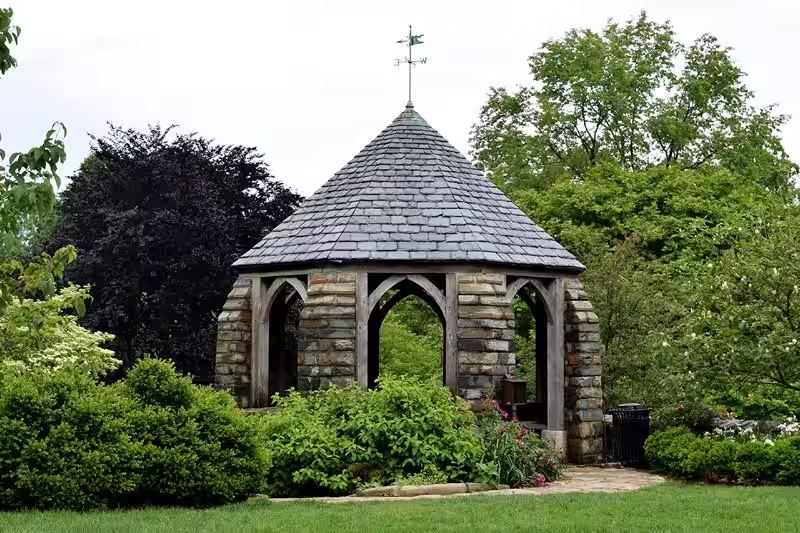
Bishop’s Garden is a historical and botanical landmark located in Washington, D.C. It is situated on the grounds of the Washington National Cathedral and is known for its diverse collection of plants, tranquil atmosphere, and historical significance.
What kind of religious significance does Bishop’s Garden have?
As part of the Washington National Cathedral, Bishop’s Garden is intrinsically linked to the Episcopal Church and its religious mission. While it is a public garden open to all, it serves as a contemplative space that can inspire spiritual reflection and appreciation for God’s creation. The garden’s design often incorporates elements that symbolize biblical themes or offer a peaceful environment for prayer and meditation.
Is Bishop’s Garden a place of worship?
Bishop’s Garden itself is not a formal place of worship, though it is situated on the grounds of the Washington National Cathedral, which is a prominent house of prayer. Visitors can find quiet corners within the garden for personal prayer and reflection. The Cathedral itself regularly hosts services and religious events.
Can I attend religious services at Bishop’s Garden?
Religious services are held at the Washington National Cathedral, adjacent to Bishop’s Garden. The garden offers a peaceful environment to visit before or after attending a service.
Is Bishop’s Garden affiliated with any specific religious denomination?
Bishop’s Garden is affiliated with the Episcopal Church, as it is located on the grounds of the Washington National Cathedral, which is the seat of the Episcopal Diocese of Washington. However, the garden is accessible and welcoming to people of all faiths and backgrounds.
Does Bishop’s Garden offer any religious programming?
While the garden’s primary focus is botanical and historical, its connection to the National Cathedral means that visitors may find that special events or contemplative services are offered by the Cathedral that utilize the garden space or are held in its vicinity. It is advisable to check the Washington National Cathedral’s official website for any specific religious programming.