When we speak of the apostles, a powerful image often comes to mind: a band of devoted followers who walked with Jesus, witnessed his miracles, and spread his teachings across the known world. Their names are etched into the bedrock of religion, synonymous with faith, sacrifice, and the genesis of Christianity. Yet, beyond the familiar designations – Peter, John, Paul – lies a deeper layer of understanding, one that begins with their original names. Exploring these original appellations isn’t merely an academic exercise; it’s a journey into the very humanity of these foundational figures, offering a richer, more relatable perspective on their extraordinary lives and the enduring legacy they’ve left for billions.
These men, hand-picked by Jesus, were not born into their apostolic roles. They were individuals with distinct lives, families, and identities before their divine calling. Understanding their apostles original names allows us to bridge the gap between the exalted figures of scripture and the ordinary people they once were. It’s about peeling back the layers of tradition and seeing the men who wrestled with doubt, experienced joy, and ultimately committed their lives to a radical new path, forever altering the course of human history and shaping the very fabric of religion as we know it.
From Humble Beginnings: The Twelve and Their Pre-Apostolic Identities
The core group of Jesus’ closest companions, often referred to as the Twelve Apostles, were instrumental in establishing the early Christian movement. While scriptural accounts primarily use the names by which they became known, delving into historical and linguistic context reveals their original identities. For instance, the prominent apostle we know as Peter was originally named Simon. This name, common in Jewish society, signifies “hearing” or “one who hears,” a humble yet profound characteristic for someone destined to be a cornerstone of faith. Imagine Simon, a fisherman from Galilee, mending nets and navigating the Sea of Galilee, his life about to be irrevocably transformed by a carpenter from Nazareth. His transformation from Simon to Peter, the “rock,” is a testament to faith and divine purpose.
Similarly, the beloved disciple, often called John, was originally John (Yochanan in Hebrew). While his original name remained consistent, his deep personal relationship with Jesus and his unique perspective on the Savior’s life and teachings set him apart. His writings, filled with profound theological insights, offer a window into the heart of early Christianity. Then there’s Andrew, whose original name was also Andrew (Andreas in Greek, meaning “manly” or “brave”). He was Simon Peter’s brother, and it’s often recounted that Andrew was the first of the apostles to be called by Jesus, playing a crucial role in bringing his brother into the fold. These apostles original names paint a picture of individuals deeply rooted in their Jewish heritage, their lives intertwined before their divine appointment.
The Brothers in Faith: Zebedee’s Sons and the Zealot
Among the inner circle were James and John, the sons of Zebedee. Their original names were likely Ya’akov and Yochanan, respectively, reflecting their Hebrew origins. Jesus, recognizing their fiery spirit, famously nicknamed them “Boanerges,” meaning “Sons of Thunder.” This epithet underscores their passionate nature, a trait that would undoubtedly have been evident even before they were called to be apostles. Their story highlights how Jesus saw not just their current selves but their potential for great impact within his religion.
Another significant figure was Judas Iscariot, whose original name was Judas – a name that, unfortunately, carries a heavy burden of betrayal. The meaning of “Iscariot” is debated, but it likely refers to his origin from Kerioth. His presence among the Twelve Apostles serves as a stark reminder of the human element within the divine narrative, even within the most sacred of contexts. It’s a difficult but essential part of the story, demonstrating that faith, while powerful, does not exempt individuals from human flaws or choices that have profound consequences for the unfolding of religion.
Beyond the Twelve: The Apostle to the Gentiles and His Name Change
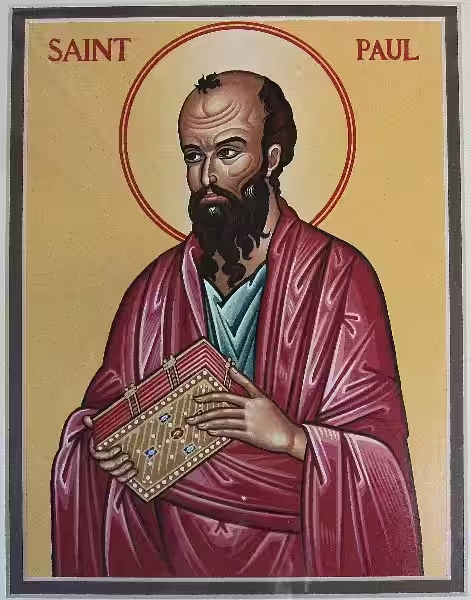
While the Twelve Apostles form the foundational core, the apostle most notably associated with a dramatic name change and an expansive ministry to the Gentiles is Paul. Before his transformative encounter with the resurrected Jesus on the road to Damascus, he was known as Saul of Tarsus. Saul was a Roman citizen of Jewish heritage, a devout Pharisee who actively persecuted early Christians. His original name, Saul, was a prominent Hebrew name, signifying “asked for” or “prayed for,” hinting at a destiny perhaps even he couldn’t comprehend.
The transformation from Saul to Paul is one of the most compelling narratives in the New Testament and a pivotal moment in the spread of religion. After his conversion, he adopted the Roman name Paul, which was also a common name for him, as it was customary for Jews with Roman citizenship to have both a Hebrew and a Latin name. This shift symbolizes his new identity in Christ and his mission to preach the gospel to the non-Jewish world. His journey from persecutor to apostle illustrates the power of redemption and the radical call to discipleship that defines the Christian faith, showcasing how even a name can represent a profound change in purpose and direction.
The Power of Identity: How Original Names Shape Our Understanding
Understanding the apostles original names enriches our comprehension of their ministries and the early days of religion. It humanizes them, reminding us that these were real people, with personal histories, before they were elevated to their apostolic roles. When we hear Simon before we hear Peter, we grasp the magnitude of his transformation. When we consider Saul before Paul, we grasp the depth of his conversion and the radical nature of his new mission. These names are not just labels; they are keys that unlock a more intimate understanding of their journeys and the powerful message they carried.
The use of apostles original names can also foster a sense of connection for contemporary believers. In a world that often feels complex and distant from ancient narratives, recognizing the humanity of these figures – their original identities, their struggles, their faith – makes their stories more relatable. It emphasizes that the call to follow God, to serve and to spread good news, is a call that can resonate with anyone, regardless of their background or their initial name. This grounding in their original names allows us to see them not as distant, untouchable figures, but as relatable individuals who, through faith and dedication, became central to one of the world’s major religions.
Revisiting the Legacy: The Enduring Impact of the Apostles
From Simon Peter, the fisherman, to Saul of Tarsus, the persecutor turned evangelist, the apostles original names offer a deeper appreciation for the diverse individuals God chose to build his church. Their stories, rooted in their personal identities, demonstrate a profound commitment to their faith and a willingness to sacrifice everything for the message of the Gospel. The transformation from their original names to their apostolic designations signifies a profound calling and a new identity forged in Christ, a narrative that continues to inspire millions.
The legacy of the apostles extends far beyond their individual lives. Their teachings, their writings, and their example form the bedrock of Christian religion. By remembering their original names, we honor their human journey and the extraordinary path they undertook. It’s a reminder that even ordinary individuals, when called by God and empowered by faith, can achieve extraordinary things and leave an indelible mark on the world, shaping the spiritual landscape for generations to come.
Frequently Asked Questions: The Apostles’ Original Names
Who were the Apostles?
The Apostles were a group of twelve disciples chosen by Jesus Christ to be his closest followers and to spread his teachings throughout the world after his death and resurrection.
Yes, many of the Apostles are known by more than one name. These differences can arise from variations in the original languages (Hebrew, Aramaic, Greek), the use of both a common name and a surname or nickname, or even a change in name upon their calling.
What was Simon Peter’s original name?
Simon Peter’s original name was Simon. Jesus later gave him the name Peter, which means “rock.”
Was there another Simon among the Apostles?
Yes, there was another Apostle named Simon, often referred to as Simon the Zealot, to distinguish him from Simon Peter.
What was James, son of Zebedee’s name?
James, son of Zebedee, is his given name. He was one of Jesus’ inner circle of disciples.
Was there another Apostle named James?
Yes, there was another Apostle named James, known as James, son of Alphaeus. He is sometimes referred to as “James the Less.”
Who was Bartholomew?
Bartholomew’s name is often understood as a patronymic, meaning “son of Talmai.” His given name is believed by many scholars to be Nathanael.
What was Thaddaeus’s name?
Thaddaeus is one of the names associated with an Apostle. He is also sometimes referred to as Judas, son of James, or Lebbaeus. It’s important not to confuse him with Judas Iscariot.
Who was Judas Iscariot?
Judas Iscariot was one of the twelve Apostles, but he is famously known for betraying Jesus. His name “Iscariot” is thought to refer to his town of origin.
What was Matthew’s original name?
Matthew was also known as Levi. He was a tax collector before Jesus called him to be an Apostle.
Was John one of the original twelve?
Yes, John was one of the twelve Apostles and a brother of James, son of Zebedee. He is traditionally known as the author of the Gospel of John, the Epistles of John, and the Book of Revelation.
Who was the Apostle Andrew?
Andrew was one of the twelve Apostles and the brother of Simon Peter. He was originally a disciple of John the Baptist.
What about the Apostle Philip?
Philip was one of the twelve Apostles. He is mentioned in the Gospels as being from Bethsaida, the same town as Andrew and Peter.