In the tapestry of human experience, few threads are as vibrant and enduring as those woven by prayer. Across cultures, continents, and millennia, individuals have turned to the divine, seeking solace, guidance, and strength through acts of prayer. This fundamental practice, deeply embedded within the heart of most religions, is far more than mere ritual; it is a dynamic dialogue, a powerful connection that can transform our inner landscapes and ripple outwards into the world. Understanding the profound nature of acts of prayer can unlock a deeper, more meaningful engagement with our spiritual journeys.
The very essence of religion often hinges on this sacred act. Whether it’s the whispered supplication of a hurried commuter, the communal chanting of a congregation, or the solitary meditation of a seeker, prayer serves as the primary conduit for believers to express their devotion, articulate their needs, and acknowledge their dependence on something greater than themselves. It’s in these moments of focused intention that we often find clarity amidst confusion and courage in the face of adversity. The power of prayer lies not just in what we ask for, but in the very act of reaching out, of believing that we are heard and that there is a response available.
The Multifaceted Nature of Prayer in Religious Practice
Prayer is not a monolithic concept; its expressions are as diverse as the faiths that embrace it. From the structured liturgies of organized religions to the spontaneous outpourings of the heart, acts of prayer encompass a wide spectrum of forms. We can categorize these into several key types, each serving a distinct purpose in the believer’s relationship with the divine. Recognizing these variations can help us appreciate the richness and flexibility of this spiritual discipline.
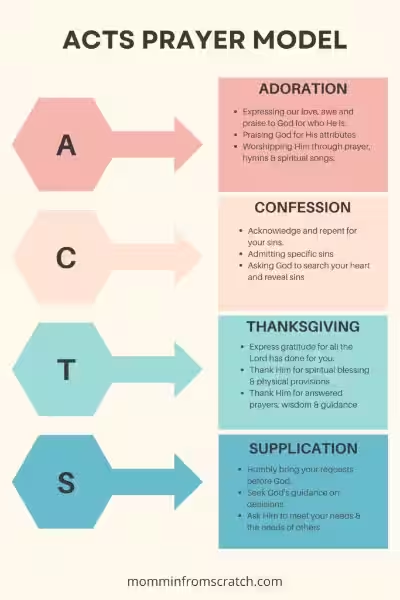
One of the most common forms is petitionary prayer, where individuals ask for specific things – healing, wisdom, protection, or material needs. Think of a parent praying for their sick child, or a student praying for success on an exam. Then there’s intercessory prayer, which extends beyond personal needs to praying for others, for communities, or even for global peace. This altruistic aspect of prayer highlights the interconnectedness that many religions emphasize. Beyond asking, there is also adoration and thanksgiving prayer, where the focus shifts to expressing praise, gratitude, and awe for the divine. This is about acknowledging God’s goodness and majesty, independent of any personal gain. Finally, confession and repentance prayer involves acknowledging one’s shortcomings and seeking forgiveness, a vital element for spiritual growth and reconciliation.
The consistent practice of acts of prayer is a cornerstone for personal spiritual development. It’s akin to a muscle that strengthens with regular exercise. When we commit to praying, we are actively choosing to prioritize our spiritual well-being, creating space in our lives for reflection and connection. This deliberate act of setting aside time for prayer can significantly impact our perspective and our inner resilience.
Through prayer, we cultivate virtues such as patience, humility, and faith. When we pray for something and don’t see immediate results, we learn patience. Acknowledging that we need divine intervention fosters humility. And the very act of praying, especially when it’s for things beyond our control, builds faith. For instance, imagine someone facing a daunting career change. Their acts of prayer might begin with asking for clarity and courage, but over time, these prayers can evolve into a profound trust in the divine plan, even if the path ahead is uncertain. This journey of prayer helps to refine our desires and align them with a higher purpose, leading to a more profound sense of peace and fulfillment, even amidst life’s challenges.
The Transformative Power of Acts of Prayer
The impact of prayer extends far beyond the individual. When individuals are united in prayer, a palpable energy can emerge, fostering a sense of community and shared purpose. This collective engagement amplifies the potential for positive change. We see this in religious gatherings, where the unified voices of many in prayer can create an atmosphere of profound spiritual significance.
Consider the example of a community facing a natural disaster. The concerted acts of prayer from its members, often reaching out to support systems far beyond their immediate vicinity, can provide immense comfort and hope. This shared spiritual endeavor can galvanize collective action, inspiring people to help one another and rebuild their lives. The power of prayer is not about passively waiting for things to happen; it’s about actively participating in the unfolding of a spiritual reality that can influence events and hearts. It’s about recognizing that our faith, expressed through prayer, has a tangible effect on the world around us, fostering resilience and driving positive transformation.
Navigating Challenges Through Prayer
Life inevitably presents us with trials and tribulations. It is during these difficult times that the practice of acts of prayer often becomes most vital. Prayer offers a sanctuary, a place where we can unload our burdens and find the strength to persevere. It’s a reminder that we are not alone in our struggles, and that there is a compassionate presence ready to listen.
When faced with personal loss, financial hardship, or relationship conflicts, the simple act of kneeling or sitting in quiet contemplation and prayer can provide an immediate sense of relief. It’s like finding a quiet harbor in a raging storm. This doesn’t mean the problems disappear, but our capacity to cope with them is significantly enhanced. The prayers we offer may be for comfort, for guidance, or simply for the strength to face the day ahead. Moreover, through prayer, we can gain a new perspective on our challenges, enabling us to see them not as insurmountable obstacles, but as opportunities for growth and learning. This process of turning to prayer in times of need is a powerful testament to its enduring role in helping individuals navigate the complexities of the human condition.
The Enduring Significance of Prayer Across Religions
While the specific forms and theological underpinnings of prayer may vary across different religious traditions, its fundamental role remains remarkably consistent. From the ancient Vedic chants to the Islamic salat, from the Buddhist meditations to the Christian Lord’s Prayer, acts of prayer are the lifeblood of religious devotion, connecting humanity to the divine across diverse cultural landscapes.
The universality of prayer speaks to a deep-seated human yearning for connection, meaning, and transcendence. It is a testament to our innate spiritual nature. Whether one prays with outstretched hands, bowed head, or closed eyes, the intention behind the prayer – to communicate with a higher power, to seek guidance, or to express gratitude – is a common thread that binds us together. This enduring significance underscores the fact that acts of prayer are not merely relics of the past, but vibrant, living practices that continue to shape and sustain individuals and communities in the present, offering hope, purpose, and a pathway to a more profound existence.
Frequently Asked Questions about Acts, Prayer, and Religion
What is the Book of Acts?
The Book of Acts is the fifth book of the New Testament. It narrates the history of the early Christian church, beginning with Jesus’ ascension into heaven and the coming of the Holy Spirit at Pentecost, and then following the ministries of apostles like Peter and Paul as they spread Christianity throughout the Roman Empire.
What is prayer?
Prayer is a form of communication with a divine being or spiritual entity. It can involve speaking aloud or silently, expressing gratitude, making requests, confessing sins, or simply offering praise and adoration. The specific forms and purposes of prayer can vary significantly across different religions and spiritual traditions.
In the Book of Acts, prayer is depicted as a vital and integral part of the early Christian life. The apostles and believers prayed together, individually, and in times of crisis or celebration. Key instances include the apostles praying before choosing a replacement for Judas, believers praying for boldness as they preached, and Peter being delivered from prison through the fervent prayer of the church. Prayer was often accompanied by acts of faith and the reception of the Holy Spirit.
What is religion?
Religion is a complex system of beliefs, practices, and ethics that are typically centered around a supernatural or divine power. It often involves rituals, moral codes, and shared values that provide meaning, purpose, and a sense of community for its adherents. Religions can be monotheistic (belief in one God), polytheistic (belief in multiple gods), or non-theistic.
How does religion relate to prayer?
Prayer is a fundamental practice in most religions. It serves as a primary means by which individuals connect with the divine, express their faith, seek guidance, and engage with the core tenets of their religious tradition. While the object of prayer and the specific methods may differ, the act of communicating with a higher power is a common thread across many religious systems.
What are some examples of prayer in the Book of Acts?
Examples of prayer in Acts include:
* The disciples praying to be filled with the Holy Spirit (Acts 4:24-31).
* Peter and John praying for the lame man to be healed (Acts 3:1-10).
* Paul and Silas praying and singing hymns in prison (Acts 16:25).
* The church praying for Peter’s release from prison (Acts 12:5).
* Paul praying for the healing of Publius’ father (Acts 28:8).
How do different religions view prayer?
Different religions have diverse approaches to prayer:
* Christianity: Prayer is seen as a dialogue with God, encompassing praise, thanksgiving, confession, and supplication.
* Islam: Prayer (Salat) is one of the Five Pillars, a structured ritual performed five times a day facing Mecca.
* Judaism: Prayer is a central aspect of worship, with set liturgy and times for communal and individual prayer.
* Hinduism: Prayer can take many forms, from chanting mantras and singing devotional songs (bhajans) to meditation and ritual offerings to deities.
* Buddhism: While not always directed at a creator deity, practices like meditation and chanting can be seen as forms of contemplative prayer or spiritual discipline.