Life, in its beautiful and messy complexity, inevitably presents us with moments where we fall short. We make mistakes, say things we regret, or act in ways that contradict our deepest values. In the tapestry of human experience, these stumbles are as common as breathing. For many, especially within the framework of religion, the path to reconciliation and inner peace often begins with a sincere act of contrition. This isn’t just a religious formality; it’s a profound psychological and spiritual act that can mend broken relationships, heal wounded spirits, and pave the way for genuine growth.
Understanding the act of contrition transcends mere rote recitation. It’s about acknowledging our wrongdoing with a genuine sense of remorse and a firm resolve to do better. Whether it’s a quiet prayer whispered in the solitude of our homes or a public acknowledgment of error, the essence remains the same: a heartfelt turning away from sin and a turning towards what is good and right. This journey of repentance is central to many faith traditions, offering a powerful mechanism for spiritual renewal and a deeper connection to the divine.
Defining the Act of Contrition: More Than Just Words
At its core, an act of contrition is an expression of sorrow for sins committed. It’s a recognition that we have offended God, ourselves, and potentially others through our actions, inactions, or thoughts. This sorrow stems from a place of love for God and a desire to live in accordance with His will. It’s not a mere intellectual acknowledgment of a rule broken, but an emotional and spiritual response that seeks to mend the spiritual fabric torn by our missteps.
Think of it like this: imagine you’ve accidentally broken a beloved heirloom, a gift from a grandparent. The initial feeling might be panic or shame. But then, a deeper feeling emerges – regret that you caused damage to something precious. You might apologize to the person who gave it to you, not just because you have to, but because you genuinely feel bad about the hurt or disappointment you’ve caused. An act of contrition operates on a similar, albeit more profound, spiritual level. It’s about understanding the gravity of our spiritual “breakages” and yearning to restore our relationship with the divine.
The Two Pillars of Contrition: Sorrow and Resolution
A true act of contrition is built upon two essential pillars: sorrow for sins and a firm purpose of amendment. Without both, the act, while perhaps well-intentioned, lacks the full transformative power that faith traditions emphasize. The sorrow must be contrition, a deep regret that we have offended a loving God and marred our own spiritual integrity. This is distinct from attrition, which is a more superficial fear of punishment.
The second pillar, the firm purpose of amendment, is equally vital. It’s not enough to feel bad about what we’ve done; we must also commit ourselves to changing our behavior. This means actively striving to avoid the sins we have committed in the future. For example, if anger has led to hurtful words, a firm purpose of amendment would involve developing strategies for managing anger, practicing patience, and choosing kinder responses. This resolution is the engine of spiritual growth, turning our regret into actionable steps towards holiness.
The Role of Contrition in Religious Practice
Across a spectrum of religious traditions, the concept of repentance and seeking forgiveness is fundamental. While the specific prayers and rituals may vary, the underlying principle of acknowledging wrongdoing and seeking reconciliation remains a constant. This is particularly prominent in Abrahamic religions like Christianity, Judaism, and Islam, where the idea of a personal relationship with God and the need for spiritual cleansing is paramount.
In Christianity, for instance, the act of contrition is a cornerstone of the Sacrament of Reconciliation (Confession). It’s not just about listing sins; it’s about a heartfelt lamentation for those sins and a genuine desire to “sin no more.” This Sacrament, and the act of contrition at its heart, provides a tangible pathway for believers to experience divine mercy and renewal, assuring them that their repentant heart is heard and embraced by God.
Contrition as a Catalyst for Spiritual Growth
The journey of faith is rarely a straight line. It’s a process of learning, falling, and rising again. An act of contrition serves as a crucial catalyst for this spiritual growth. By confronting our imperfections, we gain a deeper understanding of ourselves and our need for divine grace. This self-awareness, born from honest self-reflection and remorse, is the fertile ground upon which true spiritual transformation can take root and flourish.
Consider a musician learning a difficult piece. They will inevitably make mistakes, hit wrong notes, and stumble over passages. Each mistake, however, is an opportunity to learn and refine their technique. The musician doesn’t dwell on the errors but uses them to practice more diligently and improve. Similarly, our spiritual stumbles, met with a sincere act of contrition, become valuable lessons, guiding us towards greater virtue and a more profound connection with our faith.
The beauty of an act of contrition lies in its versatility. It’s not confined to formal religious settings. We can, and indeed should, integrate this practice into our daily lives. This can take many forms, from a simple internal prayer of acknowledgment after a moment of impatience to a more structured confession.
One of the most powerful ways to practice this is through Examination of Conscience. This is a daily or regular reflection on our thoughts, words, and deeds, specifically looking for instances where we may have fallen short of God’s will or our own moral compass. For example, before sleep, one might ask: “Did I speak unkindly today? Did I act with charity towards my neighbor? Did I honor God with my actions?” This mindful self-assessment prepares the ground for a genuine act of contrition if wrongdoing is identified.
When Words Fail: The Silent Act of Contrition
Sometimes, the weight of our mistakes can feel too heavy for words. In these moments, a silent, heartfelt act of contrition can be incredibly powerful. It’s a deep, internal acknowledgment of our offense and a plea for mercy, even if we cannot articulate it perfectly. This internal turning, this profound sorrow and desire for healing, is recognized by God, regardless of the eloquence of our prayer.
Imagine a child who has disobeyed their parent. They might not have the words to explain their actions or apologize effectively, but their tear-filled eyes and slumped shoulders convey a clear message of remorse. This unspoken act of contrition can be a powerful bridge to forgiveness. In our spiritual lives, this silent turning of the heart is a testament to the profound and often ineffable nature of our relationship with the divine.
The Healing Power of Forgiveness and Reconciliation
The ultimate fruit of a sincere act of contrition is forgiveness and the restoration of broken relationships, both with God and with our fellow human beings. When we humbly admit our faults and seek amendment, we open ourselves to the boundless mercy of God. This divine forgiveness is not just a pardon; it’s a healing balm that restores our spiritual health and allows us to move forward with renewed hope and purpose.
Furthermore, when our errors have impacted others, the act of contrition often extends beyond ourselves. It involves seeking forgiveness from those we have wronged, a process that requires courage, humility, and a genuine commitment to making amends. This dual movement – seeking divine forgiveness and extending it to others – is the essence of reconciliation, a vital aspect of living a life rooted in faith and love. This journey of repentance, atonement, and eventual reconciliation is a testament to the enduring strength and profound impact of an act of contrition.
Frequently Asked Questions about the Act of Contrition
What is an Act of Contrition?
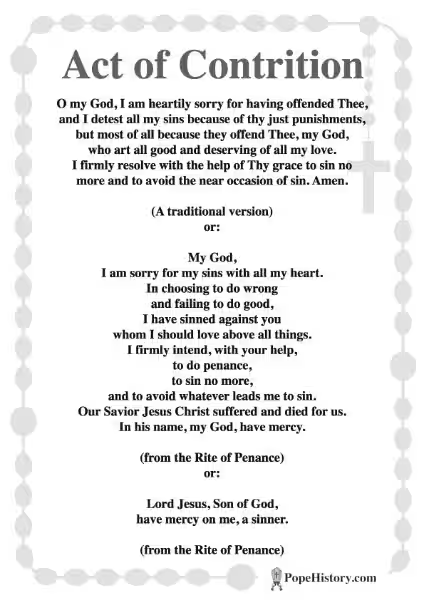
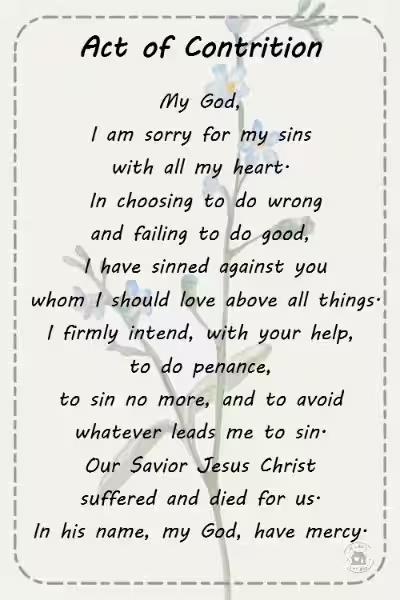
An Act of Contrition is a prayer that expresses sorrow for one’s sins and a firm purpose of amendment. It is an essential part of the Sacrament of Reconciliation (Confession) in the Catholic Church, but can also be prayed privately.
What are the essential elements of an Act of Contrition?
The essential elements are:
Sorrow for sins committed.
A firm purpose of amendment, meaning a commitment to avoid sin in the future.
Why is an Act of Contrition important?
It is important because it acknowledges our failings, seeks God’s forgiveness, and demonstrates our desire to live a more virtuous life. It is a way to reconnect with God and reaffirm our faith.
Are there different types of Acts of Contrition?
Yes, there are commonly two main types:
Perfect Contrition: Sorrow for sin out of love for God.
Imperfect Contrition (Attrition): Sorrow for sin out of fear of punishment or dislike of the ugliness of sin.
Both are considered valid for the Sacrament of Reconciliation, though perfect contrition is preferred.
Can I create my own Act of Contrition?
Yes, you can. While there are traditional prayers, the most important aspect is that your prayer genuinely expresses your sorrow for sins and your intention to try and do better.
Is an Act of Contrition a form of penance?
While praying an Act of Contrition is a devout act of prayer and repentance, the penance assigned by the priest in the Sacrament of Reconciliation is a separate but related act of satisfaction for sins.
When should I pray an Act of Contrition?
You can and should pray an Act of Contrition:
Before going to Confession.
Whenever you realize you have sinned.
As part of your daily prayer routine.
When facing difficult temptations.
Does saying an Act of Contrition automatically forgive my sins?
An Act of Contrition is a prayer that expresses a disposition for forgiveness. In the context of the Sacrament of Reconciliation, it is through the priest’s absolution, by the power of Christ, that sins are sacramentally forgiven. When prayed privately, it is a sincere plea for God’s mercy, and God, in His infinite goodness, can grant mercy based on His judgment of your heart.